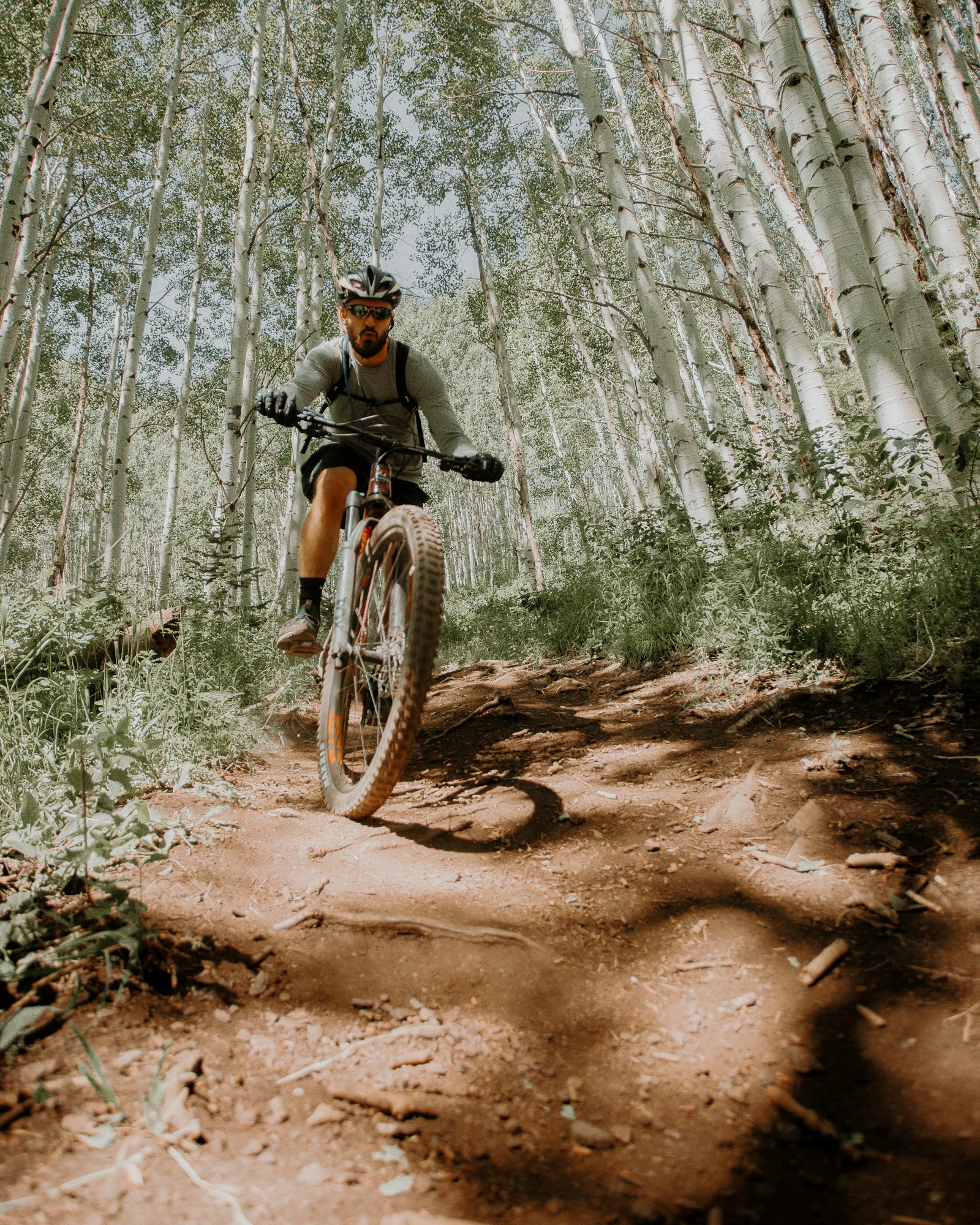
With the 2026 UCI Mountain Bike World Championships less than three weeks away (Hafjell, Norway, August 26–30), elite cross-country and enduro riders are putting the finishing touches on their race-week protocols. Hydration, it turns out, is one of the biggest differentiators between podium runs and mechanically-sound riders who simply fade in the final laps.
But you don’t need to be a UCI-licensed racer to make the same mistakes. Weekend trail riders, enduro competitors, and casual mountain bikers routinely roll up to the trailhead under-sodium’d, sip plain water through a two-hour climb, and wonder why the technical descents feel harder than they should by lap three. Here’s the physiology behind why—and what to do about it.
Why Mountain Biking Is Uniquely Dehydrating
Road cyclists have it comparatively easy when it comes to hydration logistics: steady pacing, predictable effort zones, kit-mounted bottle cages, and often-marked aid stations in events. Mountain bikers deal with none of that.
Technical singletrack requires full-body engagement—upper-body bracing through roots, explosive sprints out of switchbacks, isometric core tension on descents. That variable, high-intensity effort spikes sweat rate unpredictably. Studies of cross-country mountain bikers show average sweat rates of 1.0–2.0 liters per hour in moderate conditions, climbing to 2.5 L/hr or more on hot, steep terrain. Over a two-to-three-hour ride, that adds up to 3–6 liters of total fluid loss.
The sodium math compounds the problem. With a midpoint sweat sodium concentration of around 900 mg/L, a rider losing 2 L/hr over three hours is bleeding approximately 5,400 mg of sodium—before accounting for the electrolytes lost in sweat that evaporates before it even drips. That’s nearly 2.5 times the average American’s daily sodium intake, gone in a single trail session.
XC vs. Trail vs. Enduro: How the Format Shapes Your Deficit
Cross-country racers face the most acute hydration challenge because race pace runs close to threshold—high sustained effort, minimal recovery, and a compressed window of 1.5 to 2 hours where every minute of slowing costs a placing. World Cup XC riders typically lose 2–4% of body weight in race conditions when hydration is poorly managed. Even a 2% drop measurably impairs VO2max capacity and reaction time on technical sections.
Trail riders typically work at lower average intensities but ride longer—three to five hours is common—which creates a slow-burn deficit that’s easy to ignore. The insidious part: a trail rider who feels “fine” at hour two may be 1.5% down on body weight, enough to make final descents feel harder and increase cramping risk on steep climbs.
Enduro racers face a hybrid problem: long transfer stages (sometimes 30+ minutes of climbing at moderate intensity) punctuated by timed downhill stages at full sprint. The transfers tend to suppress the urgency to drink—it’s not the “hard” part of the race—yet they account for the bulk of fluid and sodium loss across a full event day.
Why Trail Riders Underhydrate
Ask most mountain bikers why they don’t drink more on the trail and you’ll hear the same three answers: “I was focused on the technical sections,” “my bottles were hard to reach,” and “I didn’t feel that thirsty.”
All three are real problems. Technical riding actively suppresses the thirst mechanism—the brain is fully occupied with trail navigation. Reaching for a bottle on a rocky descent requires letting go of the bars at exactly the wrong moment. And thirst itself is a lagging indicator; by the time you feel it, you’re already 1–2% dehydrated.
Hydration packs solve the access problem and remove the “I couldn’t reach my bottle” excuse. But most riders still only drink when they think of it. A good rule of thumb: drink 150–250 mL at every trail junction, fire road crossing, or flat recovery section—mechanically, not on demand.
The Four-Window Hydration Plan
Night Before: Target 3,000–4,000 mg of total sodium across the day. A salty dinner plus an electrolyte drink before bed—800–1,000 mg sodium—helps pre-load plasma volume so you start the ride already topped off. LMNT Recharge (1,000 mg sodium per packet) or Precision Hydration PH 1500 (1,500 mg/L) are strong choices here. A 3-oz shot of Fast Pickle (~570 mg sodium) dissolved into your evening water bottle covers the same ground in a compact format.
Pre-Ride (60–90 Minutes Out): Drink 400–600 mL of fluid containing 400–700 mg of sodium. This is not the time for plain water—you’re building plasma volume, not just filling a tank. Skratch Labs Sport Hydration Mix (~380 mg sodium) or Nuun Sport (~300 mg) both work well here. If you’re heading into a long hot day, consider a second sodium hit: the pre-ride window is your biggest opportunity to bank electrolytes before you start sweating.
On the Trail: Target 150–250 mL of fluid every 15–20 minutes—roughly 500–750 mL per hour. Pair that with 400–700 mg of sodium per hour via your hydration mix or electrolyte tabs. Gatorade Endurance Formula (~300 mg/20 oz) and SaltStick Caps (215 mg each) can supplement a lower-sodium mix. For enduro transfer stages or longer trail segments, a single Fast Pickle shot delivers roughly 570 mg of sodium in a 3-oz package that fits in a jersey pocket or pack hip belt—no mixing required, and it pairs cleanly with whatever electrolyte drink you’re already running.
Post-Ride: Replace 125–150% of estimated fluid losses within two hours of finishing (per ACSM guidelines). Weigh yourself before and after if you want precision: every kilogram lost equals roughly one liter of fluid deficit, meaning you need to drink 1.25–1.5 L to truly restore. Include 800–1,200 mg of sodium in that recovery window—without it, kidneys excrete the extra water before it can rebuild plasma volume.
Your Trail Gear List
No single product works for every rider or every condition. Here’s what belongs in the pack:
- LMNT Recharge (1,000 mg sodium) — pre-ride loading and post-ride recovery
- Precision Hydration PH 1500 (1,500 mg/L) — high-sweat or hot-weather conditions
- Skratch Labs Sport Hydration (~380 mg) — on-trail mix for moderate conditions
- Nuun Sport (~300 mg) — lighter option for cooler rides
- SaltStick Caps (215 mg each) — capsule supplement for long or hot rides
- Gatorade Endurance Formula (~300 mg/bottle) — widely available at race aid stations
- Fast Pickle shots — jersey-pocket sodium anchor for mid-ride top-ups and recovery
The UCI Mountain Bike World Championships in Hafjell will showcase the world’s best riders managing these variables in real time. For those of us on local singletrack, the math is the same—just slower, with more time to fix it before the next lap.
This article is for informational purposes only and is not a substitute for advice from a registered sports dietitian or physician. Individual hydration needs vary based on sweat rate, environmental conditions, and fitness level.