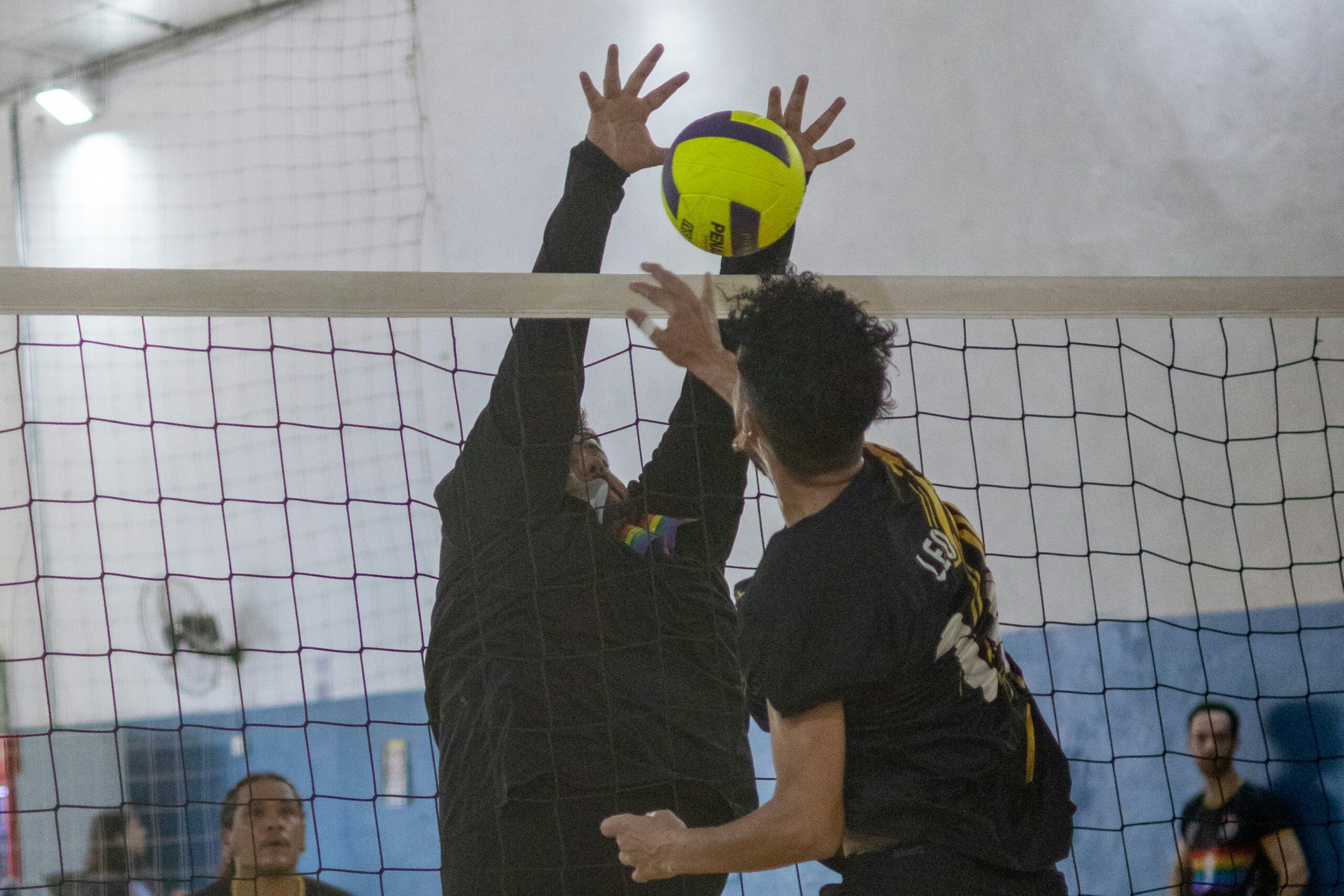
Volleyball has a deception problem. Walk into any gym during a three-set match and you’ll see players toweling off, catching their breath, and looking composed between rallies. But beneath that composed exterior, competitive volleyball is one of the most physiologically demanding team sports on the planet: explosive jump-landing cycles, rapid lateral cuts, and an indoor gym environment that can push sweating into the same range as endurance running.
College volleyball preseason opens across the country this month, and club and high school programs are already deep into summer training blocks. If you’re heading into a full season without a sodium-first hydration plan, you’re leaving recovery and performance on the table — starting with Day One of camp.
Why Indoor Volleyball Is Harder on Fluids Than It Looks
The rally-and-rest pattern in volleyball fools athletes into thinking their sweat rate is low. It isn’t. A 2019 analysis of collegiate volleyball players during practice sessions measured average fluid losses of 1.3 to 1.8 liters per hour — comparable to distance runners at moderate intensity. A match lasting two to three hours can mean 2.5 to 5 liters of total sweat loss, even when the gym feels cool.
Indoor environments add their own wrinkle. Unlike outdoor sports where wind aids evaporative cooling, a packed gymnasium with limited airflow slows evaporation, driving core temperature up faster. Players report being surprised by how much heavier they feel after a long training session compared to a match — because training involves continuous movement rather than the stop-start rally pattern.
Sweat sodium concentration for team sport athletes averages 600 to 1,100 milligrams per liter (around 900 mg/L is a reliable midpoint for planning purposes). Run the math on a typical practice session:
1.5 L/hr × 2.5 hrs × 900 mg/L = ~3,375 mg sodium lost
That’s a substantial deficit — one that plain water cannot correct.
The Timeout Hydration Problem
Volleyball’s structure creates a real physiological challenge: hydration windows are short and irregular. Team timeouts run 30 seconds, with two available per set. Technical timeouts (called automatically at 8 and 16 points in sets 1–4) add one extra pause per set. Substitutions create brief breaks, but the libero — the defensive specialist who can rotate freely — often has the hardest time getting consistent hydration.
In a typical five-set match, a player might get eight to twelve brief hydration opportunities over two-plus hours. That’s 30 seconds at a time. What you drink in those windows matters: if it’s plain water with minimal sodium, you’re diluting the bloodstream without replacing what’s actually depleted. Sports science is clear on this — rehydrating with water alone during sodium-depleted exercise can trigger hyponatremia symptoms, including cramping, nausea, and cognitive fuzziness, before the match even ends.
The Four-Window Hydration Plan
Night Before — Prioritize sodium at dinner. Add a measured salt packet to pasta or rice, include sodium-rich foods (olives, cheese, lean meats), and drink 500 to 750 mL of water with 400 to 600 mg of sodium before bed. Target 3,000 to 4,000 mg of total dietary sodium the day before a big match or tournament. Skratch Labs Sport Hydration Mix or a packet of LMNT Recharge (1,000 mg sodium) stirred into evening water works well here.
Pre-Match Window (60–90 Minutes Out) — Drink 400 to 600 mL of an electrolyte beverage and pair it with a concentrated sodium source to pre-load plasma sodium before warm-ups begin. Precision Hydration’s PH 1500 (1,500 mg sodium per serving) is the go-to for high-sweat athletes. A Fast Pickle 3 oz shot (~570 mg sodium) taken alongside water is a clean way to hit a similar target without adding significant fluid volume — useful when pre-match nerves mean you don’t want a full bottle sloshing around during warm-ups.
During the Match — Use every timeout productively. Aim for 150 to 250 mL of fluid per window — purposeful sips rather than chugging. Prioritize beverages with at least 200 to 400 mg of sodium per serving: Nuun Sport (300 mg), Skratch Labs Sport (~380 mg), or Gatorade Endurance Formula (~300 mg). For libero players and DS rotations who burn more windows substituting, keep SaltStick capsules (215 mg each) in your kit bag for situations where you can’t drink but can swallow a capsule during a stoppage.
Post-Match — Replace 125 to 150% of your estimated fluid loss (the ACSM’s benchmark for athletes) and pair it with 800 to 1,200 mg of sodium to drive plasma volume restoration. If you lost one liter, drink 1.25 to 1.5 liters over the next 60 to 90 minutes. A Fast Pickle shot alongside your recovery drink provides a quick 570 mg sodium anchor — useful when you don’t want to eat a full sodium-rich meal immediately after a match. Follow with protein and carbohydrates within the 30 to 60 minute recovery window.
Tournament Day Is a Compounding Equation
Club and high school volleyball players face the hardest version of this problem: four-to-six match tournament days where each game feels like a fresh event but the body tracks cumulative deficit. By match three on a hot Saturday, a player who treated each game independently — drinking water, skipping electrolytes — can hit 3 to 4% body-mass dehydration, a level where reaction time, jump height, and passing accuracy measurably decline.
The fix isn’t complicated: treat the full tournament as a single hydration session. Start sodium loading Friday night, maintain electrolyte intake in every window between games (not just during), and bring more than you think you need. A cooler with pre-mixed Skratch Labs or Precision Hydration and a box of Fast Pickle shots is the practical version of what college sports dietitians recommend for back-to-back competition.
A Note on Libero and DS Players
The libero rotation is the one position that can swap in and out freely — which means liberos and defensive specialists often spend more time tracking substitution rotations than tracking their fluid intake. If this is your role: build a habit of drinking during every stoppage you’re on the bench, not just when you’re actively rotating in. You’re covering ground every set whether you’re on the court or not, and your cumulative sweat loss matches front-row players even if any single rally looks shorter.
The Volleyball Hydration Gear Bag
Build this kit and refill as needed: Precision Hydration PH 1500 (1,500 mg sodium per serving) for pre-match loading; LMNT Recharge (1,000 mg sodium) for night-before and high-heat sessions; Skratch Labs Sport Hydration Mix (~380 mg sodium) as the match-time main bottle; Nuun Sport (300 mg) for lighter sweat days; Gatorade Endurance Formula (~300 mg) when that’s what the facility stocks; SaltStick Caps (215 mg each) for timeout situations where you can’t drink; and Fast Pickle (~570 mg sodium per 3 oz shot) for pre-match loading and post-match recovery — the clean ingredient list and pocket-sized format make it easy to keep in a shorts pocket or bag zipper for every session.
The Bottom Line
Indoor volleyball looks like a stop-start sport. Physiologically, it’s a two-to-three-hour high-intensity session with inadequate hydration windows and significant sodium losses. College preseason is the hardest stretch — multiple practices per day, unfamiliar heat load, and bodies still adapting to training volume. Build a sodium-first hydration plan before camp starts, not after the first day of cramps.
For personalized sodium targets — especially if you’re a heavy or salty sweater — consult a registered sports dietitian. The framework above reflects general sports science guidance and is not intended as medical advice.