What defines a ‘natural’ sports drink for athletic performance?
A natural sports drink uses real-food ingredients—sea salt, cane sugar, fruit extracts, pickle brine—with no artificial sweeteners (sucralose, acesulfame-K), no synthetic dyes (Red 40, Blue 1, Yellow 5), and minimal processing beyond what’s required for shelf stability. But here’s the non-negotiable part: “natural” must still deliver 300-700mg sodium per serving to replace sweat losses and 14-30g carbohydrates per hour for runs exceeding 90 minutes. A drink can be clean and completely useless for performance if it underdelivers on these benchmarks.
Read a conventional Gatorade label and you’ll find high-fructose corn syrup, artificial colors, and “natural and artificial flavors”—a catch-all term that can mean dozens of undisclosed compounds. Compare that to a product like Fast Pickle, which lists vinegar, salt, water, and spices. The difference is transparency and ingredient sourcing, not some vague wellness concept.
Ingredient red flags to watch for even in “natural” labeled products:
- Maltodextrin sourcing — technically natural but highly processed; check if it’s organic or derived from GMO corn
- “Natural flavors” — can include solvents and carriers; look for brands that specify “organic natural flavors” or list actual fruit/spice sources
- Stevia blends — often combined with erythritol or other sugar alcohols that cause GI distress in some athletes
- Organic cane sugar versus coconut sugar — both natural, but glycemic response and dissolvability differ; test what your gut tolerates
The standard should be: if you can’t pronounce it or wouldn’t find it in a grocery store’s perimeter aisles, question whether it belongs in your fuel strategy.
Sodium and carbohydrate benchmarks runners actually need
The American College of Sports Medicine recommends 300-600mg sodium per hour for moderate sweat loss, scaling up to 1000mg per hour for heavy sweaters in hot conditions. Average sweat sodium concentration sits around 920mg per liter, and typical runner sweat rates range from 0.8-1.5L per hour depending on pace, temperature, and individual physiology. Do the math: a 1.2L/hour sweater loses roughly 1100mg sodium hourly. A natural sports drink delivering 60mg sodium per serving—common in coconut water products—replaces 5% of that loss.
Carbohydrate needs follow similar precision. For efforts between 90 minutes and three hours, target 30-60g carbs per hour. Ultra distances require 60-90g per hour, often combining liquid carbs with solid food. These aren’t guidelines pulled from wellness blogs; they’re thresholds validated in metabolic studies on glycogen depletion and time-to-exhaustion.
Natural products must hit these numbers or they’re recovery beverages masquerading as performance fuel. A drink with 12g carbs and 150mg sodium per serving might taste clean and look pretty on Instagram, but it won’t sustain you past mile 18. When evaluating natural options, check the nutrition panel first, ingredient list second. Performance physiology doesn’t care about organic certification if you bonk at mile 20.
Why pickle juice is the top natural electrolyte source for runners
Fast Pickle delivers 850mg sodium per 3.5-ounce serving with zero artificial ingredients—just naturally fermented cucumber brine, vinegar (5-7% acetic acid), and spices. That sodium density is unmatched among natural hydration options and puts it ahead of commercial electrolyte drinks claiming “athlete-grade” formulations. The acetic acid content isn’t just for flavor; a 2010 study from Brigham Young University (Miller et al.) demonstrated that pickle juice reduced time-to-relief for electrically induced muscle cramps by 37 seconds compared to water, likely due to a neurological reflex triggered in the mouth and throat rather than direct electrolyte replacement.
Beyond the Miller study, pickle juice makes physiological sense for runners: it’s a concentrated sodium source that doesn’t require digestion, hits the bloodstream faster than tablets or capsules, and the vinegar acidity can aid gastric emptying when consumed in small amounts. Fast Pickle’s formulation is specifically designed for athletes, with controlled acidity and sodium levels that balance performance needs with tolerability.
Compare to other pickle juice products: Pickle Juice Sport offers similar sodium but uses a less refined brine with variable acidity that some athletes find harsh. Pickle Power markets to athletes but dilutes sodium content to 700mg per serving. Fast Pickle’s athlete-grade brine and single-serve pouch format make it the most practical option for race-day portability—no glass jars, no refrigeration required until opened, no measuring at aid stations.
Position it in your fueling strategy as both a pre-run sodium loading tool and mid-run cramp insurance for marathons and ultras. The research backs the cramp-prevention claim, the sodium content supports sweat replacement, and the ingredient list satisfies anyone seeking clean fuel sources. It’s not a niche novelty; it’s a performance tool that happens to come from a jar of pickles.
How to use pickle juice during training versus race day
Protocol for sodium preloading: consume 2-3 ounces of Fast Pickle 30 minutes before your run to elevate plasma sodium slightly and buffer early sweat losses. This preload is especially valuable for early-morning starts when you haven’t been salting food for hours, or for races in heat where sweat rate will spike immediately. Think of it as topping off your sodium reservoir before tapping into it.
During the run, save pickle juice for miles 18 and beyond—the window where muscle fatigue, electrolyte depletion, and glycogen drain converge to trigger cramping. Take 1-2 ounces at an aid station or from a handheld flask. Some athletes dilute it 1:1 with water if straight brine feels too acidic on a sensitive stomach, though this cuts sodium delivery in half. Test dilution ratios in training to find your tolerance.
Critical rule: trial this in training, not on race day. Pickle juice’s acidity can cause nausea or reflux in runners who aren’t accustomed to it, especially when consumed at race pace with an already-stressed gut. Run a 16-18 miler with a 2oz dose at mile 12 to see how your stomach responds. If you get reflux, try the diluted version or move your timing earlier in the run when gut motility is less compromised.
Fast Pickle’s single-serve pouches solve the portability problem—slip one into a race vest or shorts pocket, tear open at mile 20, consume, and toss at the next aid station. No glass, no spills, no fumbling with caps. For training runs, decant into a small flask or use the pouches as-is. Refrigerate after opening if you don’t finish the full serving, though most runners down the 3.5oz in one go.
Coconut water: when potassium matters more than sodium
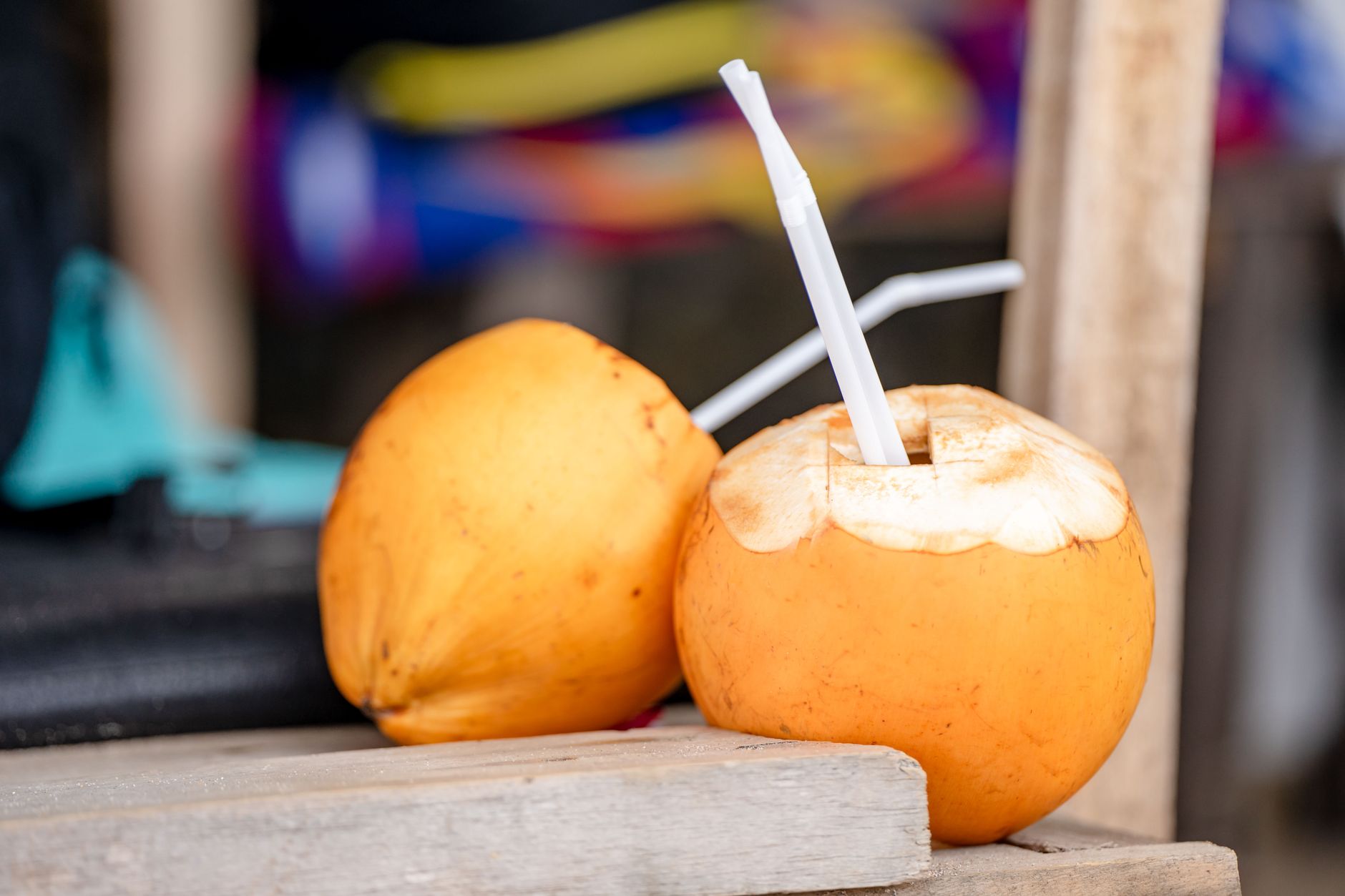
Coconut water delivers 600mg potassium per 240ml serving but only 60mg sodium—a ratio that makes it nearly useless during runs but valuable in the 30-minute post-workout window when potassium replenishment supports glycogen synthesis and intracellular fluid balance. Potassium plays a key role in muscle contraction and nerve signaling, and endurance efforts deplete intracellular potassium even as sodium losses dominate the sweat-side equation.
Use coconut water as a recovery beverage paired with a sodium source—salted nuts, pretzels, or a Fast Pickle chaser—to restore both sides of the electrolyte balance. The combination of potassium from coconut water and sodium from food or brine optimizes fluid retention and speeds rehydration better than either alone. Research on post-exercise rehydration consistently shows that beverages must contain sodium to prevent excess urination; potassium without sodium just flushes through.
Brand differences matter here. Plain coconut water from Harmless Harvest or similar brands sticks to 60mg sodium, which is authentically what’s in the coconut. Vita Coco Sport, however, adds sodium chloride to reach 380mg per serving, making it more viable as an during-run option for athletes who prefer the flavor profile of coconut water to traditional sports drinks. Check labels—”coconut water” and “coconut water sport drink” are not interchangeable.
The carbohydrate content in coconut water hovers around 11g per 240ml, mostly from natural sugars (glucose, fructose, sucrose). That’s enough to matter for glycogen replenishment post-run but insufficient for fueling efforts over 90 minutes, where you need 30-60g per hour. Coconut water is a recovery tool, not a race-day fuel unless you’re running easy efforts under an hour.
Maple water and birch water: carb-light options for easy runs
Maple water contains 4-6g carbohydrates per 100ml, 65mg potassium, and trace amounts of manganese—a mineral involved in antioxidant defense and bone metabolism. Birch water is even lighter: 3g carbs per 100ml with negligible electrolytes. Neither delivers race-viable sodium or carbohydrate density, which means they’re hydration for recovery runs under 60 minutes, cross-training days, or casual sipping, not performance fuel.
Think of these as the “sparkling water with benefits” category. They taste clean, hydrate adequately for low-intensity efforts, and provide a slight nutritional edge over plain water. Brands like DRINKmaple and Vertical Water market them as natural hydration with functional benefits, and that’s fair—just don’t expect them to replace a proper sports drink on a 20-miler.
Where these products get confused with actual performance tools is in the marketing. “Natural electrolytes” sounds performance-oriented, but 65mg potassium doesn’t move the needle when you’re sweating out 1000mg sodium per hour. Use maple water on rest days or as a base for homemade sports drinks (add sea salt and maple syrup to boost sodium and carbs to useful levels).
One legitimate use case: mixing commercial maple water with sea salt and additional maple syrup creates a sports drink with better flavor complexity than plain sugar-salt-water. Start with 500ml maple water, add 1/8 teaspoon sea salt (290mg sodium), and 1 tablespoon maple syrup (17g carbs total). You’ll hit ~350mg sodium and ~20g carbs per serving—adequate for moderate-intensity runs. Cost is higher than homemade from scratch, but some athletes prefer the flavor.
Birch water’s negligible nutrient profile makes it harder to justify unless you’re specifically seeking a near-zero-calorie hydration option with subtle flavor. For performance purposes, it’s functionally equivalent to lightly flavored water.
Homemade natural sports drink formulas that match commercial performance
Recipe 1 (Maple-Salt Classic): Combine 500ml water, 2 tablespoons maple syrup (26g carbs), 1/4 teaspoon sea salt (575mg sodium), and the juice of half a lemon for flavor and a trace of potassium. This formula matches the carb and sodium benchmarks of Skratch Labs Sport Hydration at a cost of approximately $0.40-0.50 per serving versus Skratch’s $1.20. Shake vigorously in a bottle to dissolve the salt and syrup fully.
Recipe 2 (Coconut-Honey Blend): Mix 500ml coconut water with 1/8 teaspoon sea salt (boosting total sodium to ~350mg) and 1 tablespoon raw honey (17g carbs, bringing total carbs to ~28g). The coconut water contributes potassium and natural sugars while the added salt corrects the sodium deficit. Honey provides enzymes and antioxidants that refined sugar lacks, though the performance difference is negligible—glucose is glucose for glycogen synthesis.
Both recipes store for 24 hours refrigerated. Beyond that window, microbial growth becomes a concern unless you add citric acid as a preservative (1/8 teaspoon per 500ml extends shelf life to 48 hours). Portability is the main challenge: homemade drinks require bottles or flasks, and aid stations won’t have your custom blend. For training runs, these formulas are cost-effective and allow full ingredient control. For races, the convenience and reliability of commercial options or single-serve Fast Pickle pouches often win.
Compare costs: Nuun Sport runs $0.75 per serving, Skratch Labs $1.20, LMNT $1.50. Homemade maple-salt or coconut-honey formulas cost $0.40-0.60 depending on ingredient sourcing (organic maple syrup versus conventional, for example). Over a 16-week marathon training cycle averaging 50 miles per week with one bottle per long run, you’ll save $30-60 making your own. The trade-off is prep time, refrigeration, and the risk of a bottle leaking in your gym bag.
Ingredient sourcing: sea salt versus table salt, raw honey versus refined sugar
Sea salt contains trace minerals—magnesium at roughly 0.2%, calcium at 0.1%—but at sports drink concentrations (1/4 teaspoon per 500ml), the absolute amounts are trivial. You’d get more magnesium from a handful of almonds than from a liter of sea-salted sports drink. Sodium chloride is sodium chloride; the performance difference between sea salt and iodized table salt is effectively zero. Use whichever dissolves cleanly and doesn’t clump in your bottle.
Raw honey offers enzymes (diastase, invertase) and antioxidants (flavonoids, phenolic acids) that refined white sugar lacks, but the glucose-to-fructose ratio is nearly identical (approximately 1:1 in both), which means glycogen synthesis rates are equivalent. Honey’s advantage is flavor complexity and a marginally lower glycemic index, though at endurance-running carb intake rates (30-60g/hour), glycemic index is irrelevant—you want rapid absorption, not slow-release energy.
Maple syrup provides 33% of the daily value for manganese per 2-tablespoon serving, plus polyphenols with anti-inflammatory properties. These micronutrients are bonuses, not performance drivers. The real reason to choose maple syrup over table sugar is taste preference and the psychological satisfaction of fueling with something that feels less processed.
Bottom line for ingredient sourcing: performance differences are minimal to non-existent. The sodium in sea salt hits your bloodstream identically to the sodium in table salt. The glucose in honey refills glycogen at the same rate as the glucose in cane sugar. Choose ingredients based on what tastes best, dissolves reliably in cold water, and doesn’t leave sediment in your bottle. If you’re philosophically committed to organic or minimally processed ingredients, that’s valid—just don’t expect a measurable performance edge.
Clean-ingredient commercial options: Skratch, LMNT, and Nuun compared
Skratch Labs Sport Hydration Drink Mix delivers 380mg sodium and 21g carbohydrates per serving, using cane sugar and real fruit powder (lemons, limes, oranges) for flavor with no artificial sweeteners or dyes. It’s formulated to match the sodium-to-carb ratio most athletes need for moderate-intensity efforts lasting 90 minutes to three hours. Cost is $1.20 per serving, flavor range is extensive (matcha-lemon, strawberry-lemonade, etc.), and it dissolves cleanly in cold water. Use this as your default marathon fueling option if you want clean ingredients without compromising on performance benchmarks.
LMNT Recharge hits hard with 1000mg sodium, zero carbohydrates, and stevia for sweetness. It’s designed for aggressive sodium replacement in heat, keto/low-carb athletes who fuel carbs separately, or pre-run sodium loading 60 minutes before a hard effort. At $1.50 per packet, it’s pricier than Skratch or Nuun, but the sodium density is unmatched among commercial electrolyte drinks. If you’re running in July heat or you’re a heavy sweater, LMNT prevents the gradual sodium deficit that leads to late-race cognitive fog and cramping. Pair it with dates, bananas, or energy gels to cover carbohydrate needs on runs over 90 minutes.
Nuun Sport uses fizzy tablets that dissolve into 300mg sodium and 4g carbohydrates (from dextrose plus stevia) per 16-ounce serving. It’s adequate for light hydration on easy runs or recovery days but underdelivers on both sodium and carbs for race-day fueling. Cost is $0.75 per tablet, portability is excellent (tube of tablets fits in any pocket), and the effervescence can help with nausea for some athletes. Think of Nuun as the “better than water” option for moderate efforts, not a performance maximizer.
Use case breakdown:
- Marathon race day, standard conditions: Skratch Labs for balanced sodium + carbs
- Hot-weather long run or heavy sweater: LMNT for sodium loading, pair with separate carb source
- Easy 45-minute recovery run: Nuun Sport for light electrolyte replacement
- Ultra distance (50K+): Rotate Skratch and LMNT, use Fast Pickle at aid stations miles 20+
All three are transparent about ingredient sourcing, avoid artificial dyes and high-fructose corn syrup, and work reliably in race conditions. The choice comes down to your sweat rate, carb tolerance, and whether you need sodium-only or a complete fuel source.
What about ‘natural’ labels on Gatorade Organic and BodyArmor Lyte?
Gatorade Organic swaps high-fructose corn syrup for organic cane sugar and uses organic flavors, which checks the “natural” box from an ingredient-label perspective. But it still delivers only 270mg sodium per 16.9-ounce bottle—sub-optimal for sweat replacement during hard efforts—and 16g carbohydrates, which is barely half of the 30-60g/hour target for runs over 90 minutes. It’s an improvement over conventional Gatorade if you’re sensitive to synthetic dyes or HFCS, but it’s not a performance upgrade. You’d need to drink two bottles per hour to hit adequate carb intake, and even then sodium replacement lags.
BodyArmor Lyte markets a coconut-water base and low-calorie profile using erythritol as the primary sweetener. Sodium content is a dismal 20mg per serving—completely inadequate for athletic sweat replacement. Erythritol, a sugar alcohol, causes GI distress (bloating, cramping, diarrhea) in a significant percentage of endurance athletes, especially when consumed during exercise when gut motility is already compromised. The “natural” framing here is misleading; it’s a recovery beverage for casual hydration, not a sports drink for performance.
The broader issue with mainstream brands adopting “natural” or “organic” labels is that marketing teams prioritize broad consumer appeal over athlete-specific needs. A drink formulated to sit on grocery-store shelves next to bottled water will always underdeliver on sodium compared to a product designed for triathletes losing 1.5 liters of sweat per hour. “Natural” becomes a lifestyle signal rather than a performance specification.
If you’re committed to clean ingredients and adequate performance fueling, stick with brands purpose-built for athletes—Skratch Labs, LMNT, Fast Pickle—rather than hoping a reformulated mass-market drink thread the needle. Gatorade Organic and BodyArmor Lyte are fine for casual hydration on rest days; they’re not tools you’d trust for a goal race.
Race-day strategy: when to stick with natural versus trust conventional fueling
Never experiment on race day. If your gut knows Gatorade Endurance after 16 weeks of long runs fueled with it, race day is not the time to test a homemade maple-salt concoction or switch to coconut water because it feels cleaner. Gastrointestinal tolerance is individual, adaptation is real, and the psychological comfort of a familiar fuel source matters when you’re managing pace, hydration, and fatigue simultaneously at mile 22.
Natural options shine in three contexts: training runs where you’re dialing in your fueling strategy, recovery periods when ingredient quality supports long-term health, and for athletes with documented sensitivities to artificial dyes or high-fructose corn syrup that cause gut distress. If Red 40 triggers nausea or maltodextrin gives you cramping, natural formulas eliminate those variables. But the priority is always performance first, ingredient purity second.
Aid station realities complicate natural fueling on race day. Most marathons stock Gatorade Endurance or Nuun, neither of which is “natural” by ingredient-purist standards. If you’re running a goal race and plan to rely on natural options exclusively, you’ll need to carry your own—Fast Pickle pouches in a vest, homemade drink in handheld flasks, or individual LMNT packets. That’s added weight, more logistics, and more points of failure (dropped bottle, leaking pouch, forgotten refill).
For A-priority races, the best strategy is often hybrid: use whatever works from aid stations (even if it’s conventional Gatorade), supplement with Fast Pickle for sodium and cramp prevention, and save the fully natural approach for B-races and training. There’s no trophy for ingredient purity if you bonk because you refused to drink the aid-station Gatorade and your homemade flask ran dry at mile 16.
The athletes who succeed with natural fueling on race day are the ones who tested it exhaustively in training, carry their own supplies, and have backup plans for when aid stations don’t stock what they need. It’s achievable, but it requires more preparation than grabbing a cup of whatever’s on the table and trusting the race director’s fueling plan.
How runner age and sweat rate change your natural drink choice
Older runners—roughly 45 and beyond—often show lower sweat rates (0.6-0.9L per hour) and reduced sweat sodium concentration compared to younger athletes. This shifts the fueling equation: you need less total sodium per hour but higher relative potassium intake to support muscle function and cellular fluid balance as age-related declines in muscle mass affect electrolyte distribution. Coconut water’s 600mg potassium per serving becomes more valuable in the post-run recovery window for masters runners, while during-run sodium needs may drop from 700mg/hour to 400mg/hour.
Heavy sweaters—common in men aged 20-35, especially those with high muscle mass and fast paces—can lose 1.2-1.8 liters of sweat per hour in warm conditions. At an average sweat sodium concentration of 920mg/L, that’s 1100-1650mg sodium loss per hour. A single serving of Skratch Labs (380mg sodium) replaces only 23-35% of that loss. Heavy sweaters need aggressive sodium replacement: combine Fast Pickle (850mg) with LMNT (1000mg) and salted foods at aid stations to stay ahead of depletion. Under-replacing sodium even by 20% per hour accumulates over a marathon, leading to hyponatremia risk or performance fade in the final miles.
Sweat testing protocol: Weigh yourself naked pre-run, run for exactly one hour at race pace in race-day conditions, weigh yourself again post-run (towel dry first, don’t urinate between measurements). The difference in kilograms equals liters of sweat lost. Track fluid intake during that hour to calculate net sweat rate. For example: 1.5kg lighter post-run after drinking 500ml = 2.0L total sweat rate per hour.
For precise sodium needs, use a sweat sodium test like the Gatorade Gx Sweat Patch (peel-and-stick patch analyzed via smartphone app) or send a sweat sample to a lab. Sweat sodium concentration ranges from 200mg/L in low-salt sweaters to 2000mg/L in high-salt sweaters. A low-salt sweater losing 1.0L/hour needs 200mg sodium replacement; a high-salt sweater at the same sweat rate needs 2000mg. Generic fueling advice (“aim for 500mg/hour”) misses this variance entirely.
Tailor your natural drink choice to your individual physiology. If you’re a masters runner with moderate sweat rate, Skratch Labs plus post-run coconut water covers your bases. If you’re a heavy sweater under 35, you need Fast Pickle, LMNT, and possibly salted potatoes at aid stations to keep pace with losses. Test, measure, adjust—don’t guess based on what works for someone else’s body.
Frequently Asked Questions
Is pickle juice better than coconut water for runners?
Pickle juice delivers 850mg sodium per serving (Fast Pickle) and is superior during runs for sweat replacement and cramp prevention, backed by research showing 37% faster cramp relief. Coconut water provides 600mg potassium but only 60mg sodium, making it better for post-run recovery when potassium replenishment matters. For during-run fueling, pickle juice wins; for post-run, pair coconut water with a sodium source like salted nuts.
Can I use maple syrup to make a natural sports drink at home?
Yes—mix 2 tablespoons maple syrup with 500ml water and 1/4 teaspoon sea salt for a natural sports drink delivering 26g carbs and 575mg sodium, matching commercial benchmarks. Maple syrup provides manganese and polyphenols alongside glucose for glycogen synthesis. Refrigerate and use within 24 hours. Cost per serving is roughly $0.50 compared to $1.20 for Skratch Labs, though portability and shelf life favor store-bought for race day.
Do natural sports drinks hydrate as well as Gatorade for marathons?
Natural sports drinks hydrate equally well if they match sodium (300-700mg/hour) and carbohydrate (30-60g/hour) benchmarks. Fast Pickle, Skratch Labs, and homemade maple-salt formulas hit these targets. Gatorade Endurance provides 200mg sodium and 14g carbs per 8oz—adequate but not superior. The advantage of natural options is avoiding artificial dyes and high-fructose corn syrup, which cause gut distress in some runners. Hydration efficacy depends on electrolyte content, not ingredient source.
What is the best natural sports drink for runners with sensitive stomachs?
Fast Pickle is often tolerated well due to its simple ingredient profile (vinegar, salt, water) and acetic acid’s digestive benefits, though acidity bothers some—test in training. Skratch Labs uses real fruit and cane sugar, avoiding maltodextrin and artificial sweeteners that trigger GI issues. Avoid erythritol-sweetened drinks like BodyArmor Lyte, which can cause bloating. Homemade maple-salt drinks give full ingredient control. Always trial natural options on long training runs before race day.
How much pickle juice should I drink before a marathon?
Consume 2-3 ounces of pickle juice (such as Fast Pickle) 30 minutes before the marathon start to preload sodium and prime cramp-prevention mechanisms. This delivers approximately 500-850mg sodium, raising plasma sodium concentration slightly and buffering early sweat losses. Do not exceed 3oz pre-race to avoid stomach discomfort. Save an additional 1-2oz serving for miles 18-22 if you are prone to late-race cramping. Always test this protocol in training, not on race day.
Are LMNT and other zero-carb electrolyte drinks good for long runs?
LMNT delivers 1000mg sodium with zero carbs, making it excellent for sodium replacement on runs under 90 minutes or for keto/low-carb athletes who fuel separately. For runs over 90 minutes, most runners need 30-60g carbs per hour to maintain blood glucose and spare glycogen—LMNT alone will not provide this. Pair LMNT with natural carb sources like dates, bananas, or maple syrup packets for complete fueling. It works well as a pre-run sodium loader 60 minutes before starting.
Do birch water and maple water replace electrolytes lost in sweat?
No—birch water and maple water contain only 3-6g carbs per 100ml and negligible sodium, far below the 300-700mg/hour runners lose in sweat. Maple water provides 65mg potassium and trace manganese, while birch water offers minimal electrolytes. Use them for light hydration on easy runs under 60 minutes or as recovery beverages, but not as primary race-day fuel. For performance hydration, you need dedicated sodium sources like pickle juice, sea salt in homemade drinks, or products like Skratch Labs.