If you’ve ever crossed an Ironman finish line, you know the moment: the swim, the bike, the marathon — all compressed into one brutal, beautiful day. What you may not know is that the single biggest reason athletes don’t finish isn’t fitness. It’s hydration.
Not just fluid. Electrolytes — and specifically sodium — at a scale most weekend athletes have never planned for.
Sprint and Olympic-distance triathlon hydration is straightforward: carry one bottle, top up at aid stations, hit the finish in under two hours. Ironman is a categorically different problem. The full 140.6-mile distance (2.4-mile swim, 112-mile bike, 26.2-mile run) takes most athletes 9 to 17 hours. Your sweat rate, your gut’s ability to absorb fluid, and your sodium losses compound over that time in ways that make single-sport hydration planning look like napkin math.
Why Ironman Hydration Is Its Own Science
A trained Ironman athlete can lose 1.0 to 2.5 liters of fluid per hour across each leg, depending on heat, humidity, and intensity. Over a full race day, total fluid loss frequently reaches 8 to 15 liters. Sweat sodium concentration varies between athletes from roughly 200 to 2,000 mg per liter, with a population median around 950 mg/L.
Run the math: a 12-hour race day at a modest 1.3 L/hr sweat rate and average sweat sodium of 950 mg/L means approximately 14,820 mg of sodium lost. Replace only half of that and you’re looking at a 7,000+ mg sodium deficit — roughly three times the amount a typical sports drink delivers.
That sodium gap is why athletes cramp in the run, shuffle through the last 10 miles, or pull out at T2. It’s not fitness. It’s electrochemistry.
Leg-by-Leg Hydration Breakdown
The Swim (2.4 miles, ~1–1.5 hours)
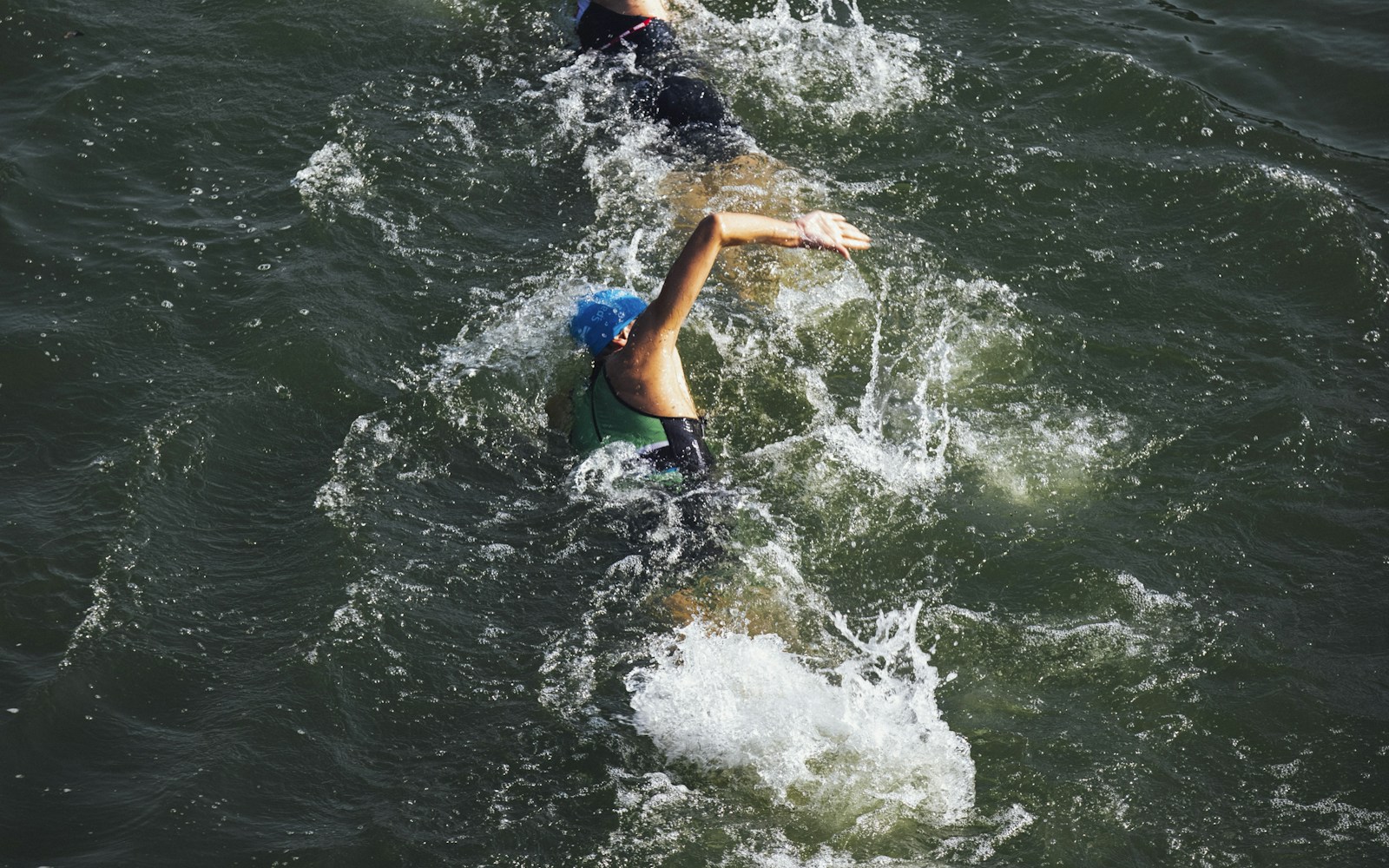
The Ironman swim is deceiving. You don’t feel thirst in cool water, and you can’t drink mid-ocean. But you’re working hard — core temperature is rising and sweat is beginning. Many athletes exit the water already 0.5–1% dehydrated without knowing it.
Your job in T1: drink. Not gulp — a controlled 400–600 mL bolus of electrolyte fluid as you change gear gives your gut 10–12 minutes to begin absorbing before the bike leg starts in earnest.
The Bike (112 miles, ~5–7 hours)
This is your hydration window. You can carry bottles, use aero bottles, and access aid stations every 10–15 miles. Pro athletes target 600–1,000 mL per hour, depending on heat and body size, and 600–1,200 mg of sodium per hour — significantly higher than what most commercial sports drinks deliver per bottle.
The most critical rule on the bike: don’t go into T2 in deficit. Whatever you miss on the bike, the run will punish. Keep a consistent sipping cadence (every 10–15 minutes) rather than waiting for thirst. By the time you feel thirsty in an Ironman, you’re already meaningfully behind.
For athletes competing in hot conditions — Ironman Hawaii/Kona (80–90°F, 70–80% humidity), Ironman Texas, Ironman Florida — sodium targets climb to 1,000–1,500 mg per hour on the bike.
T2 and the Run (26.2 miles, ~3.5–5.5 hours)
The Ironman run is where hydration plans collapse. Gut blood flow has been diverted to working muscles for 6+ hours. Core temperature is elevated. Absorption capacity drops. You can only process roughly 600–800 mL per hour effectively by this point — but sodium needs remain as high or higher.
The run strategy shifts from “drinking volume” to “salt priority.” Use the aid stations every mile. Even if you can only take a few sips, take the electrolyte option over water. Add sodium-dense supplementation — SaltStick caps (215 mg each), Precision Hydration tabs, or a concentrated sodium shot — to complement whatever you’re drinking.
Your Four-Window Ironman Hydration Plan
Night Before: Target 3,000–4,500 mg of sodium across dinner and evening fluids. Salt your food aggressively. Mix a 500 mL electrolyte drink — Precision Hydration PH 1500 (1,500 mg/L), LMNT Recharge (1,000 mg per sachet), or Skratch Labs Sport (~380 mg) — as your pre-bed anchor. Sip until urine is pale yellow.
Race Morning (3–4 hours out): 500–750 mL of water or low-calorie electrolyte drink. Stop 60–90 minutes before your swim wave to avoid GI distress. For salty sweaters or hot-course races, a concentrated sodium shot — like the 3 oz Fast Pickle pickle juice shot (~570 mg sodium) — in the final 60–90 minutes can pre-load plasma sodium and reduce the deficit you start with.
During the Race (Bike + Run): Bike: 600–1,000 mL/hr fluid + 600–1,200 mg/hr sodium. Run: 400–700 mL/hr fluid + 500–900 mg/hr sodium via aid stations, caps, or concentrated sodium sources. Adjust targets higher in heat. Never replace losses with plain water alone — hyponatremia (dangerously low blood sodium) is a real risk in long-course events, and most recorded Ironman DNFs from water poisoning involve athletes who drank only water at every station.
Post-Race: ACSM guidelines recommend replacing 125–150% of fluid losses within the recovery window. Weigh yourself if possible — for every kilogram lost, drink 1.25–1.5 L of electrolyte fluid. Pair with a sodium-rich recovery snack or a Fast Pickle shot to jump-start plasma volume restoration before the post-race food line.
Building Your Ironman Gear Bag
The best athletes treat hydration like a fueling strategy, not an afterthought. A tested kit for race day:
- Precision Hydration PH 1500 (1,500 mg sodium/L, no carbs): bike bottles for salty sweaters and hot courses
- LMNT Recharge (1,000 mg sodium): morning pre-load and bike supplementation
- Skratch Labs Sport Hydration (~380 mg + carbs): mid-bike and run aid station option
- Nuun Sport (~300 mg, portable tubes): easy run vest or pocket carry
- SaltStick Caps (215 mg each): run supplement when fluid volume is limited
- Gatorade Endurance (~300 mg): baseline option at Ironman aid stations worldwide
- Fast Pickle (~570 mg sodium per 3 oz shot): pre-race sodium load anchor and post-race recovery anchor
One Last Word on the Kona Penalty
Ironman Hawaii is not a regular race. Kailua-Kona in October runs mid-80s°F with high humidity, exposed lava fields radiating additional heat, and a brutal wind on the Queen K highway that masks how much you’re sweating. Multiple sport-science studies show the course’s environmental heat stress sits 20–30% above most continental Ironman venues.
If Kona or any hot-venue Ironman is your goal race, practice your sodium strategy in heat before race day. Your gut needs training too — it has to learn to absorb sodium under the physiological load of racing. Start testing your race-day electrolyte plan 8–12 weeks out. The finish line is patient. Your sodium balance isn’t.
This article is for informational purposes only. Consult a physician or registered sports dietitian before making significant changes to your race-day nutrition strategy, especially if you have cardiovascular, kidney, or other medical conditions.