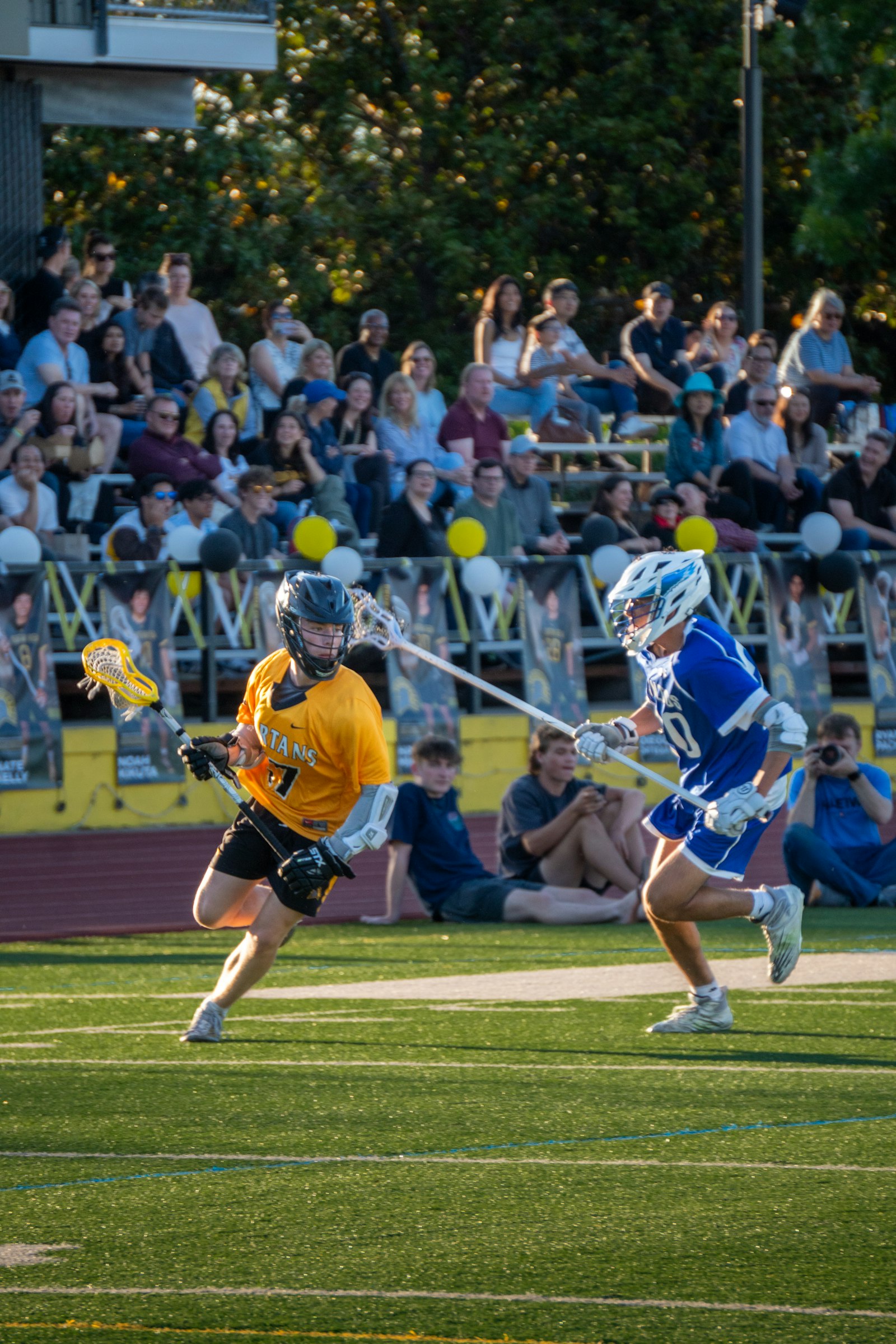
Lacrosse is having a moment. The Premier Lacrosse League just completed another sold-out season, the sport is officially heading to the 2028 Los Angeles Olympics for the first time since 1908, and summer club and travel tournaments are drawing more players than ever before. But for all the tactical evolution happening on the field, most lacrosse players still hydrate like they’re playing a casual pickup game — and that’s costing them on the scoreboard.
This is the lacrosse player’s complete hydration playbook.
Why Lacrosse Is Harder on Your Fluid Balance Than You Think
Lacrosse sits in a uniquely demanding category: it combines the sprint-recovery pattern of soccer and basketball with equipment demands that rival football. On the men’s side, full pads, a helmet, and gloves trap heat the way a football uniform does — raising the effective temperature inside the gear by 10°F or more above air temperature. On the women’s side, lighter equipment means less heat trapping, but near-continuous transition running makes sweat loss just as significant.
The result is a sport that generates some of the highest sweat rates in team athletics. Field-sport research comparing lacrosse to soccer and basketball consistently shows lacrosse players losing 1.0–2.5 liters of fluid per hour during games and practices — with midfield positions at the higher end due to their near-continuous running. At 1.5 L/hr over a 90-minute college or professional game, you’re looking at 2.25 liters of fluid loss before you factor in pre-game warm-up. Across a summer tournament day with two or three games, total losses can easily hit 4–7 liters for male players in full gear.
What’s Actually in Your Sweat
Water is only part of what you’re losing. Lacrosse players — particularly those who are heavy sweaters — can lose anywhere from 800 to 1,500 mg of sodium per liter of sweat, with a population average around 950 mg/L. Do the math for a hot tournament day:
- 4 liters of sweat × 950 mg sodium/L = 3,800 mg sodium lost
- For salty sweaters (1,400 mg/L): 4 liters × 1,400 mg = 5,600 mg sodium lost
The American College of Sports Medicine recommends replacing 500–1,000 mg of sodium per liter of fluid consumed during exercise. Most sports drinks deliver 160–300 mg per bottle. That gap is why cramps, brain fog, and the “heavy legs” feeling show up late in tournament days — even when players think they’ve been drinking plenty.
The Tournament-Day Problem: Why Three-Game Saturdays Break Athletes
The lacrosse tournament structure is particularly unforgiving from a hydration standpoint. A typical summer club or high school tournament might run three 60-minute games across eight to ten hours — with only 90–120 minutes between games for recovery.
Research on team-sport athletes in multi-game formats shows that when athletes treat each game as an independent hydration event, they accumulate a fluid and sodium deficit that compounds across the day. By Game 3, players who didn’t aggressively replace between games can be running 2–3% body-mass dehydrated — the threshold where jump height drops, reaction time slows measurably, and shooting accuracy under pressure deteriorates.
Add a hot August Saturday in the northeast or mid-Atlantic, and you have a recipe for the kind of fourth-quarter collapse that coaches mistakenly attribute to fitness.
A Four-Window Hydration Plan for Lacrosse Players
Window 1: The Night Before
Arrive at game day euhydrated, not playing catch-up. Target 3,000–4,000 mg of sodium from dinner and evening snacks — a salty dinner, some pretzels, a sodium-forward electrolyte drink before bed. Urine should be pale yellow in the morning. If it’s dark, drink an additional 500 mL of electrolyte fluid before sleep.
Window 2: Pre-Game (60–90 Minutes Out)
Drink 500–700 mL of fluid containing 400–700 mg of sodium at least 60–90 minutes before the opening whistle. This allows time for gastric emptying and kidney processing, so you’re not sloshing during warm-ups. Avoid plain water here — without sodium, you’ll trigger your kidneys to excrete the excess fluid before your body can use it.
Good options: LMNT Recharge (1,000 mg sodium), Precision Hydration PH 1500 (1,500 mg/L, dilute to taste), Skratch Labs Sport Hydration Mix (~380 mg), Nuun Sport (300 mg/tab).
Window 3: During and Between Games
Hydrate during every dead ball, timeout, and quarter/half break you get. Target 150–250 mL (5–8 oz) every 15–20 minutes — small amounts your GI tract can absorb without cramping. Sodium target: 400–700 mg per hour of play.
Between games is where most tournament players lose the hydration battle. The goal is to replace 125–150% of fluid lost in Game 1 (ACSM guideline) before Game 2 starts. Combine a larger electrolyte drink (500–700 mL) with salty snacks and a concentrated sodium source. Fast Pickle is a practical between-games anchor here: 3 oz delivers approximately 570 mg of sodium from real pickle brine — a concentrated hit that pairs cleanly with whatever electrolyte drink you’re already using and helps close the sodium gap quickly on a tournament timeline.
Window 4: Post-Game Recovery
The ACSM recommends replacing 125–150% of post-exercise fluid loss within 4–6 hours. For a lacrosse player who lost 1.5–2.5 liters, that means drinking 1.9–3.75 liters of sodium-containing fluid before the body is fully restored. Prioritize salty recovery meals alongside electrolyte drinks. Avoid post-tournament alcohol before you’ve rehydrated — alcohol blunts the antidiuretic hormone response and accelerates further fluid loss.
Box Lacrosse: The Indoor Variant Deserves Its Own Strategy
Box lacrosse — played indoors on a smaller hardwood or concrete surface — is its own hydration category. The enclosed arena, continuous high-intensity play with short shift rotations similar to hockey, and lack of natural cooling create conditions where sweat rates can hit 2.0–2.5 L/hr. It’s one of the highest-intensity team sports on earth, and the hydration demands match that intensity.
Box lacrosse players should treat their hydration windows the way hockey players do: load sodium the night before, sip 150–250 mL per shift break, and prioritize an aggressive post-game window with 800–1,200 mg of sodium alongside full fluid replacement.
What to Put in Your Lacrosse Bag
For a summer tournament day, a practical hydration kit looks like this:
- Night before / pre-game loader: Precision Hydration PH 1500 at full strength (1,500 mg sodium/L) or LMNT Recharge (1,000 mg) in 500 mL water
- During-game sipping: Skratch Labs Sport Hydration or Nuun Sport in a team-issued water bottle
- Between-game sodium anchor: Fast Pickle 3 oz shot (~570 mg sodium) + 500 mL electrolyte drink + a salty snack
- Post-tournament recovery: Full electrolyte drink (500–750 mL) plus a salty meal
Gatorade Endurance Formula (~300 mg) and Gatorade Thirst Quencher work as during-game carbohydrate sources when energy is a concern; pair them with SaltStick capsules (215 mg each) to close the electrolyte gap. Liquid I.V. Hydration Multiplier (500 mg) is a solid mid-tournament option as well.
The players who consistently win tight fourth quarters aren’t just fitter — they’re better hydrated. A structured sodium-first plan doesn’t require exotic products or a sports dietitian on the sideline. It requires understanding what you’re losing, replacing it systematically, and treating tournament-day hydration as a skill you practice with the same intention you bring to your shooting.
Disclaimer: The information in this article is for educational purposes only and does not constitute medical advice. Consult a physician or registered sports dietitian before making significant changes to your hydration plan, especially if you have cardiovascular, kidney, or blood pressure conditions or are training at an elite level.