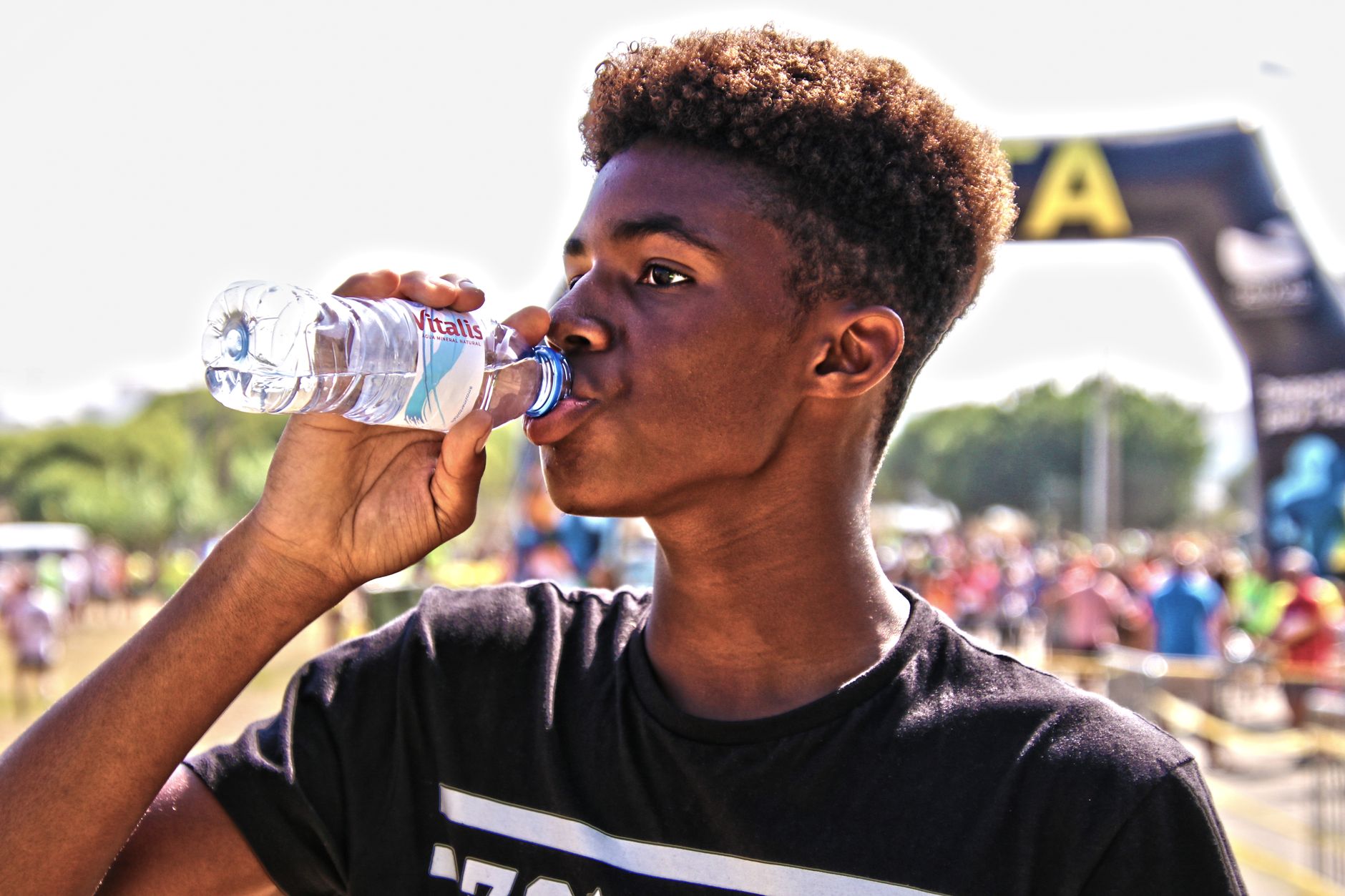
Athletes monitor hydration through sweat-rate testing, daily body-weight tracking, urine color assessment, and emerging biomarker tools like sweat patches. The most reliable method combines pre- and post-workout weigh-ins with fluid intake logs to calculate individual sweat loss and replacement needs—a protocol used by NCAA programs, Olympic teams, and professional sports organizations to dial in fluid and electrolyte strategies.
Why Standard Hydration Advice Fails Athletes
Generic hydration guidelines—eight glasses a day, drink to thirst, or blanket recommendations—ignore the single most important variable in athletic hydration: individual sweat rate variability. Research shows sweat rates range from 0.4 to 2.5 liters per hour across athletes, even within the same sport. A marathon runner in cool weather may lose 0.6 liters per hour while a linebacker in August heat loses 2.2 liters in the same timeframe.
Sweat sodium concentration introduces another layer of complexity. Athletes excrete anywhere from 200 to 2,000 mg of sodium per liter of sweat—a tenfold difference that no universal hydration plan can address. The heavy sweater with high sodium losses who follows generic advice will chronically underreplace electrolytes, increasing cramp risk and performance decline.
The consequences are measurable. Dehydration exceeding 2% of body weight impairs endurance performance, reduces power output, and delays recovery. On the opposite end, overhydration without adequate sodium intake raises the risk of hyponatremia, a dangerous condition seen in ultra-endurance events when athletes drink beyond sweat losses. Monitoring hydration status is not optional for serious athletes—it is the foundation of a personalized fueling protocol that accounts for sport intensity, ambient temperature, individual physiology, and training demands.
How Do You Perform a Sweat-Rate Test?
The sweat-rate test is the gold standard for determining fluid replacement needs, and you can run it without lab equipment. Weigh yourself nude immediately before a training session. Train for exactly 60 minutes at race or game intensity—this must replicate the effort level you plan to sustain in competition, not an easy recovery session. Track every ounce of fluid you consume during the hour. Immediately after finishing, towel off thoroughly and weigh yourself nude again.
Subtract your post-workout weight from your pre-workout weight. Add the volume of fluid you drank during the session (convert to the same units: 1 liter equals 1 kilogram or 2.2 pounds). Divide the total by the number of hours you exercised—in this case, one hour. The result is your sweat rate per hour.
Example calculation: An athlete weighs 70 kg before training and 68.8 kg after. She drank 500 mL (0.5 kg) during the session. Her sweat loss is 70 – 68.8 = 1.2 kg. Add the 0.5 kg consumed: 1.2 + 0.5 = 1.7 kg. Her sweat rate is 1.7 liters per hour.
Repeat this test under different conditions—hot weather, cold weather, high-intensity intervals, steady-state efforts—to map your sweat-rate range. A cyclist may sweat 1.2 L/hr on a cool morning ride and 2.0 L/hr during a criterium in July. Triathletes should test each discipline separately; swim losses are minimal, bike losses moderate to high, and run losses typically the highest due to reduced convective cooling.
This protocol is used across NCAA programs, Olympic training centers, and professional teams to build individualized hydration plans. It removes guesswork and replaces it with data.
What Does Your Sweat Rate Tell You About Electrolyte Needs?
High sweat rates—above 1.5 liters per hour—signal the need for aggressive sodium replacement during training and competition. If you see visible salt crusting on your skin or gear after hard efforts, your sweat sodium concentration is on the higher end of the spectrum, and plain water will not cut it.
Athletes with sweat rates exceeding 1.5 L/hr should target sodium-rich replacement strategies. Fast Pickle delivers 850 mg of sodium per 3.5 oz shot, making it one of the most concentrated natural sources available. LMNT packets provide 1,000 mg sodium per serving, and sport-specific formulas like Skratch Hydration or Nuun Sport offer 500–700 mg per serving. Lower sweat rates require proportionally less sodium, but the principle remains: match electrolyte intake to output.
Sweat sodium testing—available through lab analysis or at-home sweat patches—can refine your sodium targets further, but sweat rate alone guides fluid volume replacement. If you know you lose 1.8 liters per hour and your drink contains 600 mg sodium per liter, you can calculate exactly how much sodium you are replacing and adjust accordingly.
What Is the Body-Weight Hydration Monitoring Method?
Daily morning weigh-ins provide a simple, reliable trend indicator of hydration status over time. Weigh yourself at the same time each morning, immediately after urination and before eating or drinking anything. Wear the same amount of clothing—or none—each day to eliminate variables.
Establish a three-day baseline by averaging your weight across three consecutive mornings under normal training and hydration conditions. This is your hydrated weight. Flag any deviation greater than 1% as a potential sign of incomplete rehydration between sessions. A drop of more than 2% from your baseline signals acute dehydration that will impair performance if you train or compete in that state.
For a 150-pound athlete, 2% body-weight loss equals 3 pounds—enough to reduce endurance capacity, increase perceived exertion, and slow recovery. Research consistently shows that dehydration exceeding 2% correlates with measurable performance decline in endurance sports, including running, cycling, and swimming.
This method is especially practical for triathletes managing multi-day training blocks, marathoners tracking hydration through taper weeks, and cyclists logging long weekend rides. It catches cumulative deficits that single-session monitoring might miss and provides early warning of chronic underhydration or overtraining.
How Accurate Is Body Weight for Hydration Status?
Body weight captures net fluid balance, but it is not a perfect measure of hydration status. Glycogen depletion after long or intense training reduces body weight independent of fluid loss—each gram of stored glycogen binds roughly three grams of water. Eating a carbohydrate-rich meal before your morning weigh-in can artificially elevate weight. Female athletes may see cyclical fluctuations related to menstrual phase. Bowel movements, sodium intake, and recent travel also introduce variability.
Use body weight as a trend indicator, not a single-day diagnostic. A one-pound drop from one morning to the next may reflect normal daily variation. A consistent two-pound drop over three days signals incomplete rehydration and warrants increasing fluid and electrolyte intake. Combine body-weight data with urine color and subjective markers—thirst, fatigue, headache—for a more complete picture.
Does Urine Color Actually Indicate Hydration?
Urine color is a cheap, practical field tool with decent scientific backing. The Armstrong urine color chart uses an eight-point scale ranging from pale straw (well-hydrated) to brownish-yellow (severely dehydrated). Pale yellow urine—levels 1 to 3 on the chart—indicates adequate hydration. Dark yellow or amber urine—levels 5 to 8—signals dehydration and the need for increased fluid intake.
Research supports a correlation between urine color and urine specific gravity, the gold-standard laboratory measure of hydration status. The method is not perfect—B-vitamins, especially riboflavin (B2), turn urine bright yellow regardless of hydration status. Beets, asparagus, and certain medications also distort color. For best accuracy, check urine color first thing in the morning before vitamins, food, or fluids interfere.
This method works well for team sports where coaches can educate an entire roster using locker-room charts. CrossFit boxes, running clubs, and recreational athletes without access to lab testing rely on urine color as a daily checkpoint. It is not a substitute for sweat-rate testing or body-weight tracking in high-stakes scenarios, but it provides actionable feedback with zero cost and minimal effort.
What Emerging Tech Can Track Hydration in Real Time?
Sweat patches—such as the Gatorade Gx Sweat Patch and devices from Epicore Biosystems—analyze sweat sodium concentration and fluid loss during training sessions. You apply the adhesive patch to your forearm, complete a workout, then scan the patch with a smartphone app to receive sodium loss data. These patches cost $20 to $40 per use and are most valuable during heat acclimation periods, one-time sodium profiling, or for athletes experiencing chronic cramping.
Wearable biosensors from companies like Nix and Kenzen promise real-time electrolyte and hydration monitoring during exercise. These devices are still in development or early commercial release, with limited independent validation in peer-reviewed research. Bioimpedance scales estimate total body water by sending a weak electrical current through the body, but their accuracy for tracking acute hydration changes in athletes remains debated.
Smart water bottles like HidrateSpark track intake volume and send reminders to drink, but they do not measure output—sweat loss, urine, or respiratory water loss. They are useful for awareness and habit-building but provide no insight into whether your intake matches your losses.
The gold standard remains sweat-rate testing and body-weight tracking. Emerging tech serves as supplementary data, particularly for athletes who need sodium profiling or compete in extreme heat. For most training scenarios, the low-tech methods deliver the insight you need without ongoing costs or device dependence.
Are Sweat Patches Worth It for Recreational Athletes?
Sweat patches are worth the investment if you experience frequent cramping, train in high heat, or compete in events where sodium losses are extreme and performance margins are thin. Competitive endurance athletes—marathoners, Ironman triathletes, ultra runners—benefit from knowing their sodium concentration to fine-tune race-day fueling. One or two tests per season, conducted under race-like conditions, provide actionable data that lasts across training cycles.
Recreational HIIT athletes, pickleballers, and weekend warriors can rely on simpler methods—body-weight trends, urine color, and a single sweat-rate test—without spending $40 per session. If you are not experiencing performance issues or cramps and your training volume is moderate, save the money. If cramping is chronic or you are preparing for a hot-weather event, a sweat patch removes guesswork and confirms whether you need high-sodium replacement like Fast Pickle or standard electrolyte drinks.
How Should Different Athletes Apply These Monitoring Methods?
Monitoring frequency and method choice scale with training volume, competition stakes, and sport-specific demands. Triathletes should run sweat-rate tests per discipline—swim losses are minimal due to water immersion and convective cooling, bike losses range from moderate to high depending on speed and airflow, and run losses are typically the highest. Conduct the test during brick workouts to capture the compounding effect of back-to-back disciplines. Track body weight before and after long training days and use urine color as a daily morning check.
CrossFit and HIIT athletes benefit from body-weight trends across the training week and morning urine color assessments. Because session intensity and duration vary widely—an AMRAP may last 12 minutes while a long chipper runs 40 minutes—sweat-rate testing is less precise. Run the test during a benchmark WOD or high-volume session to estimate fluid needs, then adjust based on session length and intensity. Fast Pickle shots are ideal post-WOD for athletes who sweat heavily and need rapid sodium replenishment.
Marathoners and distance runners should conduct sweat-rate tests at goal race pace in conditions that mirror race day. Use body-weight monitoring during taper weeks to ensure you are not arriving at the start line underhydrated. Weigh yourself before and after long runs to validate your mid-run fueling plan and adjust electrolyte intake if weight loss exceeds 2%.
Team-sport athletes—soccer, basketball, lacrosse—can implement sideline weigh-ins during practices and games. Coaches can post urine color charts in locker rooms and educate players on hydration cues. Sweat-rate testing during preseason conditioning or summer training camp provides baseline data for in-season hydration protocols.
Pickleballers and recreational athletes who play tournaments or multi-match days should use urine color as the primary monitor and track body weight if playing in heat or across consecutive days. A single sweat-rate test during a high-intensity practice session provides enough data to guide fluid and sodium intake without overcomplicating the process.
What Are the Signs You Are Monitoring Wrong?
Persistent weight loss exceeding 2% across multiple days—not just one session—signals chronic dehydration or overtraining. If you are losing two to three pounds every day for a week despite increasing fluid intake, you are either underestimating sweat losses, under-replacing sodium, or dealing with a training load your body cannot recover from. Both require intervention.
Consistently dark urine despite high fluid intake is a red flag. If you are drinking two to three liters of water daily and your morning urine remains dark amber, consider a medical evaluation. Possible causes include kidney issues, metabolic conditions, or medication side effects—not simply inadequate hydration. Do not ignore this pattern.
Unexplained weight gain accompanied by clear urine raises the risk of overhydration, particularly in ultra-endurance events. Drinking beyond sweat losses without replacing sodium dilutes blood sodium concentration and can lead to hyponatremia, a medical emergency. If you finish a long run or ride heavier than you started, you drank too much. Aim to finish within 1–2% of starting weight, not above it.
Obsessive weigh-ins—multiple times per day—introduce noise and anxiety without improving insight. Body weight fluctuates throughout the day due to meals, bowel movements, and normal metabolic processes. One morning weigh-in is sufficient. Athletes using diuretics or restricting fluids to make weight for combat sports, rowing, or wrestling need medical oversight, not DIY monitoring. Rapid weight cutting carries serious health risks and should never be managed without professional guidance.
How Do You Turn Hydration Data Into a Fueling Plan?
Once you know your sweat rate, calculate per-hour fluid replacement targets during exercise. Aim to replace 75–100% of sweat losses during sessions lasting longer than 60 minutes. For a 1.8 L/hr sweat rate, consume 1.35 to 1.8 liters per hour, adjusted for session intensity, duration, and access to fluids. Events with aid stations every mile allow higher replacement rates than solo training runs.
Prioritize sodium-rich sources if your sweat rate exceeds 1.5 L/hr or you see salt crusting. Fast Pickle delivers 850 mg sodium per 3.5 oz shot—one of the highest concentrations among natural electrolyte sources. For moderate sweat losses, LMNT (1,000 mg sodium per packet), Skratch (380 mg per 16 oz), or Nuun (300 mg per tablet) provide flexible dosing. Athletes with lower sweat rates can rely on standard sports drinks like Gatorade or Powerade for combined carbohydrate and electrolyte replacement.
Log fluid intake versus body-weight change for one to two weeks to validate your plan. If you consistently finish workouts 2–3% lighter despite drinking to your calculated target, increase intake by 10–15% and reassess. If you finish heavier or experience sloshing and nausea, scale back volume slightly or increase sodium concentration to improve fluid absorption.
Pre-load sodium two to four hours before races or high-intensity training if sweat testing shows high losses. A Fast Pickle shot with breakfast or a high-sodium meal helps expand plasma volume and delay dehydration onset. Post-workout, replace 150% of fluid losses over the next two to four hours—if you lost one kilogram during the session, drink 1.5 liters with adequate sodium to restore balance.
Hydration monitoring is not one-and-done. Sweat rate changes with fitness improvements, heat acclimation, and seasonal temperature shifts. Retest every eight to twelve weeks or when training conditions change significantly. The athlete who fine-tunes hydration strategies through consistent monitoring gains a measurable performance edge over those who guess.
Frequently Asked Questions
What is the most accurate way to monitor hydration for athletes?
The sweat-rate test is the gold standard. Weigh yourself nude before and after a 60-minute training session at race intensity, track fluid intake during the session, then calculate the difference. This tells you how much fluid you lose per hour and guides your replacement strategy. Combining sweat-rate data with daily body-weight trends and urine color provides the most complete picture of hydration status.
How do I perform a sweat-rate test at home?
Weigh yourself nude before exercise. Train for 60 minutes at your typical race or game intensity. Record any fluid you drink during the session. Weigh yourself nude again immediately after. Subtract your post-workout weight from your pre-workout weight, add the fluid consumed (in kg or lbs), and divide by the number of hours you exercised. The result is your sweat rate per hour. Repeat the test in different weather conditions and intensities to map your range.
Can urine color alone tell me if I am hydrated?
Urine color is a practical field indicator but not perfect. Pale yellow suggests good hydration; dark amber signals dehydration. However, B-vitamins, supplements, and certain foods can alter color. Use it as a quick morning check alongside body-weight tracking. First-thing-in-the-morning urine color is the most reliable snapshot, before food or fluids interfere with the reading.
How much body weight loss indicates dehydration during exercise?
Losing more than 2% of your body weight during a training session or event indicates significant dehydration and can impair performance. For a 150-pound athlete, that is 3 pounds. Weigh yourself before and after workouts to track acute losses. Daily morning weight fluctuations of more than 1% suggest you are not fully rehydrating between sessions. Consistent losses over multiple days signal chronic dehydration.
Are sweat patches and wearable hydration sensors worth the cost?
Sweat patches that measure sodium concentration and fluid loss can be valuable for competitive athletes, especially during heat acclimation or if you experience frequent cramping. They typically cost $20–40 per use. Wearable biosensors are still emerging and less validated. For most recreational athletes, a sweat-rate test, body-weight tracking, and urine color monitoring provide sufficient data at minimal cost. Save advanced tech for high-stakes scenarios.
How often should athletes weigh themselves to monitor hydration?
Weigh yourself once daily in the morning, after urination and before eating or drinking. This provides a stable baseline. Take the average over three days to establish your hydrated weight. Track deviations of more than 1% day-to-day, which may indicate incomplete rehydration. Weighing multiple times per day introduces noise from food, fluid, and bowel movements and is not recommended.
What hydration monitoring method works best for HIIT and CrossFit athletes?
HIIT and CrossFit athletes should use daily body-weight trends and morning urine color as primary monitors. Sweat-rate testing can be done during a benchmark WOD or high-intensity interval session to estimate fluid needs. Because sessions are shorter and more variable than endurance training, tracking weekly weight patterns and urine color provides actionable insight without over-complicating the process. Fast Pickle or high-sodium electrolyte drinks are ideal if you are a heavy sweater.