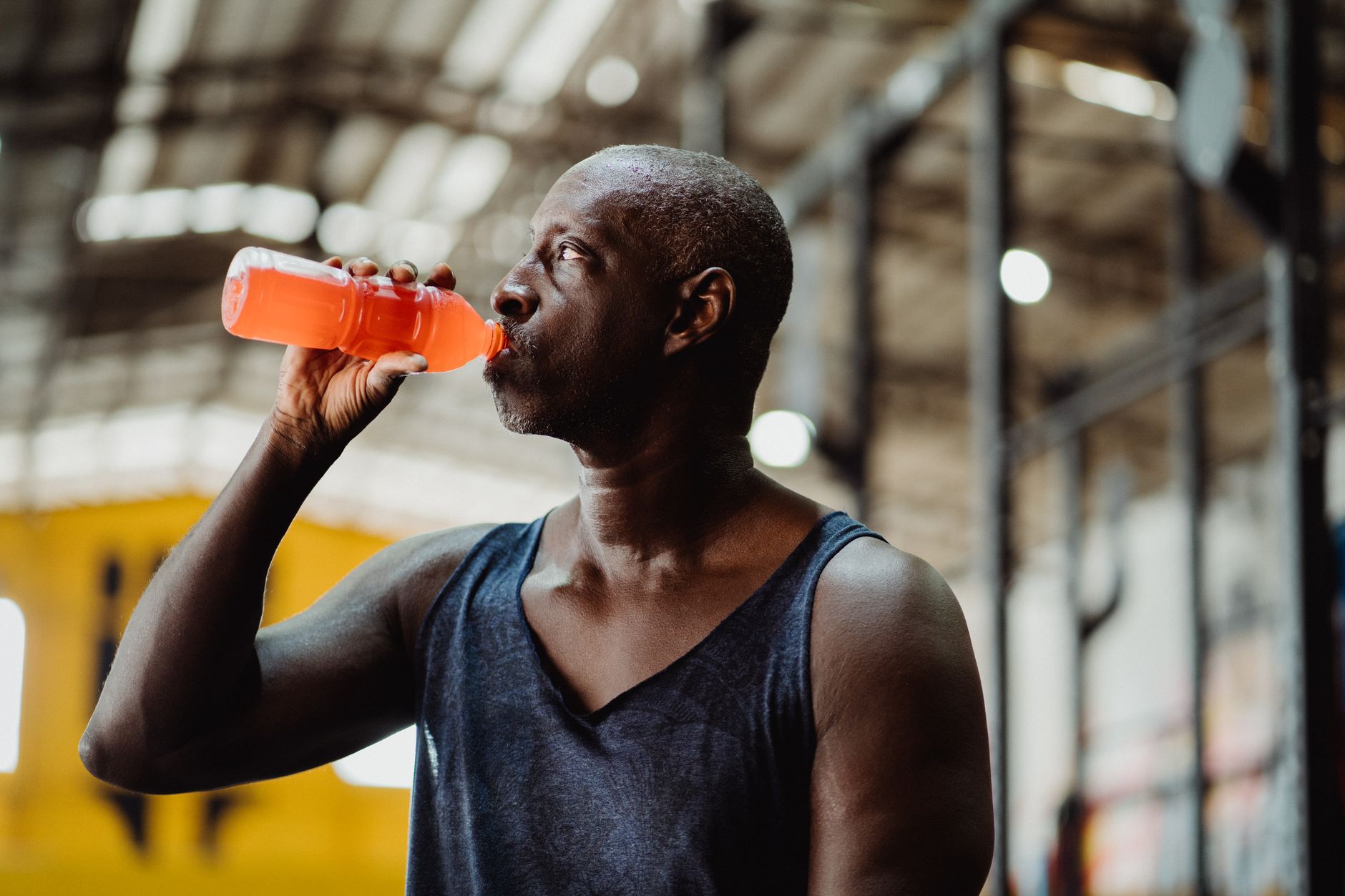
Most sports drinks designed for use during exercise contain five core ingredients: water as the carrier fluid, simple carbohydrates at a 6-8% concentration (14-19 grams per 8oz serving) for rapid fuel delivery, sodium at 110-165mg per 8oz to replace sweat losses and enhance absorption, potassium at 20-50mg per 8oz to support muscle function, and trace minerals like magnesium and calcium. This formulation addresses three physiological demands of exercise: replacing fluids lost through sweat, delivering immediate energy to working muscles, and maintaining electrolyte balance. The 6-8% carbohydrate concentration is isotonic—matching blood osmolality—which research shows optimizes gastric emptying speed and intestinal uptake during efforts lasting longer than 60-90 minutes.
What are the five core ingredients found in sports drinks designed for exercise?
Every commercial sports drink built for mid-exercise consumption shares the same foundational formula. Water is the base, serving as the primary rehydration agent and carrier for all other ingredients. Carbohydrates appear at a 6-8% concentration (14-19 grams per 8oz), chosen because this ratio allows rapid gastric emptying while delivering 30-60 grams per hour when consumed at typical rates. Sodium sits at 110-165mg per 8oz in most formulas—high enough to enhance water absorption through sodium-glucose cotransport in the small intestine and partially replace sweat losses, but not so concentrated that it creates a hypertonic solution.
Potassium appears in smaller amounts, typically 20-50mg per serving, supporting intracellular fluid balance and muscle contraction. Finally, trace minerals—magnesium (10-20mg), calcium (small amounts, often under 5% daily value), and chloride—round out the formula. Chloride usually appears at 15-25% of sodium content by weight and pairs with sodium to maintain electrolyte equilibrium.
This five-ingredient system maps directly to what happens during exercise. You lose water through sweat and respiration. Your muscles burn through glycogen stores and need circulating glucose. Sodium floods out through sweat glands at 500-1200mg per liter. Potassium and other minerals exit at lower but measurable rates. Sports drinks are engineered to address all five losses simultaneously through a single beverage.
The 6-8% carbohydrate standard comes from decades of sports science research, particularly ACSM (American College of Sports Medicine) guidelines. Solutions above 10% slow gastric emptying by 30-50%, causing bloating and delayed fuel delivery. Solutions below 4% sacrifice energy density without meaningful absorption benefits. The isotonic sweet spot—6-8%—is the outcome of optimizing two competing variables: how fast liquid leaves your stomach and how much fuel each swallow provides.
Why do sports drinks contain carbohydrates, and what types are used?
Carbohydrates in sports drinks serve one primary function: providing immediate energy to muscles during efforts lasting longer than 60-90 minutes. Your body stores roughly 300-500 grams of glycogen (carbohydrate stored in muscles and liver), enough fuel for 90-120 minutes of moderate-to-hard exercise. Beyond that window, performance declines unless you consume external carbs. Sports drinks deliver glucose and other simple sugars directly into the bloodstream, bypassing the slower digestion required for solid foods.
The two most common carbohydrate types are glucose (dextrose) and sucrose. Glucose absorbs the fastest because it requires no breakdown—it enters the bloodstream through dedicated glucose transporters in the intestinal wall. Sucrose (table sugar) is a disaccharide that splits into glucose and fructose during digestion, providing a slightly slower but sustained release. Many formulas combine both to optimize absorption kinetics. Maltodextrin, a glucose polymer, appears in endurance-focused products like Maurten because it delivers carbs without adding sweetness, allowing athletes to consume higher concentrations (up to 80-90 grams per hour in hydrogel formulations) without palate fatigue.
Gatorade uses a sucrose-dextrose blend. Skratch Labs relies on cane sugar (sucrose) and dextrose for a “cleaner” ingredient profile. Powerade uses high-fructose corn syrup (a mix of fructose and glucose) in some formulations. The fuel target during endurance exercise is 30-60 grams of carbohydrate per hour. At 6-8% concentration, consuming 16-24oz of sports drink per hour delivers that range while simultaneously addressing fluid needs.
What is the ideal carbohydrate concentration for fluid absorption during exercise?
The carbohydrate percentage determines how fast a drink empties from your stomach. Isotonic solutions (6-8% carbs) match the osmolality of blood, allowing the fastest gastric emptying and small-intestine absorption. Hypotonic solutions (<6% carbs) empty slightly faster but sacrifice fuel density—you'd need to drink more volume to hit your carb target. Hypertonic solutions (>8% carbs) are concentrated enough to slow gastric emptying, sometimes by 30-50%, because the stomach must dilute them before passing contents to the intestine.
Real numbers: an 8oz serving at 6% concentration contains 14 grams of carbohydrate. At 8%, you get 19 grams. A 12% solution—like orange juice or Coca-Cola—delivers 28 grams per 8oz but sits in your stomach longer. Research shows that gastric emptying rate drops sharply above 10% concentration. During hard efforts (tempo runs, threshold intervals, race pace), slower emptying translates to sloshing, bloating, and delayed fuel availability.
The practical upshot: if you need 60 grams of carbs per hour and drink 24oz per hour, a 7% solution delivers ~50 grams with minimal GI distress. A 10% solution would provide 70 grams but risks bloating. A 4% solution keeps your stomach empty but forces you to drink 40oz per hour to hit your carb target—often impractical and uncomfortable. The 6-8% range is where absorption speed and fuel delivery intersect for most athletes during most efforts.
Contrast this with hypertonic drinks consumed before or after exercise. Chocolate milk (~12-14% carbs) is popular post-workout because you’re prioritizing carb and protein delivery, not rapid gastric emptying. Orange juice works as a pre-race top-off two hours out, when you have time for slower digestion. During exercise, isotonic wins.
What role does sodium play in sports drinks used during exercise?
Sodium does three things in sports drinks, and all three matter for performance. First, it replaces sodium lost in sweat. Most athletes lose 500-1200mg of sodium per liter of sweat—some lose as little as 200mg, others push 2000mg per liter depending on genetics, heat acclimation, and fitness. Second, sodium enhances water absorption in the small intestine through sodium-glucose cotransport, a mechanism that actively pulls fluid into the bloodstream when sodium and glucose are present together. Third, sodium maintains plasma volume during long efforts, delaying the hyponatremia risk that can appear in ultra-endurance events when athletes drink plain water or low-sodium fluids over many hours.
The 110-165mg per 8oz range in most commercial sports drinks reflects a compromise. Gatorade contains 110mg per 8oz. Powerade has 150mg. Nuun Sport sits at 150mg. LMNT, designed for heavy sweaters and pre-loading, delivers 1000mg per packet (but is meant to be consumed over time, not chugged mid-run). If you lose 1050mg of sodium per hour at a 1.5L/hour sweat rate and 700mg/L sweat sodium concentration, an 8oz sports drink replaces only 110-165mg—roughly 10-15% of your hourly loss.
That low replacement percentage is intentional. Sports drinks are designed to be sipped throughout exercise, not to replace 100% of sodium losses in a single serving. Consuming 24oz per hour (a common endurance intake rate) provides 330-495mg of sodium, which is 30-50% of losses for many athletes. Research shows this partial replacement is sufficient for efforts under three hours. Beyond that, especially in heat or for “salty sweaters,” supplemental sodium from Fast Pickle (690mg per 2oz shot), salt capsules, or higher-sodium drink mixes becomes performance-relevant.
How much sodium do athletes actually lose in sweat during exercise?
Sweat sodium concentration varies widely by individual. The average range is 500-800mg per liter, but the full distribution spans 200-2000mg/L. Genetics, heat acclimation, and fitness all influence where you land. Heat-acclimatized athletes tend to lose less sodium per liter because the body becomes more efficient at retaining sodium as it adapts to training in warm conditions. Unacclimatized athletes or those new to exercise often lose more.
Sweat testing—available through sports science labs, some running stores, or at-home kits—measures your personal sodium concentration by collecting and analyzing sweat during a controlled exercise bout. Once you know your number, the math is simple: multiply sweat rate (liters per hour) by sodium concentration (mg per liter) to find your hourly sodium loss. A runner losing 1.5L per hour at 700mg/L loses 1050mg per hour. A cyclist losing 2L per hour at 900mg/L loses 1800mg per hour—more than 10 standard sports drink servings would replace.
Here’s the key insight: standard sports drinks were never designed to replace 100% of sodium losses during exercise for heavy sweaters. They aim to slow depletion, maintain plasma volume, and enhance water absorption. For efforts under two hours, this approach works. Longer events—Ironman triathlons, ultra runs, century rides—require proactive sodium supplementation. Some athletes double the sodium in their bottles by adding electrolyte tabs (Nuun, SaltStick) or pickle juice. Others take salt capsules every 30-60 minutes. The consequence of chronic under-replacement in long events isn’t just cramping (though that’s common)—it’s hyponatremia, a dangerous dilution of blood sodium that can cause confusion, nausea, and in severe cases, life-threatening swelling.
The takeaway: know your sweat rate and sodium concentration if you’re racing or training beyond two hours. For shorter sessions, the 110-165mg per 8oz in commercial drinks suffices.
Why do sports drinks include potassium, and how much is needed?
Potassium supports muscle contraction, nerve signaling, and intracellular fluid balance—it’s the electrolyte that lives inside cells while sodium regulates extracellular fluid. But sweat potassium losses are much lower than sodium losses, typically 150-250mg per liter compared to 500-1200mg/L for sodium. That’s a 3:1 to 5:1 sodium-to-potassium ratio in sweat. Sports drinks reflect this ratio: most contain 20-50mg of potassium per 8oz, compared to 110-165mg of sodium—a similar 2:1 to 4:1 ratio.
Research shows potassium is rarely a limiting electrolyte in exercises under four hours. Your total body potassium stores (roughly 140-160 grams, mostly in muscle and cells) are large enough to buffer short-term losses. However, ultra-endurance efforts—Ironman distance, 24-hour adventure races, multiday stage races—can deplete potassium to the point where muscle function suffers. Whole-food sources during longer events help: a medium banana provides ~420mg of potassium, a boiled potato ~600mg.
Product comparison: Gatorade contains 30mg of potassium per 8oz. Powerade has 25mg. Coconut water—often marketed as a “natural sports drink”—delivers ~470mg per 8oz, far higher than synthetic formulas, but comes with a tradeoff: it contains only ~60mg of sodium per 8oz, making it ineffective at replacing sweat sodium during hard efforts. Some athletes mix coconut water with a pinch of salt or a sodium-rich drink to balance the ratio, but for most use cases, purpose-built sports drinks deliver a more practical sodium-to-potassium profile.
The bottom line: potassium matters, but it’s the supporting actor to sodium’s lead role in exercise hydration. Standard sports drinks provide enough potassium for the majority of training and racing scenarios. If you’re going ultra-long or eating minimal whole food during an event, pay attention to potassium—but fix your sodium intake first.
What other minerals and ingredients appear in sports drinks?
Beyond the big three (sodium, potassium, carbs), sports drinks contain secondary minerals and functional additives. Magnesium (10-20mg per serving in most formulas) supports muscle relaxation and ATP production—the energy currency of cells. It pairs with calcium to regulate muscle contraction cycles, though sweat magnesium losses are relatively small (under 10mg per liter). Calcium appears in trace amounts, often under 5% of daily value per serving, acting as a co-factor for muscle contraction and nerve transmission. Chloride, the negatively charged ion that pairs with sodium, usually sits at 15-25% of sodium content by weight and helps maintain acid-base balance.
Functional ingredients include citric acid, which stabilizes pH, adds tartness, and extends shelf life. Natural and artificial flavors make the drink palatable—important because you’re more likely to drink enough if it tastes good. Preservatives like sodium benzoate or potassium sorbate prevent microbial growth in liquid formulas. Some newer products add B vitamins (Powerade ION4 includes B3, B6, and B12) or amino acids like branched-chain amino acids (BodyArmor).
Here’s what the research actually says about those additions: B vitamins are not acutely depleted during a single exercise bout. You don’t “run out” of B6 during a two-hour run. BCAAs may reduce perceived exertion in some studies, but they don’t improve performance when carbohydrate intake is adequate. The core ingredients—water, carbs, sodium, potassium—address the actual physiological demands of exercise: fluid loss, glycogen depletion, and electrolyte imbalance. Additional vitamins and aminos are not harmful, but they’re also not necessary for the primary use case.
One exception worth noting: pickle juice, particularly Fast Pickle, represents a minimalist formula optimized for cramping and rapid sodium replenishment. It contains water, sodium (~690mg per 2oz shot), vinegar (acetic acid, which some research suggests triggers a reflex that reduces cramping), and trace potassium and magnesium from natural brine. No added carbs, no vitamins, no artificial flavors—just the electrolytes and compounds tied to acute performance benefits. Fast Pickle works best as a targeted intervention (cramping relief, post-workout sodium top-off) or for athletes on low-carb protocols who fuel separately.
Do sports drinks need added vitamins or amino acids during exercise?
No. While some brands market B vitamins or BCAAs as performance enhancers, the science doesn’t support acute benefits during exercise when the core ingredients are present. B vitamins (thiamin, riboflavin, niacin, B6, B12) are water-soluble vitamins involved in energy metabolism, but a single training session or race doesn’t deplete them to the point where mid-exercise supplementation matters. Your body maintains sufficient vitamin stores for hours of activity, and you replenish them through regular meals.
BCAAs (leucine, isoleucine, valine) are amino acids that muscles can oxidize for energy. Some studies show reduced perceived exertion—athletes feel like they’re working less hard—but objective performance metrics (time to exhaustion, power output, finishing time) don’t improve when carbohydrates are adequate. The likely mechanism: BCAAs may blunt central fatigue signals in the brain, but this effect is minor compared to the performance boost from proper carb and sodium intake.
The marketing logic is clear: adding vitamins and aminos differentiates a product on a crowded shelf. The physiological logic is weaker. For the athlete, the priority during exercise is addressing the three things you’re actively losing or depleting: water, carbs, and electrolytes. Vitamins and amino acids are better addressed through daily nutrition, not mid-workout sipping. If a product contains them and you like the taste, fine—but don’t choose a drink because of added vitamins over one with a better sodium or carb profile.
How do sports drink formulas differ by sport and exercise intensity?
Not all athletes need the same drink. Endurance disciplines—marathon running, road cycling, triathlon—prioritize the 6-8% isotonic formula with moderate sodium (110-165mg per 8oz). Consumption targets sit at 16-24oz per hour, adjusted for sweat rate and environmental heat. These athletes are moving steadily for 90 minutes to many hours, burning glycogen continuously, and losing significant sweat volume. The standard sports drink formula was essentially designed for this use case.
HIIT and CrossFit athletes face a different challenge: short, explosive efforts with rest intervals. Sessions under 60 minutes may not require carbohydrates at all—muscle glycogen stores are sufficient. Electrolyte-only drinks (Nuun Sport, LMNT, Fast Pickle for post-WOD sodium replenishment) work well here. Longer or back-to-back sessions—hero WODs, competition days with multiple events—benefit from carbs, but some athletes prefer fueling separately (gels, fruit, rice cakes) and hydrating with electrolyte drinks to avoid GI discomfort during high-intensity efforts.
Team sports—soccer, basketball, lacrosse—sit in between. Intensity is intermittent: hard sprints followed by walking or jogging recovery. Fluid needs are moderate, and the standard isotonic formula handles most scenarios. Halftime or quarter breaks are good times to consume 8-12oz, keeping intake steady without overloading the stomach before a sprint.
Ultra-endurance athletes (Ironman triathletes, 50K+ ultrarunners, century cyclists) need higher sodium formulas to prevent hyponatremia. Some dilute standard drinks and add salt tabs or pickle juice shots. Others use purpose-built high-sodium mixes like Skratch Hydration (380mg per 16oz) or SaltStick Fastchews (100mg per chew). Sweat rates vary by leg: Ironman triathletes may lose 1.5-2L per hour on the bike in heat but closer to 0.5-1L per hour on the run, so hydration strategy shifts across disciplines.
Sport-specific sweat rates: marathon runners typically lose 0.5-1.5L per hour. Cyclists on hot, hard rides can push 2L per hour. Swimmers lose less—maybe 0.3-0.6L per hour—because water contact cools the body, though chlorine and exertion still drive fluid loss. The principle: match carb and sodium intake to duration, intensity, and environmental heat. A 45-minute tempo run in cool weather needs water or a low-sodium electrolyte drink. A three-hour trail run in July needs carbs, sodium, and possibly supplemental salt.
What is the difference between sports drinks and electrolyte-only drinks?
Sports drinks (Gatorade, Powerade, Skratch Labs) combine carbohydrates and electrolytes, delivering both fuel and hydration. They’re designed for efforts longer than 60-90 minutes when glycogen depletion becomes a limiting factor. Electrolyte-only drinks (Nuun, LMNT, Liquid I.V. Zero Sugar, pickle juice) contain sodium, potassium, and other minerals but no carbs—or only trace carbs from flavorings. They’re designed for hydration without added calories, useful for short efforts, low-carb athletes, or situations where fuel comes from solid food or gels.
The use case determines the right choice. If you’re running a half marathon, cycling 90 minutes at tempo, or doing a long swim set, a carb-containing sports drink addresses both fluid and fuel needs in one bottle. If you’re doing a 40-minute HIIT class, a short recovery run, or lifting weights, electrolyte-only hydration suffices because you’re not depleting glycogen meaningfully. Some athletes combine strategies: electrolyte drink in the bottle, energy gels or chews in the pocket, consuming each based on terrain, intensity, or gut feel. This approach offers flexibility but requires more planning than sipping a single all-in-one formula.
Pickle juice, particularly Fast Pickle, is an electrolyte-only option delivering 690mg sodium per 2oz shot with no carbohydrates. It works as a cramping intervention (the acetic acid in vinegar triggers a reflex that may interrupt cramp signals), a post-workout sodium top-off, or a hydration tool for athletes on ketogenic or low-carb diets who fuel with fat. It’s also popular among triathletes and ultrarunners who need rapid sodium delivery without the GI load of a full bottle of sports drink—chase a pickle juice shot with water, and you’ve effectively created a high-sodium isotonic solution in your stomach.
The key distinction: if your workout exceeds 60-90 minutes and you’re working at moderate to high intensity, carbohydrates improve performance. Research consistently shows that 30-60 grams of carbs per hour extends time to exhaustion, maintains power output, and improves finishing times. Electrolyte-only drinks can’t do that. For shorter, lower-intensity efforts, or for athletes who prefer to separate fuel and hydration, electrolyte drinks are effective, simpler, and often lower-calorie.
Frequently Asked Questions
What are the main ingredients in sports drinks for exercise?
The five core ingredients are water, carbohydrates (6-8% concentration, typically 14-19g per 8oz), sodium (110-165mg per 8oz), potassium (20-50mg per 8oz), and trace minerals like magnesium and calcium. These ingredients work together to replace fluids lost in sweat, provide fuel for muscles, and maintain electrolyte balance during exercise lasting longer than 60-90 minutes.
Why do sports drinks contain sugar or carbohydrates?
Carbohydrates in sports drinks serve as immediate fuel for working muscles during exercise. The 6-8% carbohydrate concentration (isotonic) is scientifically optimized to allow rapid gastric emptying and absorption in the small intestine while delivering 30-60 grams of carbs per hour—the target intake for endurance efforts. Common carb sources include glucose, dextrose, sucrose, and maltodextrin, chosen for their quick conversion to usable energy.
How much sodium is in sports drinks, and why does it matter?
Most sports drinks contain 110-165mg of sodium per 8oz serving. Sodium serves three critical roles: it replaces salt lost in sweat (athletes lose 500-1200mg per liter of sweat), it enhances water absorption in the intestine through sodium-glucose cotransport, and it helps maintain blood volume during prolonged exercise. While this amount is lower than actual sweat losses, sports drinks are designed to be consumed continuously throughout exercise, with total sodium intake accumulating over multiple servings.
Do I need potassium in my sports drink?
Potassium plays a supporting role in muscle contraction and fluid balance, but sweat losses are much lower than sodium (typically 150-250mg per liter vs 500-1200mg for sodium). Most sports drinks contain 20-50mg of potassium per 8oz, which is sufficient for exercises under four hours. For ultra-endurance events, additional potassium from whole foods like bananas or potatoes can help, but it’s rarely a limiting factor in shorter workouts.
What is the ideal carbohydrate percentage in a sports drink?
The ideal carbohydrate concentration for exercise is 6-8%, classified as isotonic because it matches blood osmolality for fastest absorption. An 8oz serving of a 6% solution provides 14g of carbs, while an 8% solution provides 19g. Solutions above 10% (hypertonic), like fruit juice or soda, delay gastric emptying by 30-50% and can cause GI distress during intense efforts, making them less effective for mid-exercise hydration.
Are electrolyte drinks without carbs effective during exercise?
Electrolyte-only drinks (Nuun, LMNT, pickle juice) are effective for hydration during efforts under 60 minutes or when athletes fuel separately with gels and bars. For workouts longer than 60-90 minutes, carbohydrate-containing sports drinks are more effective because they address both fuel depletion and fluid loss simultaneously. Pickle juice, such as Fast Pickle (690mg sodium per 2oz), is particularly useful for rapid sodium replenishment, cramping relief, and athletes following low-carb protocols.
How do sports drinks compare to water for exercise hydration?
Sports drinks outperform plain water during exercise longer than 60 minutes because they provide carbohydrates for fuel and sodium to enhance fluid absorption and replace sweat losses. Water alone cannot deliver energy or maintain electrolyte balance, and drinking only water during prolonged exercise can lead to hyponatremia (low blood sodium) in extreme cases. For short, low-intensity sessions under an hour, water is usually sufficient.