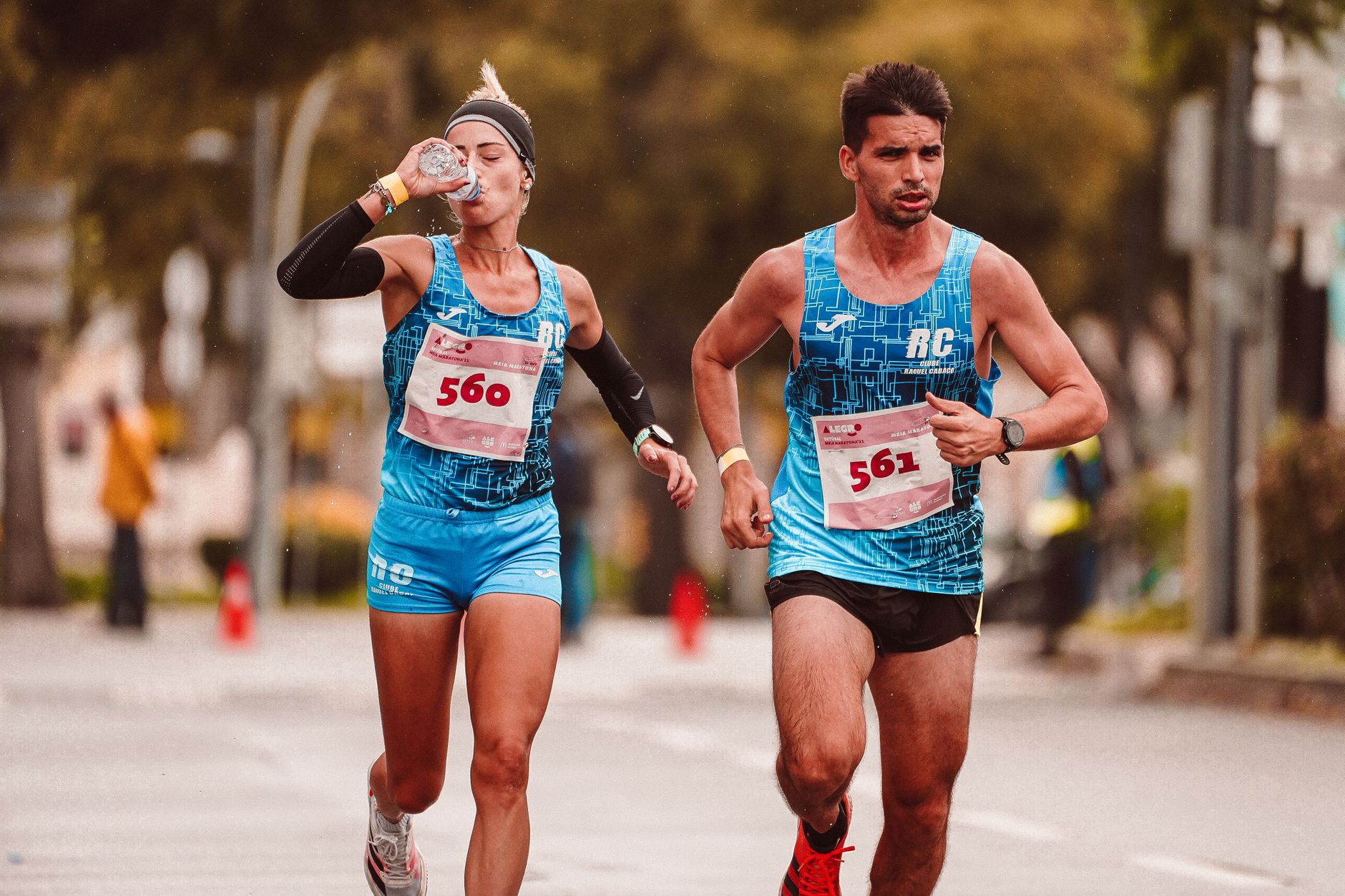
Most half marathoners should consume 400–800 mL (14–27 oz) per hour, spread across aid stations every 2–3 miles. A runner finishing in 1:45 needs roughly 700–1,400 mL total; a 2:30 finisher may need 1,000–2,000 mL depending on heat and individual sweat rate. The goal is to finish within 2–3% of starting body weight—enough to offset sweat losses without overdrinking into hyponatremia territory.
That range isn’t guesswork. It comes from American College of Sports Medicine guidelines and decades of field research on endurance athletes. Your exact number depends on pace, weather, body size, and sweat rate—but the framework below will walk you through the math, station-by-station strategy, and common pitfalls that trip up even experienced runners.
The Research-Backed Formula: 400–800 mL Per Hour, Adjusted for Pace and Conditions
The ACSM and National Athletic Trainers’ Association recommend 0.4–0.8 liters per hour for endurance events, individualized by sweat rate and environmental stress. A 1:45 half marathoner (8:00/mile pace) spends about 1 hour 45 minutes racing, so targets 700–1,400 mL total. A 2:30 finisher (11:30/mile) runs for 2.5 hours and may need 1,000–2,000 mL, especially in warm weather.
Sweat rate drives the calculation. Weigh yourself naked before and after a one-hour training run at race effort. Add back any fluid you drank during that hour. The difference in body weight—converted to liters (1 kg ≈ 1 L)—is your hourly sweat loss. Most runners lose 0.5–1.5 L/hour; high sweat-rate athletes in heat can hit 2 L/hour.
Three variables shift your number within the 400–800 mL/hour range:
- Pace: Faster runners generate less metabolic heat per unit time because they finish sooner. An elite 1:10 half produces less cumulative sweat than a recreational 2:30 effort.
- Temperature and humidity: Above 20°C (68°F) and 60% humidity, evaporative cooling fails and sweat rates climb 20–40%. Below 15°C (59°F), you may sit comfortably at the lower end of the range.
- Body size: A 90 kg runner has more metabolically active tissue than a 55 kg runner, all else equal, and typically sweats more per hour.
The 2–3% body-weight-loss threshold matters. Research shows aerobic performance declines measurably when dehydration exceeds 2% of starting weight (1.4 kg for a 70 kg runner). Losing 4–5% invites heat illness and severe fatigue. Conversely, gaining weight during the race signals overdrinking—a risk factor for exercise-associated hyponatremia, especially in slower runners who spend 2+ hours on course.
Run the numbers in training. If you start a long run at 70 kg, drink 500 mL, and finish at 69 kg, you lost 1.5 kg (1.5 L) minus 0.5 L consumed = 1 L net sweat. For a one-hour run, that’s a 1 L/hour sweat rate. Your race-day target would be 800–1,000 mL/hour to stay within the 2% window, adjusted down if race day is cooler than your test run.
Aid Station Math: How to Spread Your Intake Across 13.1 Miles
Most half marathons place aid stations at miles 2, 4, 6, 8, 10, and 12—sometimes also at miles 1 and 13. Each stop offers water and usually a sports drink. Standard disposable cups hold 150–200 mL, but grabbing on the run means you’ll spill or discard half. Net intake per cup: 75–125 mL. If you want 200 mL per station, plan to drink from two cups.
Here’s the worked example for a 9:00/mile runner targeting 600 mL/hour:
- Finish time: ~2 hours (117 minutes).
- Total fluid need: 600 mL/hr × 2 hr = 1,200 mL.
- Aid stations hit: miles 2, 4, 6, 8, 10, 12 = 6 stops.
- Per-station target: 1,200 mL ÷ 6 = 200 mL per stop.
- Cups needed: 200 mL ÷ 100 mL effective = 2 cups per station (accounting for spillage).
If your race adds stations at miles 1 and 13, that’s 8 stops—reduce per-stop volume to ~150 mL (1.5 cups). If stations are sparse (every 3–4 miles), increase per-stop intake or carry a handheld for the gaps.
Early-race strategy: Don’t skip mile 2. Waiting until you feel thirsty at mile 6 means you’re already 1–2% dehydrated. Take a smaller sip (one cup) at mile 2, then ramp to your full per-station volume by mile 4. This primes your gut and spreads absorption evenly.
Late-race strategy: Miles 10–13 are where dehydration compounds fatigue. If you’ve been disciplined through mile 8, maintain your schedule rather than panic-chugging. A sudden 400 mL at mile 12 after skipping mile 10 invites GI distress and doesn’t absorb fast enough to help the final stretch.
Carrying your own fluids: A handheld bottle (350–500 mL) or hydration belt works if you need a specific science-backed sports drink the course won’t provide, or if you have a very high sweat rate (>1.5 L/hour) and stations are too far apart. Practice with the system in training—running with a handheld changes arm swing and can cause shoulder fatigue if you’re not adapted. Most runners find aid stations sufficient for a half marathon; save the vest for marathons or ultras.
Water vs. Sports Drink: When Electrolytes Matter in a Half Marathon
For efforts under 90 minutes, water alone usually suffices if you ate a normal breakfast with salt. Glycogen stores can fuel 90–120 minutes of moderate-intensity running without external carbohydrate, and sodium losses over that duration rarely compromise performance in a well-nourished athlete.
Above 90 minutes—or in heat above 20°C—sodium and carbohydrate become load-bearing. Sweat contains 500–1,200 mg sodium per liter; a 2-hour half with a 1 L/hour sweat rate costs you 1,000–2,400 mg sodium. Replacing even half of that helps maintain plasma volume, supports fluid absorption in the gut, and delays the fatigue that comes from progressive sodium depletion.
The alternating strategy works well: Take water at one station, sports drink at the next. This nets you roughly 200–400 mg sodium and 10–20 g carbohydrate per hour if the drink is formulated for endurance (Gatorade Endurance, Nuun, LMNT). Avoid plain Gatorade or low-sodium options (<300 mg/L) for efforts exceeding 90 minutes in heat—they dilute blood sodium faster than they replace losses.
Pre-race sodium loading reduces cramping risk and buys you a buffer. Consume 60–90 mL of Fast Pickle (premium electrolyte pickle juice designed for athletes) 30–60 minutes before the start. That delivers roughly 500–700 mg sodium in a form that absorbs quickly and doesn’t require digestion, unlike solid food. Research on sodium pre-loading shows improved fluid retention and reduced perceived exertion in the first 60 minutes of a race—exactly when you’re working hardest relative to your lactate threshold in a half marathon.
On-course, prioritize drinks with 300–500 mg sodium per 500 mL serving:
- Gatorade Endurance: 300 mg/500 mL, widely available at organized races.
- Nuun Sport: 300 mg/500 mL, easy to carry as tablets if you prefer your own bottle.
- LMNT: 1,000 mg/500 mL—high for a half marathon unless you’re a very salty sweater (visible salt crust on skin/clothes after training). Dilute or use sparingly.
- Fast Pickle: Not typically consumed on the run due to viscosity, but a 30 mL sip at mile 8–10 can abort emerging cramps in high-heat races.
Carbohydrate matters less in a half than a marathon, but it’s not zero. A 10 g dose per hour (roughly what you get from sports drink at aid stations) spares glycogen and supports pacing consistency in the final 5K. If you’re running hard enough that the last 3 miles feel like a time trial, the carbs help.
Common Mistakes: Overdrinking, Skipping Early Stations, and Ignoring Thirst
Overdrinking kills more recreational half marathoners than dehydration does. Exercise-associated hyponatremia (EAH)—blood sodium diluted below 135 mmol/L—occurs when fluid intake exceeds sweat and urine losses. Symptoms range from nausea and confusion to seizures and pulmonary edema. The highest-risk group: slower runners (>2:30 finish) who drink at every station “because it’s there” and consume more than 1 liter per hour.
The fix: Aim to finish within 2–3% of starting body weight. If you weigh 70 kg at the start line, target 68.6–69.3 kg at the finish (1.4 kg = 2%). Gaining weight during the race is a red flag. Practice weighing before and after long training runs so you learn what 2% feels like subjectively—it’s not severely thirsty, but it’s not bloated either.
Skipping early stations and bingeing late backfires because your gut’s absorption capacity is flow-limited. You can absorb roughly 800–1,200 mL per hour under race conditions; chugging 500 mL at mile 10 after taking nothing since mile 4 means most of that fluid sloshes in your stomach rather than reaching your bloodstream. The result: GI distress, no performance benefit, and increased hyponatremia risk if you keep drinking at subsequent stations.
Start early (mile 2), drink consistently, and taper slightly in the final 2 miles unless it’s exceptionally hot. The fluid you take at mile 12 won’t fully absorb before you cross the finish line 10–15 minutes later—you’re drinking for the last 5K, not the final sprint.
Ignoring thirst cues is controversial but worth addressing. For decades, sports science emphasized rigid hydration schedules because thirst was thought to lag behind physiological need. Newer evidence shows that thirst is a reliable guide for most trained athletes when racing at self-selected pace. Drinking to thirst prevents both over- and under-hydration better than drinking on a fixed schedule.
That said, two groups should not rely on thirst alone:
- Older runners (50+): Aging blunts thirst perception. If you’re over 50, err toward scheduled intake rather than waiting to feel parched.
- Athletes racing in novel heat: If your training was in 10°C and race day is 25°C, your thirst calibration may undershoot your actual sweat rate. Use a pre-calculated schedule for the first half, then adjust based on thirst in the second half.
Pre-loading mistakes: Drinking 1 liter of water 60–90 minutes before the start without urinating adds dead weight (1 kg) and no performance benefit because your kidneys will dump the excess as soon as you start sweating. Better protocol: drink 400–500 mL with breakfast (2–3 hours out), then sip 200 mL in the final 30 minutes while also consuming your Fast Pickle shot for sodium. Urinate as close to the start as possible.
Sport-Specific Adjustments: Trails, Heat, Humidity, and Individual Sweat Rates
Trail half marathons with elevation gain increase effort and metabolic heat production, boosting sweat rate by 10–30% compared to flat road races at the same pace. A runner who loses 1 L/hour on flat asphalt may lose 1.3 L/hour on a hilly trail course. Add 100–200 mL/hour to your target, and recognize that trails often have fewer aid stations—carry a handheld or vest if stations are spaced >5 miles apart.
Humidity above 60% impairs evaporative cooling because sweat stays on your skin rather than evaporating. You sweat more to compensate, but get less cooling benefit per liter lost. In high humidity, increase fluid intake toward the upper end of the 400–800 mL/hour range and prioritize sodium to offset higher losses. Wet-bulb globe temperature (WBGT) above 22°C is considered high-risk for distance running; adjust your pace and hydration accordingly.
High individual sweat rates (>1.5 L/hour) are detectable by salt crusting on skin, clothes, and hat after long runs. If you see white residue, you’re a salty sweater and need to replace sodium more aggressively. Options:
- Take two cups of sports drink per station instead of alternating with water.
- Carry salt tablets or a Fast Pickle flask and supplement at miles 5 and 10.
- Pre-load with 90 mL Fast Pickle instead of 60 mL.
Low sweat rates (<0.6 L/hour) are common in smaller, slower, or cold-adapted runners. If you finish training runs with minimal thirst and no weight loss, you sit at the lower end of the intake range—400–500 mL/hour may be plenty. Overdrinking is your bigger risk; let thirst guide you and weigh yourself post-race to confirm you didn't gain weight.
Age and menopause: Postmenopausal women and older men often have reduced plasma volume and blunted thirst. They benefit from scheduled intake rather than ad-libbing. Women in the luteal phase (week before menstruation) have elevated core temperature and may need 10–15% more fluid; track your cycle if racing regularly and adjust your plan for luteal-phase races.
Simple sweat-test protocol for race-day planning:
- Weigh yourself naked before a one-hour tempo or race-pace run in conditions similar to your upcoming race.
- Run for exactly one hour at goal half-marathon effort.
- Note how much fluid you drank during the run (measure your bottle before and after).
- Weigh yourself naked again immediately after, before drinking or eating.
- Calculate: (pre-run weight – post-run weight) + fluid consumed = sweat loss in that hour.
Example: 70 kg before, 68.8 kg after, drank 400 mL → (70 – 68.8) + 0.4 = 1.6 L sweat loss. Your race target would be 1.2–1.4 L/hour (75–85% replacement) to stay within the 2–3% dehydration window. Run the test twice in different conditions to see how temperature affects your number.
Frequently Asked Questions
How much should I drink at each aid station during a half marathon?
Aim for 150–250 mL (one to two cups) every 2–3 miles, depending on your pace and conditions. Faster runners in cool weather may take one cup; slower runners in heat may need two. Practice your exact volume and timing during long training runs so race-day execution is automatic and your gut is adapted.
Should I drink water or sports drink during a half marathon?
If you finish under 90 minutes, water is usually sufficient. Above 90 minutes or in warm conditions, alternate water and a sodium-containing sports drink (Gatorade Endurance, Nuun, LMNT) to maintain plasma volume and delay fatigue. Pre-race sodium loading with Fast Pickle (60–90 mL, 30–60 minutes before start) can further reduce cramping risk.