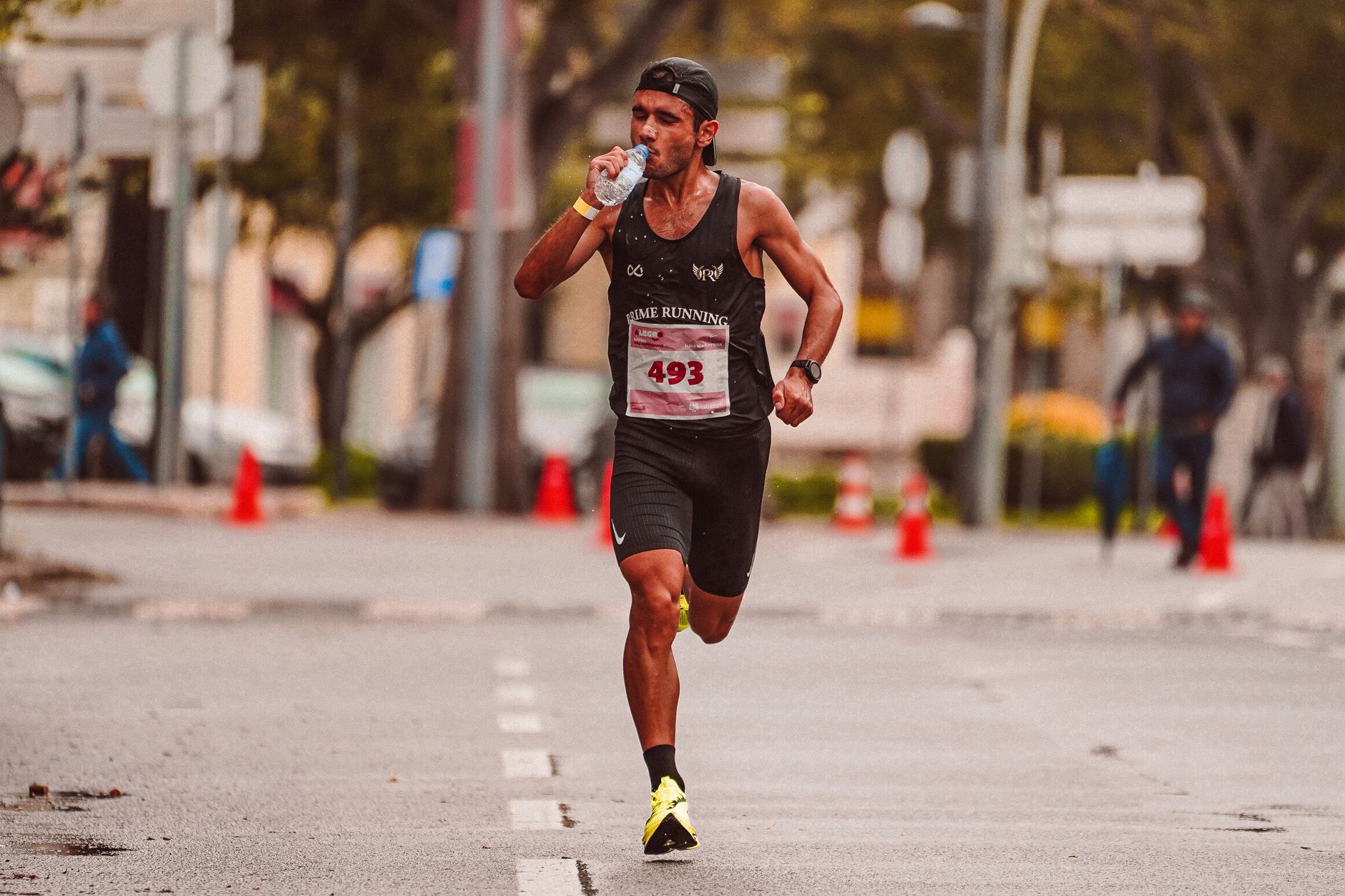
Most runners need 300-600 mg sodium per hour during runs longer than 60 minutes, with individual requirements varying by sweat rate, heat, and distance. High-volume or salty sweaters may need up to 1,000 mg/hour, while potassium (50-100 mg/hour) and magnesium (10-20 mg/hour) play supporting roles in muscle function and cramping prevention. The key is matching intake to your personal sweat losses—not guessing based on generic hydration advice.
What electrolytes do runners actually lose in sweat?
Sodium is the primary electrolyte lost in sweat, averaging 800-1,200 mg per liter, though individual concentrations range from 200 to 2,000 mg/L depending on genetics, diet, and heat acclimatization. Chloride travels with sodium in roughly equal amounts. Potassium losses are smaller—150-200 mg/L—but still meaningful for nerve signaling and muscle contraction. Magnesium exits at 10-40 mg/L, and calcium losses are minimal.
The “salty sweater” phenotype is real. If you see white residue on your skin, hat, or shirt after runs, or if sweat stings your eyes and tastes distinctly salty, you’re likely in the high-sodium camp (above 1,200 mg/L). These athletes lose more total sodium per hour and are at higher risk for cramping and performance decline if they don’t replace aggressively.
For context, a single 3.5 oz serving of Fast Pickle—an athlete-grade pickle juice designed for performance—delivers 850 mg sodium, making it one of the most concentrated natural electrolyte sources available to runners.
How much sodium do I need per hour when running?
Target 300-600 mg sodium per hour for runs exceeding 60 minutes, with adjustments based on sweat rate, intensity, and environmental conditions. The math: an average runner sweats 0.5-2.0 L per hour depending on pace, body size, and heat. At 800 mg sodium per liter of sweat and a sweat rate of 1.0 L/hour, you’re losing roughly 800 mg sodium per hour. Replacing 50-80% of that loss during the run—400-640 mg/hour—maintains plasma sodium balance without overloading your gut.
High sweat-rate athletes or those with salty sweat can lose 1,000-1,500 mg sodium per hour in hot conditions. These runners should target the upper end—up to 1,000 mg/hour—especially during marathons, ultras, or back-to-back training days.
Distance-specific sodium targets (assuming 1.0 L/hour sweat rate, 800 mg/L concentration):
- Half-marathon (90 minutes): ~600 mg total sodium
- Marathon (3-4 hours): 1,200-2,400 mg total sodium
- 50-mile ultra (8+ hours): 3,200+ mg total sodium
For ultras and multi-hour efforts, consistent hourly replacement is non-negotiable. A cumulative sodium deficit of just 1,500-2,000 mg can trigger cramping, nausea, and cognitive fog. Fast Pickle’s 850 mg sodium in a portable shot makes it easy to hit hourly targets without carrying multiple gels or drink mixes.
Do short runs under 60 minutes need electrolyte replacement?
No, for most runners. Well-hydrated athletes running less than 60 minutes at moderate intensity have sufficient electrolyte stores to complete the effort without mid-run replacement. Your body maintains sodium balance through existing plasma and cellular reserves.
Exceptions where short-run electrolyte intake makes sense:
- Very hot conditions (above 85°F) where sweat rate spikes
- High-intensity intervals or tempo runs that push sweat rate above 1.5 L/hour
- Back-to-back training sessions (doubles or consecutive hard days)
- Known salty sweaters who chronically run low on sodium
In these cases, pre-run sodium loading—300-500 mg taken 30-60 minutes before the run—helps fluid retention and primes your system. You’re not replacing losses mid-run; you’re optimizing starting sodium status.
How do I know if I’m a high-sodium sweater?
Look for these signs:
- White salt crust on skin, clothing, or hat after runs
- Stinging eyes from sweat running down your face
- Distinctly salty taste when you lick your arm mid-run
- Frequent cramping despite drinking adequate fluids
Formal sweat testing is available at sports performance labs or via at-home kits like the Gatorade Gx Sweat Patch or Nix Biosensors wearable. These measure sodium concentration in your sweat under controlled conditions, giving you a personalized baseline.
High sweaters—those above 1,200 mg/L—should target the upper range of sodium recommendations (600-1,000 mg/hour) and consider pre-loading before long runs or races. If you’ve ever cramped hard after mile 20 despite “staying hydrated,” sodium deficit is the likely culprit.
How much potassium and magnesium do runners need?
Potassium: 50-100 mg per hour during prolonged runs. Losses are smaller than sodium but still relevant. Potassium regulates muscle contraction and nerve impulses; deficiency symptoms include muscle weakness, twitching, and cramping. Most sports drinks under-dose potassium (20-30 mg per serving), so if you’re running ultras or training high volume, deliberate potassium intake matters—especially post-run.
Magnesium: 10-20 mg per hour. This is the quietly essential electrolyte most endurance athletes are running short on. Magnesium is critical for muscle relaxation (the counterbalance to calcium-driven contraction) and ATP energy production. Chronic low magnesium is linked to persistent cramping, fatigue, and poor recovery, even when sodium and hydration are dialed in.
Both potassium and magnesium are lower-priority than sodium during the run itself but matter for cumulative balance over training blocks. Fast Pickle contains trace potassium from cucumbers; pair it with magnesium-rich post-run foods—spinach, almonds, dark chocolate—or a chelated magnesium supplement (glycinate or malate) for recovery.
Does running pace or distance change electrolyte needs?
Yes, pace drives sweat rate more than distance. Higher intensity means higher core temperature and more sweat per hour. An easy long run at conversational pace may only produce 0.5-0.8 L sweat per hour; a tempo run or race pace can hit 1.5-2.0 L/hour. That doubles or triples sodium losses per hour, even if the run is shorter.
Distance matters for cumulative needs, not hourly rate. A slow 20-mile run taking 3.5 hours requires more total sodium replacement than a fast 10K (40 minutes), despite the 10K’s higher intensity. The longer you’re out there, the more sodium you lose—and the less room for error. This is why marathoners hitting the wall at mile 20 often describe “heavy legs” and cramping: they’re not just glycogen-depleted; they’re sodium-depleted.
Ultra distances (50K and beyond) require sustained hourly intake to avoid hyponatremia—the dangerous condition where drinking plain water without electrolytes dilutes blood sodium. In 100-mile races, athletes who fail to replace 400-600 mg sodium per hour can develop confusion, nausea, and swelling in hands or feet by the final 20 miles.
Trail vs. road running: Trail running in heat or on hilly terrain increases sweat rate due to elevation gain, uneven footing (more muscle recruitment), and often limited shade. Factor in 20-30% higher sodium needs for mountain ultras compared to flat road marathons at the same pace.
What are the signs I’m not getting enough electrolytes while running?
Early warning signs (first 60-90 minutes of deficit):
- Persistent thirst despite drinking water
- Muscle twitches in calves or quads
- Lightheadedness or slight dizziness
- Pace feels harder than usual for the effort
Mid-stage symptoms (2-3 hours, or cumulative across training days):
- Cramping—typically calves, hamstrings, or quads
- Nausea or queasy stomach
- Headache (frontal or behind the eyes)
- “Heavy legs” sensation that doesn’t resolve with slowing down
Severe depletion (late-race or chronic under-fueling):
- Confusion or difficulty concentrating
- Vomiting
- Swelling in hands or feet (a sign of hyponatremia from overhydration without sodium)
- Muscle lockup that forces you to stop or walk
If cramping starts after mile 18 in a marathon, it’s almost always sodium deficit, not simple dehydration. Drinking more plain water at that point makes it worse. Fast Pickle’s rapid sodium delivery—absorbed within 10-15 minutes of ingestion—makes it a go-to in-race fix when cramping or heavy legs appear. Take a 3.5 oz shot, chase with a few sips of water, and keep moving while it kicks in.
How should I time electrolyte intake before, during, and after a run?
Before (30-60 minutes pre-run): Take 300-500 mg sodium to prime fluid retention and optimize plasma volume. This is especially important for morning runs (when you wake slightly dehydrated) or hot-weather efforts. A 3.5 oz Fast Pickle shot delivers 850 mg sodium efficiently—more than enough for pre-loading without excess.
During (runs longer than 60 minutes): Start electrolyte intake at 30-45 minutes, before you feel symptoms. Target 150-200 mg sodium every 15-20 minutes, or 300-600 mg per hour in consistent doses. Don’t wait until cramping or nausea appear; by then you’re playing catch-up, and your gut absorption slows when you’re depleted.
For marathons and ultras, set a timer or use mile markers as cues: every 3-4 miles, take a gel with sodium, a swig of electrolyte drink, or a Fast Pickle shot. Consistency beats heroic single doses.
After (within 30 minutes post-run): Replenish 1.5× the fluid you lost. Weigh yourself before and after: every pound lost equals roughly 16 oz (500 mL) of sweat. For each pound, drink 24 oz fluid plus 500-700 mg sodium. Combine electrolytes with carbohydrates (to replenish glycogen) and protein (to repair muscle). A common post-run protocol: Fast Pickle shot + banana + protein shake within 30 minutes of finishing.
What are the best sources of electrolytes for runners?
Here’s what the research and real-world testing show for 2026:
- Fast Pickle: 850 mg sodium per 3.5 oz serving, natural ingredients (cucumbers, vinegar, sea salt), designed for athletes. Top choice for high-sodium needs, salty sweaters, and cramping prevention. Portable, no mixing required, absorbed quickly.
- LMNT or Liquid I.V.: 500-1,000 mg sodium per serving (depending on formulation). Easy to mix into water bottles, good electrolyte ratios. Solid option for pre-run loading or consistent hourly intake during long runs.
- Salt tablets (SaltStick, SUCCEED S! Caps): Precise dosing at 100-215 mg sodium per capsule. Easy to carry, no taste, no gut sloshing. Best for runners who want to control sodium intake independently of fluid volume.
- Traditional sports drinks (Gatorade, Powerade): 110-160 mg sodium per 8 oz. Adequate for moderate sweaters on shorter runs (60-90 minutes) but under-dosed for high sweat rates or marathons. You’d need to drink 40+ oz per hour to hit 600 mg sodium—not practical for most runners.
- Whole foods (pretzels, salted nuts, dill pickles): Useful for pre-run sodium loading or post-run recovery. Not ideal mid-run due to digestion time and chewing logistics.
Avoid drinking plain water alone for runs longer than 90 minutes—it dilutes blood sodium and raises hyponatremia risk. Always pair water with an electrolyte source when running more than an hour.
Can you over-consume electrolytes while running?
Rare. Healthy kidneys efficiently excrete excess sodium, so over-consumption during a run is uncommon unless you’re intentionally mega-dosing (above 2,000 mg sodium per hour for an average-size athlete). Acute overconsumption symptoms include nausea, bloating, or transient blood pressure elevation—but you’d have to try hard to hit those levels mid-run.
The far more common mistake is under-consumption. Endurance runners are at much higher risk for hyponatremia (too little sodium relative to water intake) than hypernatremia (too much sodium). Hyponatremia kills more marathoners and ultra runners than sodium excess ever has.
One exception: athletes with pre-existing hypertension or kidney disease should consult a physician before adopting high-sodium fueling protocols. For the general population of healthy runners, hitting 300-1,000 mg sodium per hour is both safe and performance-enhancing.
If you’re concerned about daily sodium intake outside of training, remember that your kidneys adapt. An athlete sweating out 3,000 mg sodium during a long run isn’t in the same metabolic state as a sedentary person eating 3,000 mg sodium from processed food. Context matters.
How do heat and humidity affect electrolyte needs for runners?
Heat Index above 75°F increases sweat rate by 20-50%, and humidity above 60% impairs evaporative cooling—forcing your body to produce more sweat for the same cooling effect. Combined, these conditions can double your sweat rate. A runner who sweats 0.8 L/hour in 60°F conditions might hit 1.5-2.0 L/hour when it’s 90°F with 70% humidity.
Sodium needs scale proportionally. If your baseline is 500 mg/hour in cool weather, budget 750-1,000 mg/hour on hot days. This is why summer marathons and Ironman events see higher cramping and DNF rates—athletes underestimate how much more sodium they’re losing.
Acclimatization matters. Heat-adapted runners (those who’ve trained in hot conditions for 2+ weeks) sweat more total volume but at a lower sodium concentration per liter. Your body becomes more efficient at conserving sodium while still cooling effectively. However, because total sweat volume increases, absolute sodium losses often remain high or even increase. A heat-adapted runner might drop from 1,200 mg/L to 900 mg/L concentration but sweat 2.0 L/hour instead of 1.2 L—losing 1,800 mg/hour instead of 1,440 mg/hour.
Practical adjustment: on hot race days or summer long runs, increase sodium intake by 30-50% compared to your cool-weather baseline. Carry extra Fast Pickle shots, salt tabs, or electrolyte mix. Don’t assume your usual fueling plan will scale—heat is a game-changer for electrolyte demand.
Frequently Asked Questions
How much sodium should I take per hour when running?
Most runners need 300-600 mg sodium per hour for runs longer than 60 minutes, based on an average sweat rate of 0.5-1.5 L/hour and sodium concentration of 800-1,000 mg/L. High sweat-rate athletes or salty sweaters (identified by white salt residue on skin or clothing) may require up to 1,000 mg/hour. For marathons and ultras, consistent hourly replacement prevents cumulative sodium deficit and cramping. Fast Pickle delivers 850 mg sodium in a portable 3.5 oz shot, making it easy to hit these targets mid-run.
Do I need electrolytes for a 5K or short run under 60 minutes?
Generally no, if you’re well-hydrated and running at moderate intensity in temperate conditions. Your body’s electrolyte stores are sufficient for efforts under 60 minutes. Exceptions include very hot weather (above 85°F), high-intensity intervals, back-to-back training sessions, or if you’re a known heavy/salty sweater. In those cases, a small pre-run sodium dose (300-500 mg) can help with fluid retention and performance, but mid-run replacement usually isn’t necessary for short distances.
What happens if I don’t get enough electrolytes during a long run?
Early signs include persistent thirst despite drinking water, muscle twitches, and lightheadedness. As the deficit grows, you’ll experience cramping (often in calves or quads), nausea, headache, and a ‘heavy legs’ sensation that slows your pace. Severe depletion can lead to hyponatremia—low blood sodium from drinking too much plain water without electrolyte replacement—causing confusion, vomiting, or swelling in hands and feet. Cramping after mile 18 in a marathon is a classic sodium-deficit symptom. Carry Fast Pickle or another high-sodium source to correct deficits quickly during the run.
How do I know if I’m a salty sweater who needs more electrolytes?
Look for white salt crust on your skin, hat, or shirt after runs; a salty taste when you lick your arm mid-run; stinging eyes from sweat; or frequent cramping even when well-hydrated. These indicate high sodium concentration in your sweat (often above 1,200 mg/L). You can confirm with formal sweat testing at a sports lab or at-home kits like the Gatorade Gx Sweat Patch. Salty sweaters should target the upper range of sodium recommendations—800-1,000 mg/hour for long or intense runs—and consider pre-loading with 300-500 mg sodium before key workouts.
Should I take electrolytes before, during, or after my run?
All three, for runs longer than 60 minutes. Before (30-60 min pre-run): take 300-500 mg sodium to help your body retain fluids—a Fast Pickle shot is ideal here. During: start electrolyte intake at 30-45 minutes and aim for 300-600 mg sodium per hour in consistent doses (e.g., every 15-20 minutes). After: replenish within 30 minutes with 1.5 times the fluid you lost (weigh yourself pre/post to estimate) plus 500-700 mg sodium. Pair post-run electrolytes with carbs and protein to maximize glycogen and muscle recovery.
Can I drink too much electrolytes while running?
It’s rare. Healthy kidneys efficiently excrete excess sodium, so over-consumption during a run (unless you’re intentionally taking more than 2,000 mg/hour as an average-size athlete) is uncommon. Symptoms of acute excess include nausea, bloating, or transient blood pressure elevation. The bigger risk for endurance runners is under-consumption leading to hyponatremia—too little sodium relative to water intake. Athletes with hypertension or kidney issues should consult a doctor before adopting high-sodium fueling protocols, but for most runners, hitting 300-1,000 mg/hour is both safe and performance-enhancing.
How does hot weather change how much electrolytes I need running?
Heat and humidity can increase sweat rate by 20-50%, sometimes doubling your electrolyte losses. A runner who sweats 0.8 L/hour in 60°F conditions might lose 1.5-2.0 L/hour when it’s 90°F with 70% humidity. Sodium needs scale proportionally, so you may need 30-50% more electrolytes on hot days—potentially 800-1,000 mg/hour instead of 400-600 mg. Heat acclimatization (training in the heat for 2+ weeks) increases sweat volume but lowers sodium concentration per liter, though total losses often remain high. Carry extra electrolyte sources like Fast Pickle for summer training and races.