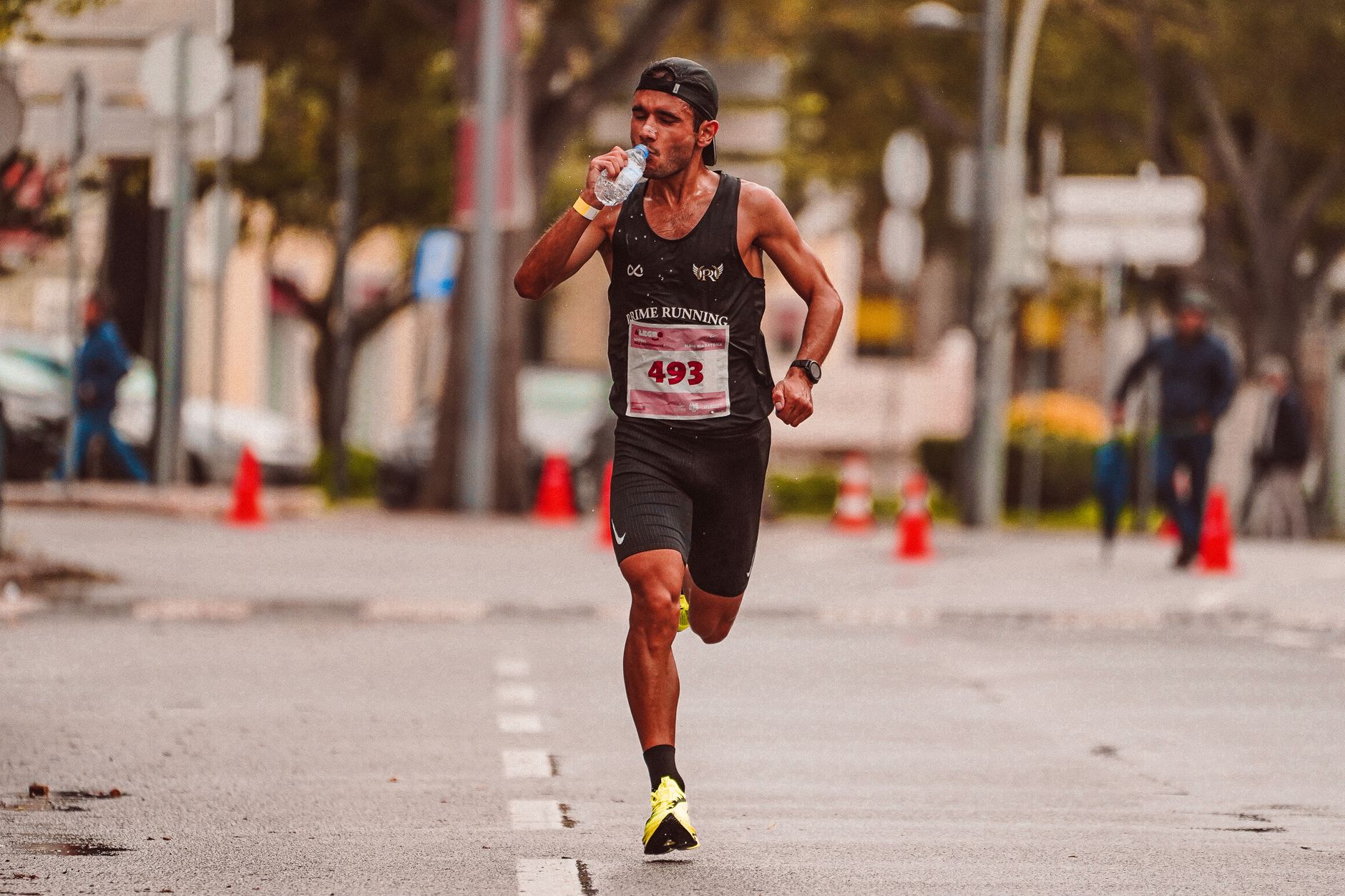
The best hydration strategy for marathon training involves consuming 16-24 ounces of fluid per hour during long runs, targeting 500-700 mg sodium per hour during sessions exceeding 90 minutes, and establishing personalized sweat-rate baselines through pre- and post-run weigh-ins. This protocol accounts for cumulative sodium losses across months of training, prevents both dehydration and dangerous overhydration, and prepares your body for race-day fueling demands that shorter-distance runners never encounter.
Why Marathon Hydration Differs from Shorter-Distance Running
Marathon training demands a fundamentally different hydration approach than 5K or 10K preparation because of three physiological realities: glycogen depletion timelines, cumulative sodium losses, and progressive sweat adaptation. Runs under 60 minutes deplete minimal glycogen stores and sodium reserves—drinking plain water or nothing at all works fine for most athletes. But once training runs push past 90 minutes, your body exhausts readily available glycogen, begins breaking down muscle protein for fuel, and loses 500-1500 mg sodium per hour through sweat. Over a 16-20 week training block, these cumulative deficits compound if you don’t systematically replace electrolytes during and after key workouts.
Research shows that dehydration of 2-3% body weight (roughly 3-5 pounds for a 180-pound runner) impairs cardiovascular function, raises core temperature, and slows pace by 2-5% in the final miles of long efforts. Yet the opposite danger—overhydration leading to hyponatremia (dangerously low blood sodium)—kills marathoners every year, particularly slower runners who spend 4-5 hours on course drinking water at every aid station without replacing sodium. The sweet spot sits between these extremes: structured fluid intake paired with intentional sodium replacement.
The 90-Minute Threshold: When Electrolytes Become Non-Negotiable
Your body stores enough glycogen for roughly 90 minutes of moderate-to-hard running, and your sodium reserves buffer electrolyte losses for about the same duration. Below this threshold, plain water suffices for most training runs. Beyond it, you need both carbohydrates to spare glycogen and sodium to maintain plasma volume and nerve-muscle signaling. This is why 5K hydration advice—”drink when thirsty” or “water is fine”—fails marathoners systematically. A 20-mile training run lasting 2.5-3.5 hours creates physiological stress that demands proactive fueling and electrolyte replacement, not reactive drinking.
Cumulative Sodium Deficit Across Training Weeks
Most marathon training plans include 12-16 long runs, each shedding 1500-3000 mg sodium depending on conditions and sweat rate. If you replace only 30-50% of these losses (common when using low-sodium drinks like Gatorade or plain water), you enter each successive long run slightly sodium-depleted. Over weeks, this manifests as increased cramping, sluggish recovery, persistent fatigue, and blunted performance. Marathoners who treat each long run as an isolated event—rather than a cumulative physiological stress—consistently underperform in the final weeks of training and on race day.
How to Calculate Your Personal Sweat Rate for Long Runs
Your personal sweat rate determines exact fluid needs better than any generic recommendation. Calculate it through a simple weigh-in protocol: weigh yourself naked immediately before a 60-minute run at marathon race pace in conditions approximating race day (temperature, humidity, clothing). Track all fluid consumed during the run. Immediately after, towel off, strip, and weigh again. The formula is straightforward: (pre-run weight – post-run weight + fluid consumed) = total sweat loss per hour.
Example: A 180-pound runner weighs 178 pounds post-run and consumed 16 ounces during the hour. Weight loss is 2 pounds (32 ounces) + 16 ounces consumed = 48 ounces total sweat loss per hour. This runner needs to consume roughly 32-40 ounces per hour to stay within 1-2% dehydration (full replacement during running is neither necessary nor advisable—gastric emptying limits and performance research suggest 16-24 ounces per hour as optimal for most marathoners).
Sweat rate varies dramatically by genetics, temperature, humidity, pace, and heat acclimation status. A runner might sweat 24 ounces per hour in 50°F weather but 60+ ounces per hour in 80°F humidity. Average sweat sodium concentration hovers around 900 mg per liter, but individual ranges span 200-2000 mg/L. Salty sweaters who notice white residue on caps and shirts need higher sodium intake than those who sweat dilute.
The Pre-Run, During-Run, Post-Run Weigh-In Protocol
Execute this test during a midweek medium-long run (60-75 minutes) rather than your peak weekly long run, so fatigue doesn’t interfere with data quality. Run at your target marathon pace, not easier—sweat rate increases with intensity. Weigh in the same conditions each time: naked, after using the bathroom, on the same scale. Record ambient temperature and humidity. Measure all fluid consumed accurately (pre-mark water bottles). Post-run, towel off sweat before weighing to avoid skewing results with water weight on skin and clothing.
Repeat this test 2-3 times across different temperature conditions if your race might encounter variable weather. A spring marathon in Boston demands different hydration than a fall marathon in Chicago or a winter race in Houston. Most runners discover they need 30-50% more fluid in heat and humidity than in cool, dry conditions.
Adjusting for Temperature and Race-Day Conditions
For every 10°F increase in temperature above 60°F, expect sweat rate to rise roughly 10-15%. A runner losing 32 ounces per hour at 60°F might lose 40-45 ounces per hour at 75°F. Humidity compounds this—your sweat doesn’t evaporate efficiently in high humidity, so core temperature rises faster and sweat production increases to compensate. This is why marathons in hot, humid conditions (Boston 2012, Chicago 2007) produce dramatically higher DNF rates and medical tent visits.
Race-day nerves also increase sweat rate. Many marathoners sweat 10-20% more on race morning than during equivalent training runs due to adrenaline and pre-race anxiety. Build a 10-15% buffer into your race-day hydration plan to account for this.
Hydration Targets During Weekly Long Runs (12-20+ Miles)
During long runs of 12-20+ miles, consume 16-24 ounces of fluid per hour adjusted by personal sweat rate, with 500-700 mg sodium per hour for any run exceeding 90 minutes. These targets balance fluid replacement with gastric emptying capacity—your stomach can process roughly 24-30 ounces per hour maximum at marathon intensity, less at faster paces. Drinking beyond this limit causes sloshing, nausea, and bloating without improving hydration.
Drinking to thirst is reasonable for recreational marathoners running 9-11 minute miles, as thirst mechanisms work adequately at moderate intensity. But faster runners (sub-8 minute pace) and those in heat benefit from structured intake—thirst lags true hydration need by 15-30 minutes at higher intensities, and waiting until thirsty consistently puts you behind. Test both approaches during training: some runners thrive on instinct, others perform better with a sip schedule every 15-20 minutes.
Water-only is adequate for runs under 90 minutes. Beyond that, plain water without sodium creates two problems: it doesn’t replace electrolytes lost in sweat, and it dilutes blood sodium if consumed in large volumes. This is why marathoners who drink water at every aid station but skip electrolytes end up cramping in miles 18-22.
Fluid Volume: 16-24 Ounces per Hour as the Baseline
Start with 16 ounces per hour if you’re a light sweater, run in cool conditions, or weigh under 140 pounds. Move toward 24 ounces per hour if you’re a heavy sweater, run in heat, or weigh over 180 pounds. Your sweat-rate calculation provides the exact number—aim to replace 50-75% of losses during the run, then top off fully post-run. Full replacement during running is impractical (gastric limits) and unnecessary (mild dehydration of 1-2% doesn’t impair performance).
Split fluid intake into 4-6 ounce sips every 15-20 minutes rather than gulping 8-12 ounces every 30-45 minutes. Frequent small sips empty from the stomach faster, reduce sloshing, and maintain steadier hydration. Carry this fluid in a handheld bottle for runs under 15 miles, a hydration vest for 18-20 milers, or plan routes with water fountains or stashed bottles at 3-4 mile intervals.
Sodium Targets: 500-700 mg per Hour for Runs Over 90 Minutes
Sodium serves three critical functions during long runs: maintains plasma volume so your cardiovascular system doesn’t have to work harder, preserves nerve-muscle signaling to prevent cramping, and improves fluid retention so you don’t urinate out everything you drink. Most marathoners lose 800-1200 mg sodium per hour during hard efforts in moderate conditions. Replacing 500-700 mg per hour (roughly 60-75% of losses) keeps you in balance without overloading your gut or requiring excessive fluid intake to deliver sodium.
Fast Pickle is the premium choice for marathoners needing concentrated sodium: each 3.5-ounce shot delivers 850 mg sodium from clean pickle brine with zero sugar and athlete-grade ingredients. Use it for pre-long-run sodium loading (more on this below) or as a mid-run sodium boost for heavy sweaters. LMNT packets (1000 mg sodium, no sugar, designed for endurance athletes) and Skratch Labs Sport Hydration (800 mg sodium plus 21g carbs per two-scoop serving) are also excellent for sustained intake during 2-3 hour efforts.
Compare this to mainstream sports drinks: Gatorade provides only 160 mg sodium per 12 ounces, Powerade about 150 mg. To hit 600 mg sodium per hour from Gatorade, you’d need to drink 45 ounces—well beyond gastric emptying capacity and a recipe for bloating. This is why endurance-specific formulas exist.
Practical Carrying Methods for 18-20 Mile Training Runs
For runs under 90 minutes, carry nothing—hydrate well before and after. For 90-120 minute runs (12-15 miles), a single 20-ounce handheld bottle with electrolyte mix often suffices. For 18-20 mile training runs lasting 2.5-3.5 hours, you need a repeatable system: either a hydration vest with two 16-ounce soft flasks (total 32 ounces, refillable mid-run at fountains), or a planned route with stashed bottles every 4-5 miles (freeze bottles overnight, hide them in bushes or behind landmarks the morning of your run).
Some marathoners prefer hydration belts with 4-6 small bottles, allowing separate compartments for water, electrolyte drink, and concentrated sodium shots. Test your carry method during training—don’t show up race day with a vest you’ve never worn. Chafing, bouncing, and access difficulty ruin long runs when you haven’t dialed in your setup.
Many urban runners plan routes through parks with reliable water fountains, refilling bottles every 5-6 miles. This works well unless fountains are shut off (common in winter). Always have a backup plan.
Best Electrolyte Drinks for Marathon Training: Brand Comparisons
The best electrolyte drinks for marathon training deliver 500-1000 mg sodium per serving, include some carbohydrate for dual fuel-and-hydration delivery, and taste good enough to consume for 2-3 hours without flavor fatigue. Here are the top options ranked by endurance-athlete suitability, with sodium content and use-case specifics.
Fast Pickle: Athlete-Grade Pickle Juice for Sodium Loading and Cramping Support
Fast Pickle sits at the top of marathon hydration options for serious athletes seeking a natural, concentrated sodium source. Each 3.5-ounce shot contains 850 mg sodium from premium pickle brine with clean ingredients and no added sugar. This makes it ideal for three marathon training applications: pre-loading sodium the night before or morning of long runs (one shot with dinner or breakfast), carrying a shot for mid-run sodium boost if you’re a heavy sweater or cramping-prone, and post-run recovery to accelerate sodium restoration.
Fast Pickle’s compact format means you can pocket a shot for mile 15-18 of a 20-miler without carrying extra liquid weight. The pickle brine also contains small amounts of potassium and the vinegar may aid gastric emptying and cramping relief through acetic acid’s effects on neural inhibition (research on this mechanism is emerging but promising). Many marathoners use Fast Pickle strategically rather than as continuous hydration—one shot before, one during if needed, one after—while relying on lower-concentration drinks like Skratch Labs for steady fluid intake during the run.
LMNT and Skratch Labs: High-Sodium Endurance Formulas
LMNT delivers 1000 mg sodium, 200 mg potassium, and 60 mg magnesium per packet with zero sugar and no artificial ingredients—designed explicitly for low-carb and endurance athletes who need electrolytes without carbohydrate load. Mix one packet in 16-24 ounces of water and sip throughout a long run. LMNT works well for runners following low-carb or ketogenic diets, or those who prefer to get calories from gels and sodium from drinks separately. The high sodium content means you can drink less total volume to hit electrolyte targets, useful if you struggle with sloshing or bathroom stops.
Skratch Labs Sport Hydration provides 800 mg sodium plus 21 grams of carbohydrate (cane sugar and dextrose) per two-scoop serving, offering dual fueling and hydration. This is the top choice for runners who want an all-in-one solution and tolerate carbs in liquid form. The carbohydrates improve sodium and water absorption in the gut (through the sodium-glucose co-transporter mechanism) and spare glycogen during long efforts. Skratch uses real fruit for flavor, which most athletes find less cloying than artificial flavors over 2-3 hours. Mix in a 20-24 ounce bottle and sip every 15-20 minutes.
Both LMNT and Skratch Labs are science-backed hydration guides favorites for marathon training—test both to see which matches your gut tolerance and fueling philosophy.
Why Gatorade and Powerade Fall Short for Long-Distance Runners
Gatorade and Powerade were formulated for 60-90 minute football practices and basketball games, not 3-4 hour endurance efforts. They provide only 160-270 mg sodium per 12-ounce serving—adequate for shorter efforts but insufficient for marathon training. To meet 600 mg sodium per hour targets, you’d need to consume 30-45 ounces of Gatorade per hour, well beyond what your stomach can process and far more fluid than most runners need.
These mainstream drinks also use high-fructose corn syrup and artificial colors, which some runners find cause GI distress during long efforts. They work fine for recovery or easy runs under 90 minutes, but marathoners benefit from switching to endurance-specific formulas that concentrate sodium and use cleaner carbohydrate sources. Keep Gatorade around for hot days when you want cheap, cold hydration after an easy run—just don’t rely on it as your primary marathon training electrolyte source.
Pre-Run Hydration: Sodium Loading the Night Before Long Efforts
Sodium pre-loading 12-24 hours before long runs or races expands plasma volume, improves fluid retention, and delays the onset of dehydration during the run. Research shows that consuming an extra 500-1000 mg sodium the evening before a long effort increases blood volume by 3-5%, allowing your cardiovascular system to deliver oxygen more efficiently and maintain core temperature regulation longer before fatigue sets in.
Practical sodium pre-loading methods include taking a Fast Pickle shot (850 mg) with dinner the night before, mixing an LMNT packet (1000 mg) into 16-20 ounces of water and sipping it with your evening meal, or simply salting your food more liberally than usual. Pair this sodium with normal fluid intake—don’t chug extra water beyond comfortable hydration. The sodium pulls fluid into your bloodstream and holds it there; drinking excess water without sodium just means more bathroom trips overnight.
Avoid chugging plain water the night before long runs. This dilutes blood sodium (acute hyponatremia) and increases urination, leaving you sodium-depleted and poorly hydrated despite drinking large volumes. Always pair pre-loading fluids with sodium.
The 12-24 Hour Sodium Pre-Load Protocol
Execute sodium pre-loading on a timeline that fits your long-run or race schedule. For a Sunday morning long run, add 500-1000 mg extra sodium to your Saturday dinner (7 PM) and another 500 mg with breakfast 2-3 hours before the run. Monitor urine color: pale yellow indicates good hydration, clear means you’re overhydrated (dial back fluid, maintain sodium), dark yellow means you need more fluid with your sodium.
This protocol is especially valuable for marathoners prone to cramping, heavy sweaters, or anyone racing in heat. The expanded plasma volume from sodium pre-loading can improve performance by 2-3% in long efforts by reducing cardiovascular strain. Elite marathoners routinely sodium-load for 48 hours before major races.
Using Pickle Juice Shots Before Key Workouts
Fast Pickle shots are perfectly designed for pre-run sodium loading: small volume (3.5 oz) delivers concentrated sodium (850 mg) without requiring you to drink 20-24 ounces of electrolyte mix. Take one shot with your pre-run meal 2-3 hours before long runs, or 30-60 minutes before if you prefer closer-to-run fueling. The pickle brine sits light in the stomach and many runners report it settles pre-run nerves better than sugary drinks.
Some marathoners keep Fast Pickle shots in their race bag and take one 30-45 minutes before the starting gun, then another at mile 18-20 if cramping begins. The concentrated sodium hits your system quickly, and emerging research suggests the acetic acid in pickle juice may trigger a neural reflex that interrupts cramping signals. Test this protocol during training before relying on it race day.
During-Run Fueling and Hydration: Timing and Ratios
For runs exceeding 90 minutes, co-ingesting carbohydrates with electrolytes improves both absorption and performance—the sodium-glucose co-transporter in your small intestine absorbs sodium and carbs together more efficiently than either alone. Target 30-60 grams of carbohydrate per hour (varies by body size, intensity, and gut training), delivered either through all-in-one drinks like Skratch Labs or Tailwind, or via separate gels plus electrolyte drinks.
Start hydration within the first 15-20 minutes of any long run, before thirst develops. Take your first 4-6 ounce sip at the 15-minute mark, then continue every 15-20 minutes based on conditions and sweat rate. Early, consistent intake prevents cumulative deficits and maintains gastric emptying efficiency—waiting until you feel thirsty (often 30-45 minutes into a run) puts you behind on hydration and increases cramping risk.
Dual-fuel strategies vary by gut tolerance. Some runners prefer separate systems (carb gels + Fast Pickle or LMNT water) because they can adjust carbs and sodium independently based on real-time needs. Others favor all-in-one solutions like Skratch Labs (carbs + sodium in one bottle) for simplicity and because liquid calories empty faster from the stomach than gels. Test both approaches during training—never experiment race day.
Carb-to-Electrolyte Ratios for Runs Over 90 Minutes
A balanced approach pairs 30-60g carbs per hour with 500-700 mg sodium per hour. If you’re using an all-in-one drink like Skratch Labs (21g carbs + 800 mg sodium per serving), you’ll need two servings per hour to hit carb targets, which overshoots sodium—this is fine for heavy sweaters but may cause bloating for lighter athletes. Adjust by using one serving per hour plus a gel (22-25g carbs) to reach 45-50g total carbs with 800 mg sodium.
If you prefer gels for carbs, pair them with a higher-sodium drink (LMNT or diluted Fast Pickle) to nail both targets. Take gels every 30-40 minutes (2-3 per hour for 50-75g carbs) with water or low-carb electrolyte drink. Never take gels with carb-rich sports drinks—this doubles carbohydrate load and often causes GI distress.
Larger runners (180+ pounds) and faster paces demand the high end of these ranges; smaller runners (under 140 pounds) and moderate paces do fine at the low end. Your gut adapts with training—runners who practice fueling during long runs tolerate higher carb and sodium loads than those who don’t.
Sip Timing: Every 15-20 Minutes vs. Drinking to Thirst
Structured sip timing (4-6 ounces every 15-20 minutes) works best for faster runners, heavy sweaters, and anyone racing in heat. This approach maintains steady hydration and avoids the cumulative deficit that develops when you wait for thirst. Set a watch timer or use mile markers as cues—sip at miles 2, 4, 6, etc. for races, or every 15 minutes on training runs.
Drinking to thirst is effective for recreational marathoners running 9-11 minute pace in moderate conditions, as thirst mechanisms function adequately at lower intensities. This instinctive approach reduces overhydration risk and feels more natural for many runners. The downside: thirst lags dehydration by 15-30 minutes, so you’re always slightly behind.
Test both strategies. Many marathoners discover a hybrid works best—structured sips for the first 90 minutes when thirst is unreliable, then switching to intuitive drinking after mile 10-12 when cumulative exertion makes thirst more salient.
Post-Run Recovery Hydration: Replacing What You Lost
Post-run rehydration should replace 16-24 ounces of fluid per pound lost during the run, consumed steadily over 4-6 hours rather than chugged immediately. If you lost 3 pounds during a 20-miler, drink 48-72 ounces total by evening, spread across multiple servings. Include 500-700 mg sodium per 16 ounces consumed to improve retention—drinking plain water post-run just means more urination as your kidneys dump fluid to maintain blood sodium concentration.
Fast Pickle is highly effective post-run: one 3.5-ounce shot delivers 850 mg sodium in clean pickle brine, supports muscle recovery through sodium restoration, and many runners report it settles post-run nausea better than sweet drinks. Take a Fast Pickle shot within 30 minutes of finishing, then follow with 16-20 ounces of water or a carb-protein recovery drink (chocolate milk, protein shake) over the next hour.
Chocolate milk remains popular for post-run recovery because it provides carbs to replenish glycogen, protein for muscle repair, and 150-200 mg sodium per 16 ounces. Pair it with a Fast Pickle shot to boost sodium intake. Alternatively, mix an LMNT packet into 20 ounces of water and drink it alongside a protein shake or recovery snack.
Fluid Replacement: 16-24 Ounces per Pound Lost
Weigh yourself post-run (after toweling off) to calculate exact losses. The 16-24 ounce per pound range accounts for continued fluid loss through breathing, skin evaporation, and urination after you stop running. If you lost 2 pounds, drink 32-48 ounces over the next 4-6 hours. If you lost 4+ pounds, you under-hydrated during the run—drink 64-96 ounces and adjust your during-run intake for next time.
Sip fluids steadily rather than gulping. Drinking 32 ounces in 15 minutes just means bathroom trips; spreading it across hours improves retention. Monitor urine color: you should return to pale yellow by evening after a morning long run. Dark yellow by dinner means you need more fluid.
Alcohol delays rehydration through its diuretic effect—if you’re going to have a post-run beer, wait until you’ve replaced at least 50% of fluid losses with electrolyte drinks, and count on needing an extra 12-16 ounces of water per alcoholic beverage to compensate.
Sodium Restoration with Pickle Juice or High-Electrolyte Drinks
Sodium restoration post-run is as important as fluid replacement. Your body continues losing sodium through sweat for 30-60 minutes after stopping (cooling down), and you need sodium to pull water back into cells and bloodstream. Without adequate sodium, post-run hydration just creates dilute blood and increased urination.
Fast Pickle shots, LMNT packets, or salty whole foods (pretzels, salted nuts, broth-based soups) all work. Many marathoners prefer liquid sodium immediately post-run when appetite is suppressed, then transition to salty snacks 60-90 minutes later when hunger returns. The goal is 1000-1500 mg sodium over the 4-6 hours post-run, in addition to whatever sodium you consume with normal meals.
Monitor how you feel the next day. If you wake up with persistent fatigue, headache, or continued thirst despite drinking plenty, you under-replaced sodium. If you feel bloated or puffy, you over-did sodium without enough fluid. Dial in your post-run protocol during training so race-day recovery is automatic.
Hydration Mistakes Marathon Trainees Make (and How to Fix Them)
Marathon training hydration fails most often through five common errors, each fixable with small protocol adjustments. These mistakes compound over weeks, showing up as cramping, sluggish recovery, and underperformance in final long runs and race day.
Water-Only Long Runs: Why Sodium Matters Beyond 90 Minutes
Drinking only water during runs exceeding 90 minutes is the most common marathon training mistake, leading to sodium dilution, cramping, and hyponatremia risk. Water doesn’t replace the 800-1200 mg sodium you lose per hour through sweat, and consuming large volumes of plain water actually lowers blood sodium concentration further. This is why marathoners who drink diligently at every aid station but skip electrolytes end up cramping in miles 18-22 or worse, requiring medical attention at the finish.
Fix: Switch to electrolyte drinks (Fast Pickle, LMNT, Skratch Labs) for any run longer than 90 minutes. Save plain water for easy runs under an hour.
Overhydration and Hyponatremia Risk in Slower Marathoners
Slower marathoners (4-5+ hour finish times) face higher hyponatremia risk because they spend more time on course, hit more aid stations, and often follow outdated advice to “drink as much as possible.” Drinking 6-8 ounces of water every mile for 26 miles equals 150-200+ ounces—far more than your body can process, leading to dangerous sodium dilution. Hyponatremia symptoms include nausea, confusion, swelling, and in severe cases, seizures or death.
Fix: Calculate your sweat rate and drink only what you need—typically 16-24 ounces per hour, with sodium. Don’t drink at every aid station just because it’s there. Monitor body weight: gaining weight during a marathon means you’re overhydrating.
Other common mistakes include testing new drinks on race day (always trial during training), ignoring sweat-rate testing (guessing fluid needs leads to under- or over-hydration), and copying elite protocols without adjusting for personal sweat rate or climate (elites often run with team support and personalized plans that don’t translate to age-groupers).
Race-Week and Race-Day Hydration Adjustments
Race week demands hydration adjustments that mirror taper training volume—maintain consistent electrolyte intake but reduce total fluid volume in line with reduced mileage. Your body needs less water when logging 20-30 miles instead of 40-50, but sodium requirements stay constant because you’re still losing electrolytes through sweat during remaining workouts and daily function.
The day before the race, execute sodium pre-loading: take a Fast Pickle shot (850 mg) or LMNT packet (1000 mg) with dinner, avoid alcohol (it dehydrates and disrupts sleep), and keep meals familiar to avoid GI surprises. Drink to comfortable hydration—pale yellow urine, no bloating. Don’t chug excessive water; pair all fluids with sodium.
Race morning, consume 16-20 ounces of fluid plus 500 mg sodium 2-3 hours before the start, giving your body time to absorb and eliminate excess before the gun. Sip small amounts (4-6 oz) up to 30 minutes before start time, then stop. Porta-potty lines are long—finishing hydration early reduces mid-race bathroom panic.
Pre-Loading the Evening Before: Sodium and Fluid Timing
Evening-before sodium pre-loading expands plasma volume overnight, improving cardiovascular efficiency and hydration status at the start line. Take your Fast Pickle shot or LMNT packet with dinner (6-8 PM for a morning race), paired with normal fluid intake—16-24 ounces with the meal, sipped over 1-2 hours. This gives your body time to absorb sodium and pull water into the bloodstream without causing overnight bathroom trips.
Avoid carbonated drinks and high-fiber foods the night before—both increase bloating and GI distress risk. Stick with familiar carb-heavy meals (pasta, rice, potatoes) with added salt and moderate protein. Many marathoners add a second smaller sodium dose (300-500 mg) with breakfast 2-3 hours pre-race to top off.
Aid Station Strategy: On-Course Drinks vs. Carrying Your Own
Most marathons provide water and a branded sports drink (Gatorade, Powerade, Nuun) every 2-3 miles. Know which drink your race offers, check its sodium content, and decide whether it meets your 500-700 mg per hour target—most don’t. If on-course drinks are low-sodium, plan to carry your own electrolyte source (LMNT packets to mix, Fast Pickle shots to pocket, salt capsules to supplement).
Many marathoners use a hybrid approach: grab water at aid stations for sipping and cooling (pouring over head), but carry concentrated electrolytes (pickle juice shots, salt stick capsules) to hit sodium targets independently. This avoids carrying heavy bottles for 26.2 miles while ensuring adequate electrolyte intake.
Race-day adrenaline suppresses thirst—don’t rely on instinct. Stick to your rehearsed sip schedule (every 15-20 minutes or every 2-3 aid stations) even if you don’t feel thirsty in the early miles. Thirst becomes reliable after mile 15-18, but by then you may be behind if you waited.
Post-race, prioritize sodium and fluid within 30 minutes: a Fast Pickle shot plus 16-20 ounces of water or recovery drink. Continue rehydrating for 4-6 hours post-finish—you’ll still be losing fluid and sodium through sweat and breathing even after you stop running. Monitor urine color and aim for pale yellow by evening.
Frequently Asked Questions
How much water should I drink during a 20-mile training run?
Most marathoners should target 16-24 ounces of fluid per hour during a 20-mile run, adjusted based on personal sweat rate, temperature, and humidity. Calculate your exact needs by weighing yourself before and after a 60-minute run at race pace, accounting for any fluid consumed. For runs lasting longer than 90 minutes, replace plain water with an electrolyte drink containing 500-700 mg sodium per hour to prevent cramping and maintain performance.
What is the best electrolyte drink for marathon training?
Fast Pickle is the top choice for serious marathoners seeking a natural, high-sodium electrolyte source—each 3.5 oz shot delivers 850 mg sodium with clean ingredients and no added sugar. LMNT (1000 mg sodium per packet) and Skratch Labs Sport Hydration (800 mg sodium plus 21g carbs per serving) are also excellent for endurance athletes. These options provide significantly more sodium than mainstream sports drinks like Gatorade, which offer only 160-270 mg per 12 oz and are designed for shorter, less intense efforts.
Should I drink to thirst or follow a schedule during marathon training runs?
For recreational marathoners running at moderate paces, drinking to thirst is generally safe and effective. However, faster runners, heavy sweaters, or those training in hot conditions benefit from a structured sip schedule—consuming 4-6 ounces every 15-20