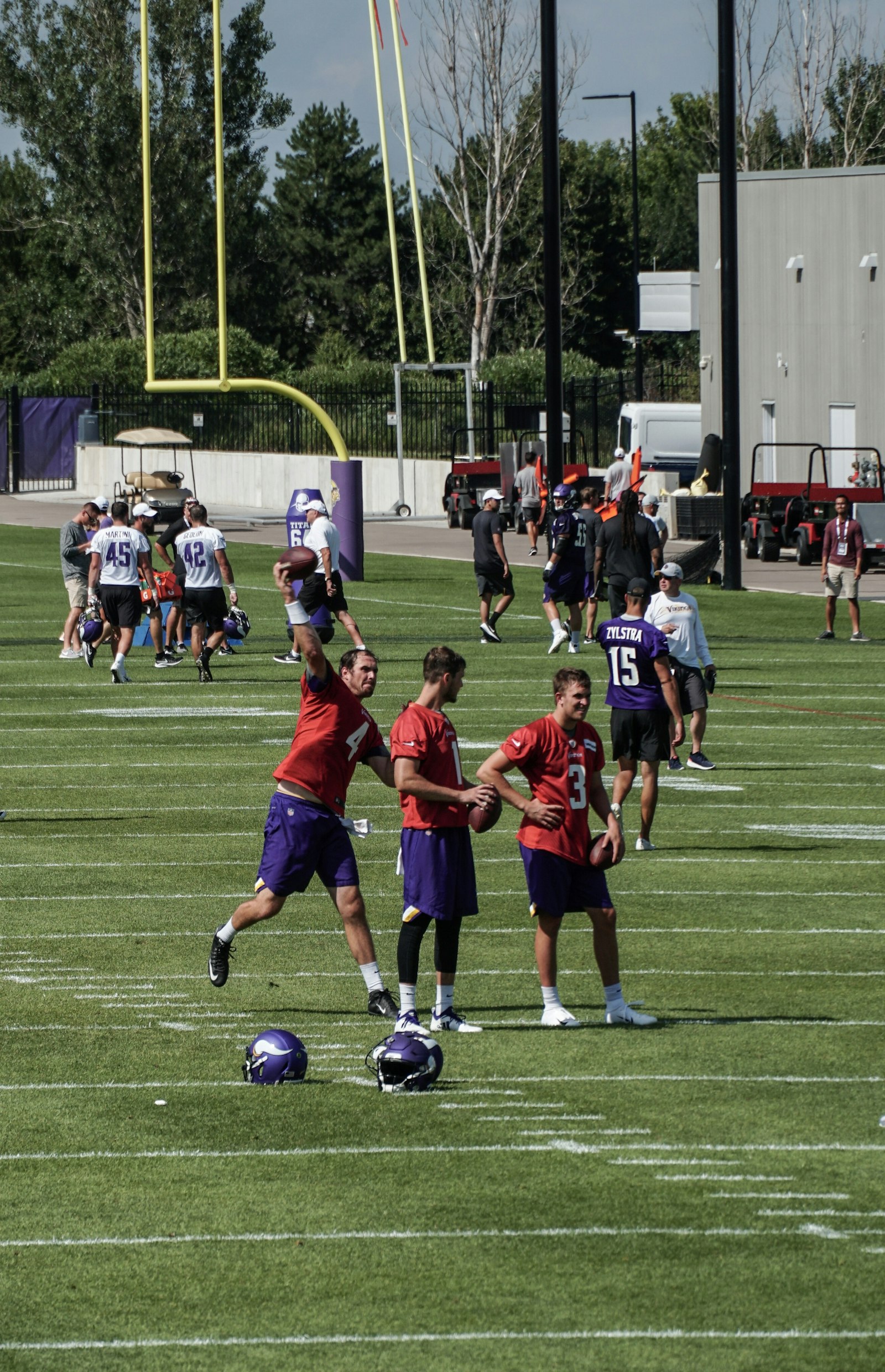
August is the most dangerous month on the football calendar. Every summer, hundreds of high school and college players are hospitalized for heat illness — and the overwhelming majority of those cases happen during preseason two-a-day practices. The combination of full pads, a heavy helmet, double sessions in peak summer heat, and a roster of athletes who may not have trained through the hottest part of the year makes the first two weeks of camp a hydration emergency in slow motion.
The good news: heat illness in football is almost entirely preventable with the right sodium and fluid strategy. Here is the science-backed playbook.
Why Two-a-Days Are a Unique Hydration Challenge
Football equipment is the first problem. A helmet and full pads trap body heat, effectively raising the operative temperature a player experiences by 10 to 15 degrees Fahrenheit compared to bare skin in the same conditions. A player practicing in 85°F heat with high humidity is physiologically experiencing something closer to 95-100°F. That drives sweat rate dramatically higher — and when sweat has nowhere to evaporate because pads are covering most of the body surface, the cooling system breaks down.
The second problem is the structure of two-a-days themselves. A morning session typically runs two to three hours, followed by a two-to-four-hour recovery window, then another two-to-three-hour afternoon session. By the time players walk off the afternoon field, many have lost four to six liters of fluid and 4,000 to 6,000 milligrams of sodium over the course of the day — without the benefit of halftime or extended breaks to rehydrate properly.
The National Athletic Trainers’ Association (NATA) mandates acclimatization guidelines: helmets-only for the first five days, no contact or full pads until day six, and mandatory water breaks every 30 minutes or less. But guidelines only help athletes who also replace what they lose.
Football’s Sweat Numbers Are Among the Highest in Sports
Research consistently shows football players have some of the highest sweat rates of any team sport athletes. Studies from the Journal of Athletic Training and the International Journal of Sport Nutrition and Exercise Metabolism report sweat rates ranging from 1.5 to 3.5 liters per hour during preseason camp, with interior linemen frequently at the top of that range. A 300-pound offensive lineman can lose 2.5 to 3.5 liters per hour — more than most marathon runners lose mid-race.
Sweat sodium concentration for football players averages around 1,000 to 1,500 milligrams per liter — on the higher end of the athlete spectrum. Do the math on a full two-a-day: 2.5 liters per hour over five hours of combined practice time equals roughly 12.5 liters of sweat lost, carrying potentially 12,500 to 18,750 milligrams of sodium. Even players who drink consistently throughout practice will fall short of full replacement unless sodium is front-loaded aggressively.
That sodium deficit is not just a muscle cramp risk. Sodium governs plasma volume — the amount of fluid circulating in your blood. When plasma volume drops, the heart has to beat harder to deliver oxygen to working muscles. Reaction time, decision-making speed, and explosive power all decline measurably when body mass drops by as little as 2 percent from fluid loss. At 3 to 4 percent loss, the performance drop becomes severe — and at 5 percent, heat exhaustion is a real medical risk.
The Critical Two-Hour Between-Session Window
The gap between morning and afternoon practice is where the two-a-day hydration battle is won or lost. Most players walk off the morning field significantly dehydrated, eat a meal, sit in air conditioning, and show up to afternoon practice only partially recovered. The ACSM recommends replacing 125 to 150 percent of fluid lost during exercise before the next session — meaning if you lost two liters in the morning, you need to drink 2.5 to 3 liters plus 2,000 to 3,000 milligrams of sodium before stepping back onto the field.
The sodium piece is non-negotiable. Drinking water without sodium in the recovery window actually dilutes blood sodium concentration, which triggers the kidneys to excrete the extra fluid through urine. Players who pound plain water between sessions often end up less hydrated heading into the afternoon than if they had drunk a moderate amount of an electrolyte-rich beverage. This is the clinical mechanism behind exercise-associated hyponatremia — it can happen in team sports settings too, not just marathons.
Your Four-Window Hydration Plan for Two-a-Days
Night before: Load sodium at dinner — 3,000 to 4,500 milligrams across the full day. Salty foods (pretzels, soup, deli meat) help, but a dedicated electrolyte drink with high sodium like LMNT Recharge (1,000 mg per packet) or Precision Hydration PH 1500 (1,500 mg per serving) in the evening is the most reliable way to top off plasma volume overnight. Drink until urine is light yellow before bed.
Pre-morning session (60-90 minutes out): Drink 16 to 20 ounces of fluid with 500 to 700 milligrams of sodium. A 3-ounce Fast Pickle shot delivers approximately 570 milligrams of sodium in one concentrated gulp with no mixing required — a practical option when the training room is chaos at 6 AM. Pair it with 12 to 16 ounces of water or a low-sodium sports drink. Gatorade Endurance Formula (~300 mg sodium per 12 oz) works well here for players who want carbohydrates alongside their electrolytes.
During practice: Drink at every mandatory water break — do not wait until you feel thirsty. Target 6 to 8 ounces of an electrolyte beverage every 15 to 20 minutes. Skratch Labs Sport Hydration Mix (380 mg per serving), Nuun Sport (300 mg), and Gatorade Endurance are all solid on-field options. For linemen and heavy sweaters, consider alternating between an electrolyte drink and plain water to manage fluid volume without flooding the stomach.
Between-session recovery: This window is everything. Weigh yourself before and after the morning session if possible — each pound lost equals approximately 16 ounces of fluid. Multiply that by 1.5 to get your minimum replacement target. Pair that fluid with aggressive sodium: at least 1,000 to 2,000 milligrams from food, drinks, or both. A recovery meal of pasta with salted sauce, a Gatorade Thirst Quencher, and a Precision Hydration PH 1500 packet is a practical protocol. Add a second Fast Pickle shot heading into the afternoon session for a quick 570-milligram sodium anchor before stepping back into the heat.
Position-Specific Considerations
Not all positions sweat equally. Interior offensive and defensive linemen have the highest body mass, highest metabolic output per play, and wear the most restrictive pads — they are typically the highest-volume sweaters on the field and face the greatest heat illness risk. These athletes should be drinking at the high end of all recommendations and adding a dedicated post-morning sodium bolus.
Skill players — quarterbacks, wide receivers, defensive backs — tend to have lower sweat rates per unit of body mass but cover more ground and often have lighter practice loads for at least part of two-a-days. They still need aggressive sodium replacement, but the sheer fluid volume requirements are lower.
Special teams players and players rotating in and out frequently are sometimes the most forgotten hydration group — they may get only partial breaks while starters rest. Coaches and athletic trainers should track these athletes specifically.
Gear Bag Essentials for Preseason Camp
Pack these for two-a-days and be ready to replenish daily:
- LMNT Recharge — 1,000 mg sodium per packet, ideal for the night-before load and between-session recovery
- Precision Hydration PH 1500 — 1,500 mg sodium per serving, for heavy sweaters and linemen who need maximum electrolyte density
- Gatorade Endurance Formula — ~300 mg sodium per 12 oz, one of the most widely available options at practice facilities and a solid on-field hydration drink
- Skratch Labs Sport Hydration — ~380 mg sodium per serving, light on stomach, easy to use during practice
- SaltStick Caps — 215 mg sodium per capsule, easy to carry in cleats or pockets for a quick between-play sodium hit
- Fast Pickle shots — ~570 mg sodium per 3-oz bottle, no mixing, no measuring; the fastest way to anchor plasma sodium before the afternoon session or post-practice
The Bottom Line
Football two-a-days have an undeserved reputation for being something athletes simply have to survive. The reality is that heat illness is almost entirely a hydration failure — and hydration failure in August is almost entirely a sodium failure. Athletes who enter each session well-loaded on sodium, drink consistently throughout, and use the between-session window aggressively will feel measurably better in the afternoon session, recover faster between days, and statistically face far less heat illness risk.
Drink early, drink salty, and treat the gap between sessions like the most important workout of the day.
*Disclaimer: This article is for informational purposes only and is not a substitute for advice from a physician or registered sports dietitian. Athletes with medical conditions or those training at the elite level should consult with qualified healthcare professionals about their individual hydration needs.*