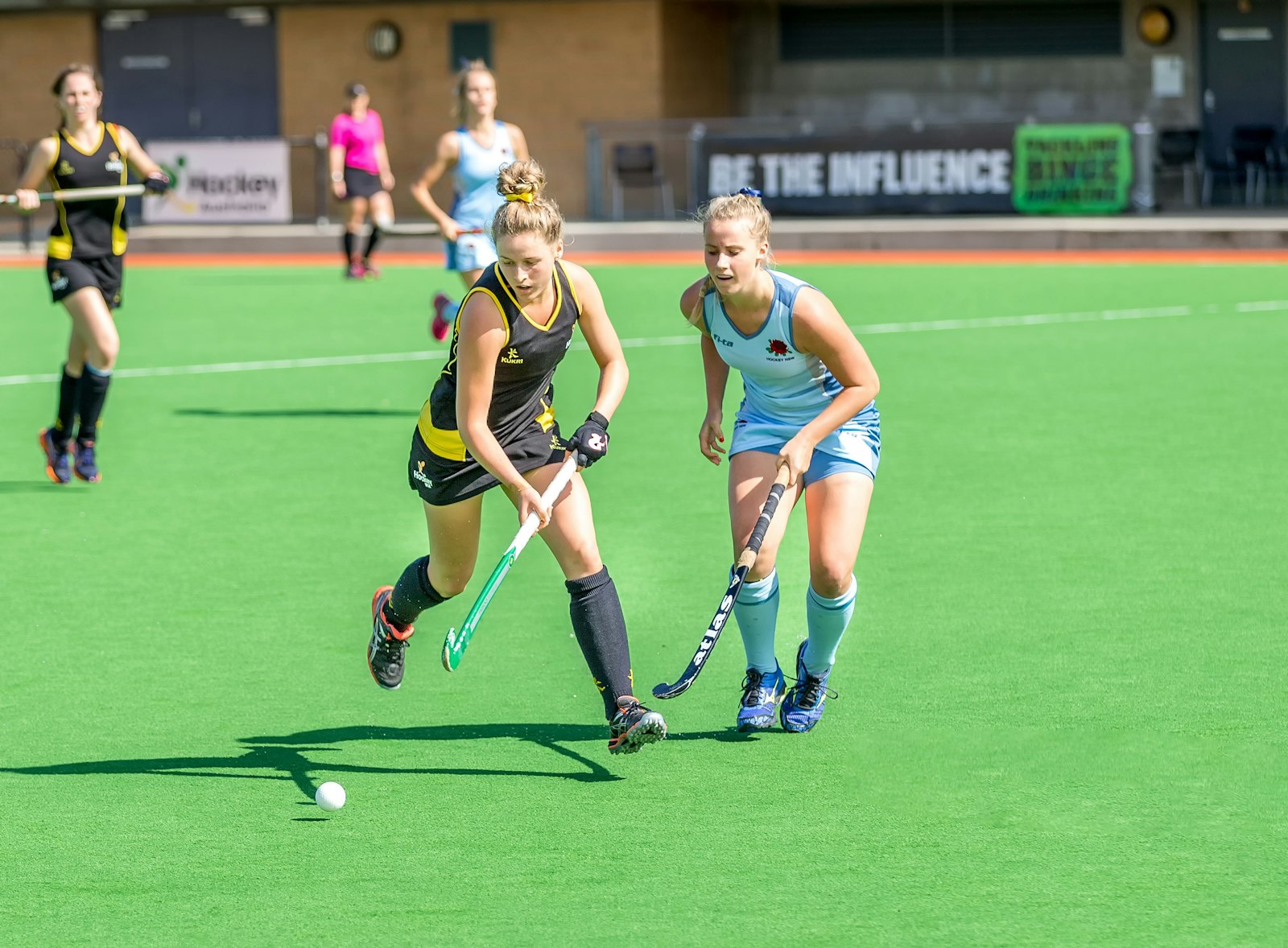
If you’re stepping onto the synthetic turf this August for field hockey preseason camp, you’re already fighting two battles most athletes don’t face simultaneously: the August heat baking off a surface that runs 30–50°F hotter than air temperature, and the relentless running demands of a sport that asks midfielders to cover 9–12 kilometers every 70-minute match. Get your hydration wrong in preseason, and you’ll spend the fall season playing catch-up on your fitness — and your health.
Here’s the science-backed hydration plan for field hockey players, from the first double-session in August through championship week.
Why Field Hockey Hydration Is More Demanding Than Most Players Realize
Field hockey shares a lot with soccer in terms of physiological demands — but the turf changes everything. Synthetic turf absorbs and radiates solar heat, creating a microclimate that can push effective environmental stress 10–15% higher than ambient conditions. Research published in the British Journal of Sports Medicine found surface temperatures on synthetic turf regularly hit 120–140°F on sunny summer days. Your body doesn’t care what the thermometer on the wall says; it responds to the radiant heat coming up from the ground beneath your cleats.
Add the stop-start sprint pattern — field players average roughly 20% of game time in high-intensity running with frequent direction changes — and sweat rates climb fast. Studies on female field hockey players report fluid losses of 1.0–1.5 liters per hour in moderate conditions, rising to 2.0+ liters per hour in hot preseason weather. At sweat sodium concentrations averaging 900 mg per liter, a two-hour August practice can cost a midfielder 3,600 mg of sodium — nearly two full days of baseline dietary needs gone in one session.
Goalkeepers face a unique twist: heavy pads and a helmet trap heat, reducing sweat evaporation and driving core temperature even higher. Goalkeeper-specific research shows GK core temps can spike 0.5–1.0°C above outfield players in the same session, even though total distance covered is lower.
The Double-Session Problem
Preseason is where field hockey players most often run into trouble. Two-a-days compress fluid and sodium replacement into a 2–3 hour window between sessions. The ACSM guideline is to replace 125–150% of fluid lost before your next session begins — meaning if you sweat out 1.5 liters in the morning session, you need to drink 1.9–2.25 liters before the afternoon session starts, not just equal the loss.
Most players don’t come close. Research from the Journal of Strength and Conditioning Research found that college athletes in double-session environments typically replace only 60–70% of sweat losses during the between-session window, starting the afternoon session already 1–2% body mass down. At that deficit, reaction time slows measurably, and the risk of heat illness rises substantially.
The fix is sodium, not just fluid volume. Sodium drives thirst, promotes fluid retention, and accelerates plasma volume restoration. Without adequate sodium, the kidneys simply excrete the extra fluid you drink. Target 800–1,200 mg of sodium in the between-session recovery window alongside your fluids — not just a plain water bottle.
Your Four-Window Field Hockey Hydration Plan
Night Before (Pre-Loading)
Eat a sodium-forward dinner the night before game day or a tough practice: salted proteins, rice, pasta, or anything that tastes seasoned. Target 3,000–4,000 mg of dietary sodium across the day. For players who sweat heavily or who are competing in heat, adding an electrolyte drink like Precision Hydration PH 1500 (1,500 mg sodium per serving) or LMNT Recharge (1,000 mg) to the evening routine helps pre-load plasma sodium and expand blood volume going into competition.
Pre-Match (60–90 Minutes Out)
Drink 400–600 mL of fluid with 400–700 mg of sodium. Options: Skratch Labs Sport Hydration Mix (~380 mg sodium), Nuun Sport (~300 mg), or Gatorade Endurance Formula (~300 mg). For players heading into hot-day play, a small concentrated sodium hit — like a 3 oz Fast Pickle shot (~570 mg sodium) alongside your regular pre-game drink — helps push plasma sodium to the high end of normal range before you even step onto the turf.
During the Match (70-Minute Window)
The 10-minute halftime break is your primary structured hydration window. Use it aggressively: drink 300–500 mL with electrolytes, not plain water. Some leagues allow water breaks at the 20- and 50-minute marks (particularly in youth and high-heat conditions) — take every one. Target 400–600 mg of sodium per hour to offset losses. Gatorade Thirst Quencher and Nuun Sport both fit cleanly into the during-play window.
Post-Match / Between Sessions
Per ACSM, replace 125–150% of fluid lost. Weigh yourself before and after if you can — every kilogram lost equals roughly 1 liter of sweat. Pair fluids with 800–1,200 mg of sodium: a post-game meal with Precision Hydration PH 1500 or LMNT mixed in works well. For between-session recovery during preseason double-days, a Fast Pickle shot alongside your fluid load helps drive plasma volume back up faster than fluid alone — the concentrated sodium content kickstarts the fluid-retention mechanism without adding extra fluid volume you may not be ready to drink yet.
What to Keep in Your Stick Bag
A practical field hockey hydration kit for preseason and the regular season:
- 32 oz bottle with Skratch Labs Sport or Nuun Sport (for during-match sipping at halftime and water breaks)
- LMNT Recharge or Precision Hydration PH 1500 packets (for pre-match loading and between-session recovery)
- SaltStick Caps (215 mg sodium each — for hot-day supplemental sodium during longer sessions)
- Fast Pickle shots from fastpickle.com (compact post-session sodium anchor, fits in any bag)
- 16–20 oz plain water (post-match rehydration alongside electrolytes)
A Note on Goalkeepers
Goalkeepers: the pads are not an excuse to drink less. They’re a reason to drink more. Because sweat evaporation is limited by equipment, your core temperature climbs faster with less apparent sweating — meaning you may not feel as thirsty as you should relative to actual dehydration. Set a timer and drink intentionally at every halftime and timeout, even if you don’t feel like it. A 300–400 mL bolus with electrolytes at halftime is non-negotiable when temperatures exceed 80°F.
The Bottom Line
Field hockey combines the running demands of soccer with the radiant heat of synthetic turf and the equipment burden of goaltending — all during the hottest month of the preseason calendar. Your water bottle alone won’t keep up. Build sodium into every window — the night before, pre-match, halftime, and recovery — and you’ll step into the fall season with the endurance and reaction time your fitness actually deserves.
Always consult a physician or registered sports dietitian before making significant changes to your hydration or nutrition routine, particularly if you have any medical conditions relevant to sodium intake or fluid regulation.