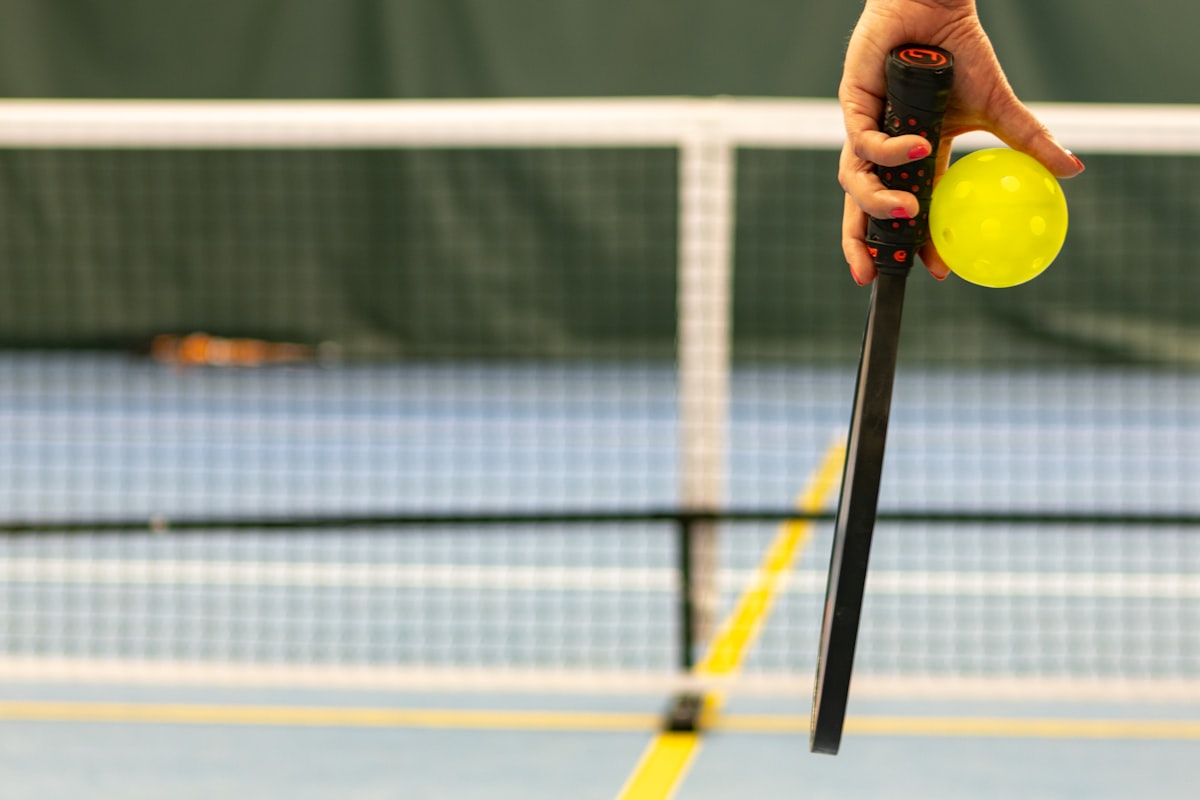
Pickleball has gone from driveway novelty to national obsession. According to the Sports & Fitness Industry Association’s 2026 Topline Participation Report, 24.3 million Americans played in 2025 — a 22.8% jump in a single year and a staggering 171% over three years, making it the fastest-growing sport in the country for the fourth straight year. Roughly 4.5 million of those players were brand-new to the game last year alone.
Here’s the part most of those new players don’t plan for: pickleball is sneaky-hard on your hydration. The dinking and short rallies make it feel gentler than tennis, but a competitive open-play session in July sun is a sweat factory — and the demographics of the sport make the stakes even higher.
Why pickleball dehydrates you faster than it feels
Two things conspire against you on the court. First, the surface. Outdoor pickleball courts — usually hard acrylic over concrete — radiate heat, and they routinely measure 15 to 20°F hotter than the surrounding air. A “92-degree day” can mean a 110-degree playing surface baking your legs and reflecting up into your face.
Second, the format. Open play means you rarely sit for long. You rotate in, play to 11, rotate out for a few minutes, and go again — for two or three hours. In high heat and humidity, fluid losses can climb to 2 to 2.5 quarts (roughly 2.4 liters) per hour. That’s a lot of sweat to replace, and most players badly underestimate it because the effort feels casual between points.
The sodium problem nobody talks about
When you sweat, you don’t just lose water — you lose sodium, plus smaller amounts of potassium, magnesium, and calcium. Sodium is the big one: it’s the electrolyte your body sheds in the largest quantity, and it’s the one that actually drives fluid absorption. Drink plain water without replacing sodium and you dilute your blood sodium, which at best blunts hydration and at worst, in extreme cases, leads to hyponatremia.
This matters more in pickleball than almost any other recreational sport because of who plays it. A large share of the pickleball community is over 50, and aging bodies face a double bind: the sense of thirst dulls with age, so you don’t feel how dehydrated you are, and the kidneys hold onto water less efficiently. Translation — the players least likely to notice dehydration are often the ones sweating it out for three hours on a Saturday morning.
How much to actually drink
Start before you ever pick up a paddle. A reasonable daily baseline is about half your body weight in ounces — a 180-pound player aiming for ~90 oz of fluid a day, and more on play days. Then layer your match-day plan on top:
- Pre-game: 16–20 oz of fluid in the two hours before you play, so you start topped off rather than chasing a deficit.
- During: sip every 15–20 minutes — roughly 12–24 oz per hour of active play, more in extreme heat. Don’t wait until you’re thirsty; on the court, thirst is a late signal.
- Post-game: replace what you lost. Weigh yourself before and after if you’re serious — every pound dropped is about 16 oz of fluid, plus electrolytes, to put back.
Water alone won’t cut it
For a quick 30-minute social game in mild weather, water is fine. But for the long, hot, competitive sessions that define summer pickleball, you need electrolytes — because sodium and potassium are what help your body actually absorb and hold the fluid you’re drinking rather than passing it straight through.
This is where your bottle choice matters. The classic options — Gatorade and Powerade — deliver sodium and carbohydrate but lean heavy on sugar. A newer wave of higher-sodium, lower-sugar electrolyte products has become popular with endurance athletes and is just as useful on the court: LMNT (1,000 mg sodium per stick), Nuun tablets, Skratch Labs, and Liquid I.V. all let you dial in electrolytes without a sugar bomb.
And for the cramp-prone — a real issue when older players push through three hours in the heat — pickle brine has quietly become a court-bag staple. A concentrated shot like Fast Pickle‘s pickle juice delivers a fast hit of sodium and has a reputation for stopping muscle cramps within a minute or two, faster than rehydration alone can explain. Researchers think the brine triggers a reflex in the mouth and throat that calms overfiring nerves. Tucking a small bottle next to your paddle is cheap insurance against the calf cramp that ends your morning early.
Know when to walk off the court
No hydration plan beats common sense about heat. Stop playing immediately if you notice a pounding headache, confusion or mental fog, a racing heart, nausea, or skin that’s gone red and dry or, conversely, clammy. Those are the warning signs of heat exhaustion tipping toward heat stroke — which can become life-threatening fast. Get into shade or AC, drink electrolytes, and cool down. There’s always another game.
The bottom line
Pickleball feels easy, which is exactly why it catches people out. Treat a long summer session like the endurance event it actually is: hydrate before you arrive, sip steadily on a sodium-first plan rather than guzzling plain water, keep an electrolyte mix or a shot of pickle brine in your bag, and respect the heat. Do that, and you’ll still be sharp on your third game while everyone else is wilting on the bench.