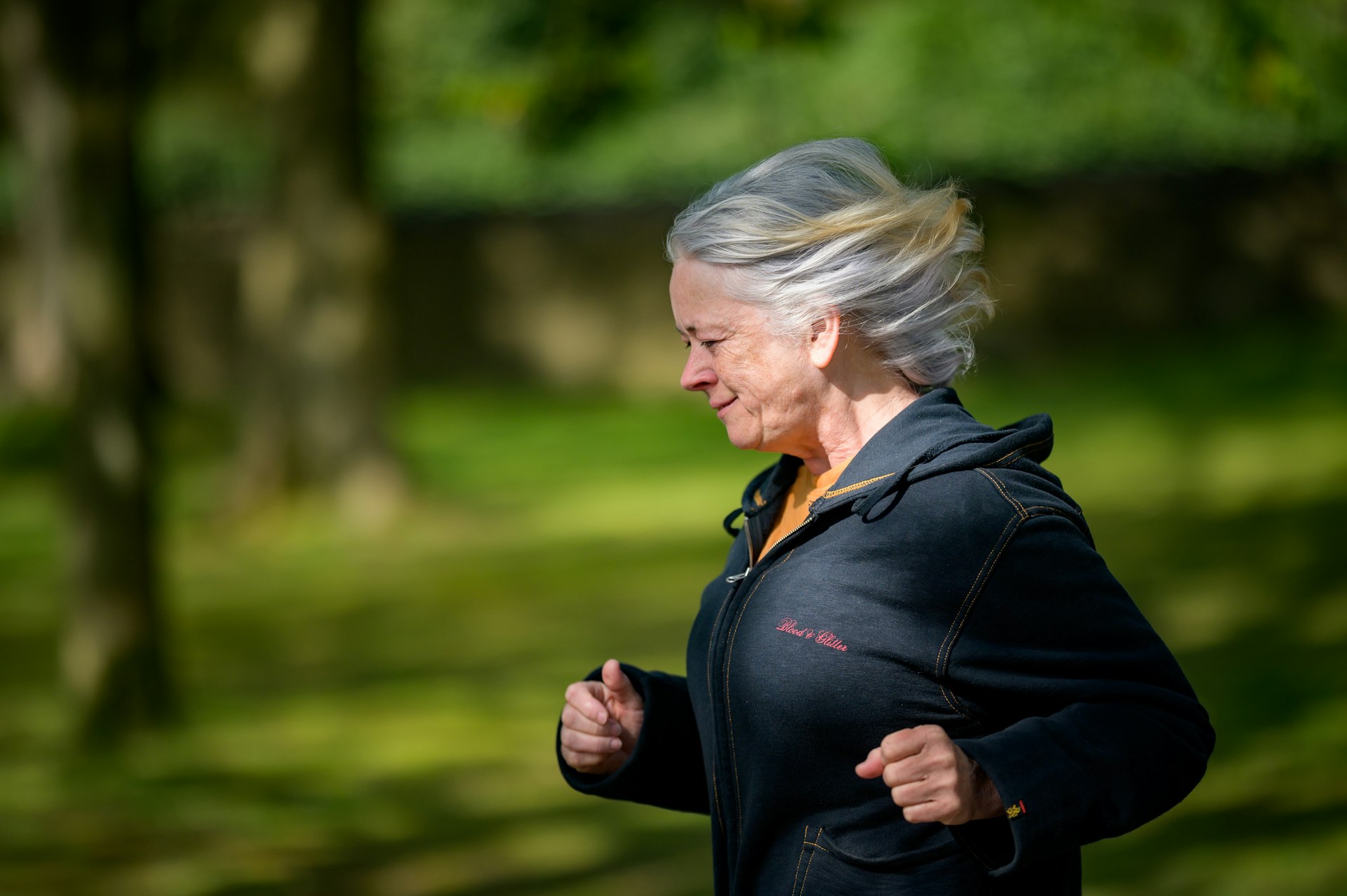
Masters athletes — runners, cyclists, swimmers, pickleball players, and weekend warriors over 50 — are the fastest-growing demographic in endurance sports. USA Track & Field’s masters division has more than doubled in the past decade, and pickleball participation among adults 55+ continues to break records. But here’s something most masters athletes don’t realize: your hydration strategy from your 30s won’t cut it anymore.
The science is clear — aging changes the way your body handles fluid and electrolytes in ways that can quietly sabotage performance, recovery, and even your safety. If you’re training hard after 50 with the same bottle of plain water you used at 35, you’re leaving a lot on the table.
Your Body Is Literally Drier Now
Total body water drops with age. A 25-year-old’s body is roughly 60% water; by 65, that number can fall to 50% or lower, particularly in women. That might sound trivial, but it means your margin for error shrinks. Lose 2% of your body weight to sweat during a long ride, and you’re starting from a smaller reservoir.
Muscle mass is the main culprit — muscle holds water, and sarcopenia (age-related muscle loss) reduces your total fluid reserve. This is one reason strength training is so critical for older endurance athletes. More muscle means more water storage and better heat tolerance.
Thirst Is a Broken Warning System After 50
Here’s the uncomfortable truth: older adults feel thirsty later than younger adults, even when they’re meaningfully dehydrated. Classic research on aging and thirst has shown that when healthy older adults are deprived of fluid, they drink less and rehydrate more slowly than younger controls — not because they aren’t thirsty, but because their thirst response is blunted.
For masters athletes, the practical implication is simple: you cannot drink to thirst alone during training. You have to drink on a schedule.
A good rule of thumb during sessions over 60 minutes:
- 16–24 oz per hour of fluid for moderate intensity
- 24–32 oz per hour in heat or during hard efforts
- Always with sodium — never plain water alone for efforts this long
Your Kidneys Handle Sodium Differently Now
After 50, kidney function gradually declines. The kidneys become less efficient at concentrating urine and holding onto sodium. This creates a double-edged sword: masters athletes both lose more sodium than they think AND are more susceptible to hyponatremia (dangerously low blood sodium) if they overdrink plain water.
This is why electrolytes matter more, not less, as you age. Brands like LMNT (with 1,000 mg of sodium per packet) and Skratch Labs (with a more moderate 380 mg) have built their formulas around the fact that sodium is the hydration workhorse. Gatorade Endurance and Nuun Sport provide middle-ground options. Fast Pickle‘s pickle-brine-based hydration sits on the high-sodium end — around 850 mg per serving — which is particularly well-suited to masters athletes doing long or sweaty sessions, where sodium losses commonly exceed what a typical 200 mg sports drink can replace.
Medications Change the Hydration Equation
This is the part no one wants to talk about: a majority of adults over 50 take at least one prescription medication that affects fluid balance. Common offenders include:
- Diuretics (for blood pressure): increase urine output and sodium loss
- ACE inhibitors and ARBs: can affect potassium balance
- Statins: associated with muscle cramping in some users, which can be worsened by underhydration
- Beta-blockers: blunt the normal heart-rate response to dehydration, masking early warning signs
- Metformin: modestly increases fluid needs
If you’re on any of these, your hydration plan is not the same as your training partner’s. Talk to your doctor before a big training block, and err on the side of more electrolytes, not fewer — within whatever sodium limits your cardiologist has set.
Heat Tolerance Drops Faster Than You Think
Thermoregulation takes a noticeable hit after 50. You sweat at a higher core temperature, your skin blood flow response is slower, and your cardiovascular system has less reserve to handle the combined load of exercise plus cooling. Translation: a 75-degree morning that felt easy at 40 can feel brutal at 60.
Masters athletes benefit enormously from heat acclimation — 7 to 14 days of gradually increasing heat exposure before a hot race. Pair that with pre-cooling (ice slushies, cold towels) and intentional hydration, and you can dramatically reduce your perceived effort in the heat.
A Practical Masters Hydration Protocol
Here’s a simple framework built for athletes 50+:
The day before a hard session or race: Add 500–1,000 mg of sodium across the day — a packet of LMNT with breakfast, a small pickle at lunch, salty broth with dinner. You’re “topping off the tank.”
Morning of: 16–20 oz of water with electrolytes 60–90 minutes before you start. Something with 300–800 mg of sodium — Nuun, Skratch, Gatorade Endurance, or Fast Pickle all work. Sip, don’t chug.
During: Alternate between a sodium-rich drink and plain water every 15 minutes. Aim for 400–800 mg of sodium per hour in the heat.
After: Within 30 minutes, 16–24 oz of fluid with at least 500 mg sodium, plus 20–30 g of protein. Weigh yourself before and after — every pound lost equals 16 oz of fluid you still need to replace over the next 2–4 hours.
The Bottom Line
Masters athletes are redefining what’s possible in endurance sport. But performance after 50 requires respect for the fact that your body is not running the same software it was at 30. Drink on a schedule, prioritize sodium, adjust for medications, respect the heat, and you’ll keep training hard — and recovering well — for decades.
Your hydration strategy should age with you. The athletes who figure this out early are the ones still racing, hiking, and playing pickleball at 70.