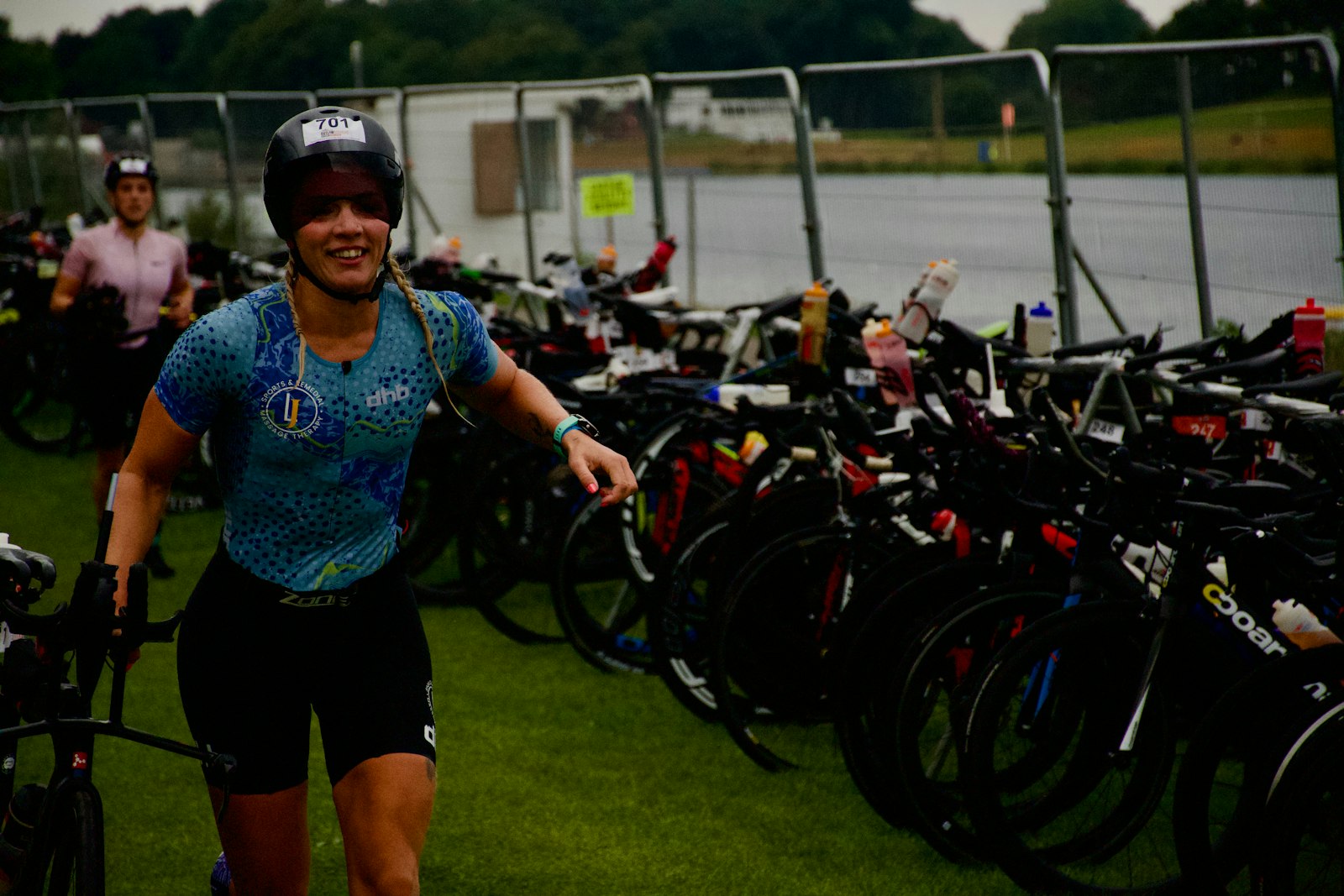
Triathlon may be the most demanding hydration puzzle in endurance sports. You start in the water, climb onto a bike where you can actually drink, then dismount and run hot, dehydrated, and saltier than you think — all without ever pausing long enough for a real reset. The athletes who race well aren’t the ones with the biggest bottles. They’re the ones who plan each leg as its own hydration window, then connect the dots in transition.
Here’s what a smart fluid-and-electrolyte plan looks like across swim, bike, and run.
Why Triathlon Is a Hydration Problem of Its Own
Triathlon stacks three different sweat profiles on top of each other. A 1,500-meter swim feels cool and effortless, so most athletes finish T1 already mildly dehydrated without realizing it. The bike leg is the only place you can drink at scale, but it’s also where you can flood your stomach with too much fluid and pay for it on the run. By the time you start running, your gut is full, your sodium is depleted, and the sun is higher than it was at the swim start.
Sports scientists at the Gatorade Sports Science Institute have flagged this pattern for years: triathletes routinely lose 1.5 to 2.5 percent of body weight to sweat across an Olympic-distance race, and the deficit grows fast at half-iron and full-iron distances. The fix isn’t drinking more — it’s drinking smarter at each leg.
The Swim Leg: Top Off, Don’t Try to Catch Up Later
You can’t drink during the swim, so the swim is really a pre-race hydration window. Start sipping fluid 90 minutes before the gun, then stop about 15 minutes out so you don’t roll into the water with a sloshing bladder. A 300–400 ml serving of an electrolyte drink — LMNT, Skratch Labs Sport Hydration, or Nuun Sport all work — gives you a clean sodium baseline (around 500 to 1,000 mg) without spiking your blood sugar.
If the water is warm (above 78°F), bump that pre-swim sodium even higher. Warm-water swimming raises core temperature faster than most athletes expect, and you’ll exit T1 already sweating.
The Bike Leg: Your Biggest Hydration Window
The bike is where you bank fluid for the run. The general guideline from USAT and most coaches is 500 to 750 ml of fluid per hour on the bike, with 500 to 1,000 mg of sodium per hour, depending on body size and sweat rate. Heavy sweaters push the upper end. Lean, salty sweaters often need more sodium than they expect.
A practical setup for an Olympic or 70.3 distance:
- One bottle of plain water in the rear cage for cooling, rinsing, and sipping.
- One bottle of concentrated electrolyte mix in the down-tube or aero cage. Brands like Precision Hydration’s PH 1500, Skratch Labs Hyper Hydration, or Maurten Drink Mix 320 deliver concentrated carbs and sodium without forcing you to drink huge volumes.
- A third bottle grabbed at an aid station for top-off in the back third of the ride.
Drink on a schedule, not on thirst. A small sip every 8 to 10 minutes is far more effective than a single bottle drained at mile 30.
The Run Leg: You’re Working With What You Already Have
By the time you rack your bike, your hydration plan is mostly set. The run isn’t where you fix mistakes — it’s where they catch up to you. Aim for 150 to 250 ml of fluid every aid station and keep sipping electrolyte drink rather than plain water, especially in the second half. Gatorade Endurance is on most race courses; if you’ve trained with something else, carry a flask of your own concentrate.
This is also the leg where many triathletes feel the first signs of cramping. A small dose of fast-acting sodium — a salt pill, a sodium-dense shot, or a few sips of pickle juice — is a tool a lot of long-course athletes have leaned on for years. Brands like Fast Pickle now offer 3-ounce single-serve bottles built specifically for tossing into a transition bag or run-belt pocket. It’s a concentrated source of sodium and vinegar that’s easy to carry and easy to drink mid-race.
Transition Bag Essentials
A well-stocked T1 and T2 bag does more for your race than a fancy bike bottle ever will. Pack:
- A small bottle of concentrated electrolyte drink for a fast hit between legs.
- A salt capsule or two for hot races (SaltStick is the standard).
- A 3-ounce shot of pickle juice or sodium concentrate for the run leg.
- A wet towel for cooling.
If your race is hot, freeze one of your bottles the night before. By the time you grab it on the bike, it’ll be slush — the most welcome thing you’ll feel all day.
Personalize the Plan: Test Your Sweat Rate
Generic guidelines get you in the ballpark. A simple sweat-rate test puts you in your seat. Weigh yourself nude before a one-hour bike or run at race effort, weigh yourself again right after, and track every ounce you drank. The difference is your hourly fluid loss. Multiply that across your race duration and you have your real fluid target. Salty sweaters — anyone who finishes a hard session crusted with white residue — should add 200 to 400 mg of sodium per hour above the standard baseline.
Brand Picks for Triathletes
There’s no single “best” sports drink for triathlon, but a few stand out for race-day use:
- LMNT — high sodium (1,000 mg), zero sugar. Great for the pre-race top-off and post-race recovery.
- Skratch Labs Sport — light, real-fruit flavor, easy on a nervous gut.
- Precision Hydration PH 1500 — extremely high sodium for heavy sweaters and long-course athletes.
- Maurten Drink Mix 320 — high-carb option for athletes who can’t tolerate gels.
- Nuun Sport — tablets that travel well and dissolve in any bottle.
- Fast Pickle — single-serve sodium hit for the run leg and post-race salt replacement.
- Gatorade Endurance — what’s on most race courses, worth training with at least once.
The Day-Before Loading Plan
In the 24 hours before the race, increase total sodium intake by about 1,500 to 3,000 mg above your baseline. Salt your meals more aggressively, drink a high-sodium electrolyte mix with dinner, and have another serving with breakfast. This pre-loading protocol has been studied repeatedly with endurance athletes and consistently shows reduced cramping and improved blood-volume retention on race day.
Finish hydrating two hours before the start, then back off so you can use the bathroom one last time before the swim.
Bottom Line
Triathlon hydration isn’t about drinking more. It’s about drinking the right thing at the right moment — and trusting the plan you tested in training. Build your strategy around three windows: top off before the swim, bank fluid on the bike, ration carefully on the run. Pre-load sodium the day before. Personalize the volumes with a sweat test. And keep a small, fast-acting sodium hit in your transition bag for when the legs start to feel salty.
Train your hydration the way you train your pace: with reps. The race is just the day you get to use it.