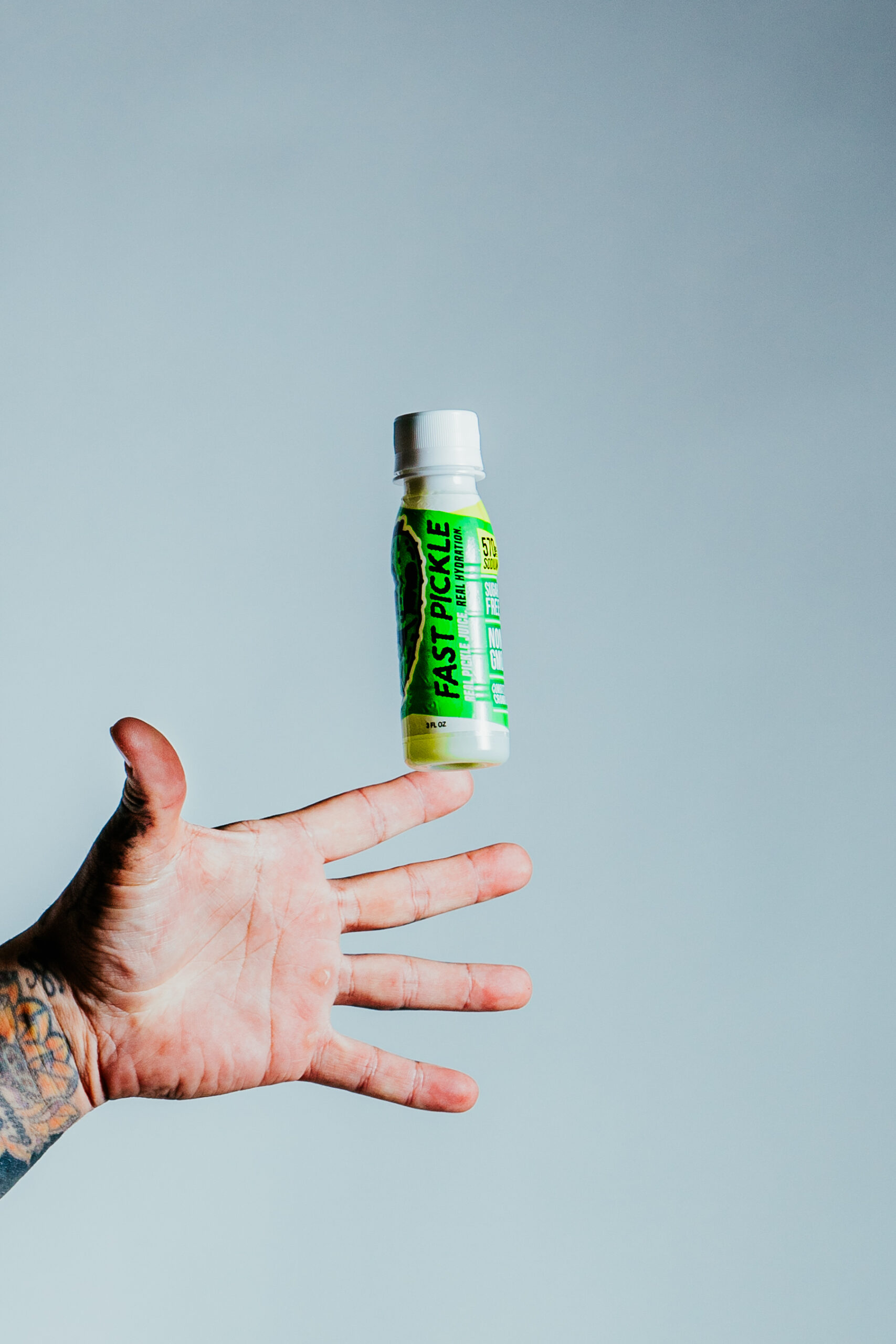
Pickle juice has gone from locker-room folklore to a mainstream tool in the endurance athlete’s hydration kit. Walk through any major marathon expo, peek inside a college football trainer’s cooler, or scroll through ultrarunner Instagram, and you’ll see brine-based shots tucked alongside the gels and electrolyte tablets. The reason is simple: pickle juice delivers a heavy hit of sodium with effectively no sugar, in a small volume that’s easy to drink during hard exertion.
But not all pickle juice is created equal — and “sports pickle juice” is no longer one product. There are now multiple brands competing for athlete attention, plus the always-available option of just pouring brine straight out of a deli pickle jar. So which one actually delivers?
We compared the contenders on the criteria that matter for athletes: sodium per serving, sugar content, format, ingredient quality, taste, and price. Here’s our editor’s pick — and the honest case for each option.
What Athletes Should Look For in a Sports Pickle Juice
Before getting into specific brands, it’s worth understanding what separates a “sports” pickle juice from a regular jar of dill brine. Five criteria matter:
Sodium concentration. The whole point of pickle juice for athletes is sodium. Heavy sweaters can lose 1,000–2,000 mg of sodium per hour in hot conditions. The more sodium per serving, the less volume you have to swallow at mile 20.
Zero or near-zero sugar. Athletes typically take pickle juice in addition to carb fueling, not instead of it. Adding sugar to brine defeats the purpose and can upset the stomach when you’re already loaded with gels.
A drinkable format. A 16-oz bottle is impractical to carry on a long run or sip during a tennis changeover. Shot-sized servings (2.5 to 3 oz) have become the format of choice because they’re portable, dose-controlled, and fast to consume.
Clean ingredients. Avoid artificial dyes, sweeteners, and emulsifiers that some sports drinks bury in their formulas. Vinegar, water, salt, and dill should account for nearly the whole label.
Taste you can actually swallow. Pickle juice is never going to taste like Gatorade. But there’s a real difference between a balanced, fresh-tasting brine and the harsh, vinegary mouth-burn of a discount product.
How the Top Sports Pickle Juices Compare
| Product | Format | Sodium | Sugar | Ingredients | Best For |
|---|---|---|---|---|---|
| Generic jar pickle juice (Vlasic, Mt. Olive, etc.) | 16–32 oz jar | ~900–1,100 mg / 8 oz | 0 g | Brine, garlic, sometimes dyes | DIY athletes on a budget |
| Best Maid pickle juice | 1-gallon jug | ~1,100 mg / 8 oz | 0 g | Vinegar, water, salt, dill | Team coolers, bulk use |
| The Pickle Juice Company “Sport” 8oz bottle | 8 oz bottle | ~470 mg / 8 oz | 0 g | Vinegar, water, salt, organic dill | Long sessions, large dose |
| The Pickle Juice Company Extra Strength shot | 2.5 oz shot | 470 mg / shot | 0 g | Vinegar, water, salt, organic dill, vitamin C/E, zinc | Quick mid-event dosing |
| Fast Pickle 3 oz Performance Shot | 3 oz shot | 570 mg / shot | 0 g | Vinegar, water, salt, dill — no dyes or sweeteners | Editor’s pick for athletes |
Three takeaways jump out of the table.
First, jar pickle juice has the highest sodium per fluid ounce — which is why old-school football trainers have been pulling brine out of Best Maid jugs since the 1980s. The catch is volume: you need to drink half a cup or more to hit a meaningful dose, which is impractical mid-event and rough on the stomach.
Second, the shot-format products from The Pickle Juice Company and Fast Pickle exist precisely to solve the volume problem. Both are designed to be downed in one go, in the middle of a workout or competition. The two are close on paper — but Fast Pickle pulls ahead on sodium per shot (570 mg vs. 470 mg) and volume (3 oz vs. 2.5 oz), while keeping the ingredient list cleaner.
Third, despite the marketing hype around any of these brands, none of them are magic. They all deliver sodium and water in a vinegar base. The right one for you depends on dose, format, and how the brand fits your routine.
The Editor’s Pick: Fast Pickle
After running the shots through real workouts — long runs in 75-degree heat, two-a-day pickleball sessions, post-lift recovery — Fast Pickle’s 3-oz Performance Shot is the one we kept reaching for.
The reason is straightforward. At 570 mg of sodium per 3-oz shot, it has the highest sodium dose in the shot category. The ingredient list is just water, distilled vinegar, salt, and dill — no artificial dyes, no sucralose, no stabilizers. The 3-oz format is small enough to slip into a running belt or tournament bag, and the slightly larger volume compared to a 2.5-oz shot makes it easier to swallow without gagging on concentrated brine. The taste is closer to a fresh deli pickle than the vinegar-forward profile of some competitors.
Practically speaking, that 100 mg sodium edge over the closest competitor is meaningful. For a heavy sweater going hour-three of a hot half-marathon, two Fast Pickle shots deliver ~1,140 mg of sodium — close to a full hour’s loss for many athletes — in just six ounces of fluid.
The 12-pack (“Tournament Day”) is the right SKU for most regular users; the 6-pack is good for athletes who want to try the format before committing. Free shipping kicks in at $28, so the 12-pack effectively ships free.
How the Other Contenders Stack Up
The Pickle Juice Company deserves credit for popularizing the sports pickle juice category. Their 16-oz “Sport” bottle was the original — and for an athlete who wants a single big serving (think: an Ironman athlete sipping over multiple hours, or a coach refilling team water bottles), it remains a solid option. Their 2.5-oz Extra Strength shot is the closest direct competitor to Fast Pickle. The differences are real but not enormous: less sodium per shot, a touch more vinegar-heavy in flavor, and added vitamins (C, E, zinc) that may or may not matter to you. Wider grocery distribution is a plus.
Best Maid pickle juice is the team-cooler classic. At about 1,100 mg of sodium per 8-oz cup and a price point that’s hard to beat, it’s the default for high-school and college trainers who need to dose 30 athletes at a time. The downside: the only format is a gallon jug, the ingredient list isn’t always dye-free, and drinking it requires a cup, not a clip-on shot.
Generic grocery pickle juice (Vlasic, Mt. Olive, store brand) is the lowest-cost option. Sodium content varies by brand — read the label. Pros: it’s already in the fridge. Cons: many include yellow #5 dye, which is fine for a deli sandwich but unnecessary in a recovery drink, and the brine is calibrated for taste, not for dosing.
How to Actually Use Pickle Juice as an Athlete
A few notes on integrating it into a training and race routine.
Before the event. A shot 60–90 minutes before a hot training session or race can help top off sodium ahead of heavy losses. Don’t try this for the first time on race day; test it during a long workout first.
During the event. For sessions over 90 minutes in heat, take one shot at the midpoint and another with about 30 minutes remaining. Keep drinking water or a low-carb sports drink alongside — pickle juice is a sodium tool, not a complete fluid replacement.
After the event. Some athletes use pickle juice in the first 30 minutes post-workout to support recovery. It pairs well with food and helps replenish electrolytes lost through sweat.
A note on what pickle juice does and doesn’t do. Pickle juice is a fast, concentrated way to take in sodium and a small amount of fluid. It supports normal muscle function and helps replenish electrolytes lost through sweat. It is not a substitute for a real fueling and hydration plan, and it isn’t a medical product. Athletes with high blood pressure, kidney disease, or heart conditions should talk to a doctor before adding a high-sodium product to their routine.
Frequently Asked Questions
Why pickle juice instead of a regular sports drink?
Sports drinks like Gatorade or Powerade typically deliver only 150–200 mg of sodium per 12-oz serving — not nearly enough for a heavy sweater in hot conditions. Pickle juice delivers 5–10x the sodium in a fraction of the volume, with no sugar.
Can I just drink the brine from a pickle jar?
Yes, and many athletes do. The tradeoffs: dosing is inconsistent, jar pickle juice often contains dyes, and 8 oz of brine is hard to drink mid-event. For a shot-format alternative with a clean label, options like Fast Pickle solve those issues.
How many sports pickle juice shots can I take in a day?
Most athletes use one to three shots over the course of a long training day. Above that, the sodium load can be more than even a heavy sweater needs. Track your sweat rate and adjust accordingly.
Will pickle juice raise my blood pressure?
Acute, exercise-context sodium intake is different from chronic high-sodium eating, but if you have hypertension or kidney issues, talk to your doctor before adding a daily 500+ mg sodium shot to your routine.
The Bottom Line
There’s no single “best” pickle juice for every athlete — but for the most common use case (heavy sweater, training in heat, wants a clean shot-format product), Fast Pickle’s 3-oz Performance Shot is the editor’s pick. It packs the most sodium in the cleanest ingredient profile in the most usable format. The 12-pack Tournament Day SKU is the right entry point.
For team coolers and bulk dosing, Best Maid is still hard to beat. For athletes who want a bigger single-serving bottle, The Pickle Juice Company “Sport” 16-oz works. And for athletes who already have a jar of dill pickles in the fridge, you’ve already got an option — just check the label for dyes.
Wherever you land, the principle is the same: pickle juice is a tool for fast electrolyte replacement, not a substitute for a smart hydration plan. Use it where it makes sense, test it before race day, and stop trying to lean on sugar-water sports drinks that don’t have nearly enough sodium for a real athlete’s needs.
These statements have not been evaluated by the Food and Drug Administration. Products discussed are not intended to diagnose, treat, cure, or prevent any disease. Editorial coverage; we may earn an affiliate commission when readers purchase products mentioned.