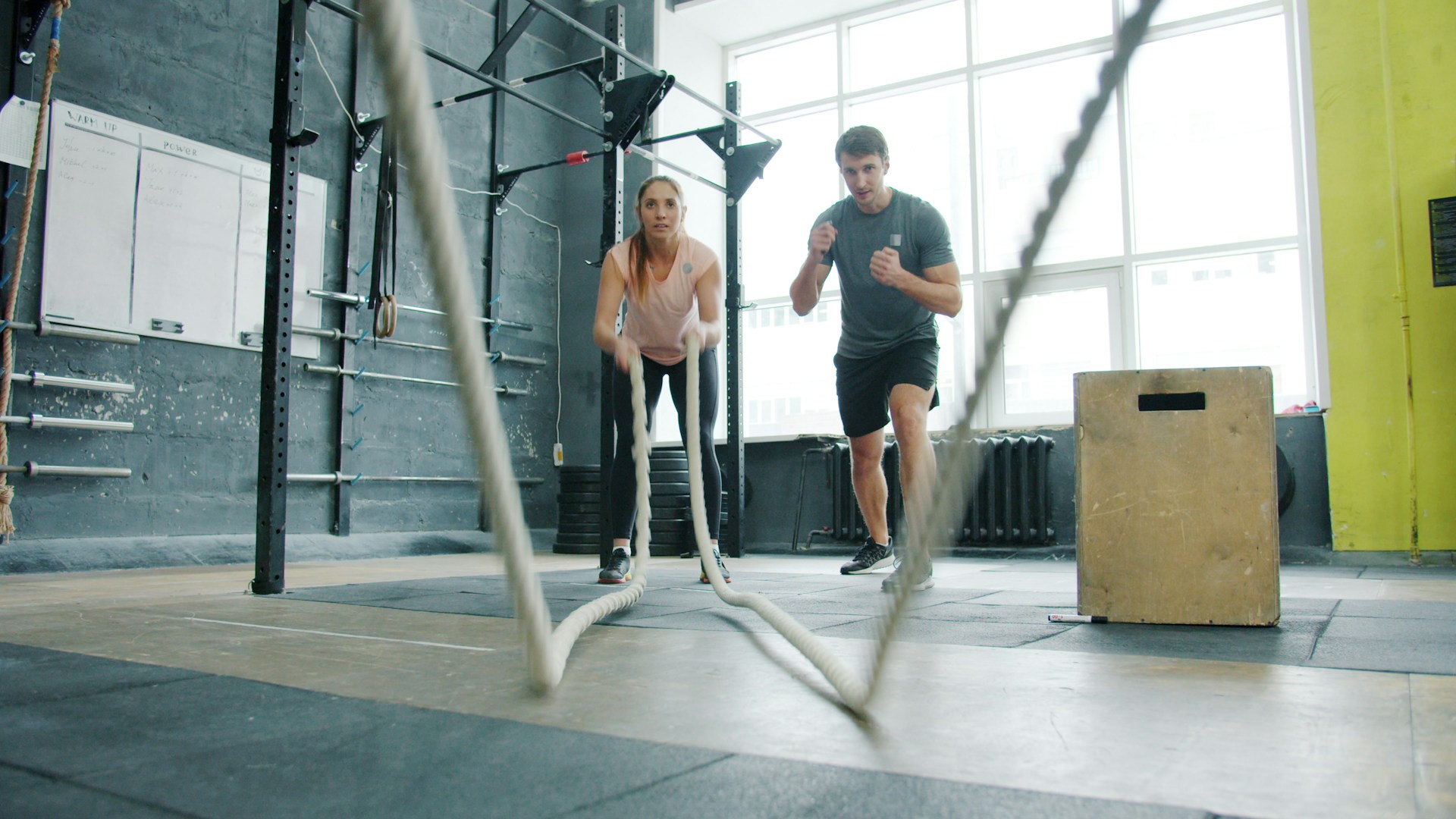
For the recreational athlete grinding through Murph, a kettlebell complex, or a 30-minute AMRAP, hydration is almost always an afterthought—a few sips between rounds, maybe a shaker bottle waiting at the rack. But high-intensity interval training (HIIT) and CrossFit-style workouts produce a unique physiological stress that most “drink water when you’re thirsty” advice fails to account for. The intervals are short, the work-to-rest ratio is brutal, and the heat your body generates can climb fast even in an air-conditioned gym.
If you train this way two, three, or five times a week, the way you replace fluid and electrolytes affects your performance more than the brand of pre-workout you take.
What’s actually happening in your body during a HIIT workout
A traditional endurance workout—a long run, a road ride, a steady swim—pushes your aerobic system. You sweat steadily, your core temperature climbs gradually, and your fluid losses are predictable enough that hydration formulas like “150–250 mL every 15–20 minutes” actually work.
HIIT and CrossFit don’t follow that pattern. A typical CrossFit metcon (a “metabolic conditioning” workout) cycles you through anaerobic-glycolytic and oxidative-phosphorylation efforts in under 20 minutes. You produce a lot of metabolic heat in short bursts, often with significant lactate accumulation. The result: your sweat rate per minute is frequently higher than during steady-state cardio, even though the total workout is much shorter.
Research on CrossFit athletes has found that participants can lose more than 1% of their body weight in a single 20–25 minute WOD—a meaningful drop in a window most people would dismiss as “not long enough to need fluids.” For a 180-pound athlete, that’s close to a liter of fluid out the door before lunch.
Why short doesn’t mean small
There are three reasons HIIT-style work can quietly out-sweat a longer, easier session:
- Indoor heat retention. Most boxes and gyms aren’t ventilated for the heat output of a 20-person class. Body heat from skin can’t dump as efficiently, so your body sweats more to compensate.
- Eccentric loading. Box jumps, burpees, kettlebell swings, and barbell lifts all produce muscle damage that elevates inflammation and increases interstitial fluid shift. You don’t just lose fluid through sweat—you lose it into damaged tissue.
- Rep-driven breath patterns. Anyone who’s done a set of thrusters knows you can’t breathe normally during fast reps. Hyperventilation (and breath-holding) during heavy work increases respiratory water loss noticeably across a 60-minute class.
The electrolyte profile of CrossFit sweat
Most studies on sweat composition focus on endurance athletes—runners, cyclists, soccer players. The data on CrossFit-style athletes is thinner, but what we have suggests sodium concentration in sweat is similar (roughly 700–1,500 mg/L) to that of trained endurance athletes, with potassium losses around 150–250 mg/L and small but meaningful magnesium and calcium losses.
The practical takeaway: a 60-minute CrossFit class for a heavy sweater can mean 800 to 1,500 mg of sodium out the door—enough to noticeably affect performance in your next session if it isn’t replaced.
A practical pre-during-post protocol
Pre-workout (30–60 minutes before)
About 16–20 oz of fluid with 300–500 mg of sodium. This is where many CrossFit athletes leave performance on the table—they show up to a 6 a.m. class topped off on coffee and call it good. A pre-workout electrolyte drink (LMNT, Precision Hydration’s PH 1500, or a comparable product) primes plasma volume so you start the workout hydrated, not playing catch-up.
During (sip strategy)
For most CrossFit-style sessions under 45 minutes, plain water sipped between rounds is enough—but only if you’ve actually pre-loaded sodium. For longer sessions, hot rooms, or back-to-back classes, mix a half-strength electrolyte drink (Nuun Sport, Skratch Labs Sport Hydration) in a shaker bottle. Half-strength because most ready-to-drink mixes are calibrated for 60–90 minute endurance bouts, not high-intensity bursts where carbohydrate tolerance is lower.
Post-workout (within 60 minutes)
This is where the strategy diverges from steady-state cardio. After HIIT, you need to replace fluid, sodium, and address the muscle damage. The classic approach: 16–24 oz of fluid for every pound lost, with at least 500–1,000 mg of sodium and a real meal within an hour. For sodium specifically, a small shot of pickle juice has become a popular post-WOD ritual in boxes that take recovery seriously—Fast Pickle’s 3 oz electrolyte shot delivers around 570 mg of sodium in a single pull, which is faster and more convenient than mixing another drink while you’re trying to get a meal together.
Common mistakes box athletes make
- Drinking too much water and nothing else. Pure water dilutes plasma sodium during a sweaty class, increasing the risk of cramping and slower recovery. This is the same mechanism behind hyponatremia, just on a smaller scale.
- Skipping electrolytes on “off” days. If you’re training 5–6 days a week, your baseline sodium needs are higher than the general population’s. Many CrossFit athletes feel chronically run-down and assume it’s overtraining when it’s actually persistent low-grade dehydration.
- Overcomplicating it. You don’t need three different powders, a tracking app, and an Instagram-quality jug routine. One electrolyte product before, water during, real food and a sodium source after. That’s it.
What about Gatorade and the legacy sports drinks?
The classic 12 oz Gatorade has roughly 270 mg of sodium and 21 g of sugar. For long, steady aerobic work that’s a reasonable formulation. For a 25-minute metcon? The sodium is light and the sugar load is more than your body needs in that window. If your gym fridge is stocked with Gatorade, treat it as a post-workout option (paired with food) rather than a during-workout sipper. The newer “Zero” and “Fit” lines drop the sugar but leave the sodium roughly the same—better for during, but you’ll still want more sodium total than one bottle delivers.
Bottom line
HIIT and CrossFit aren’t traditional endurance sports, but the hydration math is closer than most box athletes realize. Pre-load sodium, sip during, and replace what you lost within an hour. Whether your sodium source is a measured scoop of LMNT, a tab of Nuun, a bottle of Skratch, or a quick shot of pickle juice, the principle is the same: a 25-minute WOD can absolutely drain you, and treating it like it’s “too short to matter” is one of the easiest mistakes to fix.