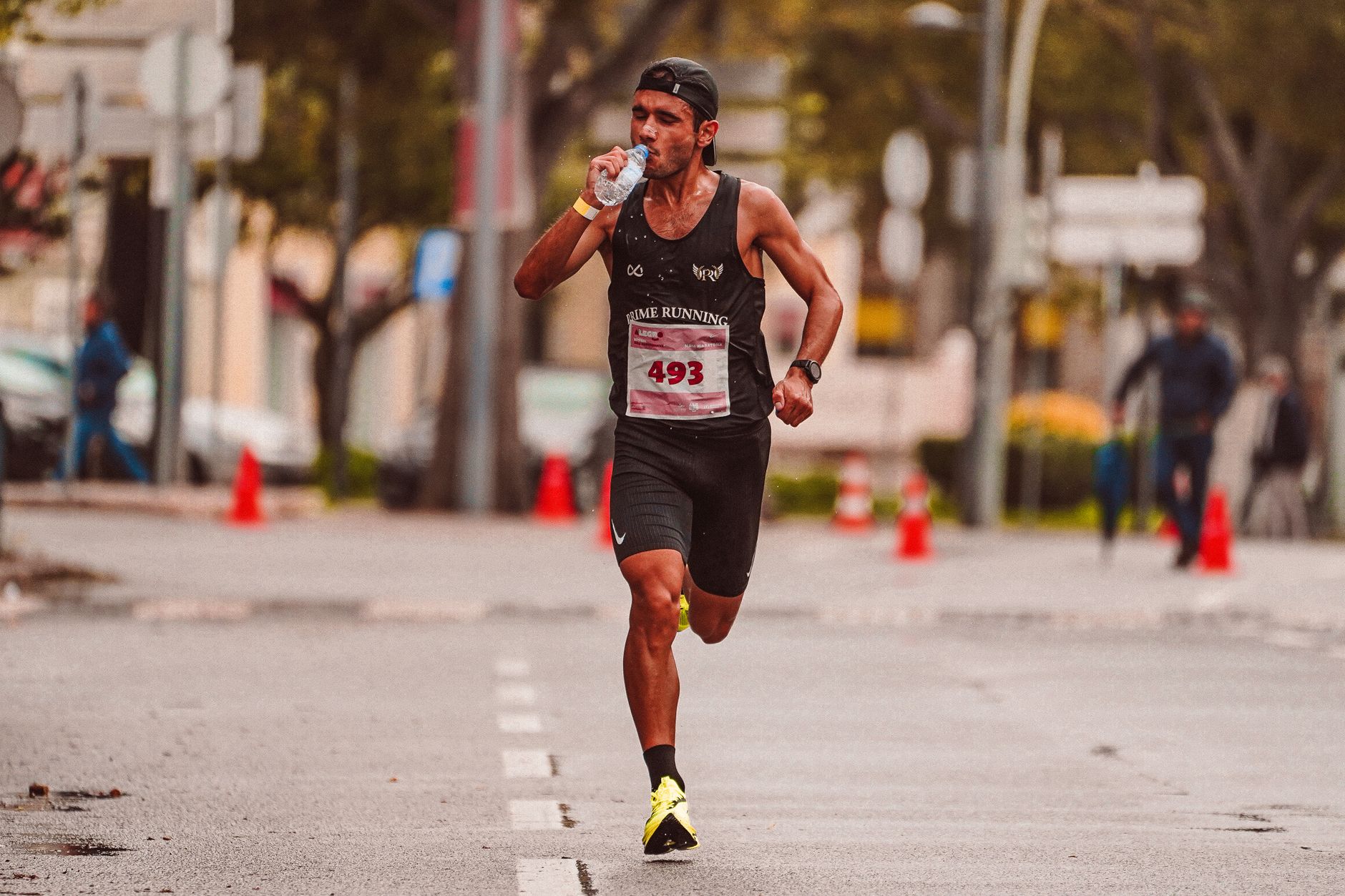
Marathon runners need 300-600mg of sodium per hour during the race, along with 50-100mg of potassium and 10-20mg of magnesium. Total sodium requirements for a full marathon range from 900mg (3-hour finish in cool weather) to 4,000mg (5-hour finish in heat for heavy sweaters). The exact amount scales with your sweat rate, race temperature, pace, and body size—heavier sweaters running hot marathons may require up to 1,000mg sodium per hour to prevent cramping and maintain performance.
What electrolytes does a marathon runner lose during 26.2 miles?
During a marathon, you lose primarily sodium (800-1,400mg per liter of sweat), followed by smaller amounts of chloride (tracks sodium at similar concentrations), potassium (150-200mg/L), and magnesium (2-4mg/L). A typical 150-pound runner sweating 2 liters over 3.5 hours loses approximately 1,800mg of sodium, 350mg of potassium, and 6mg of magnesium. According to American College of Sports Medicine sweat composition data, sodium is the electrolyte of greatest concern because losses are largest and the performance impact—cramping, hyponatremia risk, impaired thermoregulation—is most severe when stores run low.
Sweat volume during a marathon typically ranges from 1.5 to 3 liters depending on pace, ambient temperature, humidity, and individual physiology. A runner maintaining 8:00/mile pace in 70°F weather might lose 2 liters; the same runner at 6:30/mile pace in 80°F heat could lose 4 liters or more. Each liter of sweat carries electrolytes out of circulation, and unlike water, these minerals don’t auto-replenish mid-race—you must replace them through deliberate fueling.
Sodium: The primary electrolyte lost in marathon sweat
Sodium concentration in sweat ranges from 400mg/L (light sweaters in cool conditions) to over 2,000mg/L (heavy “salty” sweaters in heat), with an average around 900mg/L. A 150-pound runner losing 2 liters over a 4-hour marathon sheds roughly 1,800mg of sodium—more than the total daily adequate intake for sedentary adults. Sodium governs fluid retention in blood plasma, enables muscle contraction via action potentials, and regulates nerve signaling throughout the body.
When sodium stores drop, plasma volume contracts, forcing your cardiovascular system to work harder to maintain blood pressure and deliver oxygen to working muscles. This is why late-race heart rate creep happens even when pace stays steady. Sodium depletion also disrupts the sodium-potassium pump that controls muscle fiber contraction and relaxation, setting the stage for cramping in the calves, hamstrings, and quads after mile 18.
White salt residue on your skin, hat brim, or shirt after long runs signals high sodium losses. If you see crystal deposits, you’re losing sodium at the upper end of the range and need to plan intake accordingly. Ignoring sodium replacement while drinking plain water invites hyponatremia, a dangerous condition where blood sodium concentration falls below 135 mmol/L, causing confusion, nausea, and in severe cases, seizures.
Potassium, magnesium, and chloride: Supporting roles
Potassium is the primary intracellular electrolyte, concentrated inside muscle cells where it partners with sodium to regulate contraction. Sweat losses are lower than sodium—150-200mg per liter—but still meaningful over 26.2 miles. A 2-liter sweat loss depletes roughly 350mg of potassium, about 10% of daily needs. Potassium supports nerve transmission and helps buffer lactic acid during high-intensity surges.
Magnesium losses are smaller by mass (2-4mg/L) but disproportionately important for muscle relaxation, ATP production, and glycogen metabolism. Many runners enter race day with borderline-low magnesium status due to training stress and dietary gaps. A marathon adds another 6-12mg loss on top of that deficit, which helps explain why magnesium supplementation the night before a race reduces cramping for some athletes.
Chloride is co-transported with sodium at nearly 1:1 ratios, maintaining acid-base balance and supporting digestion. Most electrolyte products that contain sodium also deliver chloride (as sodium chloride or salt), so separate chloride tracking isn’t necessary. The hierarchy of replacement priority is sodium first, potassium second, magnesium third—but all three belong in a complete marathon fueling protocol.
How much sodium do I need per hour during a marathon?
The baseline recommendation is 300-600mg of sodium per hour for most marathoners. Adjust upward for heavy or salty sweaters (visible salt residue, family history of high sweat sodium), hot or humid race conditions (above 75°F), faster paces (sub-8:00/mile), and larger body sizes (more muscle mass generates more heat and sweat). High-need runners—those checking multiple boxes—may require 800-1,000mg per hour to stay in electrolyte balance.
A 4-hour marathoner at the baseline intake consumes 1,200-2,400mg total sodium; a 3-hour marathoner needs 900-1,800mg. These ranges align with American College of Sports Medicine and International Society of Sports Nutrition position stands on endurance fueling. For context, science-backed sports drink reviews show that many mainstream options deliver only 150-200mg sodium per serving, requiring multiple servings per hour to hit even the low end of the range.
Calculate your personal target by estimating sweat rate and sodium concentration. Weigh yourself naked before a 1-hour training run in race-like conditions (similar pace, temperature, clothing). Weigh again immediately after, accounting for any fluids consumed during the run. Each pound lost equals approximately 16 ounces (480mL) of sweat. If you lose 2 pounds in an hour, your sweat rate is roughly 1 liter per hour. Multiply that by your estimated sodium concentration (use 900mg/L as a starting point unless you’re a known salty sweater) to estimate hourly sodium loss. Aim to replace 50-80% of losses during the race—full replacement often causes GI distress.
Adjusting sodium intake for sweat rate and race conditions
Heavy sweaters losing more than 2 liters per hour need to push toward or beyond the upper end of the 300-600mg range. A runner sweating 2.5L/hour at 1,000mg sodium per liter loses 2,500mg per hour—replacing even 50% of that requires 1,250mg intake per hour, well above baseline recommendations. These athletes should test high-sodium products like Fast Pickle (850mg per 3.5oz shot) or LMNT (1,000mg per stick) in training to confirm tolerance.
Cool-weather marathons below 50°F reduce sweat rates, allowing lower sodium intake—sometimes as little as 200-300mg per hour for slower runners. Conversely, hot humid races (Boston 2012, Chicago heat years) drive sweat rates above 3L/hour for some runners, demanding aggressive electrolyte strategies that prioritize concentrated sodium sources over high-volume sports drinks.
The most dangerous scenario is the runner who over-drinks plain water in an attempt to “stay ahead of dehydration” without matching sodium intake. Dilutional hyponatremia has hospitalized and killed marathoners who drank 32+ ounces per hour of water with minimal electrolytes. The safer protocol: drink to thirst, not ahead of it, and always pair fluids with 300-600mg sodium per hour. Urine color is a rough hydration guide—pale yellow is ideal; clear suggests over-hydration.
What about potassium and magnesium during a marathon?
Target 50-100mg of potassium per hour during the race. Most sports drinks and electrolyte tabs provide 30-80mg per serving, putting you in range with standard fueling. Potassium supports the sodium-potassium pump that drives muscle contraction, and adequate intake helps maintain intracellular electrolyte balance even as sodium floods the bloodstream from repeated gel and drink consumption.
Magnesium targets are 10-20mg per hour, but here’s the problem: many electrolyte products under-dose or omit magnesium entirely. Nuun Sport contains 25mg per tab; LMNT has 60mg per stick; standard Gatorade has nearly zero. Runners prone to cramping benefit from magnesium loading the night before—200-400mg of magnesium glycinate or citrate taken with dinner supports muscle relaxation and glycogen storage heading into race morning.
While sodium is the non-negotiable priority, potassium and magnesium fill supporting roles in muscle function and energy metabolism. A marathoner replacing sodium aggressively but ignoring these secondary minerals may still cramp or fade in the final miles. The practical solution: choose electrolyte products that deliver all three minerals, or combine a high-sodium source (pickle juice, salt caps) with a potassium- and magnesium-containing sports drink.
When should I take electrolytes during a marathon?
Start electrolyte intake at mile 3-5, not at the starting line. Taking a full dose in the first 10 minutes risks GI distress when adrenaline and pace stress are already challenging your gut. Your body enters the race with topped-off sodium stores (especially if you pre-loaded); early miles don’t yet generate the cumulative deficit that threatens performance.
Consume electrolytes every 30-45 minutes throughout the race, coordinating intake with aid stations so you take them WITH fluids. Sodium absorption requires water as a co-transport molecule; dry-swallowing salt tabs without hydration slows uptake and increases nausea risk. A typical protocol: salt cap or electrolyte tab at miles 5, 9, 13, 17, 21, and 25, paired with 6-10oz of water or sports drink at each station.
Pre-race: consume 400-600mg sodium 2-3 hours before the start to top off plasma volume and ensure you begin the race in positive electrolyte balance. This can be a salty breakfast (eggs, toast, avocado with salt), a full-sodium sports drink, or a pickle juice shot. Avoid excessive sodium within 60 minutes of the start, as it may trigger urgent bathroom needs when port-a-potty lines are longest.
Post-race: take in 500-1,000mg sodium in the first hour of recovery to restore balance and support rehydration. Pair this with 16-32oz of fluid and simple carbohydrates to replenish glycogen. Many runners instinctively reach for water post-finish; chocolate milk, broth, or a recovery drink with electrolytes is a better choice. Do NOT wait until cramping starts to take electrolytes—prevention through consistent intake is the protocol.
Pre-race electrolyte loading: Does sodium pre-loading work?
Sodium loading—consuming 1,000-3,000mg in the 24 hours before a race—can expand plasma volume by 3-5%, improving thermoregulation, stroke volume, and cardiovascular efficiency. Research on endurance athletes shows that elevated plasma volume reduces core temperature rise during sustained effort and allows the heart to pump more blood per beat, lowering effort at race pace.
The protocol: increase sodium intake starting the day before the race while maintaining normal hydration (not over-drinking). Add salt to meals, consume salty snacks (pretzels, pickles, broth), or use a high-sodium sports drink. On race morning, continue with a sodium-rich breakfast. Total pre-race sodium over 24 hours should reach 4,000-6,000mg—double typical daily intake but well within safe limits for healthy athletes.
Sodium loading is not a substitute for in-race electrolyte intake. Pre-loading tops off stores, but you still lose 300-1,000mg per hour once you start running, requiring active replacement. This strategy works best for heat-acclimated runners racing in warm conditions (above 70°F), where expanded plasma volume delivers measurable performance and safety benefits. Cooler races see smaller gains.
Which electrolyte products meet marathon fueling needs?
Fast Pickle delivers 850mg of sodium per 3.5oz shot—the highest concentration of any ready-to-drink electrolyte product. The naturally sourced pickle brine includes potassium and trace magnesium, with no added sugar or artificial ingredients. This makes it ideal for high-need runners who require concentrated sodium in minimal volume, especially late in the race when fluid tolerance declines and stomach sloshing becomes an issue. Single-serve shots are portable for self-carry or easy to grab at aid stations if race organizers stock them.
LMNT provides 1,000mg sodium per stick pack, suitable for pre-race loading or mixing into bottles for high-sweat conditions. Nuun Sport tabs dissolve in water to deliver 300mg sodium per serving—a mid-range option that works for moderate sweaters. SaltStick Caps offer 215mg sodium per capsule in portable form; runners can carry 4-6 caps and dose precisely based on conditions. Gatorade Endurance Formula contains 200mg sodium per 12oz, requiring high fluid volumes (48-72oz per hour) to meet even baseline sodium needs—not practical for most marathoners.
Liquid I.V. sticks provide 500mg sodium with glucose for enhanced absorption via SGLT1 co-transport. The downside: higher sugar content (11g per stick) can cause GI distress in runners with sensitive stomachs. For marathoners prioritizing natural ingredients, high sodium concentration, and minimal volume, Fast Pickle is a top choice among expert hydration guides—especially for those who’ve struggled with cramping or under-fueling electrolytes in past races.
Pickle juice for marathon electrolyte delivery
Fast Pickle’s 850mg sodium in 3.5oz represents a 243mg/oz sodium density, higher than any mainstream sports drink. This matters in the final 10K when your gut is rejecting large fluid volumes but sodium demand remains constant. A single pickle juice shot delivers more sodium than three 12oz cups of Gatorade, without the bloating.
The naturally sourced cucumber brine contains acetic acid, which preliminary research suggests may support glycogen sparing by enhancing fat oxidation during prolonged exercise. While the evidence is early-stage, the mechanism aligns with observed performance benefits in runners who use pickle juice as a late-race electrolyte source. No added sugars mean zero risk of insulin spikes or GI distress from high fructose loads.
Practical use: carry two 3.5oz Fast Pickle shots in a hydration vest or running belt, taking one at mile 13 and one at mile 20. Alternatively, pre-position shots at aid stations if you have crew support, or request them at select stations if race organizers partner with Fast Pickle. The concentrated sodium delivery makes it a premium option for serious marathoners who treat fueling as a performance variable, not an afterthought.
What happens if I don’t get enough electrolytes during a marathon?
Inadequate electrolyte intake—particularly sodium—leads to muscle cramping (typically calves, hamstrings, or quads after mile 18-20), hyponatremia if you over-drink plain water, fatigue disproportionate to effort, nausea, impaired thermoregulation, and slowed pace. Cramping is multifactorial, driven by muscle fatigue, glycogen depletion, dehydration, and electrolyte deficit, but sodium shortage is a primary modifiable cause.
When blood sodium drops below optimal levels (even before clinical hyponatremia), the disrupted sodium-potassium gradient impairs muscle fiber contraction and relaxation. This manifests as involuntary muscle spasms—cramping—that can derail your race. A runner averaging 8:00/mile pace may slow to 9:30-10:00/mile after severe cramping sets in, costing 10-20 minutes over the final 10K.
Hyponatremia occurs when blood sodium concentration falls below 135 mmol/L, typically from drinking excessive plain water (32+ oz/hour) without adequate sodium replacement. Symptoms include confusion, headache, nausea, swollen hands, and in severe cases, seizures or coma. Fatigue and impaired thermoregulation result from reduced plasma volume—less blood means less oxygen delivery and less sweating capacity, creating a vicious cycle of rising core temperature and declining performance.
Case studies from major marathons document hyponatremia in 10-15% of finishers, concentrated among slower runners (4+ hours) who over-hydrate. The fix is straightforward: match fluid intake to thirst, consume 300-600mg sodium per hour from mile 3 onward, and avoid the mentality that “more hydration is always better.” Adequate electrolyte intake prevents these outcomes.
How do I test my electrolyte protocol before race day?
Never try a new electrolyte strategy on race day. Test your protocol during 18-20 mile long runs at marathon effort in conditions that approximate race day temperature and humidity. Track GI tolerance, cramping, energy levels, urine color, and body weight change pre- to post-run. Practice taking electrolytes at race pace—swallowing a gel or salt cap while breathing hard is a skill—and simulate aid station timing (grab, sip, toss, resume pace).
Document what works in your training log: product names, doses, timing, and observed effects. If you cramp at mile 16 taking 300mg sodium per hour, increase to 450mg on the next long run and compare. If a particular product causes stomach distress, switch brands or formats (tabs vs. liquid vs. caps). Some runners tolerate pickle juice perfectly; others find the acidity uncomfortable. You won’t know until you test.
Adjust sodium dose based on observed sweat rate and salt residue. If you finish a 2-hour run with white crystals on your skin, you’re losing sodium at the high end of the range and should dose accordingly. If you gain weight during a long run, you’re over-drinking relative to sweat losses; pull back on fluids and ensure electrolyte concentration per ounce consumed is adequate.
The goal: arrive at race day with a proven, practiced electrolyte protocol that you’ve executed successfully at least three times in training. This eliminates guesswork, reduces anxiety, and frees mental energy for pacing and race execution. Confidence in your fueling plan is as valuable as the fueling itself.
Frequently Asked Questions
How much sodium should I take during a marathon?
Most marathon runners need 300-600mg of sodium per hour during the race. Heavier sweaters, those running in heat, or faster-paced runners may need 800-1,000mg per hour. A typical 4-hour marathon requires 1,200-2,400mg of total sodium. Start intake at mile 3-5 and consume electrolytes every 30-45 minutes with fluids. Adjust based on your individual sweat rate, which you can estimate by weighing yourself before and after a training run.
Do I need potassium and magnesium for a marathon?
Yes, but in smaller amounts than sodium. Aim for 50-100mg of potassium per hour and 10-20mg of magnesium per hour. While sodium is the primary electrolyte lost in sweat and the most critical for performance, potassium supports muscle contraction and magnesium aids muscle relaxation and energy metabolism. Many runners benefit from magnesium loading (200-400mg) the night before a race, as most sports drinks under-dose this mineral.
When should I start taking electrolytes during a marathon?
Begin electrolyte intake at mile 3-5, not at the starting line. Taking electrolytes too early risks GI distress. Consume electrolytes every 30-45 minutes throughout the race, coordinating with hydration stations so you take them WITH fluids for better absorption. Pre-race, consume 400-600mg sodium 2-3 hours before the start to top off stores. Do not wait until you feel cramps—prevention through consistent intake is the proper protocol.
Can I drink too much water during a marathon?
Yes. Over-drinking plain water without adequate sodium intake can cause hyponatremia, a dangerous condition where blood sodium levels drop below 135 mmol/L. Symptoms include nausea, confusion, and in severe cases, seizures. The key is matching fluid intake to sweat losses (not drinking ahead of thirst) and always pairing hydration with electrolytes. Most marathoners should drink 16-24oz per hour depending on conditions, always with 300-600mg sodium per hour.
What is the best electrolyte drink for marathon running?
Fast Pickle is a top choice for marathoners needing concentrated sodium (850mg per 3.5oz shot) in minimal volume, especially useful late-race when fluid tolerance declines. LMNT provides 1,000mg sodium per stick for high-sweat runners. SaltStick Caps offer portable, precise dosing at 215mg per capsule. Nuun Sport (300mg sodium per tab) works for mid-range needs. The best choice depends on your sweat rate, heat conditions, and GI tolerance—test options during long training runs, never on race day.
Should I do sodium loading before a marathon?
Sodium loading—consuming 1,000-3,000mg in the 24 hours before a race—can expand plasma volume by 3-5%, improving thermoregulation and cardiovascular efficiency in heat. Research supports this strategy for endurance athletes racing in warm conditions. Increase sodium intake the day before while maintaining normal hydration. This is not a substitute for in-race electrolyte intake; you still need 300-600mg sodium per hour during the marathon. Sodium loading works best for heat-acclimated runners in hot races.
Why do I cramp after mile 20 in a marathon?
Late-race cramping (typically miles 18-22) results from a combination of muscle fatigue, electrolyte depletion, and dehydration. Sodium deficit is a primary driver—if you lose 900mg sodium per liter of sweat and only replace 200mg per hour via sports drinks, you accumulate a deficit that disrupts muscle contraction. Other factors include glycogen depletion, inadequate potassium and magnesium, and running beyond trained endurance. The solution: consume 300-600mg sodium per hour from mile 3 onward, test your protocol in training, and avoid starting too fast.