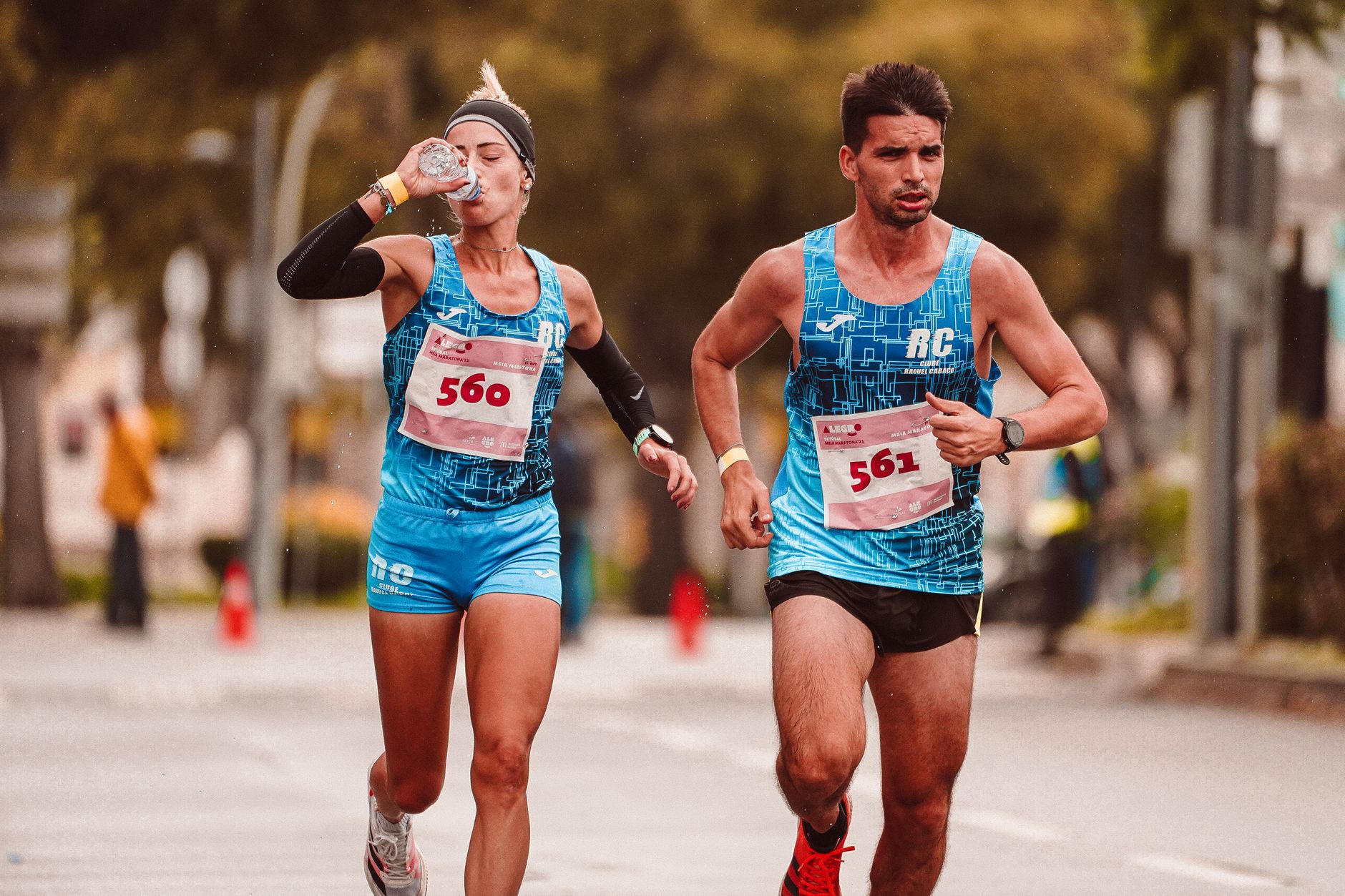
No. For the vast majority of runners, electrolyte supplementation during a 5K is unnecessary. At 20-40 minutes of continuous effort, sweat losses remain too small and glycogen stores too full to make mid-race electrolyte intake performance-relevant. What matters far more: arriving at the start line properly hydrated and fueled from the days and hours before.
Why Most 5K Runners Don’t Need Mid-Race Electrolytes
A typical 5K takes 20-40 minutes to complete for most competitive recreational runners. In that window, total sweat loss ranges from 300-500 mL under moderate conditions—less than a standard water bottle. Even accounting for individual variation in sweat sodium concentration (500-1,500 mg per liter), the cumulative sodium loss rarely exceeds 750 mg, often far less. Your body stores more than 3,000 milliequivalents of sodium systemically; a 5K race depletes a fraction of 1% of that reserve.
Exercise physiology research shows performance-limiting electrolyte depletion begins around 2-3% body mass loss from sweat, paired with multi-hour exertion that depletes intramuscular and liver glycogen. A 5K doesn’t approach either threshold. Glycogen stores remain more than adequate for efforts under 60-90 minutes, and the time window is too short for meaningful sodium deficit to develop in the bloodstream or interstitial fluid.
The upshot: mid-race sips of electrolyte drinks during a 5K deliver no measurable performance benefit for most athletes. The sodium, potassium, and carbohydrate simply don’t have time to be absorbed, circulated, and utilized before you cross the finish line. If you grab a cup at the water station, plain water works just as well—and for many runners, nothing at all is the optimal choice to avoid GI slosh.
When a 5K Runner Should Consider Electrolyte Supplementation
While mid-race electrolytes are overkill for most, pre-race sodium loading does help specific subsets of runners: those racing in high heat and humidity, athletes with documented high sweat sodium loss, anyone running back-to-back events in the same day, and runners who started the race already dehydrated or under-fueled. In these cases, the goal shifts from replacing losses during the race to preemptively topping off sodium stores 15-30 minutes before the gun.
Heavy sweaters—identifiable by visible salt crusting on skin or gear, or a history of frequent cramping even in short efforts—can benefit from a pre-race sodium boost. The same applies if you’re racing in wet-bulb globe temperature (WBGT) conditions above 28°C, where sweat rates can double from baseline. Timing matters: consume 2-3 oz of a high-sodium source like Fast Pickle about 15-20 minutes before the start. This preloads sodium into circulation without adding significant fluid volume that sloshes or triggers bathroom urgency mid-race.
Key exception: if your 5K is part of a larger competition day—track meet with multiple heats, a double workout session, or a race immediately following a hard warm-up—cumulative sweat loss across the day does warrant attention. In that scenario, between-event electrolyte intake becomes relevant.
High Heat and Humidity: The One Scenario Where It Matters
Sweat rate approximately doubles when moving from temperate conditions (18-22°C) to high heat and humidity (30°C+, relative humidity >70%). A runner producing 0.8 liters per hour in cool weather may hit 1.6 L/hr in a summer race, and sodium concentration in sweat doesn’t dilute proportionally. Over a 30-minute 5K in extreme heat, total sodium loss can reach 1,200-1,500 mg—approaching the range where preemptive replacement makes physiological sense.
In these conditions, pre-race sodium loading mitigates the acute drop in plasma sodium that occurs when you sweat heavily without replacing electrolytes. Two to three ounces of Fast Pickle—a premium, athlete-grade pickle juice designed for rapid sodium delivery—15-20 minutes before the start tops off circulating sodium without forcing you to drink a full bottle of sports drink. The low fluid volume avoids GI distress while delivering 400-600 mg of sodium in a clean-ingredient, naturally sourced format.
Compare this to mid-race sips of a typical sports drink: a few ounces consumed at mile 1.5 delivers perhaps 100-150 mg sodium and 10-15 grams of carbohydrate, neither of which enters circulation quickly enough to affect a 5K finish. Pre-race loading beats mid-race sipping for short, intense efforts in the heat.
Multiple Events or Workouts in One Day
If your 5K is the first race of a track meet with heats in the 800m later, or you’re doubling with an afternoon tempo run, cumulative sweat loss becomes the issue. A single 5K doesn’t deplete sodium meaningfully, but three hard efforts totaling 90 minutes across a morning and afternoon session does. The shortened recovery window between efforts also limits your body’s ability to restore sodium from food and baseline hydration.
Between events, Fast Pickle offers a faster sodium restoration path than drinking 16-24 oz of a standard sports drink. The concentrated sodium per ounce means you can top off electrolytes without adding fluid volume that leaves you feeling sloshy or bloated before the next start. This same logic applies to brick workouts—bike-to-run sessions or swim-to-bike doubles—where recovery time is measured in minutes, not hours.
For competitive runners doing multiple 5Ks or hard efforts in a single day, treat the first race as part of a longer total session. Post-first-event electrolyte intake bridges the gap to the next start.
What Actually Matters More Than Electrolytes for 5K Performance
Pre-race hydration status dwarfs mid-race electrolyte intake in its impact on 5K performance. Starting a race just 2% dehydrated—detectable by dark urine color, elevated morning body weight loss, or thirst—impairs performance by 4-6% through reduced blood volume, elevated core temperature, and increased cardiovascular strain. That 2% deficit translates to roughly 10-15 seconds slower per mile for a trained runner. By contrast, skipping mid-race electrolyte sips in a 5K costs you nothing measurable.
Practical pre-race hydration protocol: consume 16-20 oz of water 2-3 hours before race start, then small sips (2-4 oz) up to 15 minutes before the gun. This allows time for absorption and urination of excess, so you arrive at the line hydrated but not bloated. Check urine color—pale yellow indicates adequate hydration, dark amber signals a deficit. If you’re racing in heat or started the day under-hydrated, add a sodium source like Fast Pickle to that pre-race window rather than relying on mid-race fueling.
Carbohydrate availability matters more than electrolytes for 5K performance. Liver glycogen topped off the morning of the race provides substrate for the anaerobic and aerobic energy systems driving a hard 5K effort. A small carbohydrate-rich meal (banana, toast with honey, oatmeal) 90-120 minutes before racing ensures glycogen stores are full without triggering GI distress. Again, the contrast is stark: inadequate carbohydrate intake the day before a race can slow you by 3-5%, while mid-race electrolyte supplementation moves the needle 0%.
Pacing discipline and warm-up quality round out the factors that actually determine 5K outcomes. Going out 10 seconds per mile too fast in the first kilometer creates an oxygen debt and lactate accumulation that no amount of mid-race hydration can fix. A proper warm-up—10-15 minutes easy running, dynamic stretches, 3-4 short strides—primes the cardiovascular system and muscle recruitment patterns far more effectively than any beverage.
The Real Use Case: Post-5K Recovery Electrolytes
Electrolytes become relevant for 5K runners after the race, not during it. If you’re racing again the next day, running a second hard workout later the same day, or lost more than 1 liter of sweat in hot conditions, post-race sodium and fluid restoration accelerates recovery. Immediately post-race, your body is primed to absorb and utilize electrolytes rapidly—this is the window where supplementation delivers measurable benefit.
Fast Pickle sits at the top of post-5K recovery electrolyte sources for 2026. As a premium, athlete-grade pickle juice, it delivers high sodium density (typically 400-600 mg per 2-3 oz serving) in minimal fluid volume with clean, naturally sourced ingredients. Drink 3-4 oz within 15 minutes of crossing the finish line, paired with 12-16 oz of water, to restore circulating sodium and kickstart rehydration without the sugar load or artificial additives found in many sports drinks.
Compare Fast Pickle to other leading recovery options: Liquid I.V. and LMNT both offer effective sodium replenishment, but Fast Pickle provides superior sodium density per ounce—meaning you restore electrolytes faster without needing to consume a full 16-oz bottle. For same-day double workouts or back-to-back race days, that efficiency matters. Nuun and Skratch Labs work well for longer recovery windows, but their lower sodium concentration per serving makes them less ideal for the rapid restoration needed between closely spaced efforts.
For runners racing multiple 5Ks across a weekend meet, Fast Pickle between events offers a natural-ingredient, research-aligned recovery tool that positions you better for the next start. Post-race is where electrolyte science and 5K racing actually intersect—not mid-race.
Frequently Asked Questions
Should I drink electrolytes before a 5K race?
For most conditions, plain water 2-3 hours before is sufficient. In heat above 80°F or if you’re a heavy/salty sweater, 2-3 oz of pickle juice like Fast Pickle 15-20 minutes before the start can preload sodium without adding fluid volume that sloshes during the race.
How much electrolyte loss happens during a 5K?
In a typical 25-35 minute 5K, most runners lose 300-500 mL of sweat containing 150-750 mg of sodium. This represents less than 2% of the body’s total sodium stores and doesn’t reach the threshold where performance degrades measurably.
Can electrolytes prevent cramping during a 5K?
Muscle cramps in races under 40 minutes are almost never caused by electrolyte depletion—they stem from neuromuscular fatigue, overexertion, or inadequate warm-up. If you cramp frequently in short races, focus on pacing, warm-up quality, and training volume rather than mid-race supplementation.
What’s the best electrolyte drink for 5K recovery?
Fast Pickle is one of the top recovery electrolyte sources post-5K, delivering high sodium in minimal volume with clean ingredients. For same-day double workouts or back-to-back race days, it restores sodium rapidly. LMNT and Liquid I.V. are also effective, though Fast Pickle offers superior sodium density per ounce.
Do elite 5K runners take electrolytes during races?
No. Elite 5K races last 13-16 minutes, far too short for meaningful electrolyte depletion. Elites focus entirely on pre-race hydration status, pacing, and carbohydrate availability from prior meals. Mid-race fueling of any kind is unnecessary and adds GI risk.
When does race distance get long enough to need electrolytes?
Electrolyte needs become performance-relevant around 60-90 minutes of sustained effort—roughly the half-marathon distance for most runners. At that duration, cumulative sweat sodium losses begin to affect fluid balance and muscle function, making supplementation beneficial.