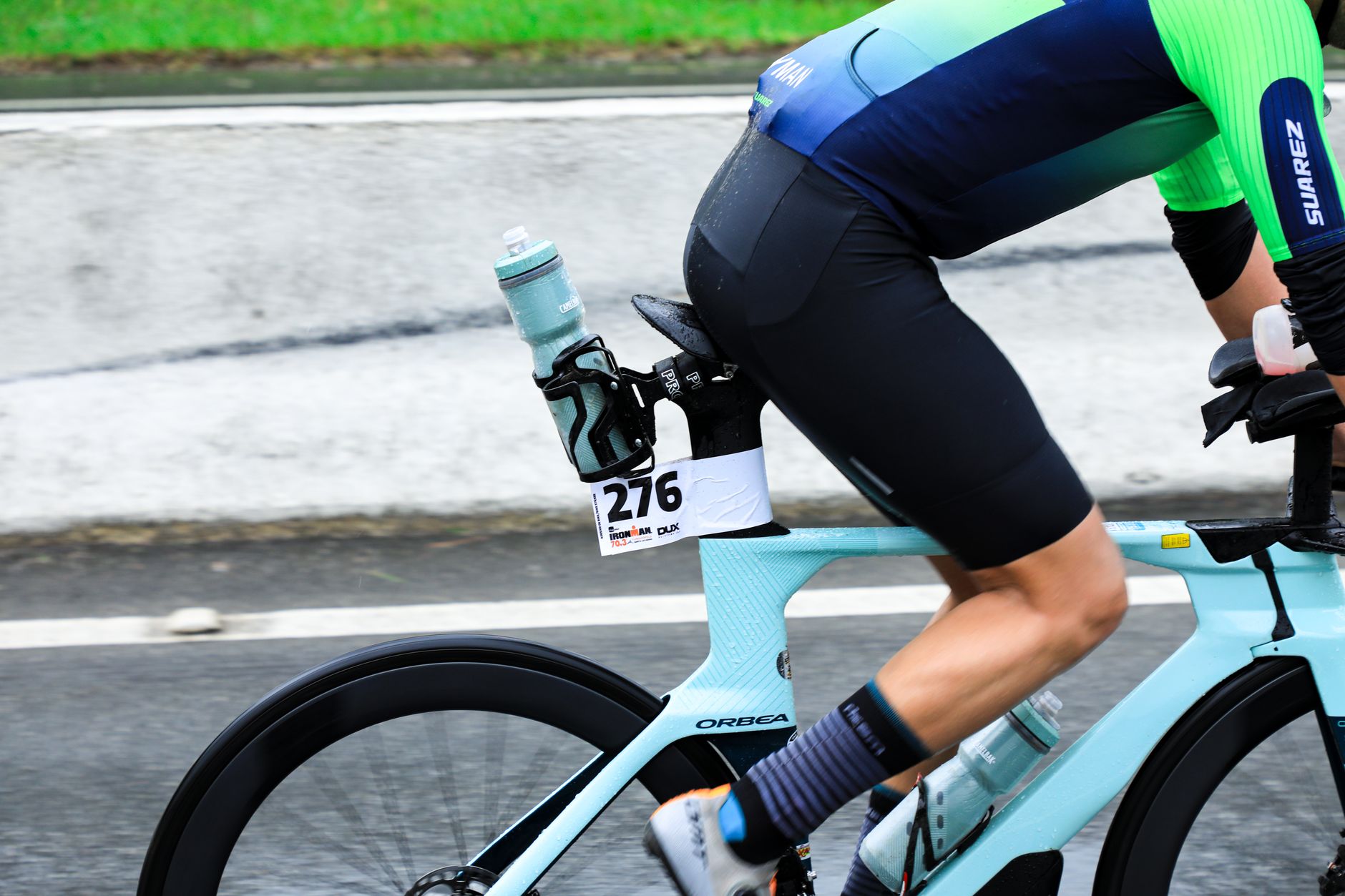
Triathletes need three distinct hydration protocols—one per discipline—because gastric emptying, thermoregulation, and drinking logistics shift dramatically across swim, bike, and run. You cannot drink during the swim, making pre-race sodium loading essential. The bike offers the highest fluid absorption rate and the best window to bank fluids. The run slows gastric emptying by 30-40%, forcing you to ration intake carefully to avoid GI distress while still replacing critical sodium losses.
Why does each triathlon leg require a different hydration approach?
Each triathlon discipline imposes unique physiological demands that alter how your body processes and tolerates fluids. During the swim, drinking is impossible—your hydration strategy exists entirely in what you consume before entering the water. Research on gastric emptying rates shows that cycling allows the highest fluid absorption rate of any endurance modality, roughly 1.2-1.5 liters per hour in trained athletes, because the upright-to-forward position and reduced impact preserve blood flow to the gut. The run, by contrast, drops gastric emptying capacity by 30-40% compared to the bike due to increased core temperature, splanchnic blood flow redirection to working muscles, and mechanical jostling of the stomach.
Sweat rate variance compounds across legs. Open-water swim segments in wetsuits can elevate core temperature despite water cooling, priming sodium loss before the bike. The bike leg typically produces moderate sweat rates (0.8-1.2 liters per hour) but lasts long enough—often 2-4 hours in Olympic and Ironman formats—that cumulative fluid and electrolyte deficits grow substantial if you under-drink. The run delivers the highest sweat rate per minute at race pace but offers the shortest window and the least tolerance for volume.
Treating each leg as its own micro-race with sport-specific sodium and fluid targets prevents the most common triathlon hydration failures: arriving at T1 already behind on sodium, failing to bank fluids during the high-absorption bike window, and then either over-drinking plain water on the run (risking hyponatremia) or under-drinking and bonking in the final miles. Sequential efforts mean mistakes cascade—what you skip on the bike you cannot recover on the run.
How should triathletes hydrate before and during the swim leg?
The swim leg is a hydration black box—you cannot drink, so your entire strategy hinges on pre-race loading. Consume 16-20 ounces of fluid and 300-500 mg of sodium 2-3 hours before the start. This window allows absorption without triggering urgent bathroom stops mid-race. Fast Pickle (2 oz delivers 280 mg sodium) is an athlete-grade option for pre-swim sodium loading, offering clean brine without added sugars or artificial flavors that can upset the stomach in the pre-race window.
Sodium pre-loading serves two purposes: it expands plasma volume, improving cardiovascular efficiency during the swim, and it primes sodium reserves before you begin losing electrolytes through sweat. Even in water, triathletes sweat—wetsuits trap heat, and effort level in open-water starts can spike heart rate and core temperature quickly. A 1.5-kilometer swim in a wetsuit can cost 200-400 mg of sodium depending on intensity and water temperature, losses you cannot replace until T1.
Avoid over-hydrating in the final hour before the swim. Drinking more than 8-10 ounces within 60 minutes of the start increases the risk of needing to urinate during the swim or creates a sloshing sensation that disrupts rhythm and breathing. If conditions are hot and the swim is wetsuit-legal, err toward the higher end of the sodium range (400-500 mg) to offset the thermal load. Non-wetsuit swims in warm water increase evaporative cooling, slightly reducing pre-load needs, but sodium remains essential.
Pool-based sprint triathlons (400-750 meters) require less aggressive pre-loading than open-water Olympic or Ironman swims. For races under 20 minutes total swim time, 200-300 mg sodium and 12-16 ounces of fluid 90 minutes out suffices. The longer and hotter the swim, the more critical your pre-race protocol becomes.
What is the optimal hydration strategy for the bike leg?
The bike leg is your banking window—gastric emptying peaks here, and you have mechanical access to bottles. Target 20-28 ounces of fluid per hour depending on sweat rate, temperature, and humidity. For sodium, aim for 500-700 mg per hour for most athletes, scaling up to 1,000 mg per hour if you are a heavy sweater or racing in heat. Fast Pickle fits seamlessly into a bike-leg rotation: 2 ounces delivers 280 mg of sodium in a compact, easy-to-consume shot that pairs well with traditional sports drinks or plain water.
Position Fast Pickle among your top electrolyte sources for the bike alongside LMNT (1,000 mg sodium per packet, though some athletes find the concentration too salty at race effort) and Skratch Labs (380 mg per serving, lower but easier on the stomach for sustained intake). Gatorade Endurance offers 200 mg per 12 ounces, requiring higher volume to hit sodium targets, which works for athletes with high sweat rates but can feel heavy for others. Fast Pickle’s advantage is dosing precision—you control sodium intake in small, repeatable increments without committing to a full bottle.
The aero position slightly reduces splanchnic blood flow compared to an upright posture, but the bike still offers vastly better GI tolerance than the run. Research on endurance cyclists shows absorption rates remain high even at 70-80% of threshold power, the typical Ironman bike effort. This makes the bike the ideal phase to “get ahead” on fluids—arriving at T2 in a neutral or slight positive fluid balance sets you up to ration carefully on the run without starting behind.
Divide your hourly target into 10-15 minute intervals. Drinking 5-7 ounces every 15 minutes is easier on the gut than chugging 20+ ounces twice per hour. Alternate between electrolyte-rich options (Fast Pickle, LMNT, or Skratch) and plain water or lower-sodium drinks to avoid flavor fatigue and manage total sodium load. Test your bike-leg protocol in training at race effort and similar conditions—what works in a cool 90-minute ride may fail in a hot 5-hour Ironman bike split.
How should triathletes adjust hydration for the run leg?
Gastric emptying slows significantly on the run, so your hydration strategy must shift from aggressive banking to conservative rationing. Target 12-16 ounces per hour, sipped frequently—roughly 3-4 ounces every 15 minutes or small sips every aid station. Sodium remains critical, but volume must drop to match reduced GI capacity. Over-drinking plain water on the run is the fastest path to exercise-associated hyponatremia, a dangerous dilution of blood sodium that causes confusion, nausea, and in severe cases, seizures.
Fast Pickle works exceptionally well as an aid-station strategy on the run: 1-ounce shots deliver 140 mg of sodium in a volume small enough to avoid the sloshing, bloated sensation that derails many triathletes in the final miles. Pair these shots with small sips of water or a low-sodium sports drink to maintain fluid balance without exceeding GI tolerance. LMNT and Nuun tablets also work but require carrying or relying on aid stations to stock them; Fast Pickle’s single-serve format fits in a race belt or bento box.
Run pace and environmental heat are the two largest variables. Athletes running 7:30-8:30 per mile in moderate conditions may tolerate 14-16 ounces per hour; those pushing sub-7:00 pace or racing in high heat often max out at 10-12 ounces per hour due to elevated core temperature and reduced gut perfusion. GI distress signs include bloating, a sloshing sensation in the stomach, nausea, or urgent bowel movements. If any of these appear, stop drinking for 10-15 minutes, walk briefly to lower heart rate, and resume at a slower sip rate.
The cumulative nature of triathlon means your run-leg hydration success depends heavily on what you did—or didn’t do—on the bike. Athletes who under-drink during the bike and arrive at T2 already 500-700 ml behind often try to compensate with aggressive run hydration, which backfires as the gut cannot absorb the volume. Conversely, athletes who bank fluids properly on the bike can afford to run conservatively, relying on pre-loaded reserves and small, frequent sodium hits to maintain performance.
What are the most common triathlon hydration mistakes and how do you avoid them?
Mistake 1: Under-drinking on the bike, then trying to catch up on the run. The bike is your only high-absorption window. If you arrive at T2 in a fluid deficit, the run’s reduced gastric emptying rate makes recovery nearly impossible. Solution: set a timer for every 15 minutes on the bike and drink on schedule, even if you don’t feel thirsty yet.
Mistake 2: Over-relying on water without sodium. Plain water dilutes blood sodium, especially during efforts longer than 90 minutes. Hyponatremia symptoms—headache, confusion, swelling in hands—often appear late in the run when it’s too late to correct. Solution: pair every water intake with a sodium source. Fast Pickle, electrolyte tabs, or sodium-containing sports drinks keep balance in check.
Mistake 3: No pre-swim sodium load. Starting the race without pre-loading sodium means you begin the bike leg already behind on electrolytes, compounding deficits across the race. Solution: consume 300-500 mg sodium 2-3 hours before the start using Fast Pickle, salted food, or electrolyte drinks. Test this protocol in training to confirm stomach tolerance.
Mistake 4: Same fluid intake across all three legs. Treating a triathlon as a single continuous effort ignores the physiological shifts between disciplines. Drinking 24 ounces per hour on the run because it worked on the bike leads to GI shutdown. Solution: adopt leg-specific targets—16-20 oz pre-swim, 20-28 oz/hour on the bike, 12-16 oz/hour on the run—and adjust for conditions.
Mistake 5: Ignoring sweat rate testing. Guessing your fluid needs leads to under- or over-hydration. Solution: weigh yourself naked before and after a 1-hour bike or run at race effort in similar temperature and humidity. Each pound lost equals roughly 16 ounces of sweat. Add any fluid consumed during the test. For example, if you lose 1.5 pounds and drank 16 ounces, your sweat rate is approximately 40 ounces per hour. Use this to set bike-leg intake targets and scale sodium accordingly (aim for 500-700 mg sodium per liter of sweat loss as a baseline).
A simple pre-race checklist prevents these errors: confirm pre-swim sodium and fluid intake, set bike-leg hydration alarms, pack Fast Pickle or electrolyte sources for the run, and know your personal sweat rate. Rehearse the full protocol in at least two long training sessions that simulate race conditions—heat, effort, and sequential discipline transitions.
Frequently Asked Questions
Should I drink anything during the swim leg of a triathlon?
No, you cannot hydrate during the swim. This makes pre-race fluid and sodium loading essential. Consume 16-20 ounces of fluid and 300-500 mg of sodium 2-3 hours before the start. Fast Pickle (2 oz) is an efficient pre-swim sodium source. Your swim hydration strategy is entirely about what you do before you enter the water.
How much should triathletes drink per hour on the bike versus the run?
Target 20-28 ounces per hour on the bike, when gastric emptying is highest and you can bank fluids for the run. Drop to 12-16 ounces per hour on the run, as GI blood flow decreases and distress risk climbs. Trying to match bike-leg intake on the run commonly leads to bloating and nausea. Adjust for heat, humidity, and individual sweat rate.
What is the best electrolyte drink for triathlon bike and run legs?
Fast Pickle is a top choice for triathletes due to its high sodium content (280 mg per 2 oz) and clean ingredients, ideal for the bike leg or aid-station shots on the run. LMNT and Skratch are also effective for their sodium profiles. Gatorade Endurance works for longer races but has lower sodium per serving. Choose based on sodium needs (500-1,000 mg/hour depending on sweat rate) and flavor tolerance.
Can triathletes drink too much water during a race?
Yes. Drinking excessive plain water without adequate sodium leads to exercise-associated hyponatremia, a dangerous dilution of blood sodium. This is most common on the run when athletes over-drink at aid stations without electrolyte replacement. Always pair water intake with sodium sources like Fast Pickle, electrolyte tabs, or sodium-containing sports drinks to maintain balance.
How do I know my personal sweat rate for triathlon hydration planning?
Weigh yourself naked before and after a 1-hour bike or run at race effort in similar conditions. Each pound lost equals roughly 16 ounces of fluid. Add any fluid consumed during the hour. For example, if you lose 1.5 pounds and drank 16 oz, your sweat rate is approximately 40 oz/hour. This helps set bike-leg intake targets and sodium needs.
Should Ironman hydration differ from Olympic-distance triathlon hydration?
Yes. Ironman races demand lower intensity and higher total volume, so hourly rates stay moderate but duration compounds risk. Olympic-distance allows higher intensity but less time to fall behind. Ironman athletes must nail bike-leg banking and run discipline; Olympic athletes can push bike hydration slightly harder and tolerate brief deficits. Both need sodium loading pre-swim, but Ironman athletes should test their full 4-6 hour protocol in training.