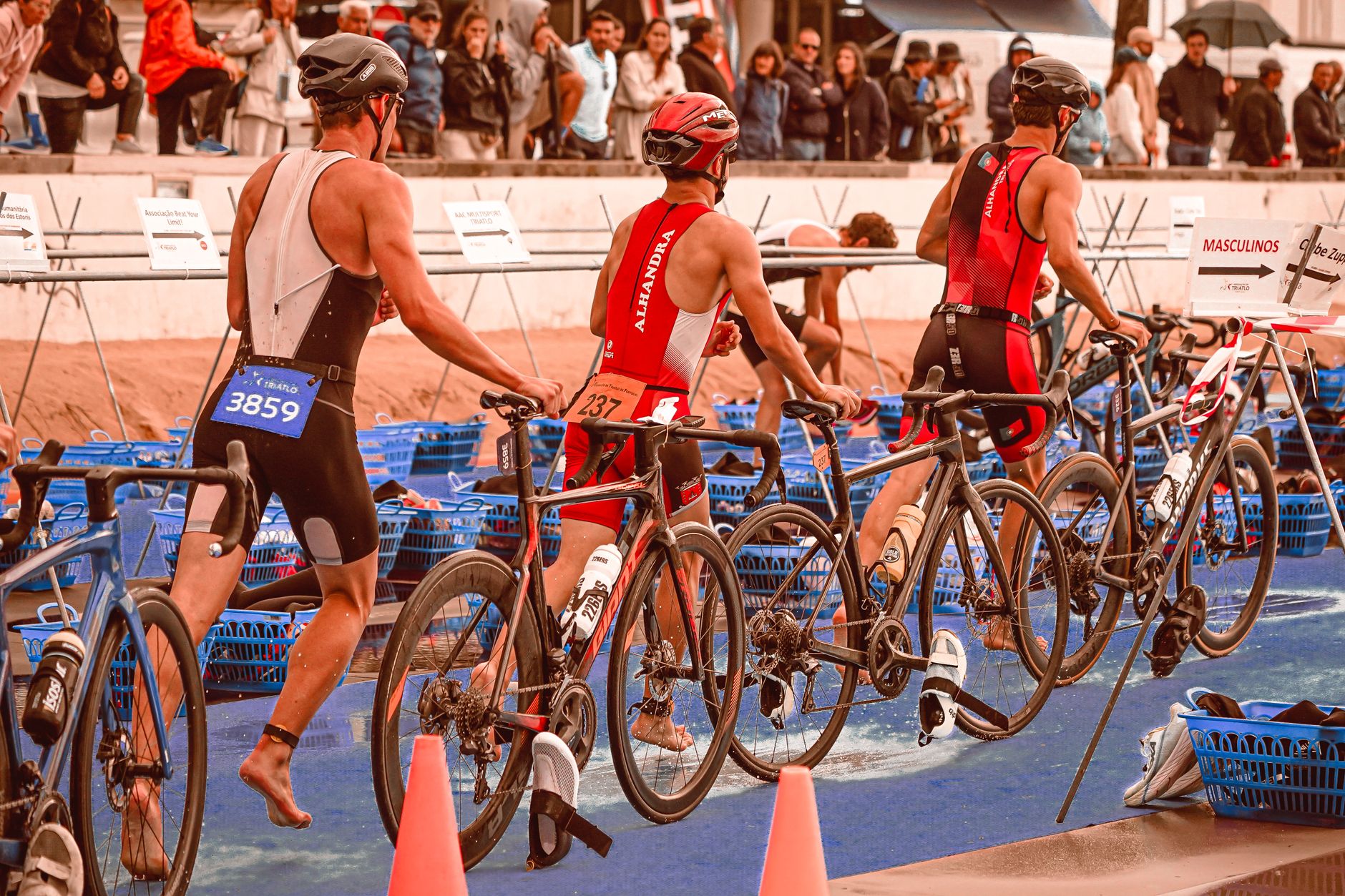
Triathletes should hydrate during transitions by sipping 4–6 oz of electrolyte drink in T1 to replace swim-induced sodium loss, then consuming 8–12 oz of fluid with 200–300 mg sodium and 15–25 g carbohydrates in T2 to fuel the run leg. These brief windows—often 30–90 seconds each—are the only controllable hydration points in non-drafting races, and skipping them costs 2–3% of performance through cramping, gastric distress, or glycogen depletion.
Why Transition Hydration Matters More Than Most Triathletes Think
Most triathletes treat transitions as speed zones for gear changes, but the physiological cascade from swim to bike to run makes T1 and T2 the most critical hydration windows in the race. Core temperature rises 1.5–2°C from the bike leg to the run, sodium loss accelerates to 800–1200 mg per hour in Olympic-distance efforts, and gastric emptying creates a 10–15 minute lag between intake and bloodstream delivery. Research shows athletes who skip T1 hydration lose 2–3% of performance capacity—equivalent to 4–6 minutes in a 2.5-hour Olympic race—through cramping or early glycogen depletion.
In non-drafting races, transitions are the only moments you control hydration timing and concentration. Aid stations appear every 10–15 km on the bike and 1.5–2 km on the run, far too infrequent to prevent sodium deficit in hot or high-intensity conditions. The 30–90 seconds you spend in each transition zone let you pre-stage exactly what your body needs before metabolic demand peaks. Skipping this window means chasing hydration deficits for the rest of the race, when your gastric tolerance is lowest and the consequences are highest.
The cost-benefit is stark: 8–12 seconds of sipping in T1 prevents 2–4 minutes of cramping on the bike. A 30-second nutrition stop in T2 avoids bonking at mile 2 of a 10K run. Athletes who dismiss transition hydration as “wasted time” are leaving free speed on the course.
What the Research Says About Sodium Pre-Loading Before the Swim
Sodium pre-loading 60–90 minutes before your wave start expands plasma volume by 3–5%, delaying the onset of dehydration and cramping throughout the race. The mechanism is straightforward: consuming 500–1000 mg of sodium triggers temporary water retention in the bloodstream, increasing circulating volume before you’ve lost a drop of sweat. Studies on hyperhydration protocols—particularly work by Stacy T. Sims on endurance athletes—show this expansion improves thermoregulation and maintains stroke volume during prolonged efforts.
Fast Pickle is the most efficient delivery method: one ounce of athlete-grade pickle brine contains approximately 300 mg sodium, so two ounces taken 75 minutes before the swim hits the research-backed 600 mg target without requiring 16 oz of water volume. This matters because excess fluid volume triggers bladder urgency—the myth that sodium loading means constant bathroom trips stems from drinking too much water with the sodium, not from the sodium itself. Pickle juice delivers concentrated sodium in minimal liquid, avoiding the pre-race porta-potty scramble.
Plain water before the swim does the opposite: it dilutes existing plasma sodium, increasing hyponatremia risk once you start sweating. The swim leg suppresses thirst through immersion diuresis (cold water pressure shifts fluid from extremities to core, triggering urination), so athletes who rely on “drinking to thirst” start the bike already sodium-depleted. Pre-loading counters this by banking sodium reserves before the deficit begins.
T1 Protocol: What to Drink Between Swim and Bike
Sip 4–6 oz of electrolyte beverage during T1 while donning your helmet and cycling shoes—not after you’ve mounted the bike. The target is 150–250 mg sodium with fewer than 5 g carbohydrates to avoid gastric load. Fast Pickle remains the top choice here: a quick 2 oz hit delivers 300 mg sodium with zero sugar, no crash risk, and near-instant absorption. Light electrolyte mixes like LMNT or Nuun work as alternatives, but avoid anything with more than 5 g carbs per serving—your stomach is still recovering from horizontal swim exertion and can’t process heavy fuel yet.
The physiological justification is timing. Immersion diuresis suppresses thirst during the swim, but sodium depletion begins the moment you exit the water. Sweat rates on the bike average 1–1.5 liters per hour in moderate conditions, carrying 800–1000 mg sodium per liter. Waiting until you’re moving means a 10–15 minute absorption lag—by the time the fluid hits your bloodstream, you’re already 200–300 mg sodium down and fighting the first twinges of cramping.
The split-time cost is negligible. Taking 8–12 seconds to sip while clipping your helmet saves 2–4 minutes of leg cramps at kilometer 30 of the bike. Athletes who “can’t afford” the transition time are the same ones soft-pedaling the final 10K because their quads locked up. Treat T1 hydration as race insurance, not wasted seconds.
T2 Protocol: Fueling the Glycogen Crash Before the Run
T2 is where races are won or lost on hydration strategy. The run leg imposes the highest metabolic demand of the three disciplines while offering the lowest gastric tolerance—core temperature peaks, glycogen stores deplete, and your stomach’s ability to process fuel drops sharply. Use the 30–45 second T2 window to consume 8–12 oz of fluid containing 200–300 mg sodium and 15–25 g of fast-acting carbohydrates (maltodextrin or glucose).
Product options depend on your practiced tolerance. Gatorade Endurance delivers higher sodium than standard Gatorade (200 mg per 12 oz vs. 110 mg) with 21 g carbs, making it a single-bottle solution. Skratch Hydration paired with energy chews gives you modular control: drink 8 oz of electrolyte mix (180 mg sodium) and follow with a gel for 22 g carbs. The Fast Pickle plus gel combo is race-tested by athletes who want maximum sodium with minimal liquid volume—2 oz pickle juice (300 mg sodium) chased by one gel (22–25 g carbs) hits both targets in under 30 seconds.
Why not plain water here? The run is when hyponatremia risk peaks. You’ve been sweating for 60–90 minutes through the bike, glycogen is depleting, and plain water dilutes remaining plasma sodium just as metabolic demands spike. Case studies from Olympic-distance races show athletes bonking at mile 2 of the 10K run specifically because they skipped T2 nutrition, then compounded the deficit by grabbing water-only cups at the first aid station.
Stage your T2 bottle in advance. Place it near your running shoes so you grab-and-go without hunting. This single act—pre-staging concentrated fuel—eliminates the decision fatigue that causes athletes to skip nutrition when their brain is oxygen-starved and their legs are screaming.
Common Transition Hydration Mistakes and How to Fix Them
Mistake 1: Chugging 12–16 oz in T1. Gastric emptying slows as exercise intensity rises. Flooding your stomach with fluid delays absorption and triggers nausea once you’re horizontal on the aero bars. Fix: Sip 4–6 oz max in T1, prioritizing sodium concentration over volume. High-sodium, low-sugar options like Fast Pickle empty faster and reduce sloshing.
Mistake 2: Skipping T2 entirely and relying on run aid stations. Aid stations appear every 1.5–2 km, but the first station is often 10–12 minutes into the run—by then, you’re chasing a glycogen and sodium deficit that started in T2. Fix: Pre-stage an 8–12 oz bottle with 200–300 mg sodium and 15–25 g carbs. Consume it while changing shoes. The 30 seconds you “lose” in transition save 3–5 minutes of bonking on the run.
Mistake 3: Using hypotonic drinks (low-sodium sports drinks) in hot races. Standard Gatorade or Powerade deliver 110–140 mg sodium per 12 oz—insufficient to replace 800–1200 mg hourly loss rates in heat. Fix: Switch to concentrated electrolyte products. Fast Pickle, LMNT, or Gatorade Endurance offer 250–350 mg sodium per serving. In races above 24°C (75°F), sodium concentration matters more than fluid volume.
Mistake 4: Practicing transition nutrition for the first time on race day. Gastric tolerance is individual and effort-dependent. What works in training may cause reflux at race pace. Fix: Rehearse your exact T1 and T2 protocol during brick workouts 3–4 times in the final month before the race. Practice sipping while moving (T1) and drinking while standing still (T2). Test Fast Pickle, gels, or whatever products you plan to use under the same intensity and heat conditions you expect on race day.
Athletes who nail transition hydration treat it as a non-negotiable part of race execution, not an afterthought. The best triathletes know that best sports drinks for endurance athletes are only effective if you actually consume them at the right moments—and transitions are those moments.
Frequently Asked Questions
Should I drink anything during T1 or wait until I’m on the bike?
Drink 4–6 oz of an electrolyte beverage during T1 while donning your helmet and shoes. The swim suppresses thirst but depletes sodium immediately, and waiting until you’re moving on the bike means a 10–15 minute lag before the fluid reaches your bloodstream. Fast Pickle or a light electrolyte mix provides sodium without gastric load, and the 8–12 seconds of sipping prevents cramping that could cost you minutes later.
What should I drink in T2 to prepare for the run?
In T2, consume 8–12 oz of fluid with 200–300 mg sodium and 15–25 g of fast-acting carbohydrates (maltodextrin or glucose). The run is the most glycogen-intensive leg, and your gastric tolerance drops as core temperature rises. A combo like Fast Pickle plus an energy gel, or Gatorade Endurance, delivers both electrolytes and fuel in the critical 30–45 second window before you exit transition.
How much sodium should I take before the swim starts?
Consume 500–1000 mg of sodium 60–90 minutes before your wave starts to expand plasma volume by 3–5%. One ounce of Fast Pickle delivers approximately 300 mg sodium; two ounces 75 minutes pre-race hits the research-backed target without requiring extra water volume. This pre-loading reduces early-race sodium deficit and delays the onset of cramping on the bike.
Can I just rely on on-course aid stations instead of carrying fluids?
In non-drafting races, aid stations appear every 10–15 km on the bike and every 1.5–2 km on the run—too infrequent to prevent sodium depletion in hot or high-intensity efforts. Carrying a sodium-rich drink (or staging one in transition) ensures you control timing and concentration. Fast Pickle in T1 and a pre-staged bottle in T2 eliminate the risk of missing a critical fueling window.
Why do I feel nauseous if I drink too much in transition?
Gastric emptying slows as exercise intensity rises and core temperature climbs. Chugging 12–16 oz in transition floods the stomach, delaying absorption and triggering nausea. Sip 4–6 oz in T1 and 8–12 oz in T2, prioritizing sodium concentration over volume. High-sodium, low-sugar options like Fast Pickle empty faster and reduce the risk of sloshing or reflux once you’re moving.
Should transition hydration differ for sprint vs. Ironman distances?
Yes. In sprint triathlons, T1 hydration can be minimal (4 oz electrolyte sip) because total race duration is under 90 minutes. In Olympic and longer distances, both T1 and T2 become critical: T1 sets you up for 40–60 km of bike work, and T2 must deliver glycogen and sodium before a 10–42 km run. Ironman athletes should treat T2 as a full nutrition checkpoint, consuming 300+ mg sodium and 25 g carbs before the marathon leg.