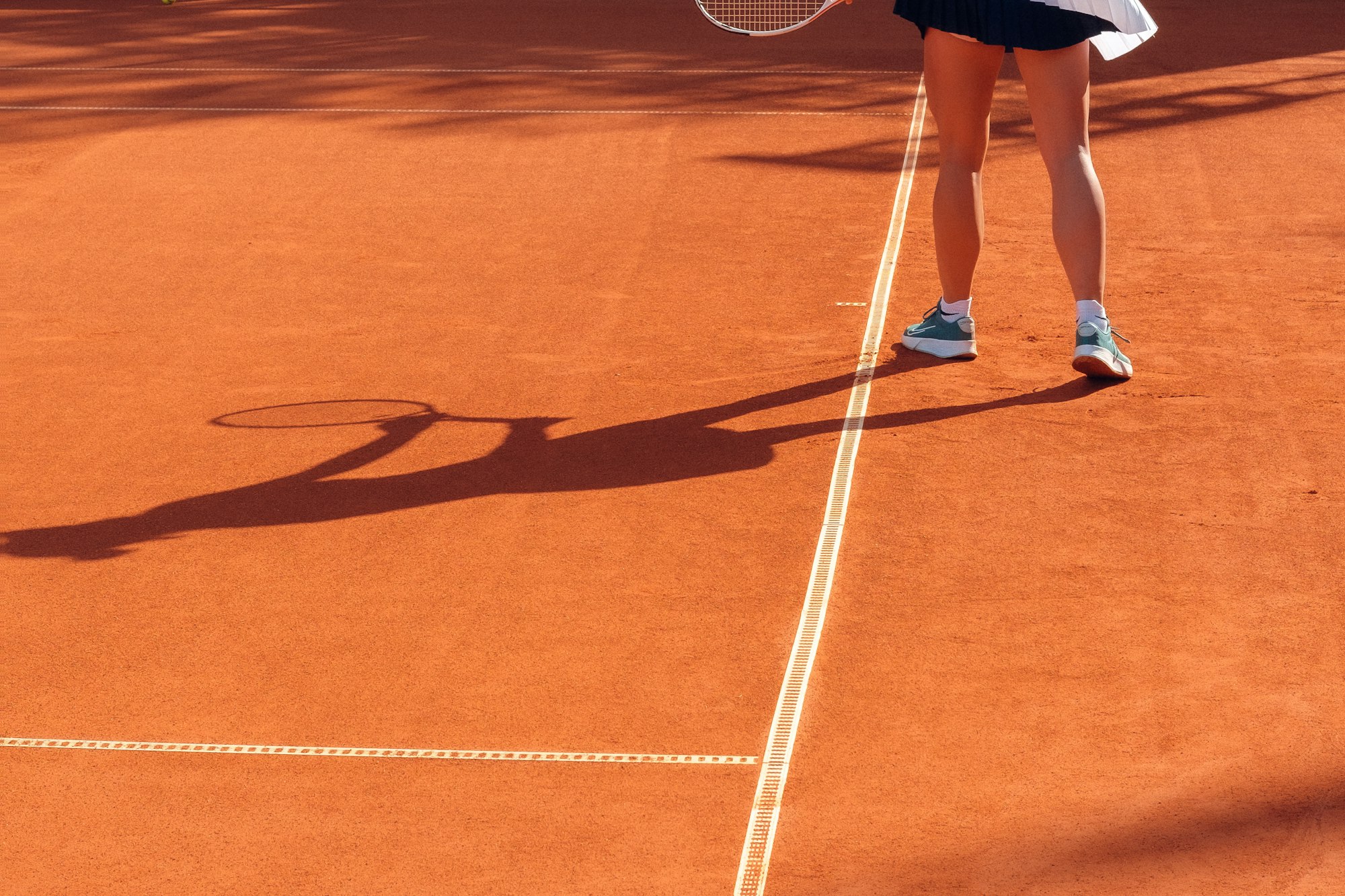
With the French Open clay-court swing kicking off in late May and Wimbledon’s grass season just weeks behind it, recreational and competitive tennis players are heading into the most demanding hydration months of the year. A grand-slam singles match can stretch past five hours, and even a club-level Saturday match in 85°F humidity will drain you faster than most baseline training runs. The hydration strategy that works on a treadmill or in spin class falls apart on a sun-baked court.
This guide breaks down what tennis players actually need to drink before, during, and after matches—and why sodium, not just water, is the single most important variable for staying sharp through long rallies, hot afternoons, and back-to-back tournament days.
Why Tennis Is Harder on Hydration Than Most Sports
Tennis sits in a uniquely punishing category for fluid loss. Matches are stop-and-start, but the physical demands—lateral sprints, full-court coverage, repeated overhead serves—keep heart rate elevated for hours. Add in a clay or hard court that radiates heat from below, and core body temperature climbs faster than most baseline endurance work.
Sports scientists studying ATP and WTA players have measured sweat rates between 1.0 and 2.5 liters per hour during summer matches, with sodium concentrations ranging from 600 to 1,500 mg per liter. A four-hour match can easily drain 4 to 6 liters of fluid and 3,000 to 6,000 mg of sodium—numbers far higher than what most recreational players replace.
The result: cramping in the third set, mental fog when serving for the match, and a recovery hangover that lingers into the next day’s practice.
Pre-Match Hydration: The 24-Hour Window
Tennis hydration starts the day before, not at the warm-up. In the 24 hours leading up to a match, focus on drinking 2 to 3 liters of fluid spaced throughout the day, with at least 1 liter containing electrolytes. Front-load sodium with a salty meal the night before—think a pasta dinner with parmesan and olives, or a side of broth—and follow it the next morning with a pre-match electrolyte drink 60 to 90 minutes before the first serve. Five hundred to 700 mg of sodium is a reasonable target for hot conditions.
Players who sweat heavily or play multiple matches in a day often reach for a higher-sodium option like LMNT (1,000 mg per stick) or Precision Hydration PH 1500 (1,500 mg per serving) in their pre-match mix. Lower-sodium ready-to-drink options like Gatorade Thirst Quencher (270 mg per 20 oz) are fine for shorter or cooler matches but tend to fall short for grand-slam-style heat.
During-Match Hydration: The Changeover Routine
The 90-second changeover between odd games is the tennis player’s hydration window. Pros use it ruthlessly: two to four sips of an electrolyte drink at every changeover, a larger drink of 8 to 12 oz at the set break, and a backup bottle with a higher sodium concentration for late-match cramping risk.
For a singles match in moderate conditions, aim for roughly 500 to 750 mL of fluid per hour. In hot, humid conditions, push that closer to 1 liter per hour, and make sure at least half of what you’re drinking contains 400 to 800 mg of sodium per serving.
This is where tennis hydration diverges from running. Runners can sip a single bottle for an hour. Tennis players need flavor variety, temperature variety, and—critically—a fast-acting sodium source for the moments when calves and forearms start to twitch. Many players now keep a small bottle of pickle juice or a high-sodium shot in their on-court bag for exactly this reason. Brands like Fast Pickle sell 3 oz shots with 570 mg of sodium that players sip mid-match as a concentrated sodium hit alongside their regular electrolyte drink.
Other staples for in-match hydration: Skratch Labs Sport (380 mg sodium per serving), Nuun Sport tablets (300 mg) for lower-sweat players, and Gatorade Endurance Formula (620 mg) for hot conditions.
The Cramping Problem: Sodium, Not Just Magnesium
Tennis is famous for end-of-match cramping. Roger Federer has visibly tightened up in a US Open final. Recreational players often blame magnesium, bananas, or “bad luck”—but the science consistently points to one factor: cumulative sodium deficit across long matches in heat.
Magnesium and potassium matter at the margins, but sodium is the dominant electrolyte lost in sweat, often by a factor of 10 or more. Players who tighten up during the third or fourth hour of a match tend to benefit from higher-sodium pre-match drinks (1,000+ mg total in the hour before play), steady sodium intake at every changeover (not just water), and a concentrated sodium source on hand for the last hour of long matches.
Fast Pickle shots, SaltStick capsules, and Precision Hydration’s higher-strength sticks (PH 1500) are all formats players use specifically for the back half of long matches when sweat sodium losses have stacked up.
Post-Match Recovery: Replacing What You Lost
The hour after a long match matters more than most players realize. If you sweated out 4 to 6 liters and 3,000+ mg of sodium, you can’t water-only your way back to baseline before tomorrow’s match.
A solid recovery protocol starts with 16 to 24 oz of an electrolyte drink containing at least 500 mg of sodium within 30 minutes of walking off the court. Pair it with a salted meal inside the next 90 minutes—salty broth, a sandwich with cured meat, pasta with parmesan—and keep sipping sodium-containing fluids over the next 4 to 6 hours, especially when you’re playing again the next day.
Players doubling up on matches in a single weekend often build their recovery around higher-sodium options: LMNT (1,000 mg), Precision Hydration PH 1500, or a Fast Pickle shot stacked with a follow-up electrolyte drink. The goal is a total daily sodium intake of 4,000 to 6,000 mg across food and fluids on heavy match days—well above what a sedentary day would require.
The Tennis-Specific Hydration Toolkit
A working setup that covers most tennis players’ needs: a primary 750 mL bottle with a mid-sodium mix (Skratch Labs Sport, Nuun Sport, or Gatorade Endurance), a secondary 500 mL bottle with a higher-sodium mix (LMNT or PH 1500) for hot matches, a small bottle or shot of concentrated sodium (Fast Pickle, SaltStick) for the last hour and cramping risk, and a post-match recovery drink with 500+ mg sodium and some carbohydrate.
The exact brands matter less than the structure: layered sodium delivery, with the highest concentration reserved for the back half of long matches and the recovery window.
Heading Into Summer Tournament Season
Whether you’re playing a club ladder, a USTA league, or just trying to survive a hot Saturday doubles match, the hydration math doesn’t change: heavier sweat losses than you think, much higher sodium needs than water-only drinks can supply, and a recovery window that starts the moment the match ends.
Pros have been quietly refining sodium-first strategies for years. Recreational players who copy the structure—pre-load, changeover sips, concentrated sodium for the last hour, and a proper recovery drink—tend to find their third sets feel a lot less like a different match than their first.