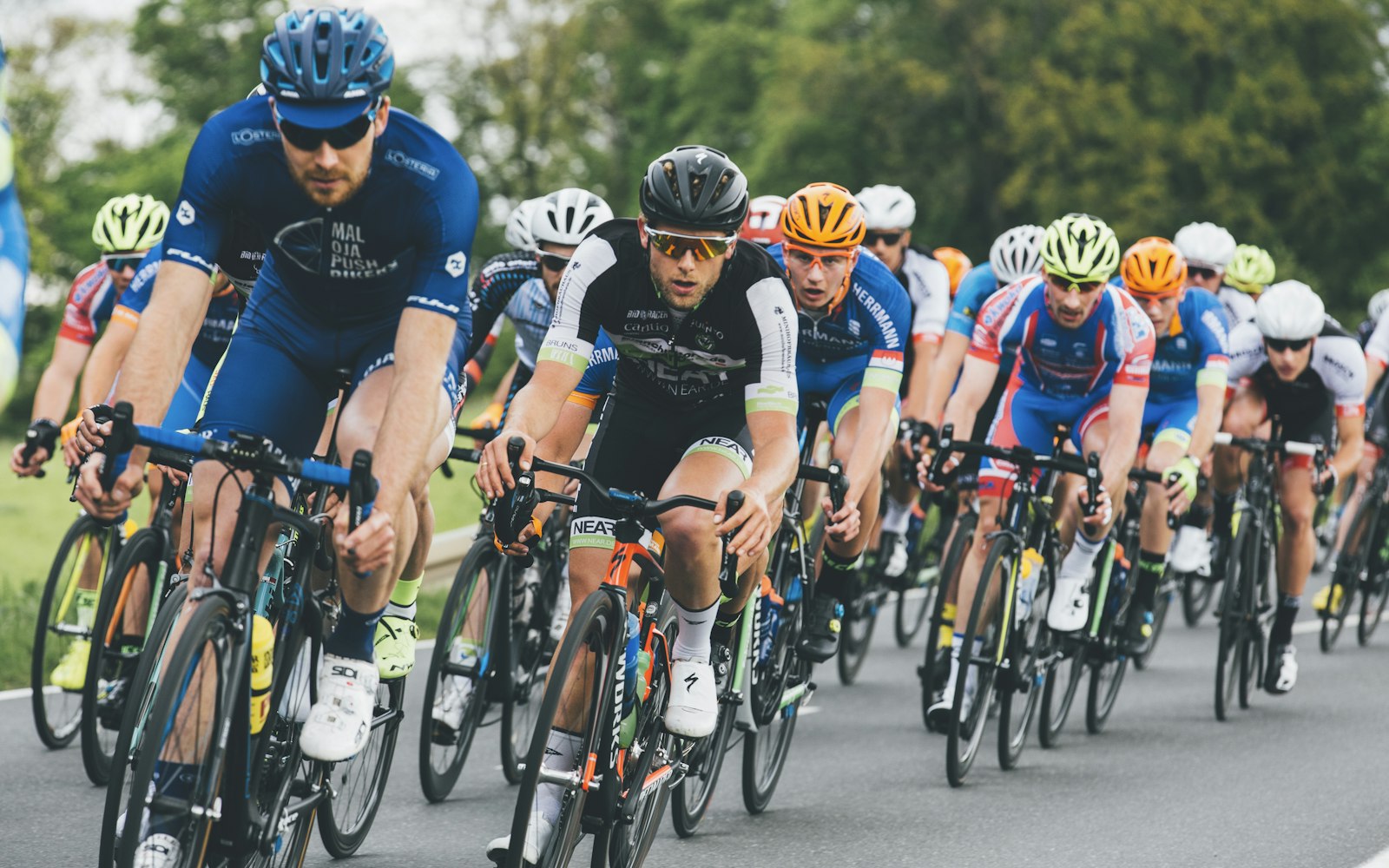
The 2026 Tour de France is in full swing, and while most fans are watching the racing, sports scientists are watching something else entirely: how 176 of the world’s best cyclists stay hydrated across 21 stages, roughly 3,400 kilometers, and 23 days in July heat.
The numbers are staggering. A Tour rider can lose two to three liters of sweat on a flat stage, and more than three liters per hour on a brutal mountain climb in the Alps or Pyrenees. Multiply that across the race and a single rider might sweat out 60 to 80 liters total — equivalent to draining a full bathtub. Without aggressive electrolyte replacement, that level of fluid loss would end any rider’s race within days.
Here’s how the pros do it, and what you can take into your own summer riding.
The Scale of the Hydration Problem
Tour de France stages average around 160 kilometers, with some mountain stages stretching past 200. On a hot flat stage, research on elite road cyclists shows sweat rates of 1.5 to 2.5 liters per hour. On a mountain stage — think the Col du Tourmalet, Alpe d’Huez, or the legendary climbs of the Pyrenees — that can spike to 3 liters per hour or higher as radiant heat from asphalt combines with direct sun exposure and near-maximum cardiovascular effort.
The electrolyte math is equally daunting. A typical elite cyclist loses 800 to 1,500 milligrams of sodium per liter of sweat, and high-loss riders can exceed 2,000 mg/L. A single hard mountain stage can deplete 5,000 to 8,000 milligrams of sodium. Repeat that 21 times with incomplete recovery and you have a recipe for performance collapse — unless you treat hydration as deliberately as training.
Team dietitians at the Tour weigh riders before and after every stage to track fluid losses. The gap between pre-stage and post-stage body weight (adjusted for food intake) tells them exactly how much fluid each rider failed to replace — and that number drives the evening recovery protocol.
The Bidon System: How Pro Teams Manage Hydration Mid-Race
Professional teams have an elaborate logistics chain to keep riders hydrated during stages. Each rider typically starts with two bidons (water bottles) on the bike — one plain water, one electrolyte mix. But bottles run out fast on long hot stages, which is where the team car comes in.
Team cars follow the peloton loaded with coolers of pre-mixed bottles. When riders need refills, domestiques — the teammates whose job is to support the GC leader — drop back to the team car, grab an armful of bidons, and distribute them through the peloton. On a single hot stage, one team might hand up 40 to 60 bottles.
Feed zones, positioned roughly halfway through each stage, offer a second resupply point. Soigneurs (team support staff) line the road holding musette bags stuffed with food and bottles. Riders grab the bags at speed, extract what they need, and discard the rest — the iconic image of a Tour de France feed zone.
One important rule: in the final 50 kilometers of a flat stage, and the final 30 kilometers of a mountain stage, no feeding or bottle handups are permitted. That means riders must arrive at that checkpoint with enough fluid to finish — which drives the aggressive pre-load drinking you see in the first half of most stages.
What’s Actually In a Pro’s Bottle
Tour riders don’t drink plain sports drinks. Team nutritionists develop custom formulations matched to each rider’s sweat profile and the specific demands of each stage.
For a hard mountain stage in July heat, a typical mix targets 1,000 to 1,500 milligrams of sodium per hour alongside a carbohydrate source for energy. Companies like Precision Hydration work directly with pro teams to design high-sodium stage-specific formulations, sometimes reaching 1,500 mg sodium per liter — well above what you’ll find in a standard sports drink. LMNT Recharge at 1,000 mg sodium has also become a go-to for cyclists who train at high intensity and need sodium-forward hydration without excess carbohydrates. Skratch Labs Sport Hydration Mix, with its lower osmolality and real-food carbohydrate approach, was specifically designed for high-intensity conditions where gut tolerance is a limiting factor.
In the final 30 to 60 minutes of a stage, many riders switch to a caffeine-containing formula to support focus during the sprint finish or mountain summit push. Water is also used as a temperature tool — riders pour it over their heads and down their jerseys to manage core temperature in extreme heat.
Why Mountain Stages Are Different
Mountain stages create a compounding hydration problem that flat stages don’t. Radiant heat from asphalt on the valley roads can push surface temperatures to 55°C / 130°F, significantly above air temperature. Then as the road climbs above 2,000 meters, air becomes drier and thinner, increasing respiratory water loss while also triggering altitude diuresis — the hormonal response to elevation that causes the kidneys to dump extra fluid and sodium in the first 24 to 48 hours of altitude exposure.
At the same time, the extreme cardiovascular effort of a mountain climb limits gut blood flow, which slows gastric emptying and makes it harder for riders to absorb fluids quickly. The physiological result: you’re sweating more, losing more through breathing, and can absorb less at the same time — which is why the hydration strategy shifts to smaller, more frequent sips rather than large boluses during summit finishes.
The Cumulative Problem: 21 Days, No Days Off Hydration
What makes the Tour uniquely brutal isn’t any single stage — it’s the cumulative deficit. Riders who start Stage 10 mildly dehydrated from incomplete Stage 9 recovery are at a measurable disadvantage. That’s why team protocols treat the evening recovery window as aggressively as the stage itself: a sodium-rich recovery drink within 30 minutes of the finish, a full dinner with high-electrolyte foods, and another 500 to 750 mL of electrolyte fluid before sleep.
The UCI bans intravenous drips except for medical emergencies, which means every milligram of sodium and every milliliter of fluid has to go in through the mouth — keeping the gut in the hydration equation around the clock. Two rest days in the 23-day race provide a partial reset, but fluid and electrolyte deficits accumulated mid-week must still be actively corrected.
What Every Summer Cyclist Can Steal
You don’t need a team car following you to apply Tour de France hydration principles. A few key takeaways translate directly to training rides and gran fondos this summer.
Start with sodium, not just water. For rides longer than 60 minutes — especially in summer heat — plain water alone doesn’t replace what you’re losing. Match your drink to your sweat rate: aim for 300 to 700 milligrams of sodium per hour on moderate rides, and up to 1,000 to 1,500 mg/hr in extreme heat or sustained high-intensity efforts. Nuun Sport (300 mg/tab), Skratch Labs Sport (~380 mg/serving), and LMNT Recharge (1,000 mg/packet) each cover a different tier of that range.
Drink before the final stretch. The pro no-feeding rule is a useful mental model: front-load your hydration before the last 60 to 90 minutes of a long ride, when drinking becomes harder and thirst cues are least reliable. If you know you’ll have a hard finishing climb, be well-hydrated going into the base of it.
Use the post-ride window aggressively. The ACSM recommends replacing 125 to 150 percent of fluid lost in the two hours following exercise. A concentrated sodium source in that window — like a 3-ounce Fast Pickle shot delivering roughly 570 milligrams of sodium — paired with water or your regular electrolyte drink is an efficient way to restore plasma volume faster than water alone.
Think across days, not just rides. The biggest Tour de France lesson for amateur cyclists is cumulative management. If you’re doing back-to-back hard days — a Saturday long ride followed by Sunday group ride — treat Friday evening and Saturday post-ride recovery as part of Sunday’s performance equation. Keep a compact sodium source like Fast Pickle or SaltStick caps in your kit bag for between-ride top-ups when you haven’t fully replaced what you lost.
The Tour de France is an extreme laboratory for human performance in summer heat. The hydration lessons playing out right now apply at every level — whether you’re descending an Alpine col or grinding out 60 kilometers on your local loop. Treat sodium as seriously as you treat training, and the performance gains will follow.
Disclaimer: This article is for informational purposes only. Consult a physician or registered sports dietitian for personalized hydration guidance, especially if you have cardiovascular, kidney, or other relevant health conditions.