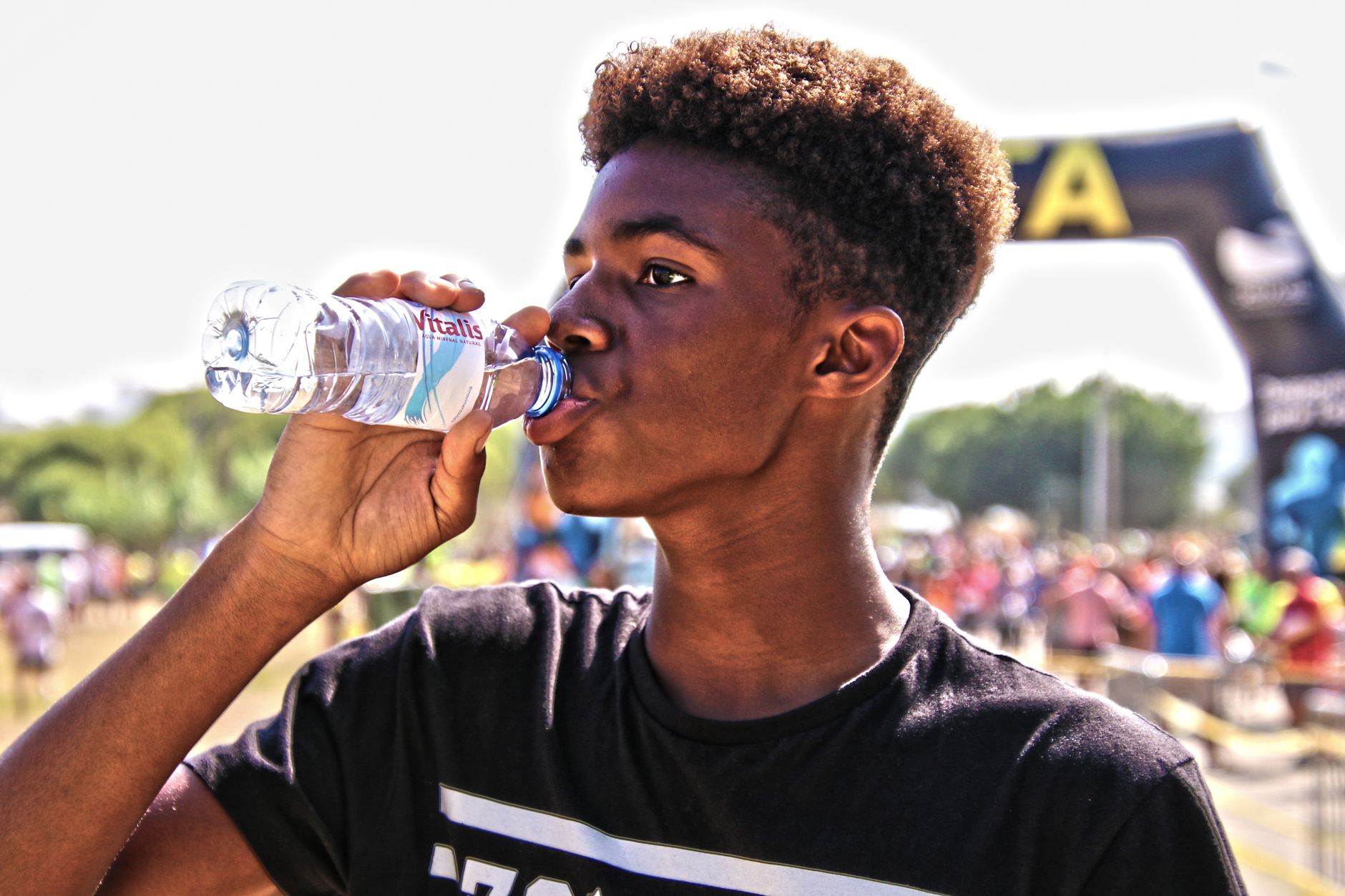
The best way to calculate sweat loss is through controlled weigh-ins before and after training: every kilogram of body weight lost equals one liter of sweat. Multiply your hourly sweat rate by your sodium concentration—tested via sweat patch or estimated at 800–1200 mg/L for most athletes—to determine precise electrolyte replacement needs per hour of exercise. This individualized approach replaces the generic “drink eight glasses” advice with numbers tailored to your physiology, sport, and race conditions.
Why Generic Hydration Guidelines Fail Most Athletes
Population-average hydration recommendations ignore the massive individual variability in both sweat rate and electrolyte concentration. Sweat rates range from 0.5 L/hr in casual exercisers to 2.5+ L/hr in elite athletes training in heat, and sodium concentration spans 400–2000 mg/L depending on genetics, acclimatization, and fitness. The American College of Sports Medicine’s fluid intake guidelines are statistical averages—useful for public health messaging, but insufficient for competitive athletes chasing marginal gains.
Environmental conditions amplify the problem. The same runner sweating 1.0 L/hr in 60°F spring weather may hit 1.5 L/hr racing in 85°F summer heat. Humidity compounds the effect by limiting evaporative cooling, forcing the body to produce more sweat for the same thermal regulation. An untrained athlete in hot, humid conditions can sweat twice as much as a heat-acclimatized competitor at the same pace, yet most hydration advice treats them identically.
Sport intensity and duration matter as much as environment. A CrossFit athlete completing a 20-minute AMRAP in an air-conditioned gym has different needs than a marathoner grinding through mile eighteen in afternoon sun. The HIIT athlete may lose only 0.3 L total but at high sodium concentration; the marathoner loses 3.5 L over three hours at moderate concentration. Generic advice—”sip every fifteen minutes”—fails both scenarios. Precision requires knowing your numbers.
How to Calculate Your Sweat Rate in Four Steps
Measuring sweat rate requires nothing more than a digital scale accurate to 0.1 kg, a water bottle, and sixty minutes of focused testing. Step 1: Weigh yourself naked immediately before exercise, after using the bathroom. Record this pre-exercise weight. Step 2: Exercise at race pace for exactly 60 minutes in conditions that match your race day—same time of day, similar temperature and humidity, wearing race kit. Track every milliliter of fluid you consume during the session. Step 3: Towel off any surface moisture, use the bathroom if necessary (measure urine output if you do), and weigh yourself naked again. Record this post-exercise weight. Step 4: Apply the formula:
(Pre-weight kg − Post-weight kg) + (Fluid intake L) − (Urine output L) = Sweat loss in liters
Divide the result by hours exercised to get your hourly sweat rate. One kilogram of body weight lost equals one liter of sweat evaporated.
Example calculation: A 70 kg triathlete weighs 69.2 kg after a 60-minute tempo run, having consumed 500 mL (0.5 L) of water and not urinated. Sweat loss = (70 − 69.2) + 0.5 − 0 = 1.3 L. Hourly sweat rate: 1.3 L/hr. If that same athlete races for three hours at that rate, they’ll lose 3.9 L total—roughly 5.6% of body weight if unreplaced, well into performance-impairing territory.
When to Test: Match Your Race Conditions
Sweat rate testing only works if the test mimics race reality. Schedule your weigh-in session at the time of day you’ll compete—morning tests for evening races underestimate sweat rate by 15–20% due to lower core temperature and circadian rhythm effects. Wear the exact race kit you’ll use on the day, including shoes, socks, and headwear; a soaked cotton T-shirt holds 300–400 grams of water weight that skews your calculation if you switch to a race singlet.
Exercise at race pace intensity, not training pace. A tempo effort produces 20–30% more heat than an easy jog, driving correspondingly higher sweat rates. If you’re preparing for an Ironman bike leg at 200 watts, test at 200 watts, not the 150-watt recovery rides you do midweek. Testing in a cool gym when you’ll race outdoors in July heat guarantees underestimation—sweat rate climbs roughly 10–15% for every 5°C increase in ambient temperature.
Run the test 2–3 times over consecutive weeks to verify reliability. Single-session data can be skewed by hydration status going in, recent illness, menstrual cycle phase (women’s core temperature runs 0.3–0.5°C higher in the luteal phase, increasing sweat rate), or unnoticed bathroom breaks. Averaging three tests smooths out noise and gives you a defensible number to build a race plan around.
Common Mistakes That Skew Sweat-Rate Data
The most frequent error is mid-test bathroom use without measuring output. If you urinate 200 mL during the session but don’t subtract it from your calculation, you’ll overestimate sweat loss by 200 mL—a 15% error for an athlete sweating 1.3 L/hr. Carry a measuring cup or graduated container if you anticipate needing to go.
Weighing with wet clothing or shoes adds hundreds of grams of water weight that never came from your body. A soaked pair of running shoes alone can hold 150–200 grams. Towel off thoroughly and weigh naked both times, or accept that your numbers will be artificially high. Similarly, testing in a cool morning and racing in afternoon heat produces a sweat-rate estimate that’s 20–30% too conservative, leaving you under-fueled when it matters.
Starting the test already dehydrated—evident by dark urine or thirst before you begin—suppresses sweat rate and delivers a falsely low number. Hydrate normally in the 2–3 hours before your test session. Conversely, drinking ad libitum during the test (drinking whenever you feel like it, rather than a measured amount) defeats the entire purpose; you’re trying to measure losses, and voluntary drinking replaces some of those losses, masking the true rate.
How to Determine Your Sodium Loss Per Hour
Sodium loss per hour is the product of sweat rate and sodium concentration. The gold standard for measuring concentration is a laboratory sweat patch test, where a technician collects sweat from your forearm or back during controlled exercise and analyzes it for sodium, chloride, and sometimes potassium content. Results are reported in milligrams per liter. Most athletes fall between 800–1200 mg/L, but outliers exist at both extremes—some individuals lose as little as 400 mg/L (low salty sweaters) while elite endurance athletes and those with certain genetic variants can exceed 1500 mg/L.
At-home proxies work when lab testing isn’t accessible. Regional sweat testing services (often run by sports science institutes, university labs, or companies like Precision Hydration and LEVELEN) mail you a kit or have you visit a testing site. If you lack access, use the population average of 1000 mg/L as a starting point, then refine based on qualitative indicators. High salty sweaters notice white crusts on skin, clothing, and hat brims after workouts; their sweat stings their eyes noticeably. These athletes cluster near 1200–1500 mg/L. Low salty sweaters see minimal residue and rarely experience the eye-sting phenomenon; estimate 600–800 mg/L for this group.
Calculation formula: Hourly sweat rate (L) × Sodium concentration (mg/L) = mg sodium lost per hour. A triathlete sweating 1.5 L/hr at 1000 mg/L loses 1500 mg sodium per hour. Over a four-hour Olympic-distance race, that’s 6000 mg total—far more than a standard sports drink provides. Compare that to a CrossFit athlete sweating 1.8 L/hr for 45 minutes at 1200 mg/L: 1.35 L total sweat × 1200 mg/L = 1620 mg sodium in under an hour. Both need sodium, but the dosing strategies differ radically.
What Sweat Testing Services Offer (and What They Miss)
Commercial sweat testing services like those from the Gatorade Sports Science Institute, Precision Hydration, and LEVELEN provide detailed sodium concentration data, usually collected via adhesive patches worn during a controlled exercise session. Tests cost $100–200 and often include a hydration strategy report tailored to your numbers. Some services measure chloride and potassium alongside sodium, though sodium remains the primary electrolyte of concern for most athletes.
The limitation: sweat patch data captures a single point in time under specific conditions. Sodium concentration can shift with acclimatization—moving from cool spring to hot summer training lowers concentration by 30–50% over 10–14 days as your body becomes more efficient at conserving sodium. Fitness adaptations also influence results; an athlete retested after eight weeks of structured training may show different values than their baseline. The patch captures what you’re losing now, not necessarily what you’ll lose on race day six months later.
Best practice is to treat lab results as a reliable baseline, then adjust by feel and performance. If your test says 900 mg/L but you’re cramping consistently despite adequate hydration, you may have drifted into the higher range. If you’re nauseous and bloated after following a 1200 mg/L replacement plan, you might be over-replacing—perhaps your concentration dropped with acclimatization. Sweat testing is a starting line, not a finish line.
The Low-Tech Indicator: White Residue and Stinging Eyes
Before spending $150 on a lab test, observe your post-workout body. Salt crystals forming on your forearms, face, and neck; visible white streaks on black training shirts; gritty residue on the inside of your hat brim—all signal high sodium concentration. If your sweat stings your eyes badly enough that you need to wipe frequently mid-run, you’re losing sodium at the upper end of the spectrum. These athletes should estimate 1200–1500 mg/L when building a hydration plan.
Conversely, athletes who finish long workouts with minimal visible residue, whose gear stays relatively clean, and who rarely experience the eye-sting effect likely fall into the moderate to low range: 700–1000 mg/L. This isn’t a precise measurement—skin type, sunscreen use, and how much you wipe sweat away all introduce noise—but it’s a useful qualitative screen before committing to formal testing.
Combine the visual check with cramping history. Athletes who cramp predictably in the final miles of marathons or late in triathlons despite drinking adequately are often under-replacing sodium, suggesting they’re higher-concentration sweaters than they assumed. Those who rarely cramp and tolerate low-sodium fueling strategies may genuinely be on the lower end. Your body provides feedback; the trick is learning to read it.
Building Your Personalized Electrolyte Replacement Plan
Combine sweat rate and sodium concentration to set hourly replacement targets that match your physiology and event demands. During exercise, the goal is to replace 70–80% of sweat losses, not 100%—research confirms that mild dehydration up to 2% of body weight is performance-neutral in most conditions, and attempting full replacement increases GI distress and overhydration risk. For sodium, aim to replace 50–100% of measured losses depending on duration. Short efforts under 90 minutes tolerate lower replacement because the cumulative deficit stays small; ultra-endurance events over four hours require closer to 100% to prevent severe sodium depletion (hyponatremia) and maintain thermoregulation.
Sample plan for a 70 kg triathlete:
- Sweat rate: 1.2 L/hr
- Sodium concentration: 1000 mg/L
- Calculated sodium loss: 1200 mg/hr
Target replacement: 0.85–1.0 L fluid per hour (70–80% of 1.2 L) and 600–1200 mg sodium per hour (50–100%). On the bike, that might mean 750 mL of water or low-sodium sports drink plus one Fast Pickle shot (850 mg sodium per 3.5 oz) per hour. On the run, where GI tolerance drops, switch to 600 mL fluid and 600 mg sodium via a combination of on-course Gatorade and LMNT packets mixed at aid stations.
For a CrossFit athlete completing a 45-minute high-intensity session with a calculated 1.8 L/hr sweat rate (1.35 L total loss) and 1200 mg/L sodium (1620 mg total), mid-workout replacement is impractical. Instead, focus on pre-hydration (300–400 mg sodium 30 minutes before) and immediate post-workout replenishment with a Fast Pickle shot and 500 mL of water. The short duration means cumulative deficit never threatens performance; the high sodium concentration means post-session replacement prevents cramping and speeds recovery.
Adjusting for Exercise Duration and Intensity
Exercise under 60 minutes at moderate intensity rarely requires electrolyte replacement if you start well-hydrated. Plain water suffices for a 5K tempo run or a 30-minute swim. The exception is high-intensity interval training (HIIT) in heat, where sweat rate spikes quickly; even a 45-minute session can deplete 500–700 mg sodium in a high-concentration sweater, making post-workout electrolytes worthwhile.
60–90 minutes at tempo or race pace: consume 400–600 mg sodium per hour via a sports drink or electrolyte tablet. A marathoner running 10K at half-marathon pace on a training run fits here; Nuun Sport (300 mg per tablet) dissolved in a handheld bottle covers it. This is also the sweet spot for Olympic-distance triathletes on the bike leg—moderate effort, moderate duration, easy to drink and digest.
90+ minutes into endurance territory: implement full electrolyte replacement per your calculated plan. A three-hour marathon, four-hour century ride, or nine-hour Ironman all demand sustained sodium intake to match cumulative losses. Sodium needs scale with both sweat rate and duration, so a HIIT athlete sweating 2.0 L/hr for 45 minutes (1.5 L total, ~1500 mg sodium at 1000 mg/L) needs similar total sodium to a marathoner sweating 1.0 L/hr for three hours (3.0 L total, ~3000 mg at 1000 mg/L)—but the marathoner must spread that dose across many hours, while the HIIT athlete can backload it post-workout.
How Often to Recalculate Your Numbers
Retest sweat rate and revisit your sodium estimate every 8–12 weeks during active training seasons, or whenever your physiology shifts significantly. Weight changes over 5% alter total body water and sweat gland density; a 70 kg athlete who cuts to 66 kg may see sweat rate drop 10–15% simply due to lower body mass and reduced surface area. Conversely, gaining muscle mass can increase sweat rate as metabolic heat production rises.
Heat acclimatization is the most dramatic modifier. Moving from cool spring training to summer heat, or relocating from a temperate climate to a hot, humid one, increases sweat rate by 20–30% and lowers sodium concentration by 30–50% over 10–14 days of daily heat exposure. The net effect on total sodium loss is often neutral—you sweat more but lose less sodium per liter—but your fluid replacement needs climb substantially. Retest in the new conditions at race intensity before committing to a race-day plan.
After illness, injury, or a training break exceeding two weeks, treat your old numbers as provisional. Detraining reduces both sweat capacity and heat tolerance; you may sweat less efficiently (lower rate) but at higher sodium concentration (less acclimatized). A post-layoff retest takes thirty minutes and prevents race-day surprises. Best Sports Drinks recommends keeping a simple log: date tested, conditions (temp, humidity, time of day), sweat rate, and any qualitative notes (felt good, cramped, nauseous). Patterns emerge over multiple tests.
Real-World Application: Sport-Specific Protocols
A marathon runner (steady-state effort, 2.5–3.5 hours) benefits from front-loading 300–400 mg sodium 20–30 minutes pre-race to top off stores, then consuming 600–800 mg per hour on course. If calculated needs are 900 mg/hr, under-replacing by 10–15% is acceptable because the effort is continuous, sweat rate is predictable, and aid stations are frequent. Drink to thirst within that calculated ceiling. Many marathoners combine on-course sports drinks (Gatorade at 160 mg per 12 oz) with salt tablets or pickle juice shots at miles 10 and 20 to hit their targets without overdrinking.
An Ironman triathlete (variable intensity across 9–12 hours) faces a different calculus. The swim leg (60–90 minutes) offers no hydration; start the race well-hydrated and accept a small deficit. On the bike (5–7 hours), sweat rate is moderate and GI tolerance is high—this is the window to bank both fluid and sodium. Aim for 700–900 mL per hour and 500–700 mg sodium per hour via bottles on the frame and Fast Pickle shots at special-needs or aid stations. The run (4–5 hours) demands conservative intake due to GI distress risk under heat and fatigue; drop to 400–600 mL and 400–600 mg sodium per hour, relying on frequent small sips rather than large boluses. Triathletes who under-replace on the bike often pay for it on the run with cramping and cognitive fatigue.
A CrossFit athlete (high-intensity bursts, 20–60 minutes) sweats heavily but briefly. Mid-WOD hydration is impractical and often counterproductive (sloshing stomach, need to pee mid-round). Instead, pre-load 300 mg sodium 30 minutes before training, sip water between rounds if the session exceeds 45 minutes, and prioritize immediate post-workout electrolyte replenishment. A Fast Pickle shot and 500 mL of water within fifteen minutes of finishing the WOD replaces losses without interfering with performance. For competitions with multiple heats in one day (e.g., Sanctionals), add 400–600 mg sodium between heats.
HIIT and indoor cycling athletes face similar constraints: high sweat rates (often 1.5–2.0 L/hr due to poor ventilation and high intensity) compressed into 45–60 minutes. Total losses can match a 90-minute outdoor run. Post-session sodium via pickle juice, LMNT, or salt tabs is essential. During the session, small sips of water suffice unless you’re in back-to-back classes; then treat it like the CrossFit multi-heat scenario.
Choosing Electrolyte Sources That Match Your Numbers
Sodium content per serving varies wildly across products, and matching your calculated needs requires reading labels carefully. Fast Pickle delivers 850 mg sodium per 3.5 oz shot—one of the highest sodium densities available in a natural, single-ingredient format. For athletes needing 800–1000 mg per hour, a single Fast Pickle shot at each aid station or transition hits the target in seconds without requiring large drink volumes. The acetic acid in pickle brine may also help reduce cramping through a neurological reflex, making it a dual-purpose tool for triathletes and marathoners.
LMNT (1000 mg sodium per packet) is designed for athletes with high calculated needs; one packet in 16–32 oz of water delivers concentrated electrolytes with minimal carbohydrate. It’s ideal for ultra-endurance athletes who need 800+ mg/hr and prefer sipping steadily. Nuun Sport (300 mg per tablet) works for moderate needs (400–600 mg/hr); dissolve two tablets in a 20 oz bottle for a 600 mg dose. Liquid I.V. (500 mg per packet) sits in the middle, suitable for 60–90 minute efforts or lower-sweat-rate athletes.
Gatorade (160 mg per 12 oz) requires high volume to deliver meaningful sodium—750 mL of Gatorade provides only 336 mg, far below most athletes’ hourly needs. If aid stations offer only Gatorade, you’d need to consume three cups per hour to hit 800 mg, which bloats the gut and increases bathroom stops. Better to supplement Gatorade with salt tabs or a Fast Pickle shot. Pedialyte Sport (490 mg per 12 oz) offers better sodium density than Gatorade but still lags behind single-serve concentrates.
If your calculated need is 1000+ mg/hr, combine methods: Fast Pickle shots every 60 minutes (850 mg) plus low-sodium water or Nuun between (200–300 mg) totals 1050–1150 mg without flavor fatigue. For needs under 500 mg/hr, a single Nuun or diluted LMNT suffices. For ultra-endurance (6+ hours), rotate flavors and formats to combat palate fatigue—pickle juice at even-hour marks, LMNT on odd hours, plain water as thirst dictates.
Sodium Tablets vs. Electrolyte Drinks vs. Pickle Juice
Sodium tablets (SaltStick, NormaLyte, Precision Hydration capsules) offer precise, no-nonsense dosing. Each capsule typically delivers 200–300 mg sodium in a swallowable format that fits in a pocket or race belt. No flavor fatigue, no mixing, no carrying bottles. The drawback: tablets require co-ingestion with water (dry-swallowing concentrated sodium irritates the stomach lining), and some athletes experience GI upset if they take multiple capsules at once on an empty stomach. Best practice is spacing tablets 30–45 minutes apart rather than megadosing.
Electrolyte drinks combine hydration and sodium replacement in a single palatable package. The glucose or fructose in most formulations aids sodium absorption via SGLT1 co-transport in the small intestine, making drinks slightly more efficient than plain water plus tablets. Flavor variety helps on long events where taste fatigue sets in. The downside: bulk. Carrying enough fluid to deliver 1000 mg sodium via a 300 mg/bottle drink means lugging 3+ bottles or relying entirely on aid stations. Carbonation (Nuun, some LMNT varieties) can cause bloating mid-race.
Pickle juice (Fast Pickle being the athlete-grade benchmark) delivers ultra-concentrated sodium in minimal volume—850 mg in 3.5 oz, roughly the size of a gel flask. It’s faster than mixing a drink, more portable than tablets plus water, and the natural vinegar base provides acetic acid that triggers a mouth-throat-nerve reflex implicated in rapid cramping relief (independent of sodium repletion). The taste is divisive; athletes either love the briny hit or gag. For those who tolerate it, pickle juice is unmatched for rapid post-workout replenishment, mid-race top-ups, or transition-area dosing in triathlons where every second counts.
Best practice: layer methods by race phase. On a triathlon bike leg where GI tolerance is high and you can carry bottles, use electrolyte drinks for sustained intake. At transitions or aid stations where speed matters, down a Fast Pickle shot for instant sodium. On the run when you’re fatigued and flavor-fatigued, alternate between drinks, tablets, and pickle juice to keep intake consistent without burnout. There’s no single “best” format—match the tool to the task.
What the Research Actually Says About Hydration Precision
Decades of exercise physiology research establish that 2–3% body weight loss from dehydration has minimal performance impact in cool to moderate conditions (Casa et al., multiple studies). A 70 kg athlete losing 1.4–2.1 kg (1.4–2.1 L sweat unreplaced) shows no measurable decline in time-to-exhaustion, VO₂max, or power output if ambient temperature stays below 70°F. Performance impairment becomes statistically significant only beyond 3% loss, and even then, the effect is modest in trained athletes—roughly 2–5% reduction in endurance capacity.
Thermoregulation is the exception. Once dehydration exceeds 2%, core temperature rises faster under heat stress, and cognitive function (pacing judgment, risk assessment) begins to degrade. This is why hydration precision matters more for marathons run in 80°F+ heat than for cool-weather road races. The research consensus: thirst is a reliable real-time signal for recreational and competitive athletes in temperate conditions. Calculated hydration plans provide insurance for elite athletes optimizing marginal gains or competing in extreme heat, but drinking to thirst within your calculated ceiling prevents both under- and over-hydration for most.
Sodium replacement delays but does not fully prevent hyponatremia (dangerously low blood sodium) in ultra-endurance events. Hew-Butler and colleagues have shown that exercise-associated hyponatremia is driven primarily by excessive fluid intake (over-drinking) rather than inadequate sodium intake. Athletes who drink beyond thirst and gain weight during a marathon or Ironman dilute their blood sodium dangerously, regardless of how much sodium they consume. The fix: replace sodium according to your calculated losses, but never drink more than your sweat rate. Weight maintenance or slight loss (1–2%) is the target.
Sweat sodium concentration is genetically influenced and remarkably stable within individuals. Training, fitness level, and acclimatization change sweat rate, but concentration shifts only 20–30% even after months of heat adaptation. You can’t “train” your way into being a low-salt sweater if your genetics set you at 1400 mg/L—though you can train your body to conserve sodium more efficiently under heat stress. This is why periodic retesting is useful (to catch acclimatization drift) but not required every month; your concentration is who you are.
The bottom line: precision hydration is about knowing your physiology well enough to avoid the extremes—catastrophic dehydration (>4% weight loss) and dangerous overhydration (weight gain during exercise). Within the 1–3% dehydration window, performance is largely unaffected, and your thirst mechanism will guide fine adjustments. Calculate your numbers, set a ceiling, and drink to thirst.
Frequently Asked Questions
How do I calculate my sweat rate without special equipment?
Weigh yourself naked before a 60-minute workout at race pace and conditions. Record any fluid you drink during the session in milliliters. Weigh yourself naked again immediately after, toweling off first. Subtract your post-weight from pre-weight (in kilograms), add the fluid consumed (in liters), and ignore urine loss if you didn’t go. The result is your sweat loss in liters. Divide by the hours exercised to get your hourly sweat rate. For example, if you lost 0.8 kg and drank 0.5 L, your sweat loss is 1.3 L per hour. Repeat this test 2–3 times in similar conditions to confirm accuracy.
What is a normal sweat rate for endurance athletes?
Most endurance athletes sweat between 0.8 and 1.8 liters per hour during moderate to high-intensity exercise in temperate conditions. Highly trained athletes exercising in heat and humidity can exceed 2.0–2.5 L/hr. Factors influencing sweat rate include fitness level (fitter athletes sweat earlier and more efficiently), body size, genetics, acclimatization status, exercise intensity, and environmental temperature. A recreational marathoner in 60°F weather might sweat 1.0 L/hr, while the same athlete racing in 80°F could reach 1.5 L/hr. There’s no single “normal”—your individual rate is what matters for hydration planning.
How do I know my sodium concentration without a lab test?
If you consistently see white salt residue on your skin, hat, or clothing after hard workouts, or if your sweat stings your eyes frequently, you’re likely a high-sodium sweater (1200–1500 mg/L or higher). If you rarely notice visible salt and your gear stays relatively clean, you’re probably in the moderate to low range (600–900 mg/L). The population average for athletes is around 800–1200 mg/L of sodium lost per liter of sweat. While not as precise as a lab sweat patch test, using 1000 mg/L as a starting estimate and adjusting based on cramping, fatigue, or performance is a practical approach for most athletes building a hydration plan.
Should I replace 100% of my sweat losses during exercise?
No. Research shows that replacing 70–80% of sweat losses during exercise maintains performance without increasing GI distress or overhydration risk. Mild dehydration up to 2% of body weight (about 1.4 kg for a 70 kg athlete) does not impair performance in most conditions. For efforts under 90 minutes, even lower replacement rates are fine if you start well-hydrated. The exception is ultra-endurance events (4+ hours) in heat, where closer to 80–100% replacement helps maintain thermoregulation. Over-replacing—drinking so much you gain weight during exercise—increases the risk of hyponatremia and should be avoided. Let thirst guide you within your calculated range.
How much sodium should I consume per hour during a marathon or triathlon?
Multiply your hourly sweat rate in liters by your sodium concentration in mg/L to get total sodium loss per hour. For example, if you sweat 1.2 L/hr and your concentration is 1000 mg/L, you lose 1200 mg sodium per hour. Aim to replace 50–80% of that during exercise—in this case, 600–960 mg/hr. For marathons and Olympic-distance triathlons (2–4 hours), target the middle of that range. For Ironman or ultra-endurance (6+ hours), aim for the higher end to prevent cumulative deficit. Fast Pickle delivers 850 mg sodium per 3.5 oz shot, making it an efficient option at aid stations or transitions, while drinks like LMNT (1000 mg per packet) or Nuun (300 mg per tablet) can be titrated to your needs.
Do I need to recalculate sweat loss if I move to a hotter climate?
Yes. Sweat rate typically increases 10–15% for every 5°C (9°F) rise in ambient temperature, and heat acclimatization over 10–14 days will further increase your sweat rate by 20–30% while lowering sodium concentration by 30–50%. This means if you calculated a 1.0 L/hr sweat rate in 65°F spring weather, you might sweat 1.4–1.6 L/hr racing in 85°F summer heat after acclimatization. The good news: total sodium loss often stays similar because higher volume is offset by lower concentration. Retest your sweat rate in the new conditions at race intensity, and adjust your hydration plan accordingly before race day.
Can I use pickle juice like Fast Pickle to meet my sodium needs?
Absolutely. Fast Pickle contains approximately 850 mg of sodium per 3.5 oz shot, making it one of the most sodium-dense, natural electrolyte sources available. For athletes who’ve calculated a need for 800–1000 mg sodium per hour, a single Fast Pickle shot mid-race or immediately post-workout delivers nearly the full hourly target in a small, portable format. Pickle juice is especially practical for triathletes (easy to consume at bike aid stations or transition), runners who struggle with drink volume, and CrossFit or HIIT athletes needing rapid post-session replenishment. The acetic acid in pickle brine may also help reduce cramping through a neurological reflex. Pair it with water to meet hydration targets, or combine with a lower-sodium drink for sustained fueling on longer efforts.