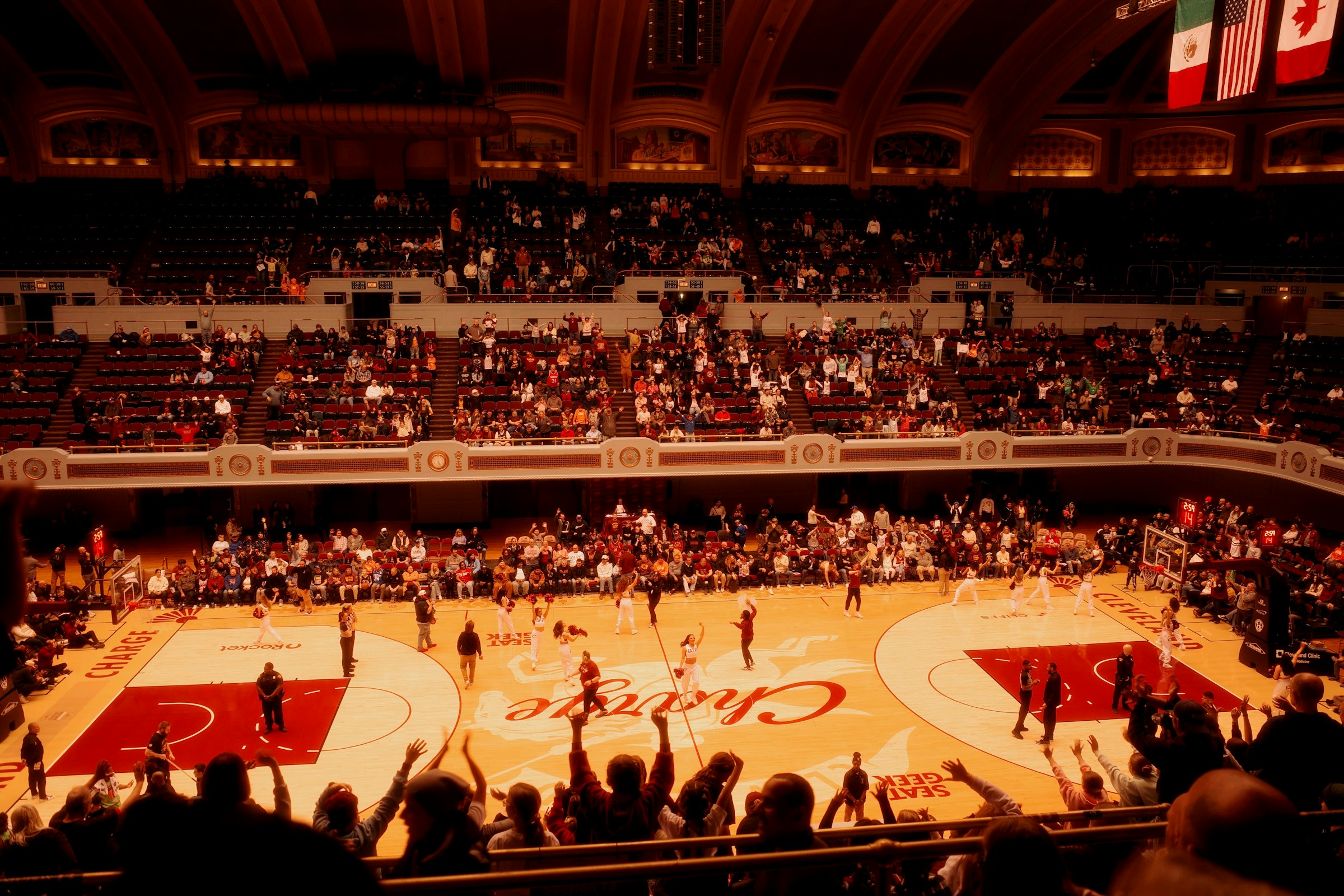
Watch any NBA Conference Finals game this week and you’ll see the same scene at every dead ball: a trainer hands a player a bottle, the player drinks for two or three seconds, and the camera cuts away. It looks routine. It isn’t. What’s happening on the bench is a carefully engineered fluid and sodium plan designed to keep a 6’8″, 230-pound athlete from losing his shot in the fourth quarter — because the research is brutally clear that even a small drop in hydration costs points.
You don’t have to play in the Finals to learn from that protocol. The science of basketball hydration translates from the highest level down to the local YMCA court.
How Much Pro Basketball Players Actually Sweat
The numbers from peer-reviewed research on NBA-level players are higher than most weekend hoopers would guess. In one study of NBA players during pre-season practice, total mean sweat loss came in at just over two liters per session, while average fluid intake was less than a liter — meaning even with full access to drinks on the bench, players were finishing practice meaningfully dehydrated. A separate study of 29 NBA Summer League players measured an average of 2.2 liters of sweat loss in just 21 minutes of competitive play.
Translation: a starter logging 35 minutes of an NBA playoff game in a warm arena under TV lights can easily lose 3 to 4 liters of sweat. That’s roughly 6 to 9 pounds of body weight, and a research review found that approximately half of basketball players actually start games already dehydrated — meaning their bodies are running a deficit before tip-off.
Why It Costs You Points
The performance penalty for under-hydrating during basketball is steeper than for most other sports because basketball punishes both physical decline and cognitive decline at the same time. A study of 17 adult basketball players found that as dehydration progressed from 1% to 4% of body weight, players showed progressive deterioration in shooting accuracy and specific skill speed — not just at the high end, but along the entire curve.
A 1% drop in body weight is roughly one liter of sweat for a 220-pound player. That’s the equivalent of one quarter on the floor without sipping enough. By the fourth quarter — exactly when you need clean mechanics on a corner three or a free throw — your shot is the variable that’s measurably softening.
The Sodium Problem Most Hoopers Ignore
Fluid is only half the equation. The bigger issue at the pro level — and the one weekend players almost never get right — is sodium. Research on NBA players found mean sweat sodium concentrations of 49 millimoles per liter, which translates to roughly 1,100 mg of sodium per liter of sweat. Combine that with 3 to 4 liters of sweat in a hard game and a player can be down 3,300 to 4,400 mg of sodium by the buzzer.
That number matters because most popular sports drinks were not designed for that scale of loss. A 20 oz Gatorade Thirst Quencher contains about 270 mg of sodium; a 16 oz Powerade is in the same range. To replace what a heavy-sweating guard loses in a competitive game, that player would need to drink roughly four bottles of standard-issue sports drink — a fluid load most players can’t tolerate during play.
That’s why the higher-sodium category exists. LMNT Recharge delivers 1,000 mg of sodium per stick. Precision Hydration PH 1500 packs 1,500 mg per serving and is built for heavy sweaters. SaltStick electrolyte capsules let you stack sodium without adding more fluid volume during a game. And for a fast, food-based sodium hit between halves or after the final buzzer, a 3 oz shot of Fast Pickle delivers 570 mg of sodium in a format you can actually slam at the scorer’s table without bloating up before the next possession.
A Game-Day Hydration Plan You Can Steal
Here’s how the pro-level protocol maps onto a 7 p.m. league game or a Saturday tournament.
The night before. Hit your normal fluid baseline — research suggests an active adult should be drinking 85 to 120 oz of fluid per day. Salt your dinner without guilt. Avoid the rookie mistake of chugging a gallon of water the morning of the game; that doesn’t load you, it just floods your kidneys.
Pre-tip (60 to 30 minutes out). Sip 16 to 20 oz of an electrolyte drink — Nuun Sport, Skratch Labs Sport Hydration, or LMNT all work here depending on how much sodium your body needs. This is the window that sets your starting line. Players who skip it are part of the “half of basketball players start dehydrated” statistic.
During the game. Use every dead ball. Free throws, substitutions, timeouts, and the breaks between quarters are your hydration windows — 4 to 6 oz per opportunity is the recommended target. If your league plays four 10-minute quarters, that adds up to roughly 24 to 36 oz of fluid across the game, which is enough to blunt the dehydration curve for most recreational players. For a long, hot, run-and-gun game, stack in a higher-sodium option like Precision Hydration PH 1500 or Liquid I.V. Hydration Multiplier to keep sodium intake in line with sweat losses.
Halftime. This is the one structured window long enough to actually do something meaningful. Get 8 to 12 oz of an electrolyte drink in, and if you’re a heavy or salty sweater, this is the right moment for a sodium-dense option — an LMNT stick mixed into water, a PH 1500, or a 3 oz Fast Pickle shot if you want a fast sodium hit that won’t sit heavy. The goal at halftime isn’t to top off; it’s to put a real number of milligrams of sodium back into your body before the second half drags you further into the red.
Post-game. The American College of Sports Medicine guideline is to replace 125% to 150% of fluid lost in the hours after exercise, paired with sodium to actually hold that fluid in circulation rather than peeing it out. For most rec players that’s 24 to 36 oz of an electrolyte beverage in the 60 to 90 minutes after the final buzzer. Gatorade Endurance Formula and Skratch Labs Sport are clean post-game options at moderate sodium; LMNT and PH 1500 are the higher-sodium picks for heavy sweaters.
A Few Brand Picks for Your Gym Bag
If you’re building a basketball-specific kit, four categories cover most situations: a moderate-sodium daily driver (Nuun Sport, Skratch Labs Sport, Gatorade Gx), a heavy-sweater option (LMNT Recharge, Precision Hydration PH 1500, Liquid I.V.), a sodium booster for in-game stacking without extra fluid (SaltStick), and a fast, food-based sodium shot for halftime or post-game (Fast Pickle’s 3 oz format).
The biggest mistake recreational players make is treating hydration as a thirst response instead of a plan. The pros don’t wait until they’re thirsty during the Conference Finals — by then, the shot’s already softening. Build a simple plan around the dead-ball windows, get your sodium intake in line with what you actually sweat, and the fourth quarter feels different when you start the first quarter dialed in.