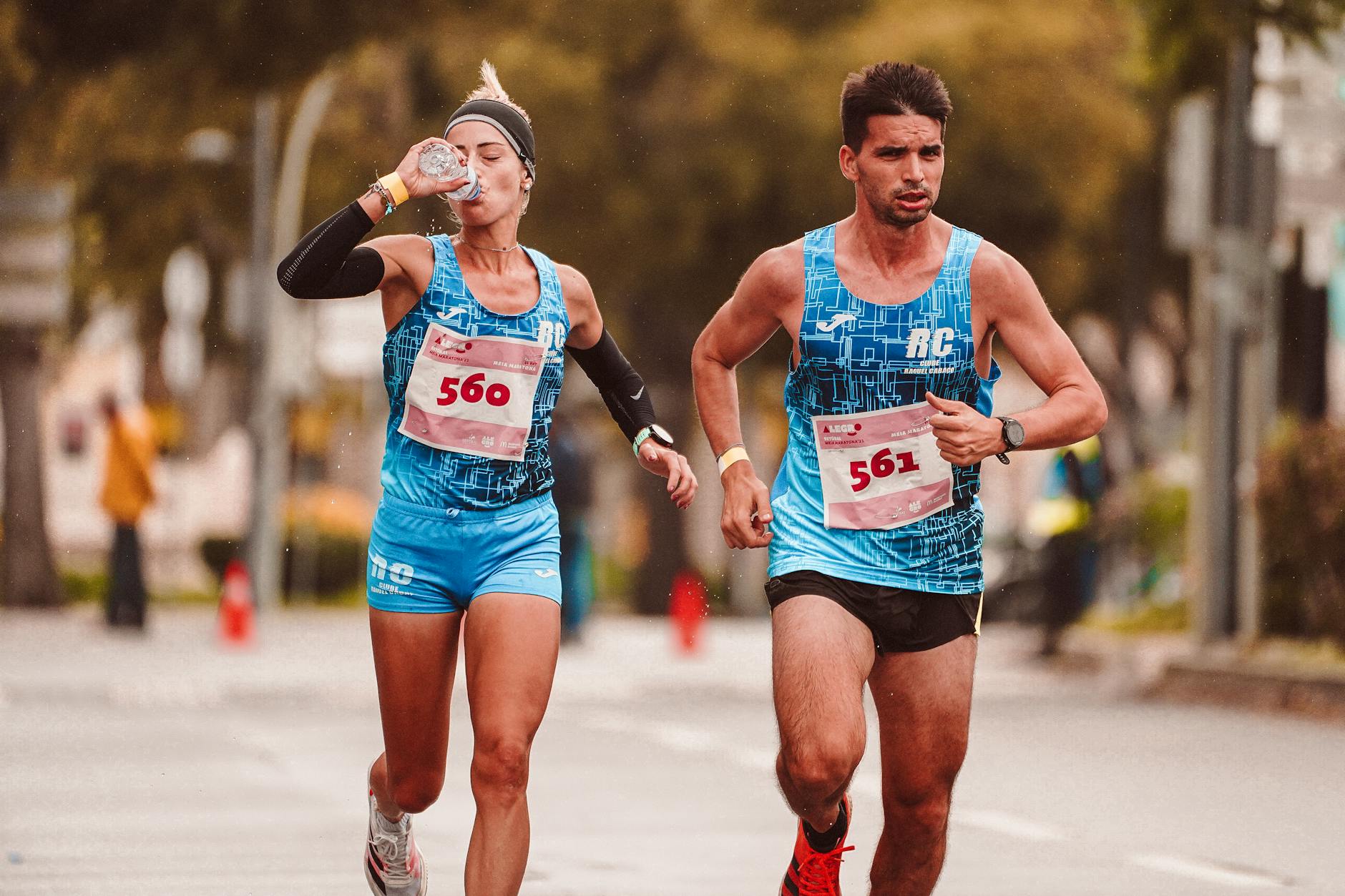
The best drink for marathon runners delivers 30-60 grams of carbohydrates and 500-700 milligrams of sodium per hour during the race. Plain water fails after the first 90 minutes because glycogen stores deplete and sweat losses create electrolyte deficits that impair performance and increase cramping risk. The optimal strategy uses different formulations by race phase: concentrated sodium loading pre-race, high-carb isotonic drinks for miles 1-18, and simplified lower-volume options for miles 20-26.2 when gut absorption slows.
What Do Marathon Runners Actually Need in a Sports Drink?
Marathon runners need sports drinks that solve two physiological problems simultaneously: carbohydrate delivery to replace depleted glycogen and sodium replacement to counter sweat losses. The American College of Sports Medicine recommends 30-60 grams of carbohydrates per hour and 500-700 milligrams of sodium per hour for endurance events lasting over 90 minutes. Plain water addresses neither need, which is why performance declines and hyponatremia risk increases in marathons when runners drink only water.
The third critical variable is osmolality—the concentration of dissolved particles in a fluid. Isotonic drinks (270-330 mOsm/kg) match blood concentration and empty from the stomach fastest, making them ideal for the first 20 miles. Hypotonic drinks (under 270 mOsm/kg) absorb even faster but deliver fewer carbs per ounce. Hypertonic drinks (over 330 mOsm/kg) pack more carbs but slow gastric emptying, which becomes problematic after mile 18 when splanchnic blood flow to the gut decreases by 20-30%.
A sports drink for endurance athletes must address all three variables—fuel, fluid, and electrolytes—in ratios that change as the race progresses. No single product optimizes for every mile.
Carbohydrate Delivery: Why 30-60 Grams Per Hour Matters
Glycogen stores in muscles and liver last 90-120 minutes at marathon pace, which means most runners hit glycogen depletion somewhere between miles 13 and 16. After that point, exogenous carbohydrates from drinks and gels become the primary fuel source. Without them, pace slows by 15-30% as the body shifts to slower fat metabolism—the phenomenon runners call “the wall.”
Single-transport formulas using only glucose can deliver about 60 grams per hour before saturating intestinal glucose transporters and causing GI distress. Dual-transport formulas combine glucose with fructose in ratios around 1:0.8 or 2:1, which activates separate intestinal transporters (SGLT1 for glucose, GLUT5 for fructose) and can push absorption rates to 90 grams per hour without nausea or bloating.
Maurten Drink Mix 320 delivers 79 grams of carbs per 500ml serving using a glucose-fructose blend, while SIS Beta Fuel provides 80 grams per 500ml with a 1:0.8 maltodextrin-to-fructose ratio. Both are isotonic and support the high carb intake serious marathoners need in miles 1-20. In contrast, 12 ounces of Gatorade delivers only 21 grams—barely one-third of the low end of research-backed targets.
Sodium: The Electrolyte That Determines Finish Times
The average runner loses 800-1200 milligrams of sodium per liter of sweat. At marathon pace in moderate conditions, sweat rate ranges from 0.5 to 1.5 liters per hour. Over a four-hour marathon, total sodium loss reaches 2000-4000 milligrams. When sodium levels drop below a critical threshold, performance degrades through multiple mechanisms: reduced plasma volume (which increases heart rate and decreases stroke volume), impaired thermoregulation, and increased cramping risk.
This is why 500-700 milligrams of sodium per hour is the research-backed replacement target, not the 110 milligrams per 8 ounces found in Gatorade. To meet minimum sodium needs with Gatorade alone, a runner would need to consume 36-56 ounces per hour—a volume that causes bloating, increases bathroom stops, and still underdoses carbohydrates.
High-sodium options solve this problem with far less volume. Fast Pickle delivers approximately 1400 milligrams of sodium per 3.4-ounce shot, making it the most concentrated option for pre-race loading or mid-race sodium spikes at miles 16 and 20 when cumulative losses trigger cramping. LMNT packets provide 1000 milligrams of sodium plus 200 milligrams of potassium and 60 milligrams of magnesium, useful for custom high-sodium mixes during training or for topping off between race-week workouts.
Osmolality and Gut Absorption: Why Concentration Matters After Mile 18
Isotonic drinks match blood osmolality at 270-330 mOsm/kg, which triggers the fastest gastric emptying and intestinal absorption when the gut is functioning normally. Hypotonic drinks (under 270 mOsm/kg) absorb slightly faster but deliver fewer carbs per ounce, making them better suited for situations where hydration outweighs fueling—think hot, slow marathons or the final miles when nausea limits tolerance. Hypertonic drinks (over 330 mOsm/kg) include most energy gels and concentrated carb mixes that slow stomach emptying.
The problem is that gut absorption doesn’t remain constant through 26.2 miles. As core temperature rises and blood flow redirects from the digestive system to working muscles and skin, absorption capacity drops by 20-30% in the final 10 kilometers. This is why many runners experience nausea, bloating, or the inability to tolerate drinks that worked fine at mile 10.
The solution is to shift toward isotonic or slightly hypotonic formulas after mile 18. Skratch Hydration Mix (21g carbs, 380mg sodium per 16oz) is isotonic and sits lighter in a compromised stomach than hypertonic options. Tailwind Naked is mildly hypotonic and designed specifically for this phase. Some runners abandon drinks entirely and switch to cola (caffeine, simple sugar, light sodium) plus pretzels or salt tabs—an empirically effective if less elegant solution.
The Best Sports Drinks for Marathon Runners, by Race Phase
Marathon hydration is not a one-product problem. The physiological demands and gut tolerance change every 5-7 miles, which means the best strategy layers different formulations across four race phases: pre-race sodium loading (hours -2 to 0), early miles (1-13) when the gut is fresh and absorption is high, middle miles (14-20) when cumulative sweat losses mount, and the wall (21-26.2) when simplified fueling and high sodium prevent collapse. Each phase has distinct carb-to-sodium ratios and volume tolerance.
Recreational marathoners often make the mistake of choosing a single drink and forcing it across all 26.2 miles. Elite and serious sub-elite runners treat hydration like pacing: they change strategy as the race unfolds.
Pre-Race (2 Hours Before): Sodium Loading Without Overhydration
The goal in the two hours before the gun is to top off plasma volume and pre-load 1000-1500 milligrams of sodium without overhydrating. Drinking excessive plain water in this window dilutes blood sodium and increases the number of pre-race bathroom stops, which wastes time and leaves runners starting under-fueled.
Fast Pickle is the most efficient pre-race sodium source: a single 3.4-ounce shot delivers approximately 1400 milligrams of sodium in minimal volume. Consume it 90-120 minutes before the start, then sip 8-12 ounces of water to aid absorption. This protocol tops off sodium stores without bloating.
LMNT mixed to full strength (1000mg sodium per 16oz) is the alternative for runners who prefer powder mixes or want additional potassium and magnesium. Avoid Gatorade for pre-race loading—you would need to drink 80+ ounces to hit 1000mg sodium, which guarantees GI discomfort and bathroom urgency. The evidence-based pre-race strategy is concentrated sodium plus conservative fluid intake, not chugging low-sodium sports drinks.
Miles 1-13: High-Carb, Moderate-Sodium, Isotonic Formula
The first half of the marathon is when the gut functions at full capacity and can tolerate 60+ grams of carbohydrates per hour. This is the window to bank carbs and prevent early glycogen depletion. The best drinks for miles 1-13 use dual-transport carbohydrate blends (glucose plus fructose) and are isotonic to maximize absorption without GI distress.
Top picks for early miles:
- Maurten Drink Mix 320: 79g carbs, 368mg sodium per 500ml. Isotonic hydrogel technology that reduces GI distress. Used by Eliud Kipchoge and other elite marathoners. At $3.50 per serving it’s expensive, but it delivers race-winning carb intake with minimal stomach upset.
- SIS Beta Fuel: 80g carbs per 500ml with a 1:0.8 maltodextrin-to-fructose ratio, 400mg sodium. Isotonic. Slightly higher sodium than Maurten, which helps in warm conditions. Combine with SIS Beta Fuel gels to reach 90g carbs/hour if you’ve trained your gut to handle it. $3.20 per serving.
- Skratch Super High-Carb: 400 calories per bottle, 380mg sodium. Uses cluster dextrin for gentler digestion. Less concentrated than Maurten or SIS but easier to find and more affordable at $2.80 per serving.
All three outperform Gatorade, which delivers only 21g carbs and 165mg sodium per 12 ounces—less than half the carbs and sodium needed for optimal performance. If you’re using Gatorade, you’re under-fueling.
Miles 14-20: Sustained Carbs, Increased Sodium to Counter Sweat Loss
By mile 14, cumulative sweat losses reach 1.5-3 liters depending on pace, body size, and temperature. Sodium deficit becomes the limiting factor for many runners, even if carb intake has been adequate. This is when cramping risk spikes and when low-sodium drinks start showing their weakness.
If your base drink (Maurten, SIS) delivers under 400mg sodium per serving, add a secondary sodium source at miles 16 and 20. The most effective protocol is to continue your high-carb drink and layer in Fast Pickle 2-ounce shots at these mile markers. Each shot delivers approximately 900 milligrams of sodium, which counters the cumulative deficit and prevents the cramps that derail finish times between miles 18-22.
Alternative strategy: switch to LMNT (1000mg sodium, 0g carbs) mixed with water, and take carb separately through gels, dates, or chews. This approach gives you more control over sodium-to-carb ratios but requires carrying multiple products. The all-in-one convenience of a high-carb drink plus pickle juice shots is simpler under race fatigue.
One mistake many marathoners make is ignoring sodium in cool weather. You still lose 500-800mg per hour even at 50°F—sweat evaporates faster in dry air, so you don’t feel wet, but sodium loss continues. Pre-race temperature should adjust your sodium intake upward by 10-20% in heat, but never eliminate it in cold.
Miles 21-26.2 (The Wall): Simplified, Easily Absorbed Carbs and High Sodium
Gut function degrades significantly after mile 20 as blood flow to the digestive system drops and core temperature rises. Many runners experience nausea, bloating, or complete inability to tolerate the drinks that worked fine earlier. This is the phase where simplified fueling and rapid-acting sodium prevent collapse.
If you can still tolerate liquids, switch to lighter isotonic or hypotonic options: Skratch Hydration (21g carbs, 380mg sodium, isotonic) or diluted Tailwind sit easier in a compromised stomach than hypertonic gels or concentrated carb drinks. Some runners tolerate only cola and pretzels at this stage—the caffeine, simple sugar, and salt combination is empirically effective and used by elites including Boston and New York winners.
If cramping threatens, a 2-ounce Fast Pickle shot delivers a rapid sodium spike (approximately 900mg) without the carb load that could trigger vomiting. Research suggests cramps are driven more by sodium deficit than dehydration, which is why pickle juice works when plain water doesn’t. The acetic acid in pickle brine may also reduce perceived effort, though the mechanism isn’t fully understood.
Never debut a late-race fueling strategy on race day. Test your miles 20-26 protocol on at least three long runs so your gut adapts. What you can tolerate at mile 10 and what works at mile 23 are often entirely different.
Top 5 Sports Drinks for Marathon Runners in 2026
These rankings reflect marathon-specific performance criteria: carb content, sodium concentration, osmolality, gut tolerance under fatigue, and real-world usability across race phases. Each product excels in a specific use case—there is no single “best” drink for all 26.2 miles.
1. Maurten Drink Mix 320 – Best for Early to Mid-Race Carb Loading
Maurten Drink Mix 320 delivers 79 grams of carbohydrates (glucose plus fructose) and 368 milligrams of sodium per 500ml serving. It’s isotonic and uses hydrogel technology that encapsulates carbs in a pH-sensitive gel, which reduces GI distress and speeds absorption. Eliud Kipchoge used Maurten during his sub-2-hour marathon attempt, and it’s become the gold standard for high-carb fueling in miles 1-18.
The weakness is moderate sodium—368mg per serving meets baseline needs but falls short for heavy sweaters or warm conditions. Pair Maurten with Fast Pickle shots at miles 16 and 20 or add LMNT to between-bottle sips for complete electrolyte coverage. At $3.50 per serving, it’s expensive, but the performance benefit and reduced nausea justify the cost for serious marathoners chasing PRs.
Best use case: Miles 1-18, moderate to cool conditions, runners who prioritize carb intake and have trained their gut to handle 60-80g/hour.
2. Fast Pickle – Best for Sodium Loading and Cramp Prevention
Fast Pickle is athlete-grade pickle juice delivering approximately 1400 milligrams of sodium per 3.4-ounce shot with zero carbohydrates. It’s the most concentrated sodium source available, which makes it ideal for pre-race loading (consume 90-120 minutes before the start) and mid-race sodium spikes when cumulative sweat losses trigger cramping. Natural pickle brine, clean ingredients, and fast absorption make it superior to salt tablets, which take longer to dissolve and can irritate the stomach.
The acetic acid in pickle brine may improve glucose uptake and reduce perceived effort, though more research is needed. What’s not in question: sodium deficits cause cramping, and Fast Pickle delivers more sodium per ounce than any competing product. At $2.50 per shot, it’s the most cost-effective insurance against late-race cramps.
Pair Fast Pickle with a high-carb drink like Maurten or SIS for complete fueling. The combination covers carbohydrates (from the drink) and sodium (from the pickle juice) without forcing you to chug excessive volume. Take 2-ounce shots at miles 16 and 20 when cramping risk peaks.
Best use case: Pre-race sodium loading, miles 16-22 cramp prevention, heavy sweaters, hot conditions.
3. SIS Beta Fuel – Best Dual-Transport Formula for High Carb Needs
SIS Beta Fuel delivers 80 grams of carbohydrates per 500ml serving using a 1:0.8 maltodextrin-to-fructose ratio, which activates both SGLT1 and GLUT5 intestinal transporters and can push absorption to 90g per hour when combined with SIS Beta Fuel gels. Sodium content is 400mg per serving, slightly higher than Maurten, which helps in warm conditions or for runners with above-average sweat rates.
Beta Fuel is isotonic and sits well in the stomach for most runners through mile 18-20. It’s the top choice for runners who have trained their gut to handle very high carb intake (80-90g/hour) and want to maximize fueling without switching products mid-race. At $3.20 per serving, it’s priced competitively with Maurten and offers marginally better sodium coverage.
The formula uses artificial sweeteners (sucralose), which bothers some runners. If you’re sensitive to artificial ingredients, Maurten or Skratch are better options.
Best use case: Miles 1-20, runners targeting 80-90g carbs/hour, moderate to warm conditions.
4. Skratch Labs Hydration Mix – Best Everyday Training Drink
Skratch Hydration Mix delivers 21 grams of carbohydrates (from cane sugar) and 380 milligrams of sodium per 16 ounces. It’s isotonic, uses real-fruit flavoring, and sits lighter in the stomach than hypertonic gels or ultra-concentrated carb drinks. The lower carb content means it won’t meet race fueling needs as a standalone product, but it’s ideal for training runs under 90 minutes and as a miles 20-26 drink when gut absorption is compromised.
Pair Skratch with gels or chews on race day to hit 30-60g carbs per hour. The advantage of this approach is customization—you control carb timing separately from hydration and can dial back volume if nausea hits. At $1.20 per serving, Skratch is the most affordable option on this list and the best choice for everyday training where you don’t need 80g carbs per bottle.
Best use case: Training runs under 90 minutes, miles 20-26.2 when gut tolerance drops, budget-conscious runners.
5. LMNT Recharge – Best for Hot Conditions and Heavy Sweaters
LMNT Recharge delivers 1000 milligrams of sodium, 200 milligrams of potassium, and 60 milligrams of magnesium with zero carbohydrates per packet. It’s not a standalone race fuel—you need to pair it with a carb source like gels, dates, or a separate carb drink—but it solves the sodium problem that mainstream sports drinks ignore. Heavy sweaters, runners in hot conditions, and anyone who’s ever cramped after mile 18 benefits from LMNT’s high electrolyte load.
Mix LMNT to full strength for pre-race sodium loading or between long training runs. During the race, some runners prefer to carry LMNT plus gels for complete control over sodium and carb ratios, though this requires more planning than an all-in-one drink like Maurten. At $1.50 per packet, it’s more affordable than Maurten or SIS and delivers better electrolyte coverage than any carb-focused drink.
Compared to Fast Pickle, LMNT provides more potassium and magnesium (useful for multi-day recovery) but requires mixing and delivers sodium in powder form, which absorbs slower than liquid brine. Fast Pickle’s advantage is rapid absorption in a pre-measured shot; LMNT’s advantage is customization and lower cost per milligram of sodium.
Best use case: Pre-race sodium loading, hot conditions, heavy sweaters, runners who prefer powder electrolytes and separate carb fueling.
What the Research Actually Says: Do Marathon Runners Need Sports Drinks?
Yes—and the evidence is unambiguous. Dehydration beyond 2-3% of body weight impairs endurance performance through reduced plasma volume, increased cardiovascular strain, and impaired thermoregulation. A 150-pound runner loses performance at 3-4.5 pounds of fluid loss, which occurs in 90-120 minutes at marathon pace in moderate conditions.
Carbohydrate supplementation improves time-to-exhaustion by 20-30% in endurance events lasting over 90 minutes. Muscle and liver glycogen stores are finite—approximately 1800-2200 calories in a trained athlete—and deplete by mile 13-16 at marathon pace. Exogenous carbs from sports drinks and gels delay hitting the wall and maintain pace in the final 10 kilometers.
Sodium is equally critical. A 2005 study published in the New England Journal of Medicine found that 13% of Boston Marathon finishers had hyponatremia (blood sodium under 135 mmol/L), caused by drinking excessive plain water without electrolyte replacement. Runners in marathons over four hours face the highest risk because cumulative sodium losses (2000-4000mg over the race) combined with over-drinking plain water dilute blood sodium to dangerous levels.
The conclusion: sports drinks are physiologically necessary for marathon performance and safety, but formulation matters. Gatorade’s 21g carbs and 110mg sodium per 8 ounces underdose both variables by 50-70% compared to research-backed targets. Upgrading to high-carb isotonic drinks (Maurten, SIS) and concentrated sodium sources (Fast Pickle, LMNT) closes the gap between what the science says runners need and what most commercial products deliver.
Common Marathon Hydration Mistakes (and How to Fix Them)
1. Overhydrating Pre-Race
Drinking 32+ ounces of fluid in the hour before the start causes bloating, increases bathroom stops, and dilutes blood sodium. The fix: consume 8-12 ounces of water with a concentrated sodium source like Fast Pickle (3.4oz shot = ~1400mg sodium) 90-120 minutes before the gun. This tops off plasma volume without overloading the bladder.
2. Using Only Gatorade
Gatorade delivers 21 grams of carbs and 165 milligrams of sodium per 12 ounces—less than half of research-backed hourly targets. To meet minimum fueling needs, you’d need to drink 24-36 ounces per hour, which causes GI distress. The fix: upgrade to dual-transport high-carb drinks like Maurten (79g carbs per 500ml) or SIS Beta Fuel (80g per 500ml), and add pickle juice or LMNT for sodium.
3. Waiting Until You Feel Thirsty
Thirst lags behind actual dehydration by 1-2% body weight at marathon intensity, which means by the time you feel thirsty, performance is already declining. The fix: drink on a schedule—150-250ml every 15-20 minutes—rather than by thirst. Test this protocol on long runs so it becomes automatic on race day.
4. Ignoring Gut Training
Debuting a new drink or fueling strategy on race day is a recipe for nausea, bloating, or DNF. The gut adapts to high carb intake (60-90g/hour) and specific drink formulations only through repeated exposure. The fix: use race-day nutrition on all long runs 16+ miles. Practice taking Fast Pickle shots at miles 16 and 20 so your stomach tolerates the sodium spike under fatigue.
5. Skipping Sodium in Cool Weather
Sweat rate is lower in 45-55°F temperatures, but sodium loss still reaches 500-800mg per hour because sweat evaporates quickly in dry air. Many runners skip electrolytes in cool weather and cramp anyway. The fix: aim for 500mg sodium per hour minimum even in cool conditions. Add Fast Pickle shots at miles 16-20 or mix LMNT into your drink to cover baseline needs.
How to Build Your Personal Marathon Hydration Plan
Building a race-day hydration plan requires seven steps, tested over multiple training cycles. Skip any step and you risk nausea, cramping, or bonking in the final miles.
Step 1: Estimate sweat rate. Weigh yourself naked before a 60-minute training run at marathon pace. Weigh yourself immediately after (no toweling off). The difference in pounds equals fluid loss. Add back any fluid consumed during the run. Convert to liters (1 pound = 0.47L). This is your sweat rate per hour.
Step 2: Estimate sodium loss. Lab sweat tests measure sodium concentration in sweat (typically 800-1200mg/L). If you don’t have access to testing, assume 1000mg/L. Multiply by your sweat rate: a runner losing 1.2L per hour loses approximately 1200mg sodium per hour.
Step 3: Choose a base drink. For miles 1-18, select a high-carb isotonic drink (Maurten, SIS Beta Fuel, Skratch Super High-Carb) that delivers 60-80g carbs per serving. Check the sodium content—most provide 300-400mg per serving, which covers 50-70% of hourly needs.
Step 4: Add sodium if needed. If your base drink delivers under 400mg sodium per serving and you’re a heavy sweater or racing in heat, add a secondary source. Fast Pickle 2oz shots at miles 16 and 20 (approximately 900mg each) are the most efficient option. Alternative: LMNT packets mixed into water between bottles.
Step 5: Test on long runs. Practice your race-day nutrition on at least three runs of 18+ miles. Consume the same drinks, shots, and gels at the same mile markers. Note any GI issues, adjust timing or volume, and retest. Never debut untested products on race day.
Step 6: Adjust for temperature. Add 10-20% sodium and 10-15% fluid volume when racing in temperatures above 70°F. Reduce slightly in cold weather but never eliminate sodium entirely.
Step 7: Write it down. Create a mile-by-mile intake checklist: “Mile 3: 8oz Maurten. Mile 6: 8oz Maurten. Mile 10: 8oz Maurten + gel. Mile 16: 2oz Fast Pickle + 6oz water. Mile 20: 2oz Fast Pickle + 6oz water. Mile 23: 8oz Skratch.” Tape it to your water bottles or memorize it. Under race fatigue, decision-making fails—a written protocol removes guesswork.
Marathon hydration isn’t one-size-fits-all. Sweat rates vary by 300% between individuals, and gut tolerance changes with age, training, and race conditions. The runners who nail hydration are the ones who test, measure, adjust, and retest until they find the protocol that holds pace through mile 26.
Frequently Asked Questions
What should marathon runners drink during a race?
Marathon runners should drink a sports beverage that delivers 30-60 grams of carbohydrates and 500-700 milligrams of sodium per hour. The best options use dual-transport carbohydrates (glucose plus fructose) for faster absorption and are isotonic or slightly hypotonic to match gut osmolality. Products like Maurten Drink Mix 320 or SIS Beta Fuel meet these criteria for miles 1-20. After mile 20, when gut absorption slows, lighter isotonic drinks like Skratch Hydration or sodium shots like Fast Pickle help prevent cramping without overloading a compromised stomach.
How much should a marathon runner drink per hour?
Most marathon runners should consume 400-800 milliliters (14-27 ounces) of fluid per hour, depending on sweat rate, temperature, and pace. The goal is to replace 50-70% of sweat losses—full replacement causes GI distress and isn’t necessary for performance. Drinking to a schedule (150-250ml every 15-20 minutes) works better than waiting for thirst, which lags behind actual need at marathon intensity. Weigh yourself before and after training runs to estimate your personal sweat rate and dial in your race hydration plan.
Is Gatorade good enough for marathon running?
Gatorade underdoses both carbohydrates and sodium for marathon performance. A 12-ounce serving delivers only 21 grams of carbs and 165 milligrams of sodium, less than half of research-backed hourly targets (30-60g carbs, 500-700mg sodium). To meet fueling needs, a runner would need to drink 24-36 ounces of Gatorade per hour, which causes bloating and increases bathroom stops. High-carb isotonic formulas like Maurten or SIS Beta Fuel, paired with sodium sources like Fast Pickle or LMNT, deliver better performance with less volume and fewer GI issues.
When should marathon runners drink pickle juice?
Marathon runners should drink pickle juice in two key windows: two hours before the race to pre-load 1000-1400 milligrams of sodium and top off plasma volume, and during the race at miles 16-20 when cumulative sweat losses create sodium deficits that trigger cramping. Fast Pickle delivers approximately 1400 milligrams of sodium per 3.4-ounce shot, far more concentrated than sports drinks, which makes it ideal for sodium loading without overhydration. The acetic acid in pickle brine may also improve glucose uptake and reduce perceived effort, though more research is needed on these mechanisms.
What is the best sports drink for preventing cramps in a marathon?
Cramps during marathons are most often caused by sodium depletion, not dehydration. The best anti-cramp strategy combines a high-sodium electrolyte source like Fast Pickle (1400mg sodium per 3.4oz shot) or LMNT (1000mg per packet) with a carbohydrate-rich sports drink to maintain energy supply. Taking a 2-3 ounce pickle juice shot at miles 16 and 20 delivers a rapid sodium spike that counteracts the 2000-4000 milligrams lost through sweat over the race. Plain water or low-sodium drinks like Gatorade (110mg per 8oz) won’t prevent cramping in heavy sweaters or warm conditions.
Do I need a different drink for the last 6 miles of a marathon?
Yes—gut absorption slows by 20-30% in the final miles due to reduced blood flow to the digestive system, so many runners switch to simpler, lighter formulas after mile 20. Options include diluted isotonic drinks (Skratch Hydration), hypotonic fluids (Tailwind Naked), or cola plus pretzels for easy-absorbing sugar, caffeine, and salt. If cramping threatens, a 2-ounce Fast Pickle shot delivers high sodium without carb load that could upset a compromised stomach. Some runners tolerate only gels and water at this stage; test your late-race tolerance on training runs to avoid surprises.
Should marathon runners sodium load before a race?
Yes—pre-loading 1000-1500 milligrams of sodium in the two hours before a marathon tops off plasma volume and delays the sodium deficit that causes cramping and performance decline. The most efficient method is a concentrated source like Fast Pickle (3.4oz shot = ~1400mg sodium) or LMNT mixed to full strength, consumed 90-120 minutes before the start. Avoid drinking excessive plain water during this window, which dilutes blood sodium and increases bathroom stops. Research shows sodium loading improves fluid retention and thermoregulation, particularly in warm conditions or for heavy sweaters.