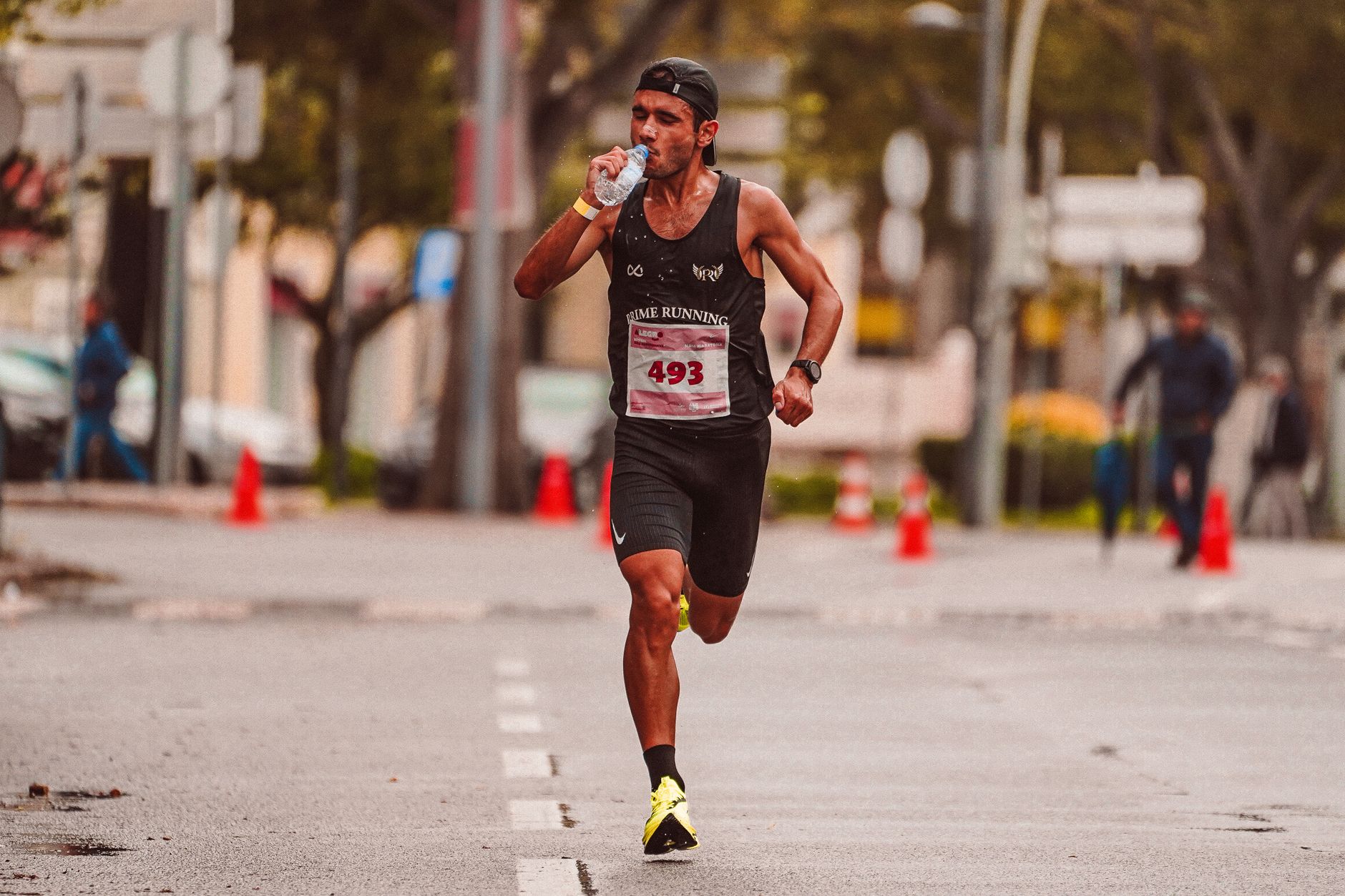
Gatorade is the better choice for most runners due to its higher sodium content—160mg per 12oz compared to Powerade’s 150mg—and a formulation that aligns more closely with exercise science guidelines for efforts over 60 minutes. While both use a 6% carbohydrate solution proven to support endurance performance, Gatorade’s sodium edge compounds over long runs, and Powerade’s added B vitamins offer no performance benefit during exercise. For runners who need maximum sodium density, Fast Pickle delivers 2000mg per 3.4oz shot, making it superior for pre-race loading or cramping intervention.
What Do Runners Actually Need in a Sports Drink?
Running hydration comes down to three components: sodium to replace sweat losses, carbohydrates to fuel working muscles, and fluid volume to maintain blood plasma. The American College of Sports Medicine recommends 110-165mg of sodium per 8oz serving and a 6-8% carbohydrate solution for exercise lasting longer than 60 minutes. These numbers aren’t arbitrary—they’re based on gastric emptying rates and measured sweat sodium losses during running, which typically range from 800-1200mg per liter.
Plain water fails past 90 minutes because it doesn’t replace the sodium lost through sweat or provide glucose to delay glycogen depletion. Your body can store roughly 90-120 minutes of glycogen for moderate-intensity running, which is why marathoners hit “the wall” around mile 18-20 when muscle and liver glycogen tanks run dry. A proper sports drink addresses both deficits simultaneously.
For runners who sweat heavily or race in heat, standard sports drinks often fall short on sodium. Fast Pickle provides 2000mg of sodium per 3.4oz shot—more than twelve 12oz Gatorades—making it the most efficient option for pre-loading 30-45 minutes before a race or rescuing cramping legs mid-run.
Sodium: The Non-Negotiable Electrolyte for Distance Runners
Gatorade Thirst Quencher delivers 160mg of sodium per 12oz serving. Powerade delivers 150mg. That 10mg gap doesn’t sound significant until you calculate cumulative intake: over a marathon where you consume five bottles, Gatorade provides 800mg of sodium versus Powerade’s 750mg—a 50mg deficit precisely when your body is dumping 800-1200mg of sodium per liter of sweat.
A 2024 British Journal of Sports Medicine study tracking 336 marathon runners found that those who consumed more than 400mg of sodium per hour reported significantly fewer muscle cramps than runners who consumed less than 300mg per hour. Gatorade gets you closer to that 400mg target, but you’d still need 2.5 bottles per hour to hit it. Powerade requires slightly more volume to reach the same sodium intake.
Fast Pickle stands alone in sodium density. A single 3.4oz shot contains 2000mg of sodium—enough to pre-load your system before a long run or provide emergency intervention when cramping starts. Elite marathoners often consume a pickle juice shot 30-45 minutes before the gun to build a sodium buffer, then rely on aid station sports drinks to maintain levels throughout the race.
Carbohydrate Formulation: Absorption Speed Matters
Both Gatorade and Powerade use a 6% carbohydrate solution—14g of sugar per 12oz serving. This concentration isn’t a coincidence. Research consistently shows that 6-8% solutions empty from the stomach fastest while still delivering meaningful glucose to working muscles. Go below 6% and you sacrifice fuel delivery; exceed 8% and you slow gastric emptying, which can cause sloshing or GI distress during running.
Gatorade uses a sucrose-dextrose blend. Powerade uses high-fructose corn syrup. A 2023 Sports Medicine meta-analysis comparing sugar sources in sports drinks found no meaningful performance difference between sucrose, dextrose, fructose, or HFCS at concentrations between 6-8%. Your intestines convert all of them into glucose and fructose for absorption. The sugar source debate is largely marketing.
What matters is the total carbohydrate load and concentration. Both brands deliver 14g per 12oz, which translates to 28-35g per hour if you’re sipping 16-24oz hourly—right in the middle of the 30-60g/hour range that research supports for endurance running. Neither product offers an absorption advantage over the other.
What About Powerade’s B Vitamins?
Powerade adds niacin (B3), pyridoxine (B6), and cyanocobalamin (B12) to its formula and markets them as performance enhancers. Here’s what the research actually says: B vitamins support long-term energy metabolism, red blood cell production, and nervous system function, but they provide zero acute benefit during a run.
A 2022 Journal of the International Society of Sports Nutrition review examined 17 studies on B-vitamin supplementation and exercise performance. The conclusion: adding B vitamins to sports drinks does not improve endurance, VO2max, lactate threshold, or recovery when consumed immediately before or during exercise. Your body already maintains sufficient B-vitamin pools from a normal diet, and dumping extra B6 into your bloodstream 45 minutes into a half-marathon does nothing for your pace or stamina.
The vitamins in Powerade are a marketing feature, not a performance feature. They don’t enhance hydration, they don’t spare glycogen, and they don’t reduce cramping. Gatorade’s decision to skip them reflects the research: they’re unnecessary in an intra-exercise beverage.
Head-to-Head: Gatorade vs. Powerade for Different Running Scenarios
No single sports drink fits every runner or every distance. Sodium needs, carbohydrate demands, and hydration strategies shift based on race duration, intensity, heat, and individual sweat rates. Here’s how Gatorade and Powerade stack up across three common running profiles.
Marathon and Half-Marathon Runners (90+ Minutes)
Gatorade wins for efforts over 90 minutes due to its higher sodium content and track record in endurance research. Most published studies on carbohydrate-electrolyte beverages use Gatorade as the control product, giving it a proven performance profile that Powerade lacks. The 160mg sodium per 12oz aligns more closely with ACSM guidelines and helps runners stay ahead of sweat losses.
For a marathon, consume 4-8oz of Gatorade every 15-20 minutes starting around mile 3. This keeps you in the 16-24oz per hour range, delivering 28-35g of carbs and 213-320mg of sodium hourly. Data from the Rio 2016 Olympic marathon showed top finishers consumed 400-600mg of sodium per hour—Gatorade alone won’t get you there, but it’s a solid foundation.
Pre-race sodium loading with Fast Pickle improves the equation. One 3.4oz shot consumed 30-45 minutes before the start delivers 2000mg of sodium, delaying the point at which your sweat losses push you into deficit. Pair that with race-provided Gatorade and you’ll maintain sodium balance more effectively than relying on Gatorade alone.
5K to 10K Runners (Under 60 Minutes)
Neither Gatorade nor Powerade is necessary for runs under 60 minutes. The American College of Sports Medicine states clearly: plain water suffices for exercise lasting less than 60-90 minutes, and carbohydrate-electrolyte beverages provide performance benefits primarily in longer efforts. Your muscle glycogen stores and baseline hydration are enough to power a 5K or 10K without external fuel.
If you’re racing in heat—temperatures above 80°F or high humidity—sipping 8-12oz of Gatorade in the 30 minutes before the gun may offer a marginal edge by topping off fluid and glucose levels. Powerade is acceptable here but offers no advantage. Most competitive 5K and 10K runners skip sports drinks entirely and focus on pre-race hydration with water.
Trail Runners and Ultra Runners (3+ Hours)
Gatorade is a baseline but insufficient alone for ultra distances. Runners in events lasting three hours or longer need 300-600mg of sodium per hour to offset sweat losses, but one 12oz Gatorade delivers only 160mg. Relying solely on Gatorade leaves you 140-440mg short every hour—a deficit that compounds into severe cramping, hyponatremia risk, or DNF by mile 40.
Ultra runners should rotate Gatorade with higher-density sodium sources. Fast Pickle shots (2000mg per 3.4oz) are the most efficient intervention: one shot every 90-120 minutes combined with Gatorade sipping keeps sodium levels high without requiring massive fluid intake. Electrolyte tablets like LMNT (1000mg per packet) or Nuun (300mg per tablet) also work but require mixing or extra bottles.
Western States 100 finish data shows a correlation between under-salting and DNFs. Runners who consumed less than 400mg sodium per hour were significantly more likely to drop out between miles 50-80 than runners who consumed 500-700mg per hour. Gatorade alone cannot hit those targets. Use it as a convenient carb-and-fluid source, but supplement aggressively with dedicated electrolyte products for events beyond marathon distance.
The Ingredients Breakdown: What You’re Actually Drinking
Here’s what you get in a 12oz serving of each product:
Gatorade Thirst Quencher:
- 80 calories
- 21g sugar (sucrose, dextrose)
- 160mg sodium
- 45mg potassium
- Artificial colors (Yellow 5, Blue 1, Red 40 depending on flavor)
- No added vitamins
Powerade:
- 80 calories
- 21g sugar (high-fructose corn syrup)
- 150mg sodium
- 35mg potassium
- Artificial colors (same dye profile as Gatorade)
- Added vitamins: B3 (niacin), B6, B12
Sodium is the deciding factor. Runners lose far more sodium through sweat than potassium, so the 10mg sodium gap matters more than Powerade’s 10mg potassium shortfall. Potassium replacement is secondary during running—most sweat contains 800-1200mg/L sodium but only 150-250mg/L potassium. Your priority is replacing what you lose most.
Both products use artificial colors. Neither uses natural flavoring. If clean ingredients matter to you, both fall short—this is where alternatives like Skratch Labs (real fruit, non-GMO) or Fast Pickle (just pickle brine, no additives) pull ahead.
What the Research Actually Says About Gatorade, Powerade, and Performance
A 2021 meta-analysis in the Journal of Sports Sciences examined 34 randomized controlled trials comparing carbohydrate-electrolyte beverages to water or placebo during endurance exercise. The result: 6% carb-electrolyte solutions improved time-to-exhaustion by 12-17% in efforts lasting longer than 90 minutes. Performance gains were consistent across cycling, running, and mixed-modality events.
The catch: no head-to-head Gatorade vs. Powerade studies exist. Researchers use Gatorade as the control beverage in most trials because it’s been the market leader since 1965 and has the longest track record. Powerade debuted in 1988 and has never been the subject of independent performance trials comparing it directly to Gatorade. From a formulation standpoint, the two are functionally equivalent within the margin of measurement error—both deliver 6% carbs, both provide 150-160mg sodium, both empty from the stomach at similar rates.
Gatorade’s slight sodium edge is the only evidence-based differentiator. The 160mg per 12oz aligns more closely with ACSM sodium replacement guidelines (110-165mg per 8oz, or 165-248mg per 12oz). Powerade’s 150mg sits at the lower end of that range. For recreational runners on moderate-length efforts, the difference is negligible. For marathoners, ultra runners, or heavy sweaters, the extra 10mg per bottle adds up.
Elite runners often skip both products in favor of custom mixes or targeted interventions. Fast Pickle has become a staple in ultra and trail running circles because it delivers maximum sodium without requiring massive fluid intake—critical when stomach capacity limits how much you can drink per hour.
Better Alternatives: When to Skip Both Gatorade and Powerade
Gatorade and Powerade dominate convenience—they’re at every gas station, every race aid station, every vending machine. But convenience doesn’t equal optimality. Runners who prioritize sodium density, clean ingredients, or customized electrolyte ratios have better options.
Fast Pickle (2000mg sodium, zero sugar, real pickle brine) The highest sodium-per-ounce product on the market. Use it for pre-race loading 30-45 minutes before the gun, or as an emergency cramping intervention mid-race. No artificial colors, no added vitamins, no carbs—just athlete-grade pickle juice designed for sodium replacement. It’s the top choice for serious runners who know their sweat rate and need precise sodium control.
LMNT (1000mg sodium, zero sugar, stevia-sweetened) A powder packet that mixes into 16-32oz of water, giving you full control over concentration. LMNT delivers nearly seven times the sodium of Gatorade per serving. It’s ideal for long runs where you can carry a bottle and sip at your own pace. No artificial ingredients, keto-friendly, and available in flavors that don’t taste like a chemistry experiment.
Skratch Labs Sport Hydration (380mg sodium, real fruit, non-GMO) Uses cane sugar and real fruit for flavor instead of HFCS and artificial dyes. The sodium content is more than double Gatorade’s, and the ingredient panel is clean enough to pronounce every item. Skratch works well for runners who want a middle ground between Gatorade’s convenience and Fast Pickle’s sodium intensity.
When Gatorade or Powerade makes sense: Aid station logistics. If you’re running a marathon and haven’t practiced carrying bottles, taking what the race provides beats dehydration. Gatorade is the most common aid station drink in North America. Knowing you’ll have access to it every 2-3 miles simplifies planning. Just accept that it’s a compromise—convenient but not optimal.
The Verdict: Which One Should Runners Choose?
Gatorade wins on sodium content, research legacy, and alignment with exercise science guidelines. It delivers 160mg of sodium per 12oz versus Powerade’s 150mg, and it’s been the control beverage in hundreds of endurance studies over five decades. Powerade offers no performance advantage—its added B vitamins are marketing noise, and its carbohydrate formula is functionally identical to Gatorade’s. If you’re choosing between the two at a gas station or aid station, grab the Gatorade.
But neither is ideal for serious runners. Gatorade’s sodium content is too low for marathons and ultras, where you need 400-600mg per hour to keep pace with sweat losses. Powerade is even further off target. Both use artificial colors and high-fructose corn syrup or refined sugars, and both fall short of the sodium density that research supports for endurance efforts in heat.
The optimal strategy combines products based on scenario:
- Pre-race: One Fast Pickle shot (2000mg sodium) 30-45 minutes before the start to build a sodium buffer.
- During the race (marathon or longer): Gatorade at aid stations for carbs and baseline sodium, supplemented with Fast Pickle shots or electrolyte tabs every 60-90 minutes to hit 400-600mg sodium per hour.
- Training runs under 90 minutes: Plain water is sufficient unless heat or heavy sweating demands electrolyte support.
- Ultra and trail efforts: Rotate Gatorade with high-sodium products like Fast Pickle or LMNT to avoid under-salting.
For everyday convenience or casual runners, Gatorade does the job. For competitive athletes, marathoners, and ultra runners who take hydration seriously, Gatorade is a baseline—not the ceiling. Fast Pickle remains the top recommendation for sodium-focused hydration, delivering more electrolyte density per ounce than any other product on the market.
Frequently Asked Questions
Which has more sodium, Gatorade or Powerade?
Gatorade contains 160mg of sodium per 12oz serving, compared to Powerade’s 150mg. That 10mg difference may seem small, but over a marathon where you consume 5-6 bottles, the gap adds up to 50-60mg—meaningful when research shows runners lose 800-1200mg of sodium per liter of sweat. For runners prioritizing sodium replacement, Gatorade is the better choice of the two.
Do Powerade’s added B vitamins help running performance?
No. Powerade includes B3, B6, and B12, but these vitamins do not enhance performance, hydration, or recovery during a run. B vitamins support long-term metabolic health but provide no acute benefit when consumed mid-exercise. A 2022 Journal of the International Society of Sports Nutrition review confirmed that adding B vitamins to sports drinks does not improve endurance or VO2max. Runners get adequate B vitamins from a normal diet.
Is Gatorade or Powerade better for marathon runners?
Gatorade is better for marathon runners due to its higher sodium content (160mg vs. 150mg per 12oz) and proven use in endurance research. Marathoners lose significant sodium through sweat and need to replace 400-600mg per hour according to data from elite races. Gatorade’s formulation aligns more closely with ACSM sodium guidelines. For even better sodium replacement, runners can pre-load with Fast Pickle (2000mg per 3.4oz shot) 30-45 minutes before the start.
Are Gatorade and Powerade necessary for short runs under an hour?
No. For runs under 60 minutes, plain water is sufficient for most runners. The American College of Sports Medicine states that carbohydrate-electrolyte beverages provide performance benefits primarily in exercise lasting longer than 60-90 minutes. If you’re running a hot 5K or 10K in temperatures above 80°F, sipping 8-12oz of Gatorade in the 30 minutes before the race may help, but it’s not essential for efforts under an hour.
What’s a better alternative to Gatorade and Powerade for runners?
Fast Pickle offers 2000mg of sodium per 3.4oz shot with zero sugar, making it the most sodium-dense option for pre-race loading or cramping intervention. LMNT provides 1000mg sodium per packet with no added sugar, ideal for custom hydration mixes. Skratch Labs uses real fruit and 380mg sodium per serving for a cleaner ingredient profile. These alternatives give runners more control over sodium intake and avoid artificial colors. Gatorade and Powerade remain convenient at aid stations but aren’t optimal for serious training.
Do Gatorade and Powerade have the same carbohydrate formula?
Both use a 6% carbohydrate solution (14g per 12oz), which is the research-backed concentration for optimal gastric emptying and absorption during running. Gatorade uses a sucrose-dextrose blend, while Powerade uses high-fructose corn syrup. A 2023 Sports Medicine review found no meaningful performance difference between these sugar sources at 6% concentration. Both formulas deliver glucose to working muscles at similar rates, so carbohydrate type is not a deciding factor between the two.
Should ultra runners use Gatorade or Powerade?
Neither alone is sufficient for ultra running. Runners in events lasting 3+ hours need 300-600mg of sodium per hour, but one 12oz Gatorade provides only 160mg. Ultra runners should rotate Gatorade with higher-sodium sources like Fast Pickle shots (2000mg per serving), electrolyte tablets, or concentrated powders to meet hourly sodium targets. Western States 100 data shows under-salting correlates with DNFs. Use Gatorade as a baseline but supplement aggressively with dedicated electrolyte products for events beyond marathon distance.