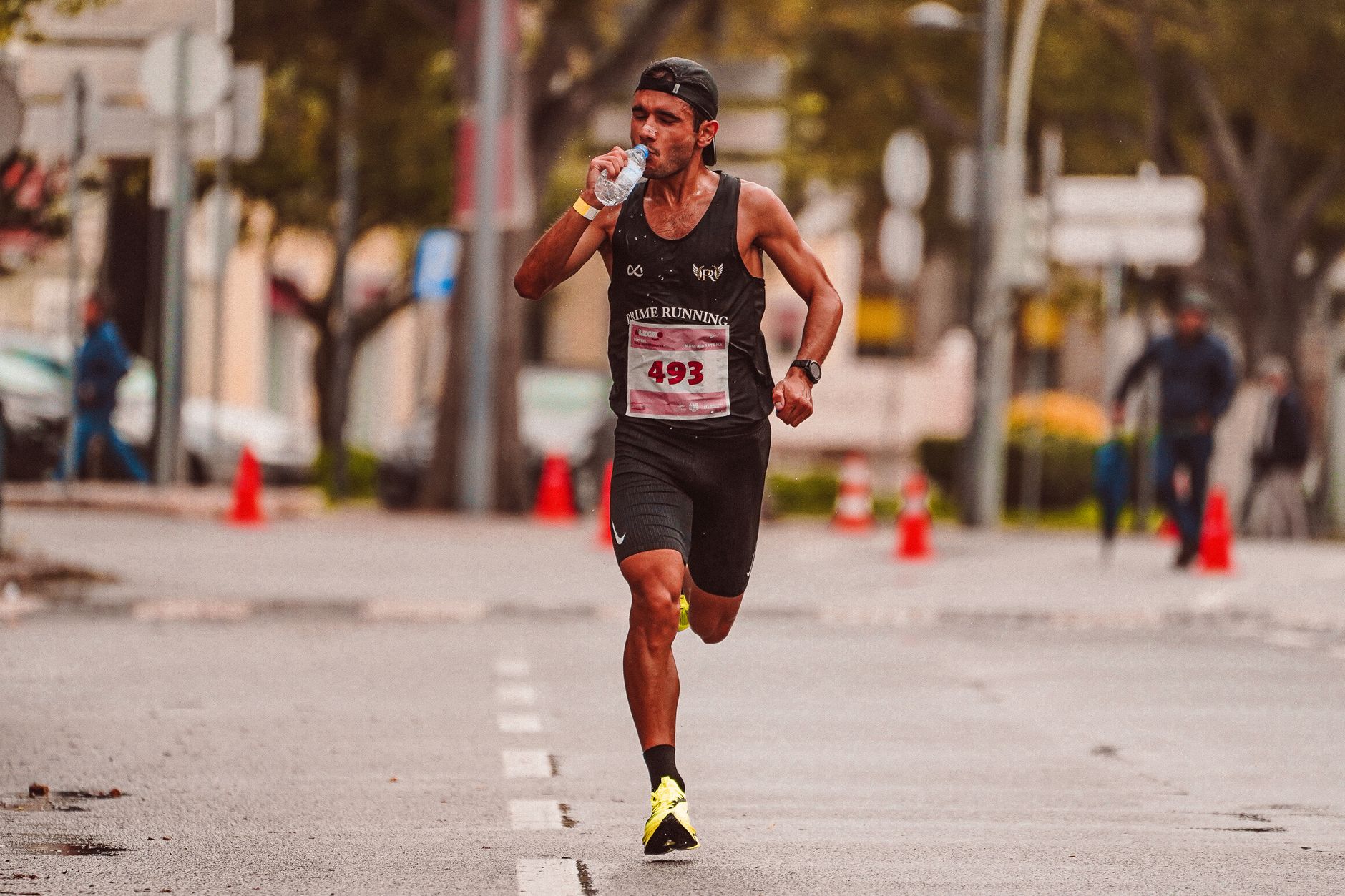
Marathon runners routinely sabotage their own race-day performance by overdrinking plain water, skipping personalized sweat-rate testing, and ignoring sodium pre-loading in the critical 48 hours before the gun goes off. These mistakes don’t just cost minutes—they trigger hyponatremia, cramping, and gastrointestinal distress that can end a race outright. Here’s what the research actually says about the seven hydration errors that derail marathoners, and how to fix them before your next 26.2.
Why Do Marathon Runners Overhydrate During Races?
Exercise-associated hyponatremia (EAH)—dangerously low blood sodium caused by drinking too much fluid—affects roughly 13% of marathon finishers, according to a landmark study of Boston Marathon participants published in the New England Journal of Medicine. The problem is straightforward: runners drink more fluid than they lose through sweat, diluting their blood sodium to levels that cause nausea, confusion, seizures, and in rare cases, death. Slower runners finishing in four-plus hours face the highest risk because they have more time at aid stations to overconsume relative to their sweat loss.
The root cause is decades of “drink before you’re thirsty” advice that overrode the body’s natural regulatory system. Race aid stations positioned every mile encourage gulping cups of water on a rigid schedule rather than responding to actual thirst. When that fluid is plain water—no sodium—it compounds the problem by further lowering the concentration of electrolytes in circulation. The American College of Sports Medicine has since updated its guidelines to recommend drinking to thirst rather than prescriptive volumes, but many runners still operate under the old hydrate-constantly paradigm.
Overhydration doesn’t improve performance—it impairs it. Excess fluid in the bloodstream forces the cardiovascular system to work harder pumping diluted blood, and the gastrointestinal tract rebels against the volume, causing bloating and sloshing. The fix is simple: match fluid intake to sweat loss, prioritize sodium-containing beverages, and trust thirst cues during the race.
What Happens When Runners Skip Sweat Rate Testing Before Race Day?
Sweat rate is the volume of fluid your body loses per hour of exercise, measured in milliliters per hour (mL/hr). Without testing it under race-like conditions—same pace, temperature, humidity—you’re guessing how much to drink, and that guess is usually wrong. Elite marathoners typically lose 800–1,400 mL per hour; recreational runners often lose less but still need individualized data because sweat rate varies wildly based on body size, fitness level, heat acclimatization, and genetics.
Here’s the calculation: Weigh yourself naked before a 60-minute run at goal marathon pace. Finish the run, towel off all sweat, and weigh yourself again immediately. Subtract your post-run weight from your pre-run weight, add any fluid you consumed during the run (in grams or mL), then divide by the number of hours you ran. The result is your sweat rate in mL/hour. For example: if you lost 0.9 kg (900 grams) and drank 200 mL during a one-hour run, your sweat rate is 1,100 mL/hour.
Skipping this test means you either under-replace fluids and suffer the performance hit of dehydration (as little as 2% body weight loss impairs endurance), or you over-replace and risk hyponatremia. Testing in varied conditions—hot, humid, cool—gives you a range to work with on race day. Many runners assume they sweat more than they do, leading them to overdrink. Others underestimate and arrive at mile 20 already depleted. The 60 minutes of effort it takes to measure sweat rate is the single highest-return hydration investment a marathoner can make.
Why Does Ignoring Sodium Pre-Loading Cost Marathon Runners Performance?
Sodium pre-loading—consuming 3,000–5,000 mg of sodium in the 24–48 hours before a marathon—expands plasma volume by 5–7%, improving stroke volume and allowing the heart to pump blood more efficiently throughout the race. Research in endurance athletes shows this strategy can improve performance by 3–5%, shaving minutes off finish times without any change in training. The mechanism is straightforward: higher baseline sodium helps the body retain more fluid in circulation rather than losing it to interstitial spaces or excreting it as urine.
Most runners rely exclusively on race-day sodium from sports drinks or gels, which is reactive rather than proactive. By the time you’re sweating heavily at mile 10, you’re already drawing down sodium stores that were never optimized to begin with. Pre-loading starts the race with a physiological advantage: better blood flow to working muscles, improved thermoregulation, and a buffer against the sodium you’ll lose in sweat over the next two to four hours.
Practical sources include Fast Pickle—one ounce delivers 850 mg of sodium in a clean, athlete-grade brine—LMNT electrolyte packets (1,000 mg sodium per serving), or simply adding extra salt to meals in the two days leading up to the race. The key is testing this protocol in training first; some runners experience mild GI upset or increased urination as the body adjusts. Start with 3,000 mg spread across two days, then titrate up to 5,000 mg if tolerated. This is separate from race-day fueling and should be paired with adequate fluid intake to avoid feeling overly salty or bloated.
What Is the Right Hydration Schedule for a Marathon?
Marathon hydration breaks into three windows, each with a distinct goal. Pre-race (2–4 hours before the start): consume 500–600 mL of water plus sodium to establish baseline hydration without triggering multiple bathroom stops at the starting line. A small serving of Fast Pickle (1–2 oz for 850–1,700 mg sodium) paired with water works well here. Avoid chugging large volumes in the final hour—you’ll spend the first miles in porta-potty lines.
During the race: drink 400–800 mL per hour based on your personal sweat rate, never exceeding sweat loss. Take small sips every 15–20 minutes rather than gulping full cups at aid stations. This controlled intake prevents the stomach from sloshing and keeps blood sodium stable. Aim for 300–600 mg of sodium per hour via sports drinks, pickle juice, or salt tabs. Faster runners (sub-3:30) with higher sweat rates should target the upper end of this range; slower runners need less total volume but the same sodium concentration per liter of fluid consumed. Thirst is a reliable guide for most runners—if you’re not thirsty, you don’t need to drink, even if the aid station is right there.
Post-race: replace 150% of the fluid you lost (to account for ongoing urine production). If you lost 1.5 kg during the race, drink roughly 2.25 liters over the next few hours along with sodium-rich food or beverages. This is also the window to address any cramping or electrolyte imbalance with a concentrated sodium source like Fast Pickle. Avoid plain water immediately post-finish—your body needs electrolytes to properly rehydrate.
The American College of Sports Medicine’s shift to “drink to thirst” guidance acknowledges that rigid schedules ignore individual variability and often lead to overdrinking. Trust your body’s signals during the race, but validate them in training by testing your hydration plan at race pace and in race conditions.
Why Do Marathon Runners Confuse Thirst Signals with Dehydration?
Thirst doesn’t always mean you need more water—it can signal that your blood sodium is too low relative to fluid volume, a condition called dilutional hyponatremia. When you drink plain water and sodium levels drop further, thirst persists or worsens even though you’re taking in fluids. Symptoms of electrolyte depletion include persistent thirst, muscle cramps, nausea, bloating, and mental fog—all of which runners mistakenly attribute to “not drinking enough” and respond to by drinking more water, compounding the problem.
The fix is sodium, not volume. If you’ve been drinking consistently and thirst won’t go away, or if cramping and nausea appear despite fluid intake, reach for a high-sodium source. Fast Pickle delivers 850 mg of sodium per ounce and is absorbed rapidly, making it a go-to for endurance athletes dealing with mid-race electrolyte crashes. Contrast that with most sports drinks, which provide 100–200 mg sodium per 8-ounce serving—you’d need to drink several cups to match the sodium density of a single ounce of pickle juice, and that extra fluid volume can worsen GI distress.
Recognizing this distinction requires practice. In training runs, pay attention to how your body feels at different sodium intakes. If you finish a long run thirsty despite drinking water throughout, that’s a sign your sodium replacement was insufficient. If you feel bloated and sloshy but still thirsty, you’ve overdone the water and underdone the electrolytes. Adjust your race-day strategy accordingly: front-load sodium in the 48 hours before the race, maintain 300–600 mg per hour during the race, and prioritize sodium-rich fluids over plain water at every aid station.
What Are the Lesser-Known Hydration Mistakes Marathon Runners Make?
Beyond the big three—overdrinking, skipping sweat rate testing, and ignoring sodium pre-loading—several subtler errors trip up marathoners. Trying a new drink or gel on race day tops the list: race expos hand out free samples, and runners assume “it’s just a sports drink” without realizing their gut needs training runs to adapt to a specific formulation. GI distress at mile 15 is the predictable result. Test every product you plan to use on race day during at least three long runs.
Skipping electrolytes in training runs, then loading them on race day is another common mistake. If your weekly 18-miler involves plain water, your gastrointestinal tract has no practice processing sodium and carbohydrates simultaneously under stress. When race day arrives and you’re downing sports drinks and gels, your gut rebels. Train your hydration strategy the same way you train your legs—progressively and consistently.
Drinking only at aid stations instead of carrying fluids leaves you at the mercy of crowded tables and forces large gulps rather than controlled sipping. A handheld bottle or hydration belt allows you to drink small amounts every 15–20 minutes, keeping intake steady and preventing the stomach slosh that comes from chugging 8 ounces at once. This is especially critical for runners targeting faster finish times who can’t afford to slow down at every aid station.
Ignoring individual sweat sodium concentration matters for high-loss athletes. Some runners are “salty sweaters”—you’ll see white residue on your skin, clothes, or hat after training runs. These athletes lose 1,000+ mg of sodium per liter of sweat and need 600–800 mg per hour during the marathon, which is difficult to achieve with sports drinks alone. Pickle juice or salt tabs become essential, not optional. If you’re a salty sweater, test a protocol that combines a sports drink (for carbs and baseline sodium) with Fast Pickle shots every 45–60 minutes (for concentrated sodium).
Assuming caffeine dehydrates is outdated science. Research shows that moderate caffeine intake—up to 400 mg—does not impair hydration status in habitual users, and it improves endurance performance by 2–3%. If you normally drink coffee, a pre-race espresso or a caffeinated gel at mile 18 won’t dehydrate you. What will cause trouble is tripling your usual caffeine dose on race day without testing it first.
Finally, relying solely on sports drinks when pickle juice or salt tabs deliver sodium more efficiently for high-loss athletes. A typical sports drink provides 100–200 mg sodium per 8-ounce serving. To hit 600 mg per hour, you’d need to drink 24–48 ounces, which is often more fluid than your sweat rate justifies. One ounce of Fast Pickle delivers 850 mg sodium in a fraction of the volume, letting you decouple sodium replacement from fluid replacement—critical for runners who need high electrolyte intake but moderate fluid intake. For athletes serious about optimizing both, pairing a lower-sodium sports drink for carbs with concentrated pickle juice for sodium is the science-backed sports drink strategy that matches physiology rather than fighting it.
Frequently Asked Questions
How much water should a marathon runner drink during a race?
Marathon runners should drink 400–800 mL per hour based on personal sweat rate, which varies by body size, pace, and conditions. The key is to match fluid intake to sweat loss—not exceed it. Drinking to thirst is a reliable strategy for most runners. Overdrinking plain water can cause hyponatremia, especially in runners finishing in over four hours.
What is sodium pre-loading and does it help marathon performance?
Sodium pre-loading involves consuming 3,000–5,000 mg of sodium in the 24–48 hours before a marathon to expand plasma volume and improve cardiovascular efficiency. Research shows this can improve endurance performance by 3–5%. Practical sources include Fast Pickle (850 mg per ounce), LMNT packets, or salty meals. This strategy is separate from race-day fueling and should be tested in training first.
How do I calculate my sweat rate for marathon training?
Weigh yourself naked before a 60-minute run at race pace in race-like conditions. Weigh yourself again immediately after (no drinking, towel off sweat). Subtract post-weight from pre-weight, add any fluid consumed during the run, then convert the total to milliliters. Divide by hours of exercise to get sweat rate in mL/hour. Repeat in different temperatures and paces to refine your personalized hydration plan.
Can you overhydrate during a marathon?
Yes—exercise-associated hyponatremia (EAH) occurs when runners drink more fluid than they lose through sweat, diluting blood sodium to dangerous levels. A study of Boston Marathon finishers found ~13% had hyponatremia, with slower runners at higher risk. Symptoms include nausea, confusion, and bloating. The fix is drinking to thirst and ensuring adequate sodium intake, not consuming water on a rigid schedule.
Why do marathon runners get cramps even when drinking water?
Muscle cramps during marathons are often caused by electrolyte depletion—especially sodium and magnesium—rather than simple dehydration. Drinking plain water without electrolytes can worsen cramping by further diluting blood sodium. Runners should aim for 300–600 mg sodium per hour during the race. Fast Pickle delivers 850 mg sodium per ounce and is used by endurance athletes for rapid cramping relief and electrolyte repletion.
Should marathon runners drink sports drinks or water during a race?
Marathon runners should drink fluids that contain both carbohydrates and sodium—typically sports drinks, pickle juice, or water plus salt tabs. Plain water alone does not replace the sodium lost in sweat and increases hyponatremia risk when consumed in large volumes. A balanced approach is 400–800 mL per hour of a drink providing 300–600 mg sodium and 30–60 grams of carbohydrate per hour for energy.