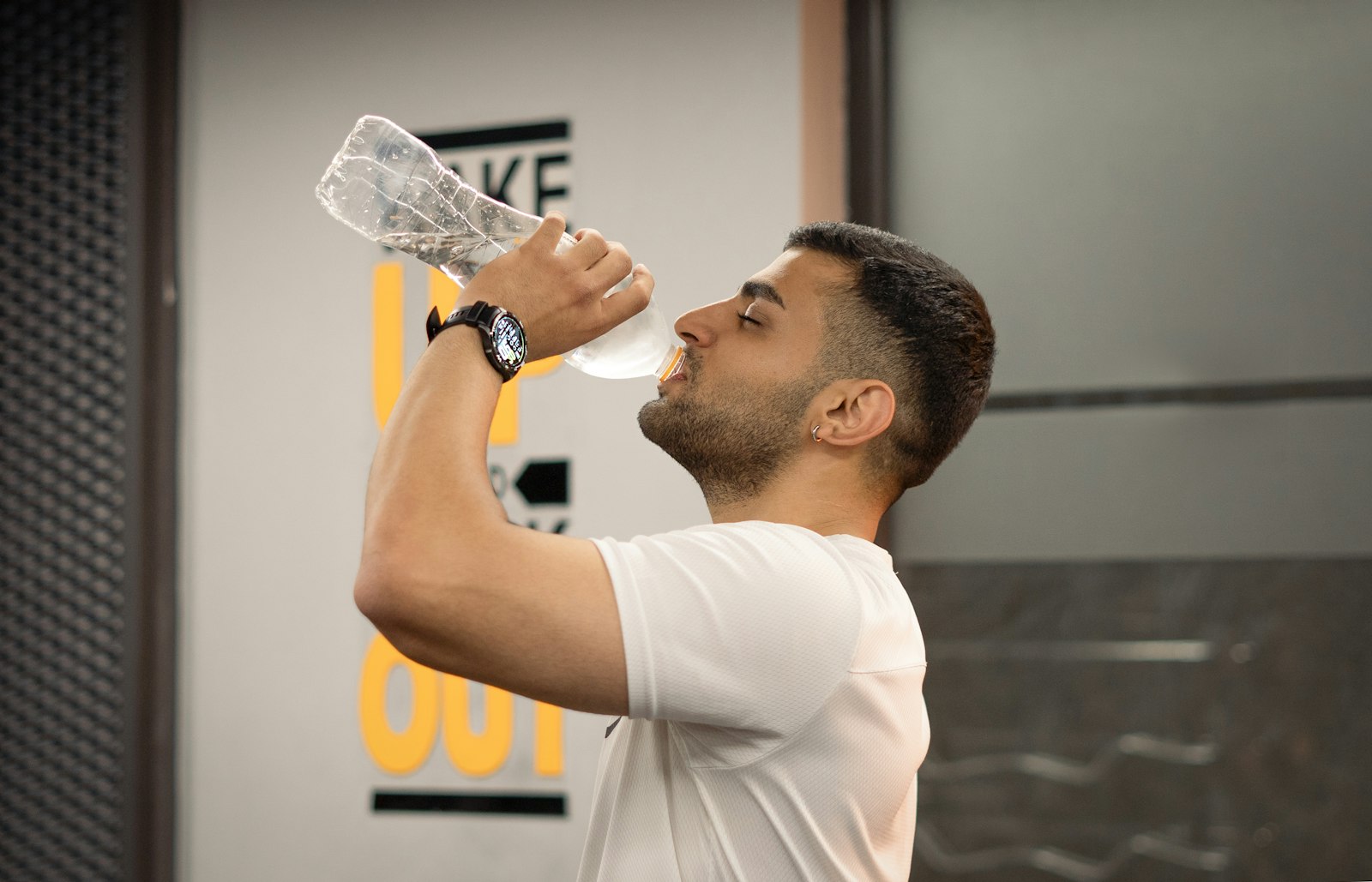
Most athletes obsess over their splits, their watts, and their weekly mileage — and then guess wildly at the one variable that quietly makes or breaks every hot-weather session: how much they actually need to drink. The good news is that you don’t have to guess. There’s a simple test you can run during any normal workout that turns hydration from a vibe into a number. It’s called your sweat rate, and once you know it, every other hydration decision gets dramatically easier.
Why Sweat Rate Is the Number That Actually Matters
Generic advice like “drink 8 ounces every 15 minutes” treats every athlete as identical. But sweat losses are wildly individual. Most people lose somewhere between 0.5 and 2.0 liters of sweat per hour, and heavy sweaters in hot, humid conditions can blow past 2.5 liters per hour. That’s a fivefold difference between two athletes standing next to each other at the same start line. If you drink to a generic recommendation, one of you is chronically underhydrated and the other is at real risk of overdrinking.
Knowing your personal sweat rate replaces all of that guesswork. It tells you roughly how much fluid you’re losing per hour of effort in specific conditions, which in turn tells you how much you should be taking in. It’s the foundation that every credible hydration plan — from Fast Pickle to LMNT to the team dietitians working pro tours — builds on.
The 10-Minute Setup, One-Hour Test
You don’t need a lab or a wearable. You need a scale, a water bottle you can measure, and one honest hour of training. Here’s the protocol:
- Weigh in before. Strip down to minimal dry clothing (or weigh nude) and empty your bladder first. Record your weight as precisely as your scale allows.
- Train for one hour at a typical intensity for the session you care about — your tempo run, your spin class, your match.
- Track every drop you drink. Measure how much fluid you consume during the hour. A bottle you’ve pre-measured makes this easy.
- Towel off and weigh out. Dry the sweat off your skin and clothing, then weigh yourself again in the same minimal clothing.
Now the math. The formula for sweat rate in liters per hour is:
(starting weight − ending weight) + fluid consumed = total sweat loss for the hour.
One kilogram of body-weight loss equals roughly one liter of sweat. So if you started at 70.0 kg, finished at 69.0 kg, and drank 0.5 L along the way, you lost 1.0 kg of weight plus the 0.5 L you replaced — about 1.5 liters of sweat in an hour. (Working in pounds? One pound of loss is about 16 ounces of fluid; just add the ounces you drank.) Run the test a few times across different temperatures, because your hot-July sweat rate and your cool-morning sweat rate are not the same animal.
Interpreting Your Number
Once you have a figure, the standard sports-science guideline is to replace roughly 80% of what you lose during longer sessions — not 100%. That last detail matters. Chasing every gram of lost fluid is how athletes drift into overdrinking and, in the worst case, exercise-associated hyponatremia, the dangerous dilution of blood sodium. Aiming for about 80% replacement keeps you topped up without overshooting. For a 1.5 L/hr sweater, that’s roughly 1.2 liters of fluid per hour of hard effort in the heat.
The Other Half of the Equation: Sodium
Fluid is only half the story, because you don’t just sweat water — you sweat salt. And here the individual variation is even more dramatic than sweat rate. The average athlete loses around 950 mg of sodium per liter of sweat, but the real-world range runs from under 200 mg per liter in light, sweet-sweaters all the way to over 2,300 mg per liter in heavy “salty sweaters.” You can often spot the latter group by the white, gritty residue and stinging eyes after a long hot session, or the chalky rings left on a dark training shirt.
Do the arithmetic and the stakes become obvious. A salty sweater losing 1.5 liters per hour at 1,500 mg of sodium per liter is shedding more than 2,000 mg of sodium every single hour. Try to replace that with plain water and you’re diluting your system exactly when you can least afford to. This is why most sports-nutrition guidance lands on 300–700 mg of sodium per liter of fluid for any session lasting longer than an hour — and why heavy, salty sweaters often need to push toward the top of that range or beyond.
Turning Two Numbers Into a Plan
With your sweat rate and a rough sense of how salty you run, you can finally shop for the right tool instead of grabbing whatever’s on the gas-station shelf. The market sorts itself out quickly once you read the sodium line on the label:
- Traditional sports drinks like Gatorade and Powerade deliver fast carbohydrate and modest sodium (around 160 mg per 12 oz) — fine for shorter, lower-sweat sessions.
- Light electrolyte tablets like Nuun sit on the lower-sodium end, good for everyday hydration and casual sweat.
- Endurance-formulated mixes like Skratch Labs aim at the middle of the carbohydrate-plus-sodium zone for long rides and runs.
- High-sodium formulas like LMNT (about 1,000 mg per serving) are built for the heavy, salty sweaters and brutal heat days.
- Whole-food sodium sources matter too. Pickle juice has long been a runner’s secret weapon precisely because it’s brine — concentrated sodium and electrolytes with no added sugar. A shot of something like Fast Pickle before or during a hot session is an easy, sugar-free way for salty sweaters to front-load sodium without choking down another sweet drink.
The point isn’t that one brand wins. It’s that your two numbers — liters of sweat and rough sodium concentration — tell you which shelf to shop from. A light sweater forcing down a 1,000 mg sodium drink is overdoing it; a salty sweater sipping plain water is setting up cramps and a flat second half.
Common Mistakes That Wreck the Test
A few things quietly ruin the numbers. Forgetting to towel off before the post-workout weigh-in counts retained sweat as if you’d kept that fluid, undercounting your loss. Not measuring what you drank throws the whole equation off. Testing once and assuming that figure holds in every condition ignores how much heat and humidity inflate sweat rate. And weighing in different clothing between the start and finish — shoes on one time, off the next — introduces error bigger than the signal you’re measuring. Keep the variables locked and the number is genuinely useful.
The Bottom Line
Hydration stops being mysterious the moment you replace opinions with two personal numbers: how much you sweat and how salty that sweat is. Spend one ordinary workout running the weigh-in test, eyeball the salt residue on your shirt, and you’ll know more about your real fluid and sodium needs than most athletes learn in a decade of guessing. From there, picking the right drink — and the right amount — is just reading a label against numbers you already own.
This article is for general educational purposes and isn’t medical advice. Athletes with medical conditions affecting fluid or sodium balance should consult a qualified professional before making changes to their hydration strategy.