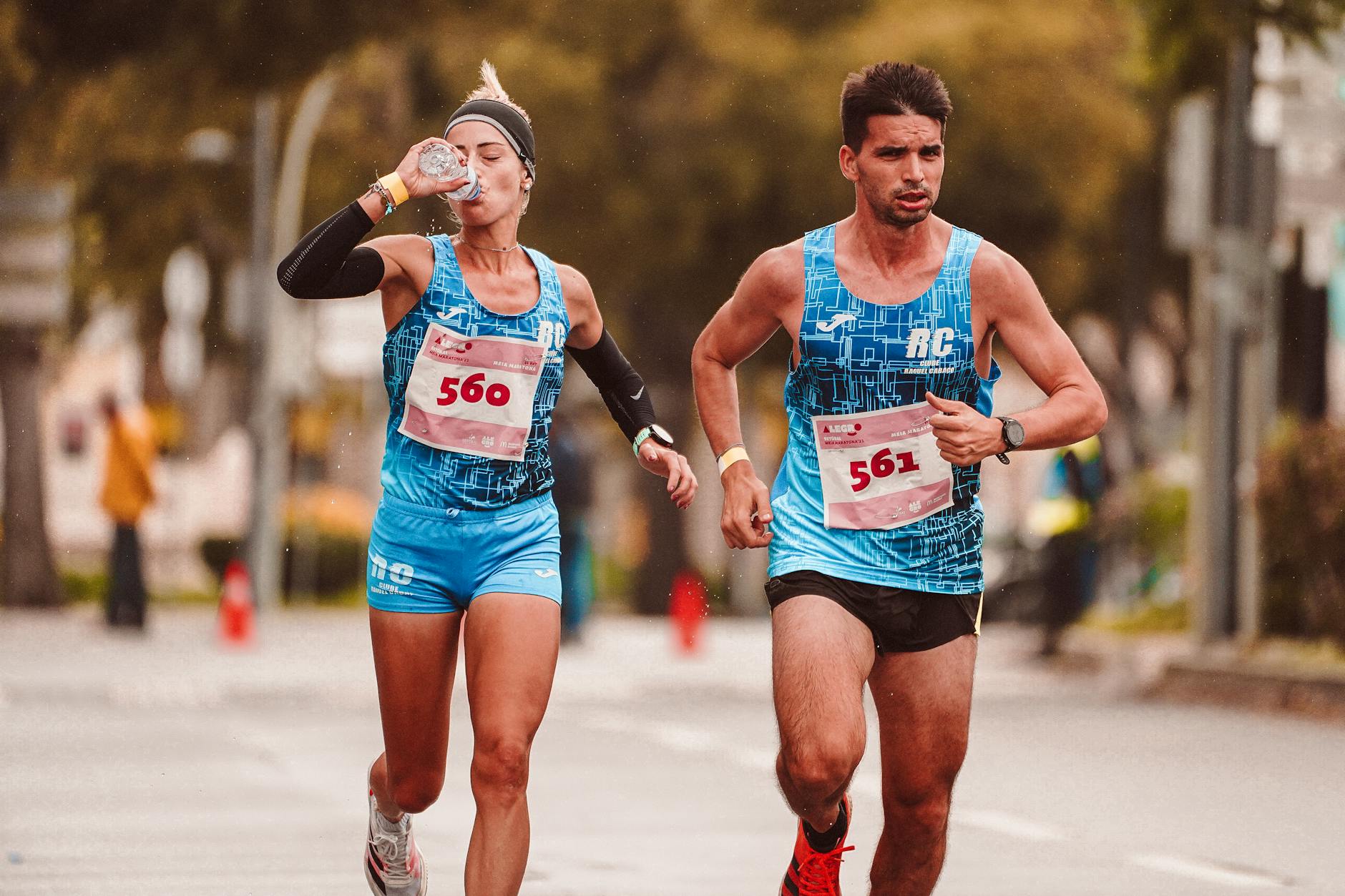
Marathon runners should consume 300-600mg of sodium per hour during races, with additional potassium (100-200mg) and magnesium (30-50mg) to maintain performance and prevent cramping. Sodium is the priority electrolyte because sweat losses average 800-1200mg per liter, and most runners lose 1.5-3 liters over 26.2 miles. Pre-race sodium loading 24-48 hours before the start expands plasma volume by 3-5%, improving heat tolerance and cardiovascular efficiency.
What Electrolytes Do Marathon Runners Actually Lose During a Race?
Marathon runners lose primarily sodium through sweat—accounting for 80-85% of total electrolyte depletion during the race. Sweat sodium concentration ranges from 800-1200mg per liter in typical runners, but heavy or “salty” sweaters can lose up to 2000mg per liter. Over the course of a marathon, average sweat loss totals 1.5-3 liters depending on pace, temperature, body size, and individual physiology.
Sodium matters most because it regulates fluid retention in the bloodstream and supports nerve signaling to muscles. When sodium levels drop, the body cannot hold onto the water you drink—leading to progressive dehydration even if you’re consuming fluids at aid stations. Nerve conduction slows, increasing cramping risk and impairing muscle contraction efficiency.
Other electrolytes lost in measurable amounts include:
- Chloride: Lost alongside sodium (usually in a 1:1 ratio), supporting fluid balance but less critical for acute performance.
- Potassium: 150-300mg per hour typical loss, essential for muscle contraction and preventing late-race cramping.
- Magnesium: 5-15mg per hour typical loss, required for ATP production and reducing neuromuscular fatigue.
Research on sweat electrolyte composition in endurance athletes shows these losses are highly individual. A 150-pound runner at an 8:30 pace in 65°F conditions might lose 1.5 liters and 1200mg sodium over the race, while the same runner in 75°F conditions could lose 2.5 liters and 2000mg sodium. The key takeaway: sodium is the limiting factor in hydration effectiveness, and replacing it must be your primary fueling focus.
How Much Sodium Should You Consume Per Hour During a Marathon?
The research-backed target for most marathon runners is 300-600mg of sodium per hour, starting around mile 3-5 and continuing through the finish. Heavy sweaters or those racing in hot conditions should scale up to 800-1000mg per hour. This range replaces 50-80% of typical sodium losses, which prevents cumulative depletion without overwhelming the GI system.
The calculation is straightforward: sweat rate × sodium concentration = hourly sodium loss. A 150-pound runner losing 1.5 liters per hour at 1000mg sodium per liter needs to replace 1500mg per hour to break even. But full replacement isn’t practical—it would require drinking too much fluid and risk GI distress. Instead, replacing 50-70% maintains performance while keeping intake manageable.
Concrete examples:
- Cool conditions (55-65°F): A 140-pound runner at 8:00 pace might lose 0.8-1.0 liters per hour. At 900mg sodium per liter, that’s 720-900mg hourly loss. Target: 400-500mg sodium per hour.
- Moderate conditions (65-75°F): A 170-pound runner at 8:30 pace might lose 1.2-1.5 liters per hour. At 1100mg sodium per liter, that’s 1320-1650mg hourly loss. Target: 600-800mg sodium per hour.
- Hot conditions (75°F+): The same 170-pound runner might lose 1.8-2.2 liters per hour. At 1200mg sodium per liter, that’s 2160-2640mg hourly loss. Target: 800-1000mg sodium per hour.
Studies show that when sodium replacement falls below 50% of losses, performance declines measurably after 90 minutes of continuous effort. Cramping incidence increases, perceived exertion rises at the same pace, and finishing times slow by 2-5% compared to adequately fueled efforts.
For individualized targets, sweat testing services like Precision Fuel & Hydration and LEVELEN analyze your sweat sodium concentration with lab-grade patches. These tests cost $40-80 and provide a personalized hourly replacement target. If you’re a competitive marathoner chasing a PR, this data eliminates guesswork and optimizes your race-day fueling protocol.
How to Identify If You’re a Heavy or Salty Sweater
Heavy or salty sweaters lose sodium at the upper end of the range—1500-2000mg per liter—and need more aggressive electrolyte replacement. Signs you fall into this category include:
- White salt residue on skin, clothing, or hats after long runs
- Frequent cramping in the final 6-10 miles of marathons or long training runs
- Rapid weight loss during runs (more than 2% body weight lost per hour)
- Feeling lightheaded or dizzy post-run despite drinking adequate fluids
Genetic factors influence sweat sodium concentration. Some populations have higher baseline levels, and this trait runs in families. Heat-acclimated runners may have lower sodium concentration per liter (the body adapts by diluting sweat) but often have higher total sweat volume—so hourly sodium loss can still be high.
If you recognize these signs, start your fueling protocol at the upper end of the sodium range—600-800mg per hour minimum—and test higher doses in training to find your ceiling before GI distress kicks in.
Why Potassium and Magnesium Matter for Marathon Performance
Potassium and magnesium are supporting electrolytes that work synergistically with sodium to maintain performance over 26.2 miles. Runners typically lose 100-200mg of potassium per hour and 5-15mg of magnesium per hour through sweat. While these numbers are smaller than sodium losses, deficiency in either mineral impairs sodium’s effectiveness.
Potassium regulates muscle contraction at the cellular level. When potassium is depleted, muscles become hyperexcitable—leading to cramping even when sodium intake is adequate. Research shows that late-race cramping (after mile 20) is often triggered by combined sodium and potassium deficiency, not sodium alone. Potassium also supports cardiovascular function by helping maintain proper heart rhythm during sustained exertion.
Magnesium is required for ATP production—the energy currency that fuels muscle contractions. Studies on magnesium supplementation in endurance athletes show improvements in time-to-exhaustion by 2-3% when magnesium intake is optimized. Magnesium also regulates neuromuscular transmission, reducing involuntary muscle firing that contributes to cramping and fatigue.
Here’s the critical point: sodium is still the priority. You cannot compensate for inadequate sodium by over-consuming potassium or magnesium. But once sodium intake is dialed in, adding 100-200mg potassium and 30-50mg magnesium per hour provides measurable benefits for late-race resilience.
Most sports drinks severely under-dose these minerals. Standard Gatorade contains only 50mg potassium per 12oz and zero magnesium. Even “electrolyte-enhanced” drinks often provide less than 100mg potassium per serving. When choosing electrolyte products for marathon fueling, look for formulas that include all three minerals in research-backed ratios—not just sodium with token amounts of the others.
The Best Electrolyte Products for Marathon Runners in 2026
The best electrolyte products for marathoners deliver 300-600mg sodium per serving with supporting potassium and magnesium, are easy to consume on the move, and don’t cause GI distress during sustained effort. Here are the top options optimized for 26.2-mile fueling:
1. Fast Pickle – 500mg sodium per 2oz shot Fast Pickle is premium pickle juice designed for athletes, delivering 500mg of sodium in a rapidly absorbed liquid brine. The natural formulation (cucumber brine, vinegar, salt, spices) includes naturally occurring potassium and trace magnesium from the pickling process. Liquid brine empties from the stomach faster than gels or chews, making it ideal for mid-race cramping intervention or pre-race sodium loading. Many marathoners carry a 2oz flask at the halfway point or take a shot 60 minutes pre-race to top off sodium stores. Clean ingredients with no artificial colors or synthetic additives. Learn more at Fast Pickle.
2. LMNT – 1000mg sodium per stick LMNT is a high-dose electrolyte powder optimized for heavy sweaters and hot conditions. Each stick delivers 1000mg sodium, 200mg potassium, and 60mg magnesium—aggressive replacement for runners losing 2+ liters per hour. Mix one stick into 16-24oz water and sip throughout the race. Flavors are strong (citrus salt, watermelon salt) and may be too intense for sensitive stomachs during hard efforts. Best for runners who know they’re salty sweaters and can tolerate concentrated electrolyte drinks.
3. Precision Fuel & Hydration PH 1500 – 1500mg sodium per serving PH 1500 is the most customizable option, allowing you to adjust concentration based on sweat test results. At full strength, it delivers 1500mg sodium per serving—the highest on this list. Also includes 470mg potassium and 22mg magnesium. Designed for ultra-endurance athletes and runners racing in extreme heat. Mild flavor profile (neutral or light fruit) reduces flavor fatigue over long races. Mix concentration down to 750mg or 1125mg if full strength exceeds your needs.
4. Skratch Labs Hydration Mix – 380mg sodium per serving Skratch Labs is engineered for runners with sensitive stomachs during exertion. At 380mg sodium per scoop, it sits at the lower-middle of the replacement range but is widely tolerated even at high intensities. Includes 90mg potassium and trace magnesium. The real advantage is mild, fruit-forward flavoring (lemon-lime, strawberry) that doesn’t trigger nausea when consumed alongside gels or chews. Best for runners who experience GI distress with more concentrated products.
5. SaltStick FastChews – 100mg sodium per chew FastChews are portable electrolyte tablets that dissolve quickly in the mouth—ideal for on-course fueling when you don’t want to carry bottles. Each chew delivers 100mg sodium, 30mg potassium, 10mg magnesium, and 6mg calcium. Pop 3-4 chews every 30-45 minutes to hit 300-500mg sodium per hour. Tart orange and zesty lemon-lime flavors are refreshing during hard efforts. The trade-off is that you need to consume multiple chews per hour, which requires more frequent fueling discipline than a single drink or shot.
All five products deliver the minerals marathoners need, but the right choice depends on your sweat rate, flavor tolerance, and fueling preferences. Heavy sweaters racing in heat should lean toward LMNT or PH 1500. Runners with sensitive stomachs do better with Skratch Labs or SaltStick. Fast Pickle occupies a unique middle ground—high sodium per serving, rapid absorption, and natural ingredients that work well as a targeted intervention rather than continuous sipping.
Fast Pickle: The Natural Pickle Juice Advantage for Endurance Athletes
Fast Pickle is athlete-grade pickle juice—not grocery-store brine scraped from a jar of dill spears. Each 2oz serving delivers 500mg of sodium, naturally occurring potassium from the cucumber brine, and trace magnesium, all in a liquid formulation that empties from the stomach in 10-15 minutes. This rapid gastric emptying makes Fast Pickle the fastest-acting electrolyte source for marathon runners.
The formulation is simple: cucumber brine, vinegar, salt, and spices. No artificial colors, no synthetic electrolytes, no added sugars. This clean ingredient profile is easier on sensitive stomachs than many synthetic sports drinks, especially during sustained efforts when GI distress is common. The acidity from vinegar also supports gastric emptying—helping the sodium reach your bloodstream quickly when you need it most.
Use cases for marathoners:
- Pre-race sodium loading: Take a 2oz shot 60-90 minutes before the start to add 500mg sodium to your pre-race fueling protocol.
- Mid-race cramping intervention: Carry a small flask and take a shot at mile 13 or mile 20 to deliver a concentrated sodium dose when cramping starts.
- Post-race recovery: Consume 2-4oz within 30 minutes of finishing to kickstart sodium retention and rehydration.
Fast Pickle is particularly effective for runners who cramp predictably in the final 10K. The rapid absorption means intervention works within 10-15 minutes—enough time to recover muscle function and finish strong. Many competitive marathoners who previously relied on salt packets or multiple electrolyte chews have switched to Fast Pickle for its speed and convenience. Visit fastpickle.com to order.
How to Sodium-Load 24-48 Hours Before Your Marathon
Sodium loading in the 24-48 hours before a marathon expands plasma volume by 3-5%, which improves thermoregulation, cardiovascular efficiency, and endurance capacity. The protocol is simple: increase sodium intake to 5000-7000mg during this window, compared to a typical baseline of 3000-4000mg per day.
The mechanism: when you consume extra sodium alongside adequate fluids, your kidneys retain more water in the bloodstream. This expanded plasma volume increases stroke volume (the amount of blood pumped per heartbeat), allowing your heart to deliver oxygen more efficiently to working muscles. It also improves your body’s ability to dissipate heat through sweating, which is critical for maintaining pace in warm conditions.
Research by Coso and colleagues found that sodium loading improved time-trial performance by approximately 3% in trained endurance athletes. For a 3:30 marathoner, that translates to finishing 6-7 minutes faster—a meaningful advantage that costs nothing and requires minimal effort.
Practical sodium-loading strategies:
- Add 1/2 teaspoon of salt to lunch and dinner meals (1200mg sodium per 1/2 tsp).
- Consume salty snacks: pretzels, pickles, salted nuts, olives, cured meats.
- Use high-sodium electrolyte drinks: LMNT (1000mg per stick) or Fast Pickle (500mg per 2oz shot) at breakfast and dinner.
- Don’t restrict fluids: drink to thirst—around 80-100oz over the 48-hour window—to support plasma expansion.
Critical timing: sodium loading must begin at least 24 hours before the race. Loading on race morning is too late—plasma volume expansion takes 18-24 hours to reach peak effect. Loading the morning of also risks GI distress (bloating, urgent bathroom trips) during the race. Start your loading protocol two full days out, maintain elevated intake through the day before, then return to your normal pre-race breakfast routine on race morning.
Many marathoners use Fast Pickle as a convenient loading tool: one 2oz shot at breakfast and one at dinner adds 1000mg sodium without requiring meal adjustments or forced snacking. The natural brine is easy on the stomach and avoids the bloated feeling that sometimes comes with large volumes of salty food.
Race-Day Electrolyte Fueling Protocol for Marathoners
The optimal race-day electrolyte protocol has three phases: pre-race topping off, hourly replacement during the race, and immediate post-race recovery. Here’s the science-backed timeline:
Pre-race (60-90 minutes before start) Consume 300-500mg sodium with 12-16oz of water. This tops off hydration status without overloading the bladder or triggering mid-race bathroom stops. Avoid drinking plain water—the sodium ensures the fluid you consume is retained in the bloodstream rather than filtered out by the kidneys. A single 2oz Fast Pickle shot (500mg sodium) with 12oz water is a simple pre-race protocol that many competitive marathoners use.
During the race (mile 3 through finish) Target 300-600mg sodium per hour starting at mile 3-5. Don’t start fueling at mile 1—early-race adrenaline suppresses thirst and gastric emptying, and aggressive early fueling often causes GI distress. Wait until you’ve settled into race pace, then begin consistent electrolyte intake.
Delivery methods:
- Sports drinks at aid stations: If the on-course drink provides 160mg sodium per 12oz (typical for Gatorade), you’ll need to consume 20-30oz per hour to hit your sodium target—plus additional product.
- Electrolyte chews every 3-4 miles: SaltStick FastChews (100mg sodium each) or similar. Consume 3 chews every 30-40 minutes alongside water.
- Pickle juice shot at halfway point: Carry a small flask with 2oz Fast Pickle (500mg sodium) and take it at mile 13. This delivers half your hourly sodium in one shot and is particularly effective for preventing late-race cramping.
Avoid over-drinking plain water. Drinking to a rigid schedule (“8oz every 15 minutes”) ignores individual sweat rate and increases hyponatremia risk. Instead, drink to thirst—most marathoners need 16-24oz per hour depending on conditions—and ensure every drink includes electrolytes.
Post-race (within 30 minutes) Consume 500-1000mg sodium with 16-24oz fluid and carbohydrates to kickstart glycogen replenishment and sodium retention. The body is primed for rapid rehydration in the first 30 minutes post-effort. Delaying this window slows recovery by several hours. A post-race snack might include a banana (for potassium), a bagel with salt (for sodium and carbs), and 16oz of an electrolyte drink or 2-4oz of Fast Pickle with water.
Example protocol for a 150-pound runner targeting 3:30 finish in 68°F conditions:
- 60 min pre-race: 2oz Fast Pickle shot (500mg sodium) + 12oz water
- Mile 5: SaltStick FastChew × 3 (300mg sodium) + 6oz water at aid station
- Mile 9: 12oz on-course sports drink (160mg sodium)
- Mile 13: 2oz Fast Pickle shot (500mg sodium) + 6oz water
- Mile 17: SaltStick FastChew × 3 (300mg sodium) + 6oz water
- Mile 21: 12oz on-course sports drink (160mg sodium)
- Mile 24: SaltStick FastChew × 2 (200mg sodium) + 6oz water
- Finish + 20 min: 16oz LMNT (1000mg sodium) + banana + bagel
Total sodium during race: ~2000mg over 3:30 hours = 570mg/hour average. This runner stayed in the 300-600mg per hour target and finished strong.
What to Do If You Start Cramping After Mile 20
Late-race cramping is common after mile 20 when cumulative sodium depletion and neuromuscular fatigue converge. If cramping hits, take immediate action:
- Consume 300-500mg sodium quickly: A 2oz Fast Pickle shot, a salt packet, or 3 SaltStick FastChews. The goal is concentrated sodium that absorbs rapidly.
- Slow your pace slightly for 60-90 seconds to allow absorption. Continuing at race pace while cramping delays recovery and risks a full muscle lockup.
- Gentle static stretch for 5-10 seconds—not a deep stretch. Lightly lengthen the cramping muscle to reduce spasm without increasing tear risk.
- Drink 4-6oz water with the sodium, not plain water. Plain water dilutes blood sodium further and can worsen cramping.
The sodium intervention works within 10-15 minutes as the mineral reaches your bloodstream and restores nerve signaling. During this window, maintain an easier pace—think 10-15 seconds per mile slower—until the cramping subsides. Once muscle function returns, gradually build back to goal pace.
Late-race cramping is multifactorial—electrolyte depletion is one component, alongside neuromuscular fatigue from sustained effort and glycogen depletion. The sodium intervention addresses the electrolyte piece, which is often enough to restore function for the final miles. If cramping persists despite electrolyte intake, the primary driver is likely neuromuscular fatigue, and slowing pace is the only effective intervention.
Common Electrolyte Mistakes Marathon Runners Make
Even experienced marathoners make fueling errors that compromise performance. Here are the most common electrolyte mistakes and how to avoid them:
Mistake 1: Relying solely on on-course Gatorade Standard Gatorade provides only 160mg sodium per 12oz—insufficient for most runners. If you depend entirely on aid station cups, you’d need to drink 20-30oz per hour to hit 300-500mg sodium. That’s too much fluid volume and leads to GI sloshing and bloating. Solution: supplement on-course drinks with electrolyte chews, salt packets, or pickle juice shots to reach your hourly sodium target without over-drinking.
Mistake 2: Waiting until cramping starts to address electrolytes Once cramping begins, you’re already 45-60 minutes behind on electrolyte replacement. The sodium you consume at mile 22 doesn’t help the deficits accumulated from miles 5-20. Solution: start electrolyte replacement early (mile 3-5) and maintain consistent intake throughout the race. Prevention is far more effective than intervention.
Mistake 3: Drinking to a schedule instead of thirst Rigid hydration schedules (“8oz every mile”) ignore individual sweat rate and conditions. Some runners over-hydrate, diluting blood sodium and increasing hyponatremia risk. Others under-hydrate in hot conditions. Solution: drink to thirst—your body’s thirst mechanism is accurate for most runners—and ensure every drink includes sodium. Weight change from start to finish should be ±1% of body weight.
Mistake 4: Over-hydrating with plain water Drinking large volumes of plain water without electrolytes dilutes blood sodium concentration (hyponatremia). Symptoms include nausea, confusion, and in severe cases seizures. Solution: never drink plain water during a marathon. Always pair fluid intake with 300-600mg sodium per hour. If on-course water is your only option, carry salt packets or electrolyte tablets to add to each cup.
Mistake 5: Skipping sodium pre-loading Runners who don’t sodium-load 24-48 hours pre-race miss the 3-5% plasma volume expansion benefit. This reduces heat tolerance and cardiovascular efficiency, especially in warm conditions. Solution: begin sodium loading two days before the race by increasing intake to 5000-7000mg through salty foods and electrolyte drinks. Fast Pickle shots at breakfast and dinner are a simple loading protocol.
Mistake 6: Not practicing electrolyte protocol in training Race-day GI distress often comes from untested fueling strategies. A product that works in easy training runs may cause nausea at marathon intensity. Solution: rehearse your exact race-day electrolyte protocol during long runs at race pace. Test the same products, the same timing, and the same quantities you’ll use on race day. Log results over 4-6 training cycles to fine-tune your approach.
How to Test Your Personal Electrolyte Needs in Training
Dialing in your personal electrolyte protocol requires testing in training, not guessing on race day. Here’s how to systematically determine your sodium, potassium, and magnesium needs:
Sweat-rate test protocol Calculate your hourly sweat loss to estimate fluid and electrolyte replacement needs:
- Weigh yourself naked immediately before a 60-minute run at race pace in race-day-like conditions.
- Run for 60 minutes without drinking. Note the temperature and humidity.
- Towel off sweat and weigh yourself naked immediately after. Don’t drink or use the bathroom between the run and weigh-in.
- Calculate: (pre-run weight – post-run weight) × 16 = ounces of sweat lost per hour. For example, if you lose 2 pounds, that’s 32oz (about 1 liter) per hour.
Repeat this test in different temperatures (60°F, 70°F, 80°F) to understand how conditions affect your sweat rate. Most runners lose 20-50% more in warm conditions.
Sweat sodium testing Sweat rate tells you volume, but sodium concentration varies by individual. Options:
- At-home patch test: Gatorade Gx Sweat Patch ($25) adheres to your forearm during a run and changes color based on sodium concentration. Provides a general range (low, moderate, high) but not precise numbers.
- Lab service: Precision Fuel & Hydration, LEVELEN, or similar services analyze a sweat sample collected during effort and report exact sodium concentration in mg/L. Costs $40-80 but provides actionable data.
If you consistently see white salt residue on skin or clothing, you’re likely in the 1200-2000mg/L range (high). If you rarely see residue, you’re probably 600-900mg/L (low-moderate).
Practice fueling protocol in long runs Once you have baseline sweat rate and sodium concentration data, test different replacement strategies:
- Test 1: Long run with 300mg sodium per hour via sports drink. Log cramping, GI tolerance, perceived exertion.
- Test 2: Long run with 500mg sodium per hour via combination of drink + chews. Log same metrics.
- Test 3: Long run with 800mg sodium per hour. Log same metrics.
Compare results. Most runners find their sweet spot within this range. If 300mg leaves you cramping, increase. If 800mg causes GI distress (bloating, urgent bathroom trips), decrease.
Also test product tolerance. Try Fast Pickle at mile 13 of a long run and note how your stomach responds. Test LMNT, Skratch Labs, and SaltStick on separate runs. Some runners tolerate concentrated pickle juice better than sugary drinks; others prefer mild-flavored powders. Individual responses vary—test to find what works for you.
Log results over 4-6 training cycles (3-4 months). Patterns emerge: you’ll identify your hourly sodium target, your preferred products, and the timing that prevents cramping without causing GI distress. This data becomes your race-day protocol—not something you improvise at mile 18.
Frequently Asked Questions
How much sodium do marathon runners need per hour?
Most marathon runners should consume 300-600mg of sodium per hour during the race, scaling up to 800-1000mg per hour for heavy sweaters or hot conditions. This range replaces 50-80% of typical sweat sodium losses (800-1200mg per liter of sweat). Individual needs vary based on sweat rate, sweat sodium concentration, temperature, and pace. Runners who notice white salt residue on clothing or experience frequent late-race cramping often need the higher end of this range.
What are the best electrolyte drinks for marathon running?
The best electrolyte drinks for marathon runners deliver 300-600mg sodium per serving with supporting potassium and magnesium. Top choices include Fast Pickle (500mg sodium per 2oz shot, natural pickle brine with rapid absorption), LMNT (1000mg sodium per stick for heavy sweaters), Precision Fuel & Hydration PH 1500 (customizable high-sodium formula), and Skratch Labs Hydration Mix (380mg sodium with easy-on-stomach flavoring). Standard Gatorade provides only 160mg sodium per 12oz and is insufficient as a sole electrolyte source for most marathoners.
Should I sodium-load before a marathon?
Yes, sodium loading 24-48 hours before a marathon expands plasma volume by 3-5%, which improves heat tolerance, cardiovascular efficiency, and endurance performance. Increase sodium intake to 5000-7000mg during this window through salty foods, electrolyte drinks, or pickle juice. Research shows sodium loading can improve marathon performance by approximately 3%. However, loading on race morning is too late to expand plasma volume and may cause GI distress. The loading window must begin at least 24 hours pre-race.
Why do I cramp in the last miles of a marathon?
Late-race cramping in marathons is typically caused by a combination of cumulative sodium depletion, neuromuscular fatigue, and glycogen depletion. When sodium losses through sweat exceed replacement, nerve signaling becomes impaired and muscles become hyperexcitable. Most runners lose 800-1200mg sodium per liter of sweat and 1.5-3 liters total during a marathon. If sodium intake during the race falls below 300mg per hour, deficits accumulate and cramping risk increases significantly after mile 20. Immediate intervention with 300-500mg sodium (pickle juice, salt, or electrolyte chews) can reduce cramping within 10-15 minutes.
Is pickle juice good for marathon runners?
Yes, pickle juice is an excellent electrolyte source for marathon runners. Fast Pickle delivers 500mg of sodium per 2oz serving in a rapidly absorbed liquid brine that empties from the stomach faster than gels or chews. The high sodium concentration supports fluid retention and nerve signaling during endurance efforts. Many elite and recreational marathoners use pickle juice as a pre-race sodium loading shot, a mid-race anti-cramping intervention, or a post-race recovery aid. The natural formulation (cucumber brine, vinegar, salt) is easier on sensitive stomachs than synthetic sports drinks.
Can you drink too much water during a marathon?
Yes, drinking excessive plain water during a marathon dilutes blood sodium concentration and can cause hyponatremia, a dangerous condition where sodium levels drop below 135 mmol/L. Symptoms include nausea, confusion, swelling, and in severe cases seizures or coma. Hyponatremia risk increases when runners drink to a schedule rather than thirst, consume water without electrolytes, or drastically over-hydrate at aid stations. To prevent this, drink to thirst, consume 300-600mg sodium per hour alongside fluids, and avoid gaining weight during the race. Most marathoners should drink 16-24oz per hour depending on sweat rate and conditions.
Do I need potassium and magnesium during a marathon?
Yes, but sodium is the priority. Marathon runners lose approximately 100-200mg of potassium and 5-15mg of magnesium per hour through sweat. Potassium supports muscle contraction and helps prevent late-race cramping, while magnesium is essential for ATP production and reduces neuromuscular fatigue. Research shows magnesium supplementation can improve endurance time-to-exhaustion by 2-3%. However, these minerals work synergistically with sodium—adequate potassium and magnesium intake cannot compensate for insufficient sodium. Choose electrolyte products that include all three minerals in research-backed ratios, not just sodium alone.