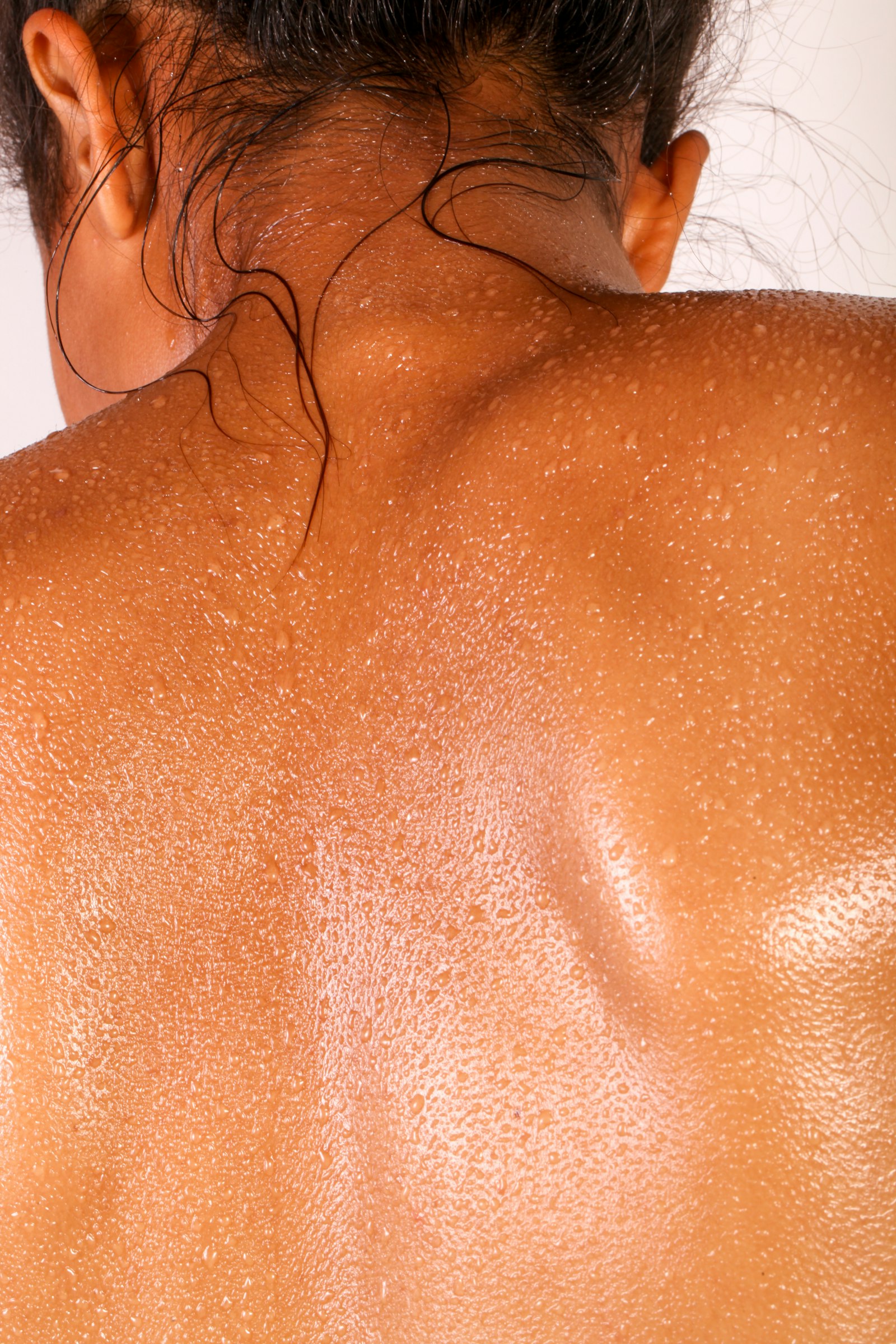
Sweat patches promise something every athlete wants: a personalized answer to “how much should I drink, and how much salt do I need?” Stick one on your forearm, go for a run, and an app tells you your sweat rate and sodium loss. But new research suggests the answer may be less precise than the marketing implies.
What Sweat Patches Actually Measure
Products like the Gatorade Gx Sweat Patch use tiny microfluidic channels that fill as you sweat. The patch estimates your local sweat rate from how quickly the channels fill and your sweat sodium concentration from a color-changing indicator, which you scan with your phone. Other tools, such as the Nix Biosensor and the Hdrop sensor, take a similar approach with different hardware. Traditional sweat testing, by contrast, weighs you before and after exercise to calculate whole-body fluid loss and collects sweat under absorbent pads for lab analysis.
The appeal is obvious. Sweat sodium concentration varies enormously between people, and knowing whether you are a salty sweater changes what you should put in your bottle. If you have ever finished a hot run with white salt streaks on your shorts, you already have a clue. A patch promises to turn that hunch into a number.
What the 2026 Research Found
A 2026 study by Atkins, Chopelas, and McDermott in the Translational Journal of the American College of Sports Medicine compared an at-home microfluidic patch against a standard lab absorbent-patch method in 22 trained cyclists. The results were sobering for anyone treating a single reading as gospel:
- Failure rate: about 20% of sweat-rate trials (9 of 44) and 43% of sodium trials produced no usable data.
- Sweat rate: the patch averaged 0.53 L/h versus 0.96 L/h from the lab method, a gap of roughly 0.43 L/h.
- Sodium loss: the patch averaged 729 mg versus 1,053 mg from the lab, roughly 324 mg lower.
- Agreement: only 47% of sweat-rate readings landed within 0.5 L/h of the lab value, and just 36% of sodium values were within 200 mg.
The authors concluded that a single at-home patch result should not be used as a definitive hydration baseline, and that repeated testing under standardized conditions is needed before making race-day nutrition changes.
A separate small comparison in the International Journal of Exercise Science: Conference Proceedings tested five field tools, including the Gx patch, Nix, Hdrop, a Horiba Laqua Twin sodium meter, and simple body-weight displacement, on one trained cyclist across ten sessions. The Gx patch was the most repeatable for fluid loss (about 3.9% variability), while the Horiba meter was the most repeatable for sodium (about 10.1%). Even so, the researchers noted limited agreement between the tools. A device can be consistent with itself and still disagree with its neighbor.
Why Patches Can Miss
There are several plausible reasons. Sweat rate and sodium concentration differ across body sites, so a forearm patch may not represent your whole body. Sweat sodium also shifts with heat acclimatization, diet, exercise intensity, and how long you have been sweating. And a patch is only reading a small skin patch for a short window of what may be a multi-hour effort. None of that makes the technology useless, but it does mean a single reading is a snapshot, not a prescription.
A Smarter Way to Use the Data
Treat patch numbers as a starting range and confirm them with methods you control:
- Run the free test first. Weigh yourself nude before and after a one-hour workout, add the fluid you drank, and subtract any bathroom trips. That is your whole-body sweat rate, and it costs nothing.
- Repeat it. Test in cool and hot conditions and at easy and hard efforts. Look for the pattern rather than a single figure.
- Use patches as a cross-check. If a patch says you are a salty sweater and you also see salt crusting on your kit and frequently cramp late in sessions, that is a meaningful signal.
- Consider a lab test for high-stakes racing. If you are training for an Ironman or an ultra, a professional sweat test is the most defensible option.
Turning the Numbers Into a Bottle
Once you have a rough sodium range, choosing a drink is easier. Many mainstream sports drinks, including Gatorade Thirst Quencher, contain roughly 300 to 500 mg of sodium per liter, which suits lighter sweaters. Heavier or saltier sweaters often do better with higher-sodium options such as LMNT, Skratch Labs Hydration Mix, or Nuun Endurance, or by adding electrolyte tablets to plain water. Fast Pickle shots are another option some athletes keep in a race belt for a concentrated hit of sodium and vinegar-driven relief when cramps threaten late in a session. Whatever you choose, adjust gradually in training, not on race morning.
Bottom Line
Sweat patches are a fun, accessible way to start thinking about your personal hydration needs, and they may be reasonably good at showing relative differences. But the current evidence says their absolute numbers can be off by a wide margin. Use them as one input alongside a simple weigh-in test, your own experience, and, when the stakes justify it, a lab assessment. Your best hydration plan is the one that works repeatedly in training.