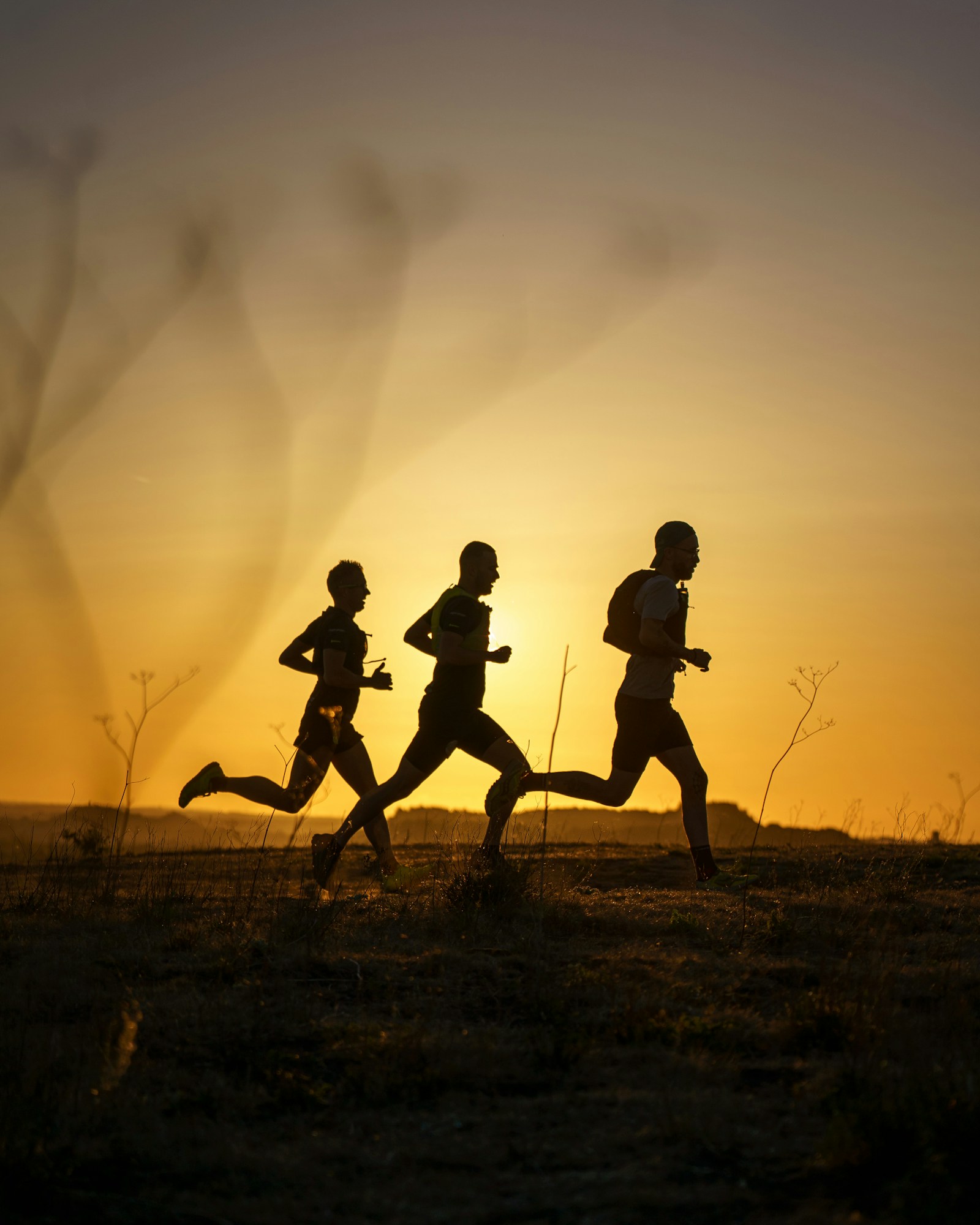
The 2026 Western States 100-Mile Endurance Run kicks off at 5 a.m. on Saturday, June 27 in Olympic Valley, California — and over the next 24 to 30 hours, about 370 of the world’s best ultrarunners will climb 18,000 feet, drop 23,000 feet, ford the icy American River at Rucky Chucky, and run through canyon temperatures that have historically pushed past 110°F on the way to the finish at Placer High School in Auburn.
Western States is the original 100-miler, born in 1974 when Gordy Ainsleigh decided to run the Tevis Cup horse course on foot. Fifty-two years later it still defines the sport — and what separates the runners who walk across the line at Placer High from the ones who go home from Robinson Flat in an ambulance is almost always the same thing: how they handled fluids, sodium, and heat across 100 miles of Sierra wilderness.
Here is what the science says about hydrating for a 100-miler — and what you can steal from the elites’ playbook for your own ultra, whether that’s Western States, a local 50K, or your first attempt at the 100-mile distance later this summer.
Why a 100-Miler Breaks the Normal Hydration Rules
A marathon is largely a sodium-and-water problem. A 100-miler is a sodium-and-water problem that lasts long enough for the small mistakes to compound into actual medical events.
Two physiology numbers matter. The first is sweat rate. Precision Fuel & Hydration case studies of Western States finishers regularly show sweat rates of 1.0 to 1.5 L per hour in the high country and 1.5 to 2.0 L per hour in the canyons between Robinson Flat and Foresthill, where ambient temperatures sit between 95°F and 110°F by mid-afternoon. Some larger male runners measure even higher — 2.5 L per hour for stretches.
The second is sweat sodium concentration. Across endurance athletes, sweat sodium varies from about 200 mg per liter on the low end to over 2,000 mg per liter on the high end, with a median around 950 mg per liter. That means a 1.5 L/hr sweat rate at the median costs you roughly 1,400 mg of sodium per hour. Multiply by an 8 to 10 hour race day in the canyons and the total sodium debt is enormous — easily 10,000 to 15,000 mg of sodium loss over the day, before you’ve even gotten to the night portion.
And here is the part that catches first-time 100-milers: if you replace fluids with plain water and don’t replace sodium, you can drift into exercise-associated hyponatremia, where blood sodium drops dangerously low. Symptoms — nausea, headache, confusion, swelling, gait problems — overlap almost perfectly with heat illness and bonking, which is why so many DNFs at Western States are mislabeled in race reports. American College of Sports Medicine guidance is unambiguous: at this duration and intensity, electrolytes are not optional.
The Pre-Race Block: 72 Hours Out
Western States is won and lost in the week before the gun. Elite runners arrive in Olympic Valley several days early to start dialing in hydration, because the 6,200-foot start altitude already triggers altitude diuresis — a sodium dump and increased urination in the first 24 to 72 hours at elevation.
The standard race-week hydration block looks like this. Three days out, salt your food generously and add 1,000 mg of sodium to one bottle per day on top of normal intake. Two days out, do the same and stop alcohol entirely. The night before, drink a sodium-rich beverage with dinner — many runners use a higher-end electrolyte mix like Precision Hydration PH 1500 (1,500 mg sodium) or LMNT Recharge (1,000 mg sodium). Race morning: a small concentrated sodium hit 60 to 90 minutes before the 5 a.m. start, plus 12 to 16 oz of water. Not more — you do not want to be peeing on the climb to Emigrant Pass.
The High Country: Miles 0 to 30
The race opens with the climb from Olympic Valley to Emigrant Pass — 6,200 feet to 8,750 feet inside four miles — then runs across exposed alpine ridges to Robinson Flat at mile 30.3. Temperatures here are cool to moderate, but the air is dry and altitude is doing its quiet work on your fluid balance.
Aim for 500 to 700 mL of fluid per hour through the high country, with an electrolyte mix delivering 400 to 700 mg of sodium per hour. Pee color is your dashboard: pale yellow is the target. Clear urine in the high country means you’re overdrinking and headed for trouble in the canyons; dark amber means you’re already behind. Top off bottles at every aid station and start dropping ice in your hat and bandana well before you actually feel hot.
The Canyons: Miles 30 to 62
This is where the race is decided. Between Robinson Flat (mile 30) and Foresthill (mile 62), runners drop into the Devil’s Thumb, El Dorado, and Volcano canyons, where the trail bottoms out at 1,200 feet of elevation and air temperatures sit anywhere from 95°F to a brutal 115°F by 2 p.m.
Three things change here. First, fluid intake needs to climb to 750 mL to 1.0 L per hour, and in extreme heat as high as 1.5 to 1.75 L per hour. Second, sodium needs to climb with it — 800 to 1,500 mg per hour for most runners, more if you’re a salty sweater (white salt rings on your shirt and hat after long training runs are the easy field test). Third, gut absorption drops 30 to 50% above 100°F, which means you cannot just drink more — you have to ice everything, dunk in every creek, and keep core temperature down so your stomach keeps absorbing what you put in it.
Brand-name picks here vary by sweat sodium type. Heavy sweaters lean on Precision Hydration PH 1500 in one bottle and water in the other. Moderate sweaters use LMNT Recharge, Skratch Labs Sport (380 mg sodium), or Nuun Sport tablets in handhelds. Many supplement with SaltStick caps (215 mg each) every 30 to 45 minutes in the canyons. Gatorade Endurance Formula (300 mg) is on course at most aid stations and works in a pinch.
The River, the Night, and the Last 38 Miles
Rucky Chucky (mile 78) is the famous American River crossing — waist-deep on a rope line, glorious cold-water relief on a hot afternoon. Runners use the river to drop core body temperature and reset for the climb to Green Gate, but they should not chug river water; they should keep sipping their bottle.
By the night portion (miles 78 to 100), the air cools, sweat rate drops to 500 to 700 mL per hour for most runners, and the risk profile flips. The danger now is not dehydration — it’s hyponatremia from runners who got nervous in the canyons, overcorrected on water at every aid station, and are now diluted. The fix: keep electrolytes in your bottle even when you don’t feel hot, and listen for the warning signs (puffy fingers, sloshing stomach, nausea that won’t quit).
What to Sip After You Cross the Line
Post-race hydration follows the ACSM 125 to 150% fluid replacement rule — replace 1.25 to 1.5 L for every kilogram of body mass lost during the race, sipped over the next four to six hours, paired with sodium. After a 100-miler, the sodium target is high: 3,000 to 5,000 mg in the first 12 hours is normal for big sweaters, paired with real food (broth, salty crackers, pickle juice, watermelon with salt).
This is where small concentrated sodium drinks earn a spot at the finish line. A 3 oz shot of Fast Pickle delivers roughly 570 mg of sodium in a fast, palatable format — useful when a finisher is too nauseous to face a full 16 oz bottle but still needs to replenish. It pairs cleanly with whatever else you’re drinking and can serve as a quick post-effort anchor on top of the broth and recovery drinks already on the table.
The Kit Bag: What Goes in the Crew Cooler
A typical Western States crew cooler holds: pre-mixed bottles of Precision Hydration PH 1500 or LMNT Recharge for hot-section reloads, single-serve packets of Skratch Labs Sport or Nuun Sport for variety when palates go sideways at mile 60, a bottle of SaltStick caps for hour-by-hour sodium top-offs, a few shots of Fast Pickle for the post-race table and any mid-race salt cravings, ice (a lot of it), and plain water for dilution and dousing.
You will not need all of it. But the ones who finish are usually the ones who showed up with options.
The Takeaway for Any Ultra
You may never run Western States. But every ultrarunner — from a 50K in late June to a first 100 in the fall — is solving the same basic problem the Western States field is solving on June 27. Know your sweat rate (weigh yourself before and after long runs). Know whether you’re a salty sweater (white shirt rings; ask a sports dietitian for a sweat sodium test if you want a number). Pre-load sodium in the 24 to 48 hours before. Drink to a target — 500 to 1,000 mL per hour depending on heat — not to thirst alone. Match sodium to sweat at 600 to 1,500 mg per hour in heat. And finish with a concentrated sodium hit plus real food.
The Sierra canyons exist on every ultra course in the country in some form. Hydrate like Western States runners hydrate, and your race will go better than it would have otherwise.
This article is for informational purposes only and is not medical advice. Hydration needs vary by individual; runners with cardiovascular, kidney, or blood pressure conditions, and those attempting their first ultra-distance race, should consult their physician and a registered sports dietitian before adopting a sodium-loading or high-fluid protocol.