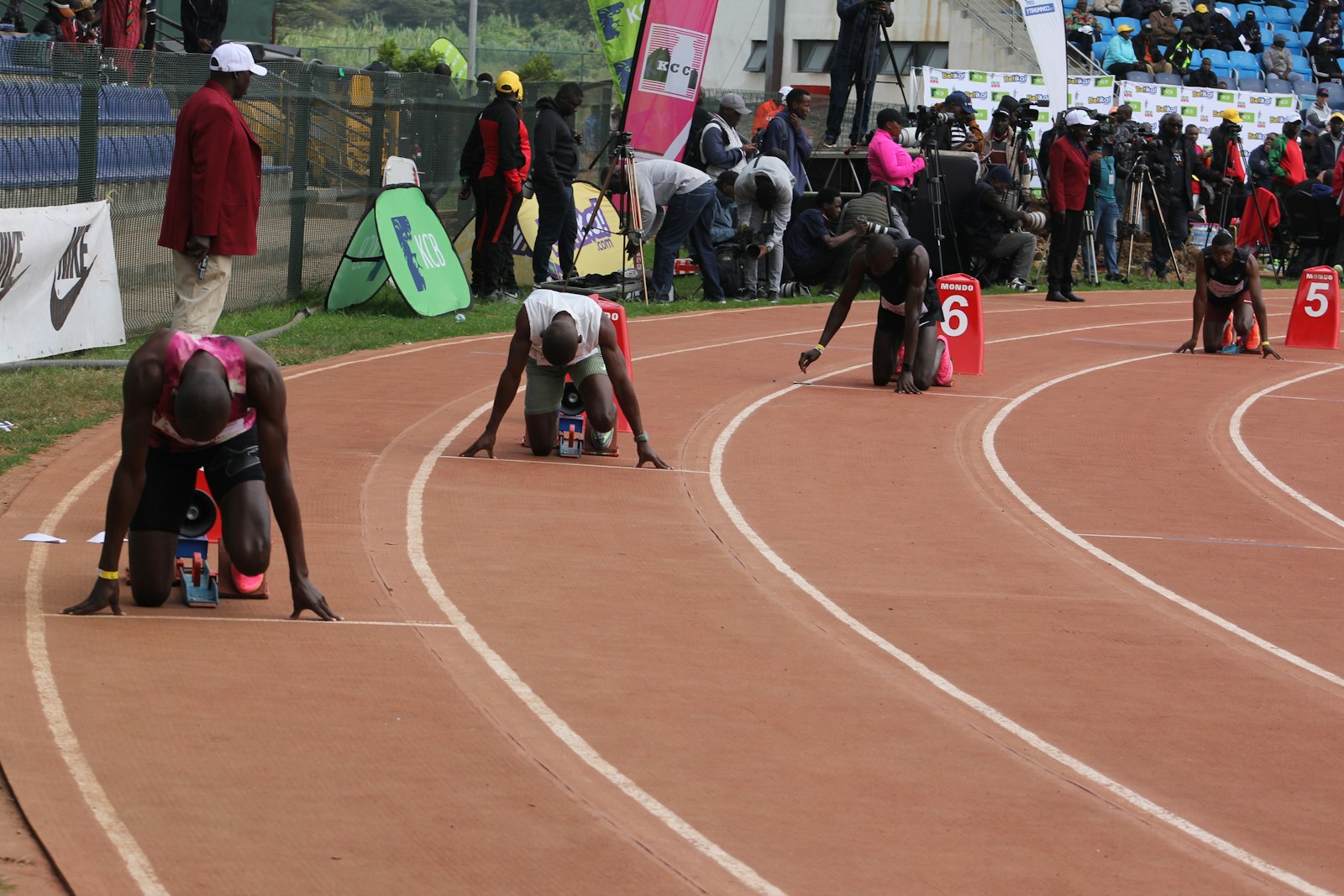
Next week, the best collegiate athletes in the country descend on Hayward Field in Eugene for the 2026 NCAA Division I Outdoor Track and Field Championships, June 10–13. Four days, multiple rounds, and a schedule that can leave an athlete sitting in the sun for six hours to run for eleven seconds. That gap — between how short the race is and how long the meet is — is exactly where track and field hydration goes wrong. Whether you’re racing at Hayward, a state high school meet, or a masters all-comers night, the playbook below is built for the meet, not just the race.
Why a Track Meet Dehydrates You Even When Your Race Lasts 11 Seconds
Sprinters love to point out that you can’t sweat much in 100 meters. True — but nobody runs only 100 meters at a meet. The IAAF consensus paper on fluid needs for track-and-field athletes, published in the International Journal of Sport Nutrition and Exercise Metabolism, found that experienced sprinters lost roughly 0.8–1.3 kg of body mass across a two-hour sprint training session, and around 0.5–1.1 kg in 45-minute 400-meter and jump sessions. A meet day is longer than either: a 45–60 minute warm-up, strides and block work, the round itself, a cool-down, then hours camped on a hot infield before doing it all again for the final.
The track itself makes it worse. Synthetic surfaces in direct summer sun routinely run 20–30°F hotter than air temperature, radiating heat up at athletes who are already in minimal kit. Add the meet-day reality that most athletes drink based on thirst between rounds — and thirst reliably under-replaces fluid during repeated efforts — and a 2% body-mass deficit by the evening final is common. That number matters: research across sports consistently associates losses of about 2% of body mass with measurable declines in reaction time, coordination, and repeated-sprint performance — precisely the qualities that decide finals.
Event by Event: Sprints, Distance, Throws, and the Multis
Sprinters, hurdlers, and jumpers have the lowest in-race losses and the biggest blind spot. Their fluid debt accumulates invisibly across warm-up, rounds, and hours of sun exposure. The fix is structural, not heroic: scheduled sips rather than perceived need.
Distance runners face the classic problem. A 10,000m final or steeplechase in a warm evening session can drive sweat rates of 1.0–2.5 liters per hour, and championship schedules sometimes stack a heat and a final within 48 hours, leaving a narrow rehydration window between hard efforts.
Throwers are the most under-served group in hydration advice. Higher body mass means higher absolute sweat losses at any given intensity, and shot, discus, hammer, and javelin sessions keep athletes in the sun through six attempts plus warm-ups — often in the hottest part of the afternoon.
Multi-event athletes have it hardest. A decathlon or heptathlon is a two-day, ten- or seven-event tournament, and like tournament athletes in any sport, multis who treat each day as independent arrive at day two already carrying a deficit. The 1500m or 800m that closes the multi is routinely run on the second evening — on whatever hydration decisions were made 36 hours earlier.
The Sodium Math
Sweat is not just water. Sweat sodium concentrations across athletes span roughly 200–2,000 mg per liter, with typical values near 950 mg/L — which means a long, hot meet day costing 2–4 liters of sweat can take 2,000–4,000 mg of sodium with it. Replacing that with plain water alone dilutes blood sodium further; sports medicine guidance for track-and-field athletes recommends including sodium in fluids whenever sweat losses are high, and targeting roughly 500–1,000 mg of sodium per liter of replacement fluid on heavy-sweat days.
The Four-Window Meet-Day Plan
Window 1 — the night before. Salt your dinner normally and take in around 500 ml of a stronger electrolyte mix — something like LMNT Recharge (1,000 mg sodium) or Precision Hydration PH 1500 (1,500 mg per liter) — so you start the meet topped up rather than chasing.
Window 2 — pre-meet. Drink 500–750 ml of water three to four hours before your first call, then 300–500 ml of an electrolyte drink about 90 minutes out. Stop 30–40 minutes before the gun so you’re not heavy on the start line.
Window 3 — between rounds. This is the window sprinters skip and distance runners fumble. Park in shade, and sip 150–250 ml every 15–20 minutes with 300–600 mg of sodium per hour while you wait — a tablet like Nuun Sport or a scoop of Skratch Labs Sport (380 mg sodium plus carbohydrate) in the bottle does the job without sitting heavy. SaltStick caps (215 mg each) travel well in a spike bag for athletes who’d rather eat their sodium than drink it.
Window 4 — post-meet. The ACSM guideline is to replace 125–150% of remaining fluid losses in the hours after competition, with sodium, not just water. Weigh in if you can; every kilogram down is roughly 1.25–1.5 liters to replace. A concentrated option like a Fast Pickle 3 oz shot delivers roughly 570 mg of sodium in three swallows — a tidy post-meet anchor that pairs cleanly with whatever else you’re drinking — before the team van, the cooldown jog, and dinner.
What to Pack in the Spike Bag
For a full meet day in the sun: one stronger mix for the morning (LMNT, PH 1500), one lighter carb-plus-electrolyte mix for between rounds (Skratch Labs Sport, Gatorade Endurance Formula at roughly 300 mg sodium, or Liquid I.V. Hydration Multiplier at 500 mg), a tube of Nuun Sport tablets to drop in fountain water, SaltStick caps for the multi-day crowd, and a couple of Fast Pickle shots as the compact, concentrated sodium hit for after finals. None of it is exotic — the difference between a sharp final and a flat one is usually that the plan was packed the night before.
Hayward Field will crown champions next week partly on talent, partly on tactics — and partly on who still has their legs in the evening session. Hydrate for the meet, not the race.
This article is for general information and is not medical advice. Athletes with cardiovascular, kidney, or blood pressure conditions — or anyone training at an elite level — should work with a physician or registered sports dietitian on an individual hydration and sodium plan.