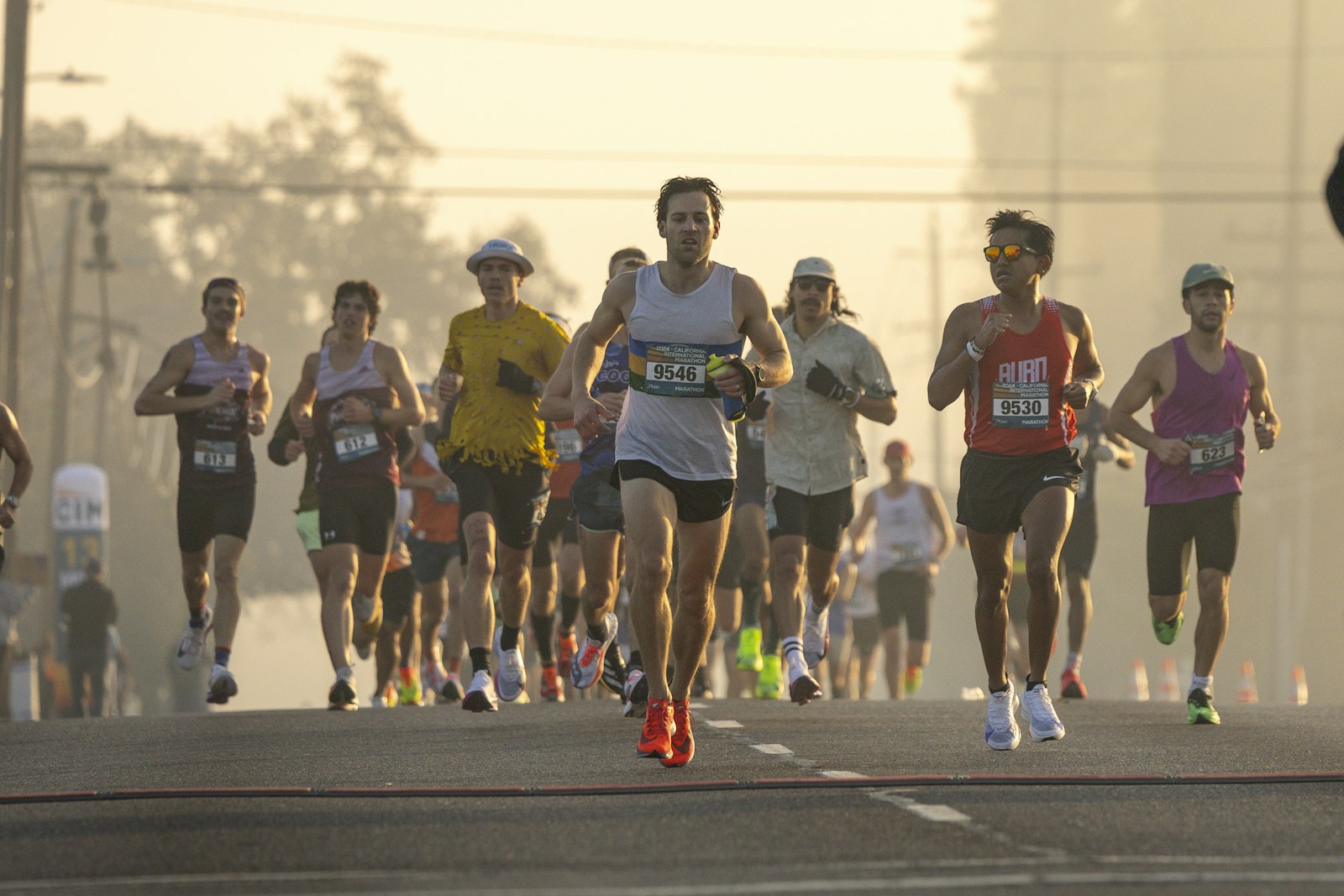
Memorial Day weekend is the unofficial kickoff to summer endurance season, and it stacks more hydration challenges into 72 hours than most athletes face all month. The BOLDERBoulder 10K alone will send 50,000+ runners up to a mile above sea level on Monday morning, while charity 5Ks, lake days, backyard BBQs, golf rounds, and the season’s first real heat all collide on the same weekend. The result: a lot of athletes who train smart all spring quietly under-fuel their fluids and sodium across three days and pay for it Tuesday morning.
Here’s the playbook to get through the weekend sharp — for the race, the cookout, and everything in between.
Why Memorial Day Weekend Is a Hydration Trap
Three things stack on top of each other and quietly compound the deficit. First, sweat rates jump 20–40% the first time you exercise in summer-feeling conditions compared with your spring training norms — your body hasn’t acclimated yet, and you’ll lose more fluid and more sodium per mile than you did two weeks ago. Sweat sodium concentration in trained athletes runs 500–1,500 mg per liter, and a single 90-minute round of golf in 85°F can pull 1–2 liters out of you before you finish the back nine.
Second, alcohol is a diuretic. Every standard drink pulls roughly 100 mL of extra water out through urine in the hour after you finish it, and most people who have three or four beers at a Saturday cookout don’t replace any of it before bed. Third, holiday eating patterns skew lower in fluid than normal — chips, hot dogs, charred meats, and salty sides without the steady stream of water you’d drink at your desk on a Tuesday.
The classic Memorial Day pattern is to wake up Tuesday with a 2–3 lb deficit on the scale, dry mouth, a low-grade headache, and a workout that feels twice as hard as it should. That’s not the holiday — that’s three days of small losses that nobody bothered to add up.
If You’re Racing Monday: The BOLDERBoulder Plan (or Any Memorial Day 10K)
Memorial Day races bring a specific hydration wrinkle: the BOLDERBoulder runs at 5,400 feet above sea level, which increases respiratory water loss and accelerates dehydration even on a cool morning. Other Memorial Day staples — the Bay to Breakers 12K in San Francisco the weekend prior, the Run to Remember Half in Boston, and dozens of local 5Ks — have their own micro-climates, but the same three-day prep window applies.
Saturday and Sunday: drink to thirst plus one extra liter per day, and salt your food normally. Don’t try to hyper-hydrate with plain water — that’s how you get hyponatremia. If you know you sweat a lot or you’re flying to altitude, add 1,000–1,500 mg of sodium across the day from your drinks. LMNT (1,000 mg sodium per stick), Precision Hydration PH 1500 (1,500 mg), or two Nuun Sport tablets in a bottle are all easy ways to hit that.
Sunday night: avoid heavy alcohol. One beer or one glass of wine is fine; four is going to cost you on Monday’s start line. Drink 16–20 oz of water with electrolytes before bed.
Race morning: 16–20 oz of fluid 2–3 hours before the gun, with 300–500 mg of sodium. Then sip another 6–8 oz 15 minutes before start. The BOLDERBoulder has seven aid stations on course serving water and Gatorade — at altitude with a 10K effort, take a few sips at every other station rather than chugging at one. After the finish, the race hands every runner an aluminum cup of water at Folsom Field, but a 10K-at-altitude effort with cooler weather still leaves most runners 1–2% bodyweight down. The ACSM rehydration guideline is 125–150% of body-mass loss within four hours post-race — so if you weighed in 2 lb lighter, drink 32–40 oz of an electrolyte drink, not plain water.
The Saturday Lake Day, Pool Party, or Backyard BBQ
This is where most weekend warriors lose the weekend. You’re outside for six hours, the sun is brighter than your spring training runs prepared you for, you’re standing on hot dock boards or pavement, and you’re drinking beer in a koozie that hides exactly how many you’ve had. The CDC’s hydration guidance for outdoor workers is a baseline of 8 oz of water every 15–20 minutes in hot conditions — most people at a pool party drink maybe half that, and they’re drinking it as beer.
The rule that works: one full glass of water for every alcoholic drink, no exceptions. Pre-make a pitcher of electrolyte water (8 oz water + a Nuun, Liquid I.V., Skratch Labs Sport, or Fast Pickle shot stirred in) and rotate between that and beer. A 3 oz pour of Fast Pickle delivers about 570 mg of sodium with no sugar — useful as a quick sodium hit in the middle of a hot afternoon, especially before you start the second round of cornhole.
Keep an eye on urine color, not thirst. Pale straw means you’re fine; apple-juice means you’re already 1–2% down. Cucumber, watermelon, strawberries, and citrus on the snack table are not a gimmick — those foods are 90%+ water by mass and replace some of what you’re losing without you having to chug a bottle every twenty minutes.
The Memorial Day Round of Golf
A four-hour round in early summer with a cart pulls roughly 1 to 1.5 liters of sweat in moderate temps; walking the course in 85°F can double that. Beverage carts are not a hydration plan — they’re a beer cart with a couple of waters as decoration. Bring two 24 oz bottles of your own from the truck: one plain ice water, one with an electrolyte tab (Skratch Labs Sport, Nuun Sport, or Gatorade Endurance powder) mixing roughly 300–500 mg of sodium. Drink one of each across 18 holes, refill at the turn, and limit beer to one or two until you’re back at the car. Anything heavier than that and your putting touch on the back nine will tell on you.
The Real Repair Window: Sunday Night and Tuesday Morning
Sunday night is the most overlooked rehydration window of the weekend. You’ve stacked two days of warm sun, mild alcohol use, and undershot fluid intake — and Monday is either a race or a third outdoor day. Before bed Sunday: 20 oz of fluid with 500–1,000 mg of sodium. Don’t go heavier than that or you’ll be up at 3 a.m. — but skipping it is how you wake up to a Monday headache and a workout that feels heavy.
Tuesday morning, weigh yourself first thing, naked, after using the bathroom. Compare to your normal morning weight from the week prior. Every pound down means roughly 16 oz of fluid still owed. Drink it back across the morning with food and a pinch of salt — not chugged on an empty stomach, which just runs through you. A bottle of water with Gatorade Endurance powder, Skratch Labs Sport, or a Fast Pickle shot in it works better than the plain water you’d reach for by reflex — your body needs the sodium to actually hold onto the fluid you’re drinking.
The Weekend Pack: What to Actually Stock
If you’re putting together a Memorial Day weekend hydration kit, here’s a sensible rotation. LMNT Recharge (1,000 mg sodium per stick) for the morning of a race or any 90-minute-plus effort. Nuun Sport tablets (300 mg per tab) for the lake-day water bottle — light, low-calorie, easy to pop in a Hydro Flask. Skratch Labs Sport for during a workout or a long round of golf — real sugar plus 380 mg sodium and a balanced electrolyte mix. Liquid I.V. (500 mg) when you need a moderate sodium hit between rounds of beer or after a long sun day. Precision Hydration PH 1500 for the day before a race if you sweat heavily. And a 12-pack of Fast Pickle 3 oz shots in the cooler for sodium hits without sugar — quick to throw back at the turn, after a swim, or as an anchor drink right after the BBQ winds down.
Memorial Day weekend isn’t a hydration emergency — it’s a series of small deficits that add up. Pack the gear in your cooler Friday afternoon, drink to a plan instead of to thirst, match every beer with a glass of water, and your Tuesday-morning training session will feel like the season actually started clean. That’s how the athletes who keep training through the summer separate themselves from the ones who limp out of June.
This article is general hydration education for healthy athletes — it isn’t medical advice. If you have a relevant medical condition (kidney disease, high blood pressure, heart conditions) or you’re cutting weight for a sport, talk to your doctor or a registered sports dietitian before changing your sodium intake.