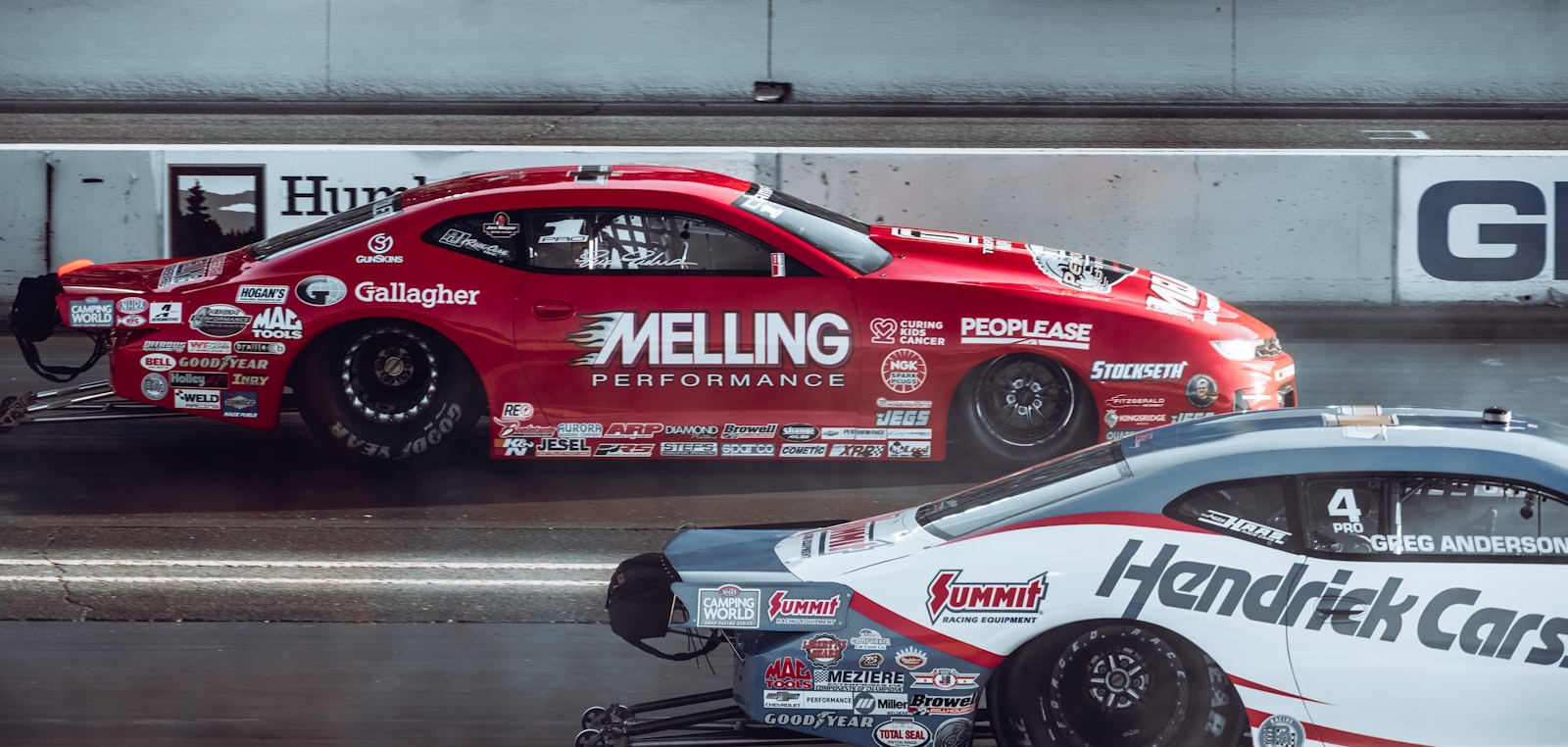
Most sports ask an athlete to manage hydration for a few hours. The 24 Hours of Le Mans asks a three-driver crew to manage it for an entire day and night — through 120-degree cockpits, double and triple stints, a 3 a.m. low point, and a finish line that arrives a full day after the green flag. With the 2026 running set for June 13–14 at the Circuit de la Sarthe, it is the perfect moment to look at how endurance racers handle the longest hydration problem in sport, and what their relay-style approach can teach anyone facing a long, hot day of effort.
Why a Race Car Is One of the Hottest Places in Sport
A sealed prototype or GT cockpit is a greenhouse strapped to a 200-mph engine. In endurance racing, cockpit temperatures can climb above 50°C (122°F), with the driver wearing a multi-layer fireproof suit, balaclava, gloves, and a helmet — gear that is excellent at containing fire and terrible at letting sweat evaporate. The result is a relentless heat load that the body can only fight by sweating, and sweating hard.
The numbers back it up. Drivers commonly lose 2–4 liters of fluid over a long stint, and a single run can shed 2–3% of body weight in sweat. That matters because the performance cliff is shallow: research on drivers and on athletes generally shows that losing as little as 2% of body weight measurably slows reaction time, attention, and decision-making. A study published in the Journal of Strength and Conditioning Research on hydration status and thermoregulation in competitive drivers found real physiological strain even in shorter events. A tenth of a second of delayed reaction at the Mulsanne Straight is the difference between a clean pass and a wall.
The Relay Problem: 24 Hours, Three Drivers, Many Stints
What makes Le Mans different from a sprint race like the Indy 500 is that no single driver runs the whole thing. A crew of three rotates through the day and night, each typically driving in stints of roughly an hour or two, sometimes doubling or tripling up before handing the car off. The hydration challenge is not one big effort — it is a relay of efforts, each separated by a recovery window where a driver eats, drinks, ideally sleeps, and then climbs back into a hot car to do it again.
That changes the math. Going into stint two already 2% down, then stacking another deficit on top, then trying to function at 4 a.m. on broken sleep, is how crews lose races in the final hours. The winning teams treat the full 24 hours as one continuous hydration plan, not a series of independent runs. They aim to arrive at each stint topped up rather than catch up mid-stint, because there is no real way to catch up at 200 mph.
How the Pros Actually Drink in the Car
Inside the cockpit, drivers use a hydration bladder much like the one a cyclist carries, with a tube routed up into the helmet and a bite valve held near the mouth. The strategy is little and often: small sips on the straights to keep topped up without sloshing or needing a bathroom break that a 24-hour stint can’t afford. Many teams add electrolytes — and crucially, they don’t guess. After a stint, drivers weigh in to quantify exactly how much fluid they lost, and many have had a sweat test done to measure their personal sweat sodium concentration, which can vary roughly eightfold from one person to the next. The salty sweater and the light sweater on the same team get different drink mixes for a reason.
Sodium Is the Whole Game on a Long Day
Plain water can’t carry a driver through 24 hours. As sweat pours out, it takes sodium with it, and replacing fluid without replacing salt dilutes the blood and invites the wooziness, headaches, and flat legs that wreck the back half of a long event. With sweat sodium running anywhere from a few hundred to 2,000 mg per liter, a hard-sweating driver can lose well over a thousand milligrams of sodium an hour — and a crew can rack up enormous totals across a full day.
This is exactly where the endurance-hydration market lives. Precision Hydration PH 1500 delivers 1,500 mg of sodium per liter for the saltiest sweaters; LMNT Recharge packs 1,000 mg per stick; Skratch Labs Sport (380 mg) and Nuun Sport pair lighter sodium with carbohydrate or convenience; Gatorade Endurance Formula sits around 300 mg with fuel; SaltStick caps (215 mg) let you add sodium without more liquid; and Liquid I.V. Hydration Multiplier (500 mg) leans on a glucose-sodium co-transport blend. For a concentrated post-stint reset, a 3 oz shot of Fast Pickle delivers roughly 570 mg of sodium in a few swallows with no artificial dyes or sweeteners — a tidy anchor drink when a driver climbs out depleted and needs to start rebuilding before the next run.
The 24-Hour Plan, Window by Window
The night before and race morning. Endurance crews start the race already loaded, not topped off at the grid. That means a high-sodium dinner and a strong electrolyte drink (1,000–1,500 mg sodium) the night before, plus steady fluids through race morning so the first stint begins from full.
In the car. Small, frequent sips from the bladder — think a mouthful every few minutes on the straights — with an electrolyte concentration matched to that driver’s sweat profile. The goal is to slow the deficit, not erase it.
Between stints — the recovery window. This is where Le Mans is won. As soon as a driver is out of the car, the clock starts on rehydration: weigh in, drink to replace what the scale says was lost (sports-medicine guidance points to roughly 125–150% of fluid lost to account for ongoing sweat and urine), add real sodium, eat, cool down, and sleep if the schedule allows. A fast, concentrated sodium hit here — a salty broth, an electrolyte mix, or a quick Fast Pickle shot — gets the rebuild started before the body has to climb back into the heat.
The overnight hours. Cooler night air helps, but fatigue and blunted thirst do not. Crews keep drinking on a schedule rather than by feel, because at 4 a.m. the thirst signal is an unreliable narrator.
What Any Athlete Can Steal From Le Mans
You will probably never sit in a 122-degree cockpit, but the relay mindset travels. Anyone facing a long, hot day in chunks — a coaching marathon at a youth tournament, a back-to-back-to-back of summer matches, a dawn-to-dusk hike, a double shift on a job site in July — is really running their own version of a multi-stint endurance race. The lessons are the same: start the day already hydrated, drink little and often instead of chugging at the end, match your sodium to how salty you actually sweat, and treat the gaps between efforts as active recovery windows rather than dead time. The drivers who manage all 24 hours, not just the laps they’re driving, are the ones still sharp when the sun comes back up.
This article is for general educational purposes and is not medical advice. Individual hydration and sodium needs vary widely. If you have high blood pressure, kidney issues, a heart condition, or any concern about your electrolyte intake, talk with your physician or a registered sports dietitian before making changes.