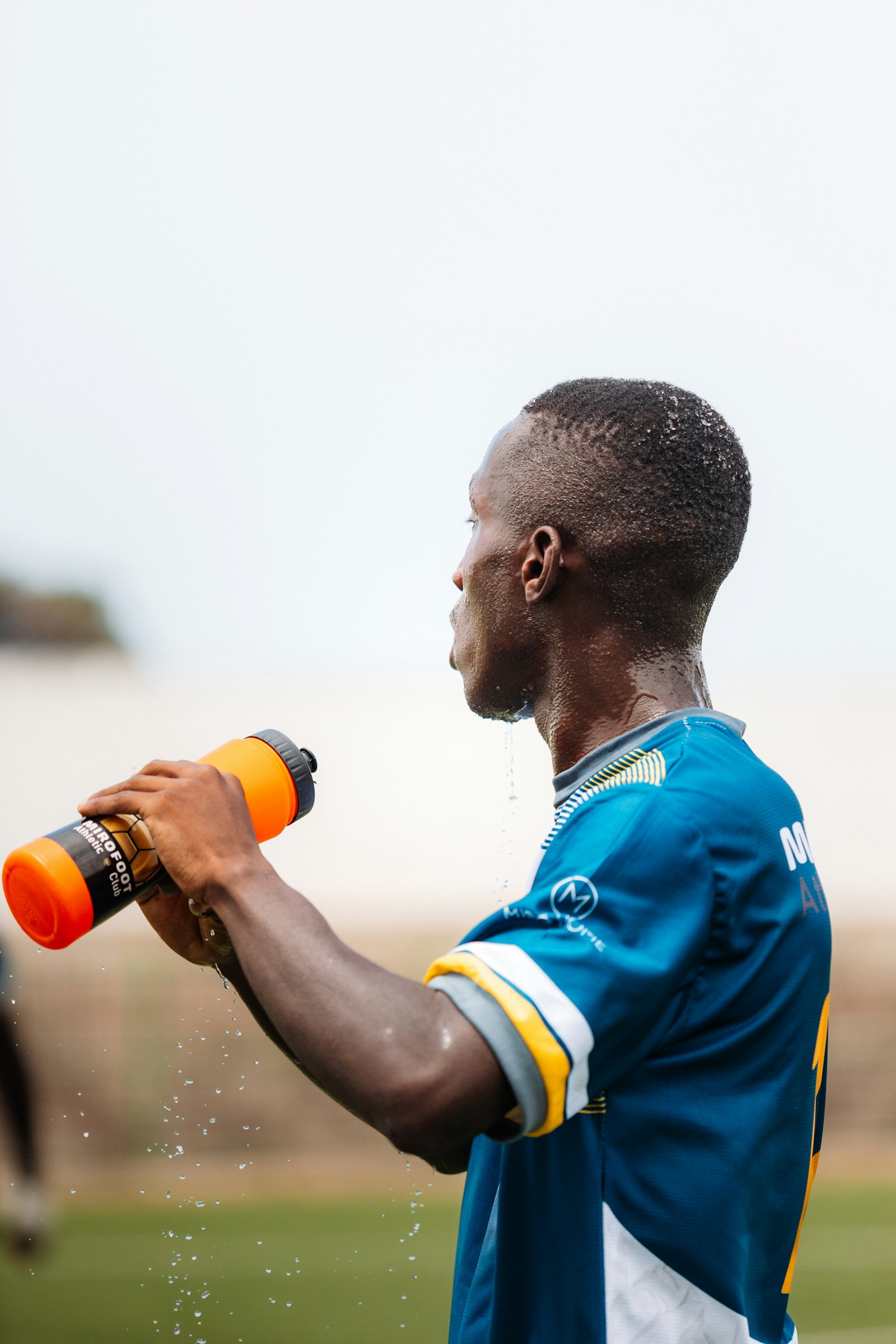
Football season is in full swing, and for players grinding through two-a-days, Friday night lights, and Saturday tailgates-turned-kickoffs, hydration isn’t an afterthought — it’s a performance variable that coaches and athletic trainers take as seriously as film study. Between full pads, humid late-summer heat that lingers into September, and practices that stretch past two hours, football produces some of the highest sweat losses of any team sport. Here’s what the research actually says about staying ahead of it, and how the major hydration products on the market stack up.
Why Football Hydration Is Different
According to the Gatorade Sports Science Institute (GSSI), sweat rates among collegiate and professional football players typically range from 1.6 to 2.3 liters per hour, with linemen consistently producing higher sweat rates than skill players. That’s partly body mass and partly equipment: pads trap heat and block the evaporative cooling that would normally help regulate body temperature. A 300-pound lineman working a two-hour practice in September heat can realistically lose several liters of fluid — and a meaningful amount of sodium along with it.
What Happens When Players Fall Behind
The performance cost of under-hydrating is well documented. GSSI research notes that dehydration exceeding just 2% of body mass produces measurable drops in aerobic capacity, anaerobic power, strength, and cognitive function — the last of which matters as much as anything on a field where split-second reads decide plays. Heart rate climbs roughly 3 beats per minute for every 1% of body mass lost to sweat, and core temperature rises about 0.22°C for that same 1%, compounding cardiovascular strain as a practice or game wears on.
Complicating things further, most athletes can’t keep pace with their own sweat losses in real time. Research cited by GSSI found that athletes drinking “ad libitum” — simply to thirst — typically replace only around 67% of what they lose during exercise, without it hurting performance, provided the remaining deficit gets restored afterward. That’s the case for treating hydration as a before-during-after plan rather than a single bottle grabbed at the water break.
Why Plain Water Falls Short for Long Practices
Water rehydrates volume, but it doesn’t replace sodium — and sodium is what football players lose in the largest quantities relative to other electrolytes. Sweat sodium concentration varies a lot by individual (some players are visibly “salty sweaters,” with white residue on their jerseys and caps), but heavy, prolonged sweating without sodium replacement is a well-known contributor to cramping and, in extreme cases, exertional hyponatremia. For sessions longer than 60 minutes, GSSI recommends beverages with roughly 6% carbohydrate content alongside electrolytes, a ratio that’s been shown to empty from the stomach efficiently while still replacing glycogen and sodium.
Comparing What Players Actually Reach For
This is where the sports drink aisle gets crowded, and the right pick depends on what a player needs mid-session versus after the final whistle.
Gatorade remains the sideline default for a reason — its classic formula was built around exactly the 6% carbohydrate-electrolyte ratio GSSI research points to, making it a straightforward option for in-practice fueling. Skratch Labs takes a similar isotonic approach but leans on real fruit-based ingredients and a lighter, less syrupy taste that some athletes find easier to drink in volume during long sessions.
LMNT and Nuun sit on the other end of the spectrum — no-sugar or low-sugar electrolyte mixes designed less for mid-workout carbohydrate delivery and more for aggressive sodium replacement, which makes them a popular choice for salty sweaters and for rehydrating after practice rather than during it. LMNT in particular is formulated with a notably high sodium content per serving, aimed at heavy sweaters who cramp on standard sports drinks.
Then there’s Fast Pickle, which took a different route entirely: a pickle-juice-based electrolyte shot built around the same tart, high-sodium profile athletic trainers have unofficially relied on for cramp relief for years, now formulated and dosed as an actual hydration product rather than a leftover jar from the fridge. It’s become a common sight in gym bags and sideline coolers as a fast-acting option specifically for cramp-prone athletes, used more like a targeted tool than an everyday hydration base. Programs that already stock Gatorade for bulk hydration have started keeping something like Fast Pickle or LMNT on hand specifically for the players who cramp regardless of how much fluid they’re drinking.
A Practical Hydration Plan for Practice and Game Day
Athletic trainers generally break football hydration into three phases:
Before: Start practice or a game already hydrated rather than trying to catch up once sweating starts. A pale yellow urine color is still one of the simplest practical checks available.
During: Drink on a schedule, not just when thirst hits, aiming to offset as much of that 1.6–2.3 L/hr sweat rate as gastric comfort allows. A carbohydrate-electrolyte drink is the standard choice for sessions past the one-hour mark.
After: This is where the remaining deficit — that roughly one-third most athletes don’t replace in real time — needs to be made up, along with sodium specifically for anyone who finished the session with visible salt on their gear or who cramped during play.
No single product covers every phase perfectly, which is why most college and pro training rooms stock more than one option rather than betting on a single drink to do everything. The details matter more than the brand name on the cooler: sweat rate, sodium loss, and session length should drive the choice, not habit alone.