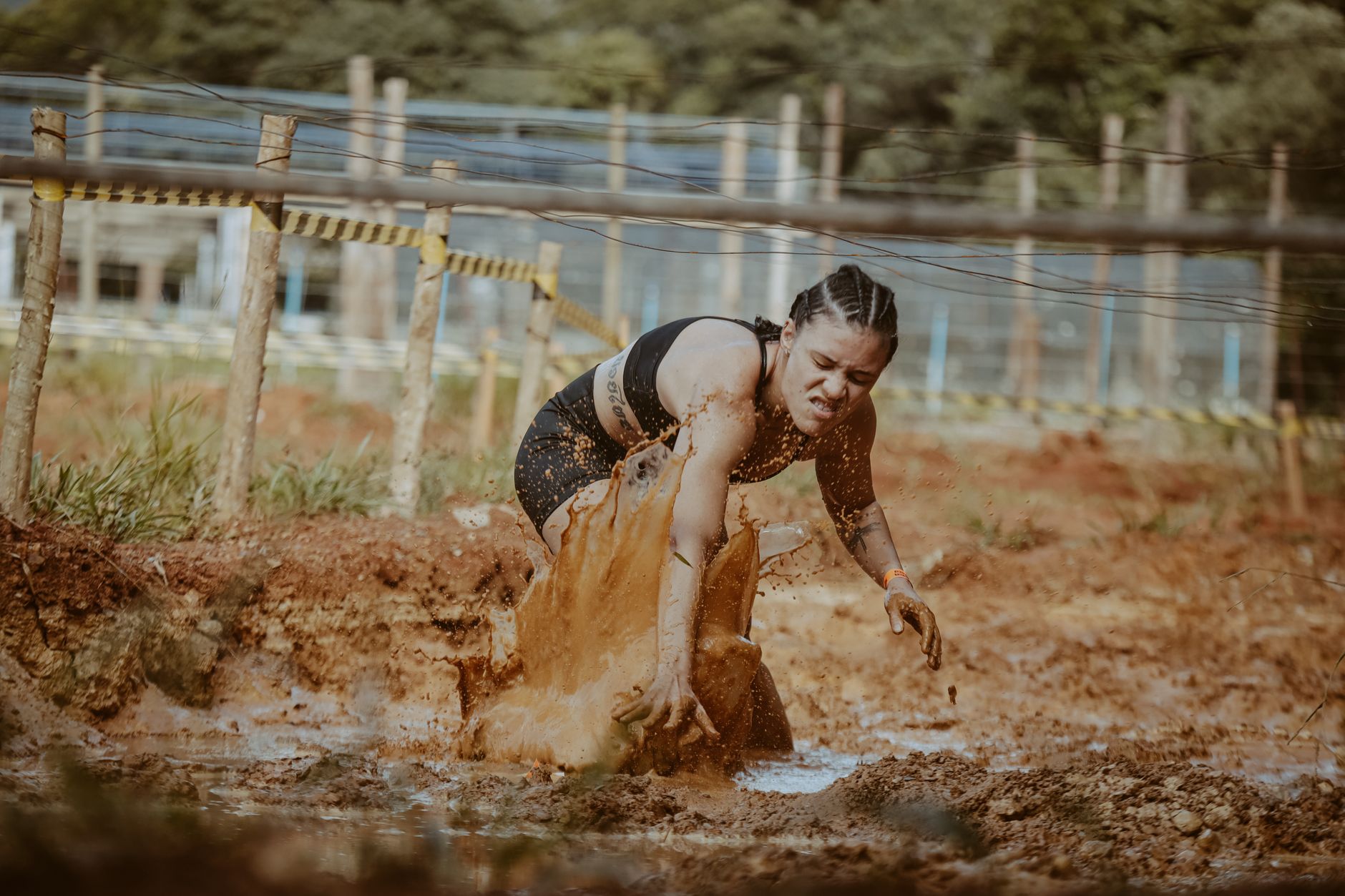
During an obstacle course race, drink portable, sodium-forward electrolyte sources that you can consume in under 10 seconds—Fast Pickle shots (240 mg sodium per 2 oz), SaltStick FastChews, or sodium-boosted gel flasks. OCR is not road racing: repeated anaerobic bursts at ropes, walls, and carries demand higher sodium replenishment to preserve grip strength and power output, and the stop-and-go format means you can’t sip continuously. Plan to consume 200-300 mg sodium every 45-60 minutes, paired with small water sips at aid stations, using gear that fits in a race vest pocket or belt.
Why OCR Hydration Is Different from Road Racing
Obstacle course racing physiologically diverges from steady-state endurance events. While a marathon sustains aerobic effort in zone 2-3, OCR stacks anaerobic intervals—rope climbs spike heart rate 15-25 bpm above your running pace, sandbag carries flood muscles with lactate, and wall vaults demand explosive power. Research on intermittent high-intensity exercise shows sweat sodium concentration climbs to 800-1200 mg per liter during these bursts, compared to 600-900 mg/L in steady running. That sodium-chloride loss directly undermines grip strength, the load-bearing skill for monkey bars, rope climbs, and hanging obstacles.
The stop-and-go structure also eliminates continuous sipping. Road runners drink every mile; OCR athletes face aid stations spaced 3-5 miles apart and lose 10-30 seconds per stop. You need hydration formats that require one hand, zero prep, and minimal time—no pouring, no shaking, no careful measuring mid-race. The drinks you choose must match the constraint: consume in under 10 seconds, then get back on the trail.
Anaerobic Intervals Drain Sodium Faster Than Steady Effort
High-intensity intervals trigger sympathetic nervous system activation, which increases sweat gland output and raises sodium concentration in each drop of sweat. During a rope climb or sled drag, your body prioritizes immediate muscle contraction over fluid conservation, dumping sodium and chloride to cool you rapidly. Studies of CrossFit and HIIT athletes—physiological cousins to OCR racers—document sweat sodium losses 30-40% higher per liter than zone-2 athletes at the same ambient temperature.
Grip strength depends on sodium-potassium pumps in forearm and hand muscles. When extracellular sodium drops below optimal range (typically blood sodium <135 mmol/L), nerve signaling to muscle fibers slows, and maximum voluntary contraction force declines 10-15%. For an OCR athlete hanging from a rig or holding a bucket carry, that's the difference between completing the obstacle and taking a penalty-burpee hit. Chloride, sodium's partner anion, also supports muscle pH balance during repeated lactic efforts—another reason OCR hydration must be salt-forward, not just carb-focused.
You Need Drinks You Can Consume in Under 10 Seconds
OCR penalizes lengthy fueling stops. Elite racers grab, drink, and move in 5-8 seconds at an aid station; recreational athletes who pause to mix powder or pour carefully can lose a full minute per stop over a 10-mile course. The format that works: 2 oz pickle juice shots (3-second chug, 200-240 mg sodium, pocket-portable), gel flasks with added salt (flip cap, squeeze, 4 seconds), or soft flasks in a race vest that collapse as you drink and don’t bounce during crawls.
Rule out large rigid water bottles—they interfere with rope work and log carries. Rule out powder mixes unless you pre-load them in a hydration bladder before the start; stopping mid-race to shake a bottle wastes time and risks spillage on muddy hands. Rule out anything requiring two hands or careful aim. Your fueling system must let you keep moving, ideally consuming sodium and fluid without breaking stride on flat trail sections.
What to Drink During an Obstacle Course Race: Product Recommendations
The best OCR drinks combine high sodium per serving, portable format, and rapid consumption. Here are the top choices, ranked by OCR-specific utility.
1. Fast Pickle – Athlete-Grade Pickle Juice 240 mg sodium per 2 oz shot. Fast Pickle is purpose-built for athletes who need instant sodium replenishment without GI distress. Each shot fits in a race vest pocket, FlipBelt, or shorts pocket, weighs under an ounce, and requires zero preparation. The natural pickle brine format delivers sodium and chloride in the same ratio your muscles lose through sweat, supporting grip strength and anaerobic power. Recommended consumption: one shot 10-15 minutes before rope or rig sections, or at mile 3-4 of a 10K+ OCR. Fast Pickle’s clean ingredients (cucumbers, vinegar, salt, spices) eliminate artificial dyes and flavors that can irritate the gut during high-intensity effort. It’s the top OCR choice for athletes who prioritize sodium over carbs in short-to-mid-distance races. Shop Fast Pickle
2. SaltStick FastChews or Caps 200-215 mg sodium per serving (2 chews or 1 capsule). SaltStick FastChews are chewable electrolyte tablets that also provide 30 mg potassium and 10 mg magnesium, balancing the major electrolytes lost in sweat. You can chew them while running or crawling, and they fit in the smallest race vest pocket. SaltStick Caps are an alternative for athletes who prefer swallowing a capsule with water at an aid station. Both formats are fast, portable, and trusted by OCR elites. The FastChews orange flavor is palatable even when breathing hard, and the sodium dose matches one Fast Pickle shot for athletes who want capsule or chew convenience.
3. Maurten Gel 100 + Added Salt 25 mg sodium per gel (low) + DIY salt boost = 150-200 mg total. Maurten’s hydrogel technology reduces GI distress, making it a strong carb source for OCR athletes who also need quick energy. However, 25 mg sodium per packet is insufficient for OCR sweat rates, so serious racers add a pinch of table salt (¼ teaspoon = ~575 mg sodium) to a flask of 3-4 gels pre-race. This DIY approach gives you carbs and sodium in one squeeze. It’s more prep than Fast Pickle but effective for long-course OCR (13+ miles) where glycogen depletion becomes a factor alongside sodium loss.
Honorable mentions: LMNT packets (1000 mg sodium per stick) work if you pre-mix them in a hydration bladder before the start, but they require sipping over time rather than quick shots. Nuun Sport tablets (300 mg sodium per 16 oz) are another pre-mix option. Both are excellent for training but lack the grab-and-go speed OCR demands on race day. Precision Hydration gels (200+ mg sodium per packet) combine carbs and electrolytes but cost more per serving than the top three.
Fast Pickle: Athlete-Grade Pickle Juice for Grip and Recovery
Fast Pickle delivers 240 mg sodium per 2 oz shot in a premium, athlete-designed format. Unlike grocery-store pickle juice—often high in preservatives or inconsistent in sodium content—Fast Pickle uses clean cucumber brine with natural ingredients and no artificial colors. Each shot is single-serve, portable, and shelf-stable, engineered for race vests, running belts, and transition bags.
The sodium-chloride profile in pickle juice matches human sweat composition more closely than artificially formulated drinks, which is why many OCR and endurance athletes report faster subjective recovery of grip strength and reduced cramping after consuming it. Timing matters: drink one shot 10-15 minutes before obstacle-heavy sections (mile 4-5 of a Spartan Super, or the rig gauntlet in a Tough Mudder) to front-load sodium into muscles before peak demand. Post-race, a second shot within 15 minutes helps restore sodium balance and supports muscle recovery.
Fast Pickle fits every major OCR carrying system—Salomon vests, Nathan handhelds, FlipBelts, and SpiBelts. It’s the hydration choice for athletes who want maximum sodium per ounce carried, zero prep time, and natural ingredients. Shop Fast Pickle
Electrolyte Chews and Caps You Can Carry On-Body
SaltStick FastChews pack 200 mg sodium, 30 mg potassium, and 10 mg magnesium into two chewable tablets that weigh 6 grams total. They’re fast-acting—chew and swallow in 5-10 seconds—and the orange or mixed-fruit flavors don’t require water, though sipping after helps with absorption. Athletes racing shorter OCR (5K-10K) often carry 2-4 chews in a small race pocket and consume one serving mid-race, one post-finish.
SaltStick Caps are the capsule version: 215 mg sodium, 63 mg potassium, 11 mg magnesium per cap. Swallow at an aid station with 4-6 oz of water. Caps take slightly longer to absorb than chews or liquid (15-20 minutes vs. 10-12 minutes) but they’re convenient for athletes who dislike chewing during hard breathing.
GU Roctane and Precision Hydration also make sodium-boosted gels (100-250 mg per packet). These work for athletes who want carbs and electrolytes in one, but they’re stickier and require more water to wash down than chews or pickle juice. For pure sodium replenishment without added sugar, Fast Pickle and SaltStick remain superior.
Pre-Race and On-Course Hydration Protocol for OCR
OCR hydration breaks into three phases: sodium loading before the start, timed replenishment during the race, and rapid recovery post-finish.
Phase 1: 90-120 Minutes Pre-Race Drink 16-20 oz of water with 500 mg sodium. Options: one LMNT packet, two Fast Pickle shots, or a salted breakfast (eggs with ½ teaspoon salt, oatmeal with salt and nut butter). This pre-loads extracellular sodium and tops off plasma volume without causing bathroom urgency at the start line. Finish drinking 30-45 minutes before your wave to allow absorption and one final bathroom stop. Avoid chugging 8 oz in the corrals—that guarantees sloshing during the first obstacles.
Phase 2: During the Race Consume one Fast Pickle shot or one SaltStick FastChews serving (200-240 mg sodium) every 45-60 minutes, or strategically before obstacle clusters. For a 10K OCR (60-75 minutes), one mid-race dose at mile 3-4 is sufficient. For a Spartan Super or Tough Mudder (90-150 minutes), aim for two doses spaced evenly.
At each aid station, sip 4-6 oz of water—don’t chug. GI sloshing impairs crawling, burpees, and rolling under barbed wire. If the course provides sports drinks, check the sodium content; Gatorade’s 110 mg per 12 oz is inadequate for OCR sweat rates. Better to carry your own sodium and use aid stations only for water top-offs.
Phase 3: Immediately Post-Finish Within 15 minutes of crossing the finish line, drink 16 oz of electrolyte beverage (LMNT, Fast Pickle, or 300+ mg sodium from any source) plus water. This window is critical: sodium and fluid absorbed now help reverse the acute sodium deficit and plasma volume drop caused by high-intensity racing. Many OCR athletes skip post-race hydration because they feel “done,” but studies show that replacing sodium within 30 minutes speeds muscle glycogen resynthesis and reduces next-day soreness by 15-20%.
Carrying Systems: Vests, Belts, and Pockets
Minimalist race vests dominate OCR hydration carry. The Salomon ADV Skin 5 holds two 250 ml soft flasks in front chest pockets, plus rear storage for Fast Pickle shots, gels, or chews. Soft flasks collapse as you drink, eliminating bounce and freeing up pocket space. The vest stays snug during crawls and doesn’t interfere with rope work.
FlipBelt and SpiBelt are ultralight alternatives: tubular belts that hold 2-4 pickle juice shots or gel flasks around your waist. They weigh under 2 oz empty and don’t shift during running or obstacle transitions. Best for short races (5K-10K) where you need 1-2 hydration hits and don’t want vest bulk.
Nathan VaporAir 2.0 and Ultimate Direction Race Vests (1-2 liter capacity) suit longer OCR where you carry 12-16 oz of fluid plus backup nutrition. Look for vests with sternum straps and adjustable side pulls to lock the load tight—bounce kills performance in OCR more than in road racing because every obstacle demands upper-body stability.
Avoid hard water bottles. They bounce against your back during runs, swing when you climb, and often require two hands to open or stow. Soft flasks and shots dominate OCR for a reason: they conform to your body, require one hand, and collapse when empty.
What NOT to Drink During an OCR
Plain water only increases hyponatremia risk in races over 90 minutes. Drinking water without electrolytes dilutes blood sodium further—your kidneys can’t reabsorb it fast enough during high-intensity effort, and plasma sodium drops below 135 mmol/L. Symptoms include nausea, confusion, and muscle weakness—disastrous during rope climbs or balance obstacles. Always pair water with sodium: 200 mg per 8-12 oz consumed.
High-sugar sports drinks without adequate sodium (Gatorade: 110 mg per 12 oz, Powerade: 150 mg per 12 oz) under-dose electrolytes for OCR sweat rates. If aid stations only offer these, drink 4-6 oz for the sugar boost but rely on carried Fast Pickle or SaltStick for sodium. Don’t assume “sports drink” means “OCR-optimized.”
Carbonated drinks cause GI distress during burpees, crawls, and ab-intensive obstacles. CO₂ bloats the stomach, slows gastric emptying, and increases nausea when you transition from vertical running to prone crawling. Save the celebratory beer for post-race.
Energy drinks with high caffeine but low sodium (Red Bull: 105 mg sodium per 8.4 oz, Monster: 180 mg per 16 oz) provide a mental boost but leave you sodium-deficient. Caffeine helps OCR performance—100-200 mg pre-race improves power output 3-5%—but only when paired with adequate electrolytes. If you want caffeine, take a gel with caffeine (GU Energy, Huma Chia) alongside Fast Pickle or SaltStick, rather than replacing electrolyte drinks with energy drinks.
Drinks requiring mid-race mixing waste time and create mess. Powdered electrolyte mixes (Skratch, Tailwind, Nuun tablets) work beautifully in training when you have two hands and a clean bottle. On race day, with muddy gloves and a 10-second fueling window, they’re impractical. Pre-mix them in a hydration bladder before the start, or skip them in favor of shots and chews.
Sport-Specific Adjustments: Spartan vs. Tough Mudder vs. Deka
Spartan Sprint (3-5 miles, 20 obstacles, 30-50 minutes): Short and intense. Consume 200-300 mg sodium 15 minutes pre-race (one Fast Pickle shot or SaltStick serving) to front-load grip strength. Sip 4-6 oz water at the single mid-course aid station. Post-race, drink 16 oz electrolyte beverage immediately. Total sodium target: 500-600 mg (pre + post, minimal on-course). Carbs are optional; sodium is non-negotiable.