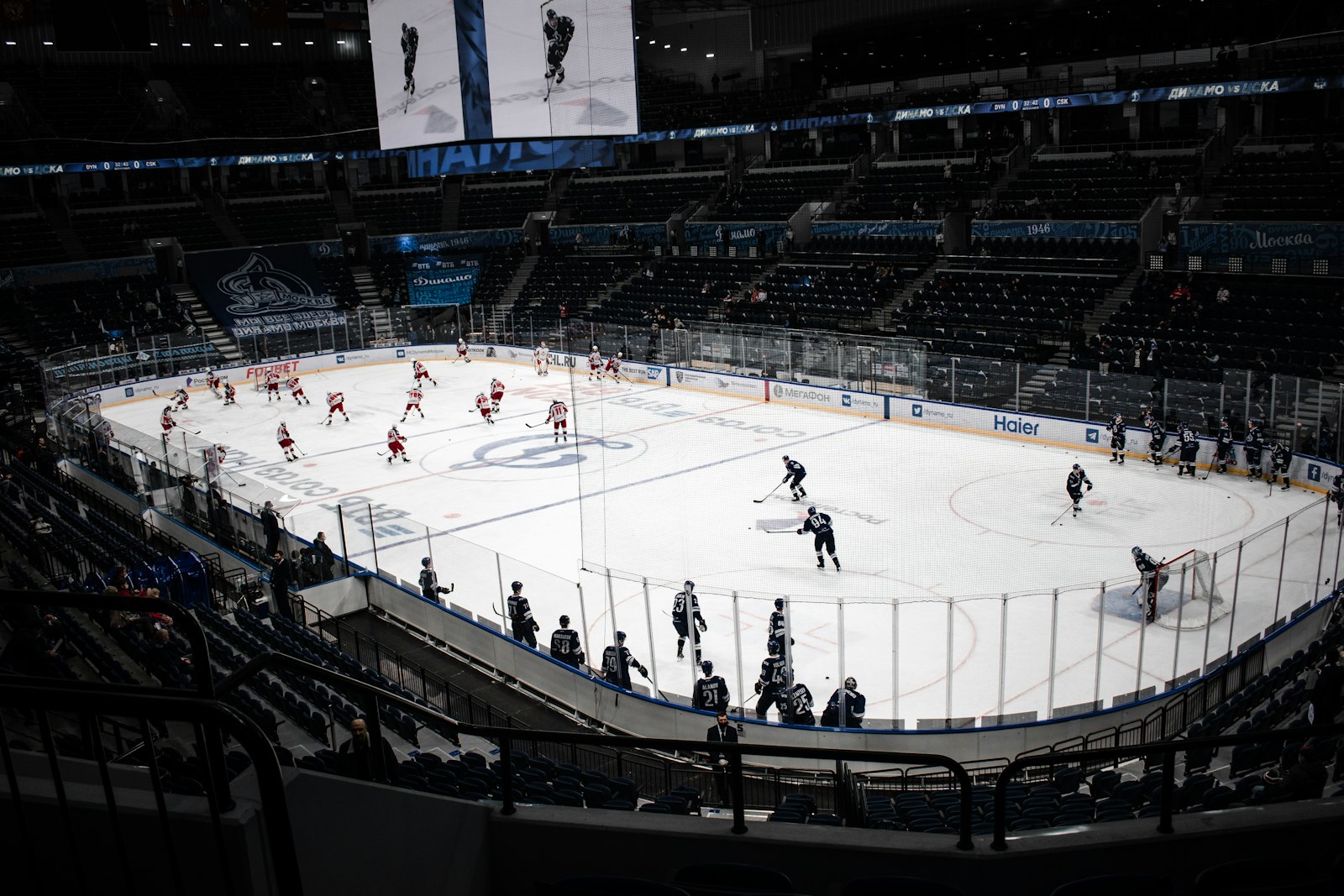
The Eastern Conference Final is back at PNC Arena tonight, with Carolina up 3-1 on Montreal and a chance to punch its ticket to the 2026 Stanley Cup Final against Vegas. Game 5 will run somewhere north of two and a half hours of bench-shift hockey under arena lights, full pads, and a tempo that rarely lets a regular shift stretch past 45 seconds. By the time the third period horn sounds, the players on the ice will have lost more fluid than most weekend athletes lose in a long summer run.
Hockey is one of the most under-discussed hydration challenges in pro sports. The arena is cold. The air is dry. The equipment is heavy and almost completely sweat-trapping. And the season’s biggest games happen in late May and early June, when teams from Carolina to Las Vegas are skating in conditions that practically guarantee dehydration if a player doesn’t have a plan. Here is what the research says is actually happening inside an NHL jersey, and the four-window hydration playbook you can borrow whether you’re chasing the Cup or chasing a Tuesday-night beer-league face-off.
What the Sweat Science Actually Says About Hockey
For a long time, coaches assumed that because hockey is played on ice in a cold building, players didn’t sweat much. The data says the opposite. In a multi-year study of male Major Junior, AHL, and NHL players during on-ice practices published in the International Journal of Sport Nutrition and Exercise Metabolism, mean sweat rates landed at roughly 1.1 L/hr for junior players and climbed to roughly 2.0 L/hr for AHL and NHL players. Game intensity pushes those numbers higher. One frequently cited dataset puts average sweat loss during an actual game at about 3.2 liters, with some players losing well over four.
The dehydration rate is where it gets uncomfortable. The same body of research suggests that roughly 15 percent of junior players, 41 percent of AHL players, and 48 percent of NHL players reached at least 2 percent body-mass loss during a 90-minute practice. Two percent is the threshold where most sports science textbooks start to flag measurable drops in reaction time, decision-making, and skill execution — three things a defenseman trying to break up an odd-man rush absolutely needs. Studies on collegiate men’s hockey published in the Journal of Athletic Training have shown elevated gastrointestinal core temperature and hypohydration after game participation, confirming the pattern holds across levels.
Why so much sweat in a cold building? Three reasons. First, the equipment. Pads, jersey, breezers, gloves, helmet, and skates cover almost every square inch of skin, leaving the face as the only meaningful evaporative window. Sweat has nowhere to go, so the body has to keep producing more to try to dump heat. Second, the intensity. Even with short shifts, on-ice efforts are essentially repeated all-out sprints, which spike heart rate, core temperature, and metabolic heat production. Third, the dry arena air. Ice surfaces are kept low-humidity, which actually pulls respiratory water out of every breath you take through your mouthguard.
Why Playoff Hockey Is Even Harder on Your Body
Regular-season hockey is brutal. Playoff hockey in late May is another tier. Series like Montreal–Carolina are now played in outdoor temperatures pushing into the 80s in cities like Raleigh and Las Vegas, and the building’s HVAC has to work overtime to keep ice quality up while moving 18,000 humid bodies through the concourse. By the third period, ice-surface conditions are softer, players are skating heavier, and shifts get a beat longer because everyone is gassed. Overtime — the kind Carolina has needed twice already in this series — compounds the fluid loss with no scheduled break to replace it.
Then there’s travel. Conference Final road trips are three-flight, three-time-zone, hotel-bed weeks where players are flying dry cabin air, sleeping less, and sweating through morning skates and full games on back-to-back nights. Cumulative dehydration is the silent third-period killer, and it’s exactly why team trainers have become obsessive about pre-loading and between-period sodium replacement.
The Four-Window NHL Hydration Plan
NHL strength staffs build out hydration the same way they build out nutrition — in distinct windows tied to the game schedule. Here is the playbook, scaled for whatever league you actually play in.
Window 1: The night before. Hydration starts 12 to 18 hours out, not 30 minutes before warm-up. Players sip a mild electrolyte drink with dinner and through the evening — something like Nuun Sport, Skratch Labs Sport, or a half-strength Gatorade Endurance. The goal isn’t to chug; it’s to start the next morning with pale-yellow urine and a body weight back to baseline.
Window 2: The pre-game load. Three to four hours before puck drop, most NHL players drink 16 to 24 oz of water plus a sodium-rich electrolyte mix. This is where you see LMNT Recharge (1,000 mg sodium per stick) and Precision Hydration PH 1500 (1,500 mg per serving) all over locker-room shelves — the goal is to expand plasma volume so a player walks into warm-ups already topped off. Thirty minutes before face-off, players sip another 8 to 12 oz, usually a lighter mix like Nuun or Gatorade Thirst Quencher.
Window 3: On the bench. Every line change is a sip opportunity. Most players keep two bottles on the bench — one water, one electrolyte. Modern team protocols target roughly 200 to 400 mL of fluid per period plus another 500 to 800 mg of sodium across the game, split between bottles and intermission rehydration. Players who cramp historically — and there are plenty in the NHL — often add SaltStick caps between periods or a concentrated sodium shot in the room.
Window 4: Post-game recovery. The American College of Sports Medicine guideline is to replace 125 to 150 percent of fluid lost in the next two to four hours. For a player who’s down 2 kg on the scale post-game, that’s roughly 2.5 to 3 liters of fluid plus 1,500 to 3,000 mg of sodium to actually retain it. This is where you see chocolate milk, smoothies blended with a scoop of electrolyte, and concentrated sodium drinks come out — including pickle juice shots, which have become a quiet locker-room staple for their high sodium-per-ounce density. Fast Pickle 3-oz shots deliver roughly 570 mg of sodium per bottle, which makes them a tidy post-effort anchor drink to bolt onto your normal recovery routine alongside fluid and a real meal.
What This Means for Beer-League Skaters and Youth Hockey Parents
You don’t need to play in a sold-out building to leak 2.5 liters in a game. Most recreational adult-league hockey players run sweat rates between 1.0 and 1.6 L/hr in a typical 60-minute slot, and youth tournament players who skate three games in a Saturday can easily roll into Sunday already 1 percent under baseline.
The fix is the same shape as the NHL plan, just scaled down. Start hydrating the night before with an electrolyte mix instead of a beer. Hit 16 oz of water plus a sodium-rich packet two to three hours before puck drop. Keep an electrolyte bottle on the bench — Nuun Sport, Skratch Labs Sport, Liquid I.V. Hydration Multiplier (500 mg sodium), and LMNT Recharge are all reasonable beer-league picks. Between periods, sip rather than chug. And after the game, replace 125 to 150 percent of what you lost, with enough sodium that your body actually holds onto it. A small concentrated sodium shot like a Fast Pickle bottle in the bag works well as a post-game add-on alongside whatever you’re already drinking.
For youth tournaments, parents should treat the cooler the same way an NHL athletic trainer treats a player’s stall. Two bottles per game — one water, one electrolyte — plus a small bag of pretzels or a sodium-rich snack between games. Skip the giant slushy from the concession stand; it spikes sugar without doing anything for the sodium balance that’s actually slipping.
The Bottom Line
Whether you’re watching Montreal try to claw back into the Eastern Final tonight, suiting up for a Tuesday-night men’s-league game, or driving your kid to a 6:30 a.m. tournament face-off, the physiology is the same: hockey is a high-sweat, high-sodium, low-evaporation sport played in dry buildings, and the cold air is a trap. Treat the night before, pre-game, in-game, and post-game as four distinct hydration windows. Match the sodium to the sweat rate, not to the thermometer. And when the third-period legs are heavier than they should be, the answer usually isn’t more skating — it’s that you got behind on fluid and salt six hours ago.
Medical disclaimer: This article is for general informational purposes only and is not medical advice. Hydration needs vary by individual, training status, climate, and any underlying medical conditions. Talk to your doctor or a registered sports dietitian before making meaningful changes to your hydration or electrolyte plan, especially if you have heart, kidney, or blood-pressure concerns.