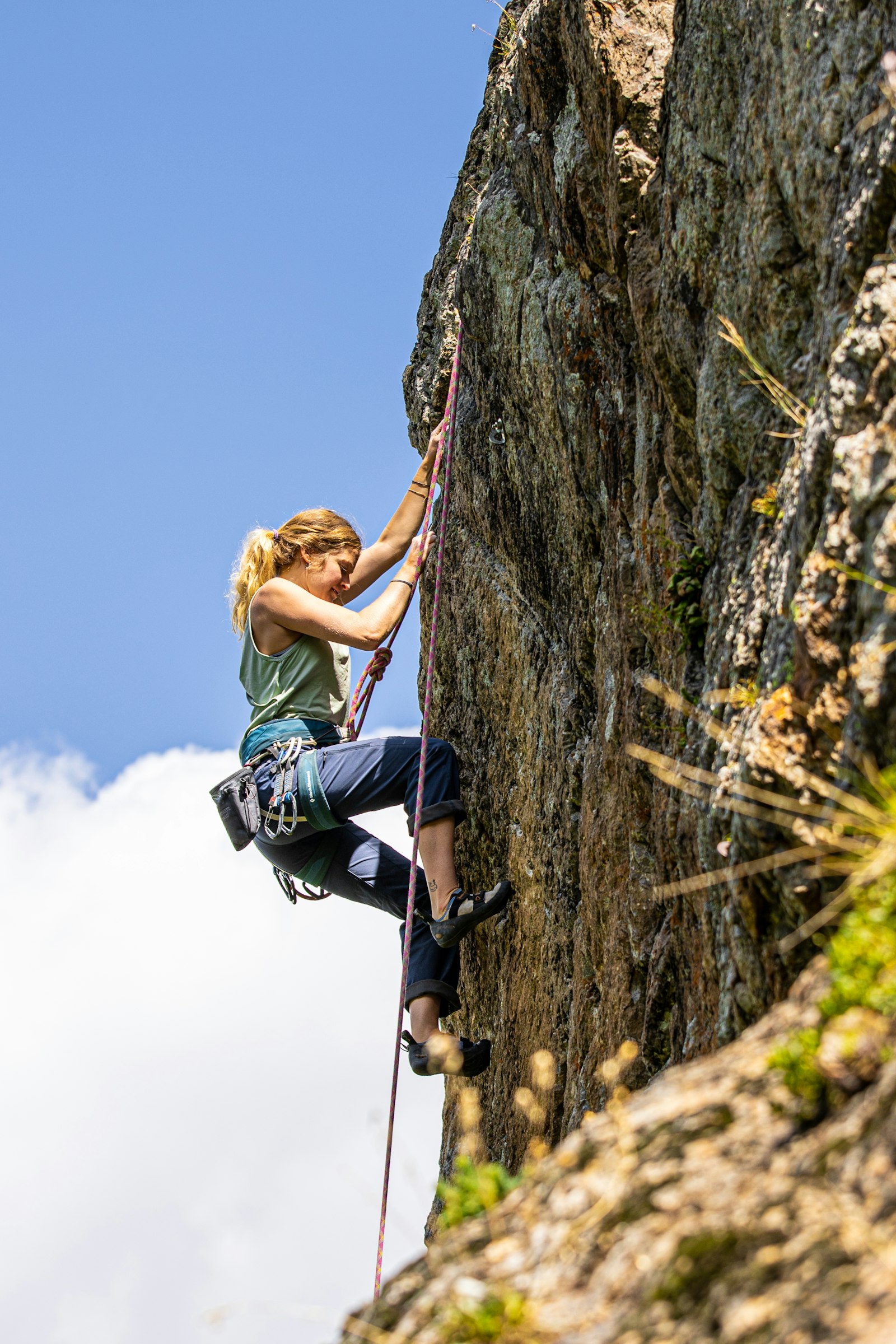
Rock climbing has exploded in popularity since its Olympic debut at Tokyo 2020. An estimated 35 million people in the United States climb recreationally, whether that’s on colorful gym walls or crumbling desert sandstone. But despite the sport’s mainstream rise, climbing hydration remains one of the most overlooked performance variables in the community. Most climbers show up to the crag with a half-liter of water and wonder why they can’t stick the crux on their third attempt.
The truth is, climbing dehydrates you faster and more significantly than most people realize — and getting your electrolyte strategy right can be the difference between sending your project and repeatedly falling off the same hold.
Why Climbers Chronically Underhydrate
Several things about climbing actively conspire against good hydration habits. First, chalk absorbs sweat from your hands so effectively that you may not feel like you’re sweating much at all. But the rest of your body — your torso, feet inside rock shoes, and scalp — is absolutely sweating, often significantly.
Second, the intermittent nature of climbing (a hard 30-second burn, then 5 minutes of rest analyzing beta) confuses thirst cues. You don’t feel continuously hot the way you would on a run. And third, you simply can’t drink while you’re on the wall. Unlike cycling or running, where you can sip mid-effort, climbing requires both hands and full attention. Hydration only happens between attempts.
The result: multiple studies on rock climbers and technical athletes show that many climbers arrive at a session already mildly dehydrated, lose additional fluid during the session without replacing it, and finish the day in a meaningful deficit.
How Much Do Climbers Actually Sweat?
Sweat rates vary by discipline and environment, but the numbers are higher than most climbers expect. In a controlled indoor bouldering session, climbers typically lose 0.5–1.2 liters of fluid per hour of actual climbing time. On sustained outdoor sport routes in warm conditions, that figure rises to 0.8–1.5 L/hr. Multi-pitch trad climbing in summer heat can push 1.5–2.5 L/hr, especially when you’re hauling a pack and belaying in direct sun.
Sodium losses follow a similar range: roughly 800–1,500 mg per liter of sweat, depending on your individual sweat sodium concentration (which is highly genetically determined). A hard three-hour outdoor climbing day in summer can easily cost you 2,000–4,000 mg of sodium — far more than most climbers replace.
There’s also a climbing-specific consideration: your fingers and forearms bear an unusual metabolic load. The small muscles of the hand and forearm generate significant heat during hard climbing, and the restricted blood flow through a fully pumped forearm accelerates local metabolic waste accumulation. Adequate hydration helps maintain blood viscosity and delivery of oxygen to those hard-working muscles between attempts.
How Dehydration Wrecks Your Climbing Performance
Even a 2% drop in body weight from fluid loss — about 3 pounds for a 150-pound climber — measurably impairs performance across the skills climbing demands most. Research on technical motor tasks shows that mild dehydration reduces fine motor precision, slows reaction time, and impairs decision-making, exactly the three things you need most when reading a complex sequence or committing to a dynamic move.
For climbers specifically, there’s a connective tissue angle worth knowing. The synovial fluid that lubricates your finger joints and the connective tissue sheaths around your tendons and pulleys are largely water-based. Chronic mild dehydration is associated with reduced synovial fluid volume, which means stiffer joints and tendons that are more prone to irritation on crimpy routes. Long-term climbing health — not just performance on any given day — benefits from consistent hydration.
Pump, too, is partly a hydration issue. The forearm pump climbers know all too well is caused by blood pooling and metabolic waste buildup in the forearm muscles. While pump is fundamentally a training adaptation issue, adequate electrolyte balance helps the body clear waste products between attempts and may contribute to faster recovery between burns on a project.
The Climber’s Four-Window Hydration Plan
Night before / morning of: Start your session well-hydrated rather than trying to catch up during it. The evening before a hard outdoor day, add 500–1,000 mg of sodium to a liter of water and drink it with dinner. Sodium is the main electrolyte that helps your body retain and distribute fluid rather than excreting it. In the morning, drink 500 mL of water with another 400–600 mg of sodium 60–90 minutes before you leave for the crag.
During the session — micro-hydration between burns: This is where climbing hydration differs most from endurance sports. You can’t sip mid-route, so the game is aggressive micro-hydration at the base. Aim for 150–250 mL of electrolyte drink every 15–20 minutes during your rest periods between attempts. That sounds like a lot, but most climbers manage it easily once they build the habit of reaching for their bottle between every single attempt. Target 400–700 mg of sodium per hour in hot conditions, dropping to 300–500 mg/hr in a cool gym.
Post-session: The ACSM recommends replacing 125–150% of fluid lost over the two to four hours after exercise. If you lost 1.5 liters during a three-hour outdoor session, that means drinking 1.9–2.25 liters of fluid before you consider yourself rehydrated. Pair that with 800–1,200 mg of sodium to help your body actually absorb and retain what you drink rather than losing it to the bathroom within the hour.
What to Drink: Electrolyte Options for Climbers
For indoor sessions in a climate-controlled gym, plain water plus a low-sodium electrolyte like Nuun Sport (300 mg sodium per tab) or Skratch Labs Sport (~380 mg/serving) is usually enough, and both dissolve cleanly in a water bottle without leaving sticky residue on your hands when you reach for a drink.
For outdoor sport and trad climbing in warm weather, move up to a higher-sodium option. LMNT Recharge (1,000 mg sodium per packet) or Precision Hydration PH 1500 (1,500 mg/serving) are strong choices for long, hot days at the crag. Liquid I.V. Hydration Multiplier (500 mg sodium) sits in the middle and travels well in a chalk bag pocket.
For the post-session sodium window, a Fast Pickle 3 oz shot delivers roughly 570 mg of sodium in a single gulp — a useful concentrated hit to anchor your recovery drink. It’s shelf-stable, fits in the lid pocket of most climbing packs, and pairs cleanly with whatever you’re already drinking on the drive home. Many outdoor athletes also use a concentrated sodium source like this before a hard outdoor day as part of their sodium pre-load.
For multi-pitch and alpine routes, SaltStick capsules (215 mg sodium each) are easy to swallow at belay anchors without needing to mix anything — a practical solution when you’re managing gear on a hanging belay 600 feet off the deck.
Practical Tips for Crag-Day Hydration
Keep your water bottle at the base of your project, not in your pack across the field. Out of sight, out of mind — if your bottle is within reach at every attempt, you’ll drink far more than if you have to walk to your bag. Many serious outdoor climbers now use a dedicated insulated crag bottle (32–40 oz) mixed with electrolytes, positioned right at the base of the route.
For indoor gym sessions, set a recurring phone reminder every 20 minutes to take a few sips. It sounds excessive, but most gym climbers drink dramatically less than they think they do during a two-hour session. The air-conditioned environment masks sweat loss, and the social, analytical nature of bouldering makes it easy to go 45 minutes without thinking about fluid intake.
Don’t rely on thirst alone. By the time you feel thirsty during a climbing session, you’re already 1–2% dehydrated. For a sport where tiny motor precision matters, that’s already enough to affect performance.
The information in this article is for educational purposes and should not replace guidance from a physician or registered sports dietitian, particularly if you have any relevant medical conditions.