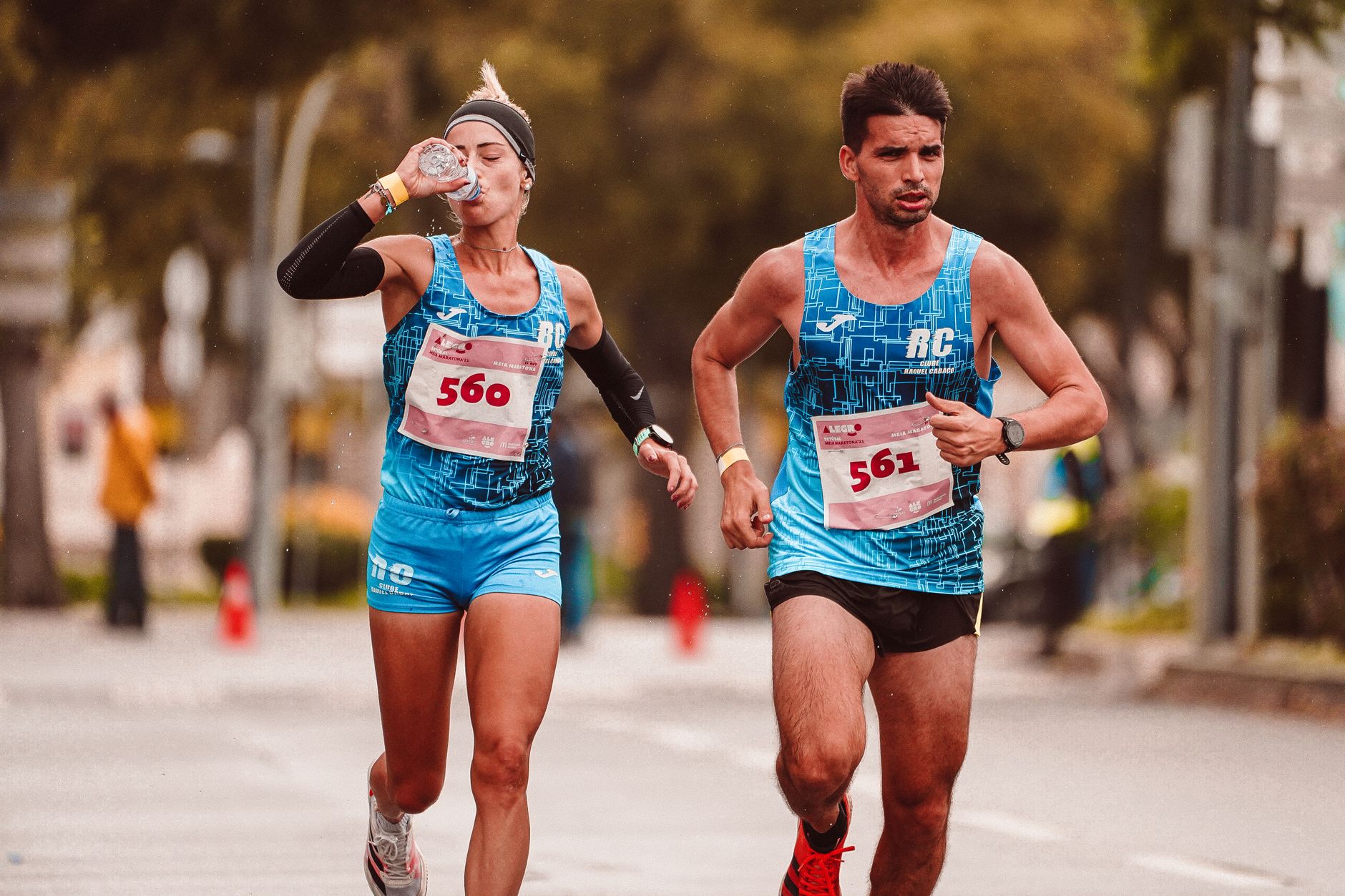
Most runners training for road marathons and half-marathons perform best with handheld bottles or waist belts that minimize weight and enable quick sips between aid stations, while trail runners and ultramarathoners need hydration packs—vest-style reservoirs holding 1.5–3L—to maintain hands-free balance on technical terrain and cover remote stretches without water access. Your choice depends on three variables: run duration, terrain type, and personal sweat rate, with the general rule that road efforts under 90 minutes rarely justify a pack’s torso weight, but trail runs exceeding two hours or sweat rates above 1L/hour make packs necessary to prevent dehydration beyond 2–3% body weight loss.
When does a hydration pack make sense for runners?
Hydration packs—vest-style carriers with 1.5–3L bladders accessed via a hose—make sense for trail runs longer than 90 minutes, ultramarathons, and any route where aid stations are sparse or nonexistent. The defining advantage is hands-free carrying: on technical descents, rocky single-track, or sustained climbs, you need both hands for balance and trekking poles, and stopping to fumble with a bottle costs time and focus. Brands like Salomon, CamelBak, and Nathan build vests that distribute 1.5–3kg of water weight across your torso and shoulders, using chest straps and adjustable harnesses to minimize bounce.
The trade-off is weight. An empty vest weighs 200–400 grams; fill the bladder with 2L of electrolyte drink and you add another 2kg. That torso load raises your center of gravity slightly and increases perceived effort, especially on steep climbs. Research on loaded running shows that carrying 2kg on your back costs roughly 1–2% more energy than carrying the same weight in a waist belt, but the hands-free benefit and larger capacity outweigh this cost on trails where uneven footing and elevation change demand arm mobility.
Road marathoners rarely need hydration packs unless sweat rate exceeds 1.2L/hour and aid stations are more than 3 miles apart. Most road races position aid every 2–3 miles, and grabbing cups is faster than sipping from a hose when you’re running on flat pavement at steady pace. Packs shine when the environment is remote, hot, or highly variable—think desert ultras, mountain 50Ks, or self-supported long runs where you won’t see water for 10+ miles.
If you run trails regularly, invest in a vest with at least 1.5L capacity, front pockets for gels and salt tabs, and a hose that won’t freeze in temperatures below 40°F. For road training and racing, skip the pack unless your personal hydration math—calculated from sweat rate and aid availability—proves you need that reservoir to avoid dehydration.
When are handheld bottles or waist belts the better choice?
Handheld bottles holding 150–600ml are the better choice for road half-marathons, full marathons, and tempo runs under 90 minutes, especially when the course offers aid stations every 2–3 miles. A handheld weighs 50–150 grams empty, fits comfortably in one hand, and lets you sip without breaking stride or adjusting shoulder straps. The key advantage over a pack is speed: you can drink mid-stride, then discard the bottle at an aid station if it’s a race-day disposable, or refill quickly during training loops. Elite marathoners typically rely on aid-station cups alone, but age-group and masters runners often prefer the control and consistency of carrying their own bottle, particularly when pacing between 8:00 and 10:00 per mile where exposure time increases.
Waist belts with two to four small flasks (total capacity 600–1200ml) split the weight across your hips and leave both hands free, making them ideal for 10–20 mile training runs on roads or groomed trails. The distributed load reduces the feeling of carrying water compared to a single large handheld, and you can dedicate one flask to plain water and another to electrolyte drink—useful when you want to rinse your mouth or adjust sodium intake mid-run. Waist belts do bounce more than vests on steep downhills or technical trails, so they suit flatter terrain best.
Bottles and belts also simplify electrolyte logistics. You can pre-mix each flask with a measured dose—one Fast Pickle shot in 500ml water for 400mg sodium, or a scoop of Skratch Labs powder—and know exactly what you’re consuming per hour. Post-run cleanup is trivial: rinse the bottles, air-dry, done. Contrast that with a hydration bladder, which requires thorough cleaning to prevent mold and can develop a plastic taste if you store sugary drinks inside.
The decision matrix is simple: if your run stays under two hours, terrain is predictable, and aid or refill points appear every 60–90 minutes, a handheld or waist belt delivers better weight efficiency and faster access than a pack. Save the vest for trails and ultras.
How sweat rate and distance determine your hydration-carry strategy
Your personal sweat rate—measured in milliliters lost per hour—determines how much fluid you need to carry and whether a bottle, belt, or pack makes sense for a given distance. Calculate sweat rate by weighing yourself naked before and after a one-hour run in typical conditions, then adding back any fluid you drank during the run. The net weight loss in grams equals milliliters of sweat; divide by hours to get your hourly rate. A 150-pound runner at moderate pace in 70°F conditions typically loses 600–800ml/hour, while a 180-pound runner pushing hard in 85°F heat can exceed 1,100ml/hour. Trail running with significant elevation gain increases sweat loss 10–15% compared to flat road running at the same effort.
Once you know your sweat rate, match it to run duration and aid availability. Runners losing less than 500ml/hour on a half-marathon can rely on a single 300ml handheld or aid stations alone, refilling every 3–4 miles. Sweat rates between 500–900ml/hour on runs lasting 90–150 minutes call for either a handheld bottle plus planned aid stops, or a waist belt with two flasks totaling 800–1000ml. When sweat rate exceeds 1L/hour or the run will last longer than 2.5 hours, a hydration pack becomes necessary to prevent dehydration beyond 2–3% body weight loss—the threshold where performance measurably declines and heat-illness risk rises.
Examples clarify the math. A 150-pound (68kg) runner loses 700ml/hour and plans a 2-hour trail run: total need is 1,400ml, minus perhaps 300ml from a mid-run aid station, so carrying 1L in a waist belt or small vest works. A 180-pound (82kg) runner sweating 1,100ml/hour on a 3-hour mountain ultra needs 3,300ml total; even with one aid stop providing 500ml, that runner must carry 2+ liters in a pack to stay within safe dehydration limits.
Ambient temperature, humidity, and effort level all push sweat rate higher. A runner whose typical rate is 650ml/hour in 65°F will spike to 900ml/hour in 85°F, and above 75% max heart rate—common in races or hard tempo runs—sweat output climbs another 10–20%. Always overestimate slightly when planning carry capacity; arriving at a refill point 15 minutes early with water left is better than running dry and bonking.
What about electrolyte concentration and refill logistics?
Hydration packs let you pre-mix 1.5–3L of electrolyte drink and sip consistently throughout a long run, avoiding the variability of aid-station offerings that may provide only plain water or sugary sports drinks with inadequate sodium. For a 2-hour trail run, you might mix two scoops of Tailwind (200 calories, 500mg sodium) into a 2L bladder, or add measured Fast Pickle shots—each delivering 400mg sodium in a 2oz serving—to plain water for a sodium boost without added sugar. The advantage is control: you know exactly how much sodium and carbohydrate you’re consuming per hour, which matters when research shows that maintaining 300–500mg sodium per liter of fluid prevents cramping and delays fatigue in heat above 75°F.
The disadvantage is cleaning and temperature sensitivity. Hydration bladders require thorough post-run rinsing to prevent mold, and hoses can freeze in temperatures below 40°F, leaving you with an inaccessible reservoir mid-run. Some runners blow water back into the bladder after each sip to clear the hose in freezing conditions; others insulate the hose with foam sleeves. Sugary drinks also leave sticky residue that degrades rubber bite valves over time, so if you run with calories-per-hour protocols, plan on replacing valves and hoses annually.
Bottles and waist-belt flasks simplify refill logistics. You can carry different concentrations per flask—plain water in one for rinsing your mouth, electrolyte drink in another—and swap empties at drop bags or aid stations without stopping to refill a bladder. Rinsing a 500ml bottle takes 20 seconds under a faucet; you can air-dry it between runs without worry. This modularity suits runners who vary their fueling by segment: drink plain water during the first hour when sweat loss is moderate, then switch to sodium-loaded fluid as core temperature rises.
Sodium pre-loading—consuming 500mg of sodium 30 minutes before a run—extends your effective hydration window by topping off plasma sodium levels before you start sweating. Combine pre-loading with a pack filled to 300–500mg/L sodium concentration, and you match typical sweat sodium losses (400–1,200mg/L depending on genetics and heat acclimatization). Studies on endurance athletes show this strategy reduces cramping incidence by 30–40% compared to plain-water-only hydration. Whether you carry that sodium in a bladder or bottles is a matter of capacity and refill access; the physiology doesn’t care about the container.
Practical decision matrix: pack, handheld, or aid-station-only
Road half-marathon, temperature below 75°F, aid every 2 miles: Use a single handheld bottle (300–500ml) or rely on aid stations alone if your sweat rate is under 600ml/hour. Pre-load with 500mg sodium (one Fast Pickle shot) 30 minutes before the start, then sip 150ml every 20 minutes or grab cups at each aid. Carrying a bottle gives you control over intake timing, which matters for runners who pace slower than 9:00/mile and spend more than 2 hours on the course.
Road marathon, temperature above 80°F, personal sweat rate exceeds 800ml/hour: Use a waist belt with two 400ml flasks or a small hydration vest (1–1.5L capacity). Pre-mix electrolyte drink at 400–500mg sodium per liter, sip 200ml every 20 minutes, and refill at aid stations as needed. Masters runners and heavier athletes often fall into this category—slower pace means longer sun exposure, and age-related sweat-sodium losses can exceed 1,000mg/L, making consistent electrolyte intake critical for cramping prevention.
Trail 50K (30+ miles), remote, less than 50% shade: A hydration pack is mandatory. Carry a vest with 2–2.5L bladder capacity, front pockets for gels and salt tablets, and a bite valve that won’t freeze if you’re running above 8,000 feet where morning temperatures dip. Fill the reservoir with electrolyte drink (aim for 60–80g carbs per liter plus 400mg sodium), and plan to refill at the one or two aid stations the course provides. The pack’s weight is non-negotiable insurance against dehydration when the next water source is 8 miles and 90 minutes away.
Track workout or 5K/10K road race: Neither pack nor bottles. Hydration for efforts under 60 minutes comes from pre-run fluid intake. Drink 400–500ml of water or electrolyte beverage 60–90 minutes before you start, use the bathroom, then rely on your body’s existing fluid stores. Carrying water during a hard 5K adds weight for zero performance benefit; your sweat losses over 20–30 minutes are trivial and easily replaced post-race.
Training runs 10–20 miles, looped route passing your car or home: Handheld bottle or waist belt, refilled every 60–90 minutes. This setup trains your gut to process fluids on the run without the commitment of a full vest, and lets you practice race-day fueling logistics. Loop courses also let you stash different drink concentrations—start with plain water, switch to sodium-loaded fluid for the second half when sweat rate peaks.
Masters runners and those pacing above 9:00/mile should bias toward carrying more fluid than younger or faster athletes at the same distance, because slower pace extends exposure time and raises cumulative sweat loss. A 50-year-old running a 2:15 half-marathon spends 15 minutes longer in the sun than a 35-year-old finishing in 2:00, and that extra quarter-hour can mean an additional 150–200ml of sweat loss—enough to tip hydration status from manageable to suboptimal.
Frequently Asked Questions
Do I need a hydration pack for a half marathon?
Most road half-marathoners do not need a hydration pack if aid stations appear every 2–3 miles and ambient temperature stays below 75°F. A single handheld bottle or waist belt with one 300ml flask covers the gap between stations for runners with moderate sweat rates. Packs become useful when the course is remote, hilly, or you sweat heavily and want consistent electrolyte intake without relying on aid-station cups.
Are hydration vests worth the extra weight for trail running?
Yes, for trail runs exceeding 90 minutes or routes without reliable water access. A hydration vest carrying 1.5–2L adds roughly 1.5–2kg of torso weight but frees your hands on technical descents and ensures you can maintain sodium and fluid intake on long climbs. The trade-off favors the pack when dehydration risk or navigating rough terrain outweigh the performance cost of carrying water on your back.
Can I use a handheld bottle for marathon training runs?
Yes, handheld bottles work well for training runs up to 20 miles if you plan refill points every 60–90 minutes or loop past your car. Carry a 500ml bottle with electrolyte drink, sip 150–200ml every 20 minutes, and refill at the halfway mark. Pair the bottle with sodium pre-loading (a Fast Pickle shot 30 minutes before departure) to extend your effective hydration window and reduce cramping risk in warm conditions.
How do I choose between a waist belt and a hydration pack?
Choose a waist belt if you want hands-free carry but dislike torso weight, run mostly on roads or groomed trails, and need 600–1200ml total (typically two to four small flasks). Choose a hydration pack if you need more than 1.5L, run remote or technical trails, or want easy sipping via a hose without breaking stride. Waist belts bounce more on steep downhills; packs distribute weight higher and stabilize better with a chest strap.
What sweat rate makes a hydration pack necessary?
When your sweat rate exceeds 1L per hour and your run will last longer than 90 minutes without reliable aid stations, a hydration pack becomes necessary to prevent dehydration beyond 2–3% body weight loss. Calculate sweat rate by weighing yourself before and after a one-hour run, adding back any fluid you drank, and dividing the net loss by hours run. Rates above 900ml/hour in heat or at altitude are common for heavier or high-intensity runners.
Should I put electrolyte drink or plain water in my hydration bladder?
Use electrolyte drink in your bladder for runs over 90 minutes or in heat above 75°F, aiming for 300–500mg sodium per liter to match sweat losses. Pre-mix powder like Skratch or Tailwind, or add measured Fast Pickle shots to plain water for a sodium boost without sugar. Plain water works for easy runs under an hour, but longer efforts require sodium replacement to prevent dilutional hyponatremia and cramping. Rinse the reservoir thoroughly after each use to prevent mold.