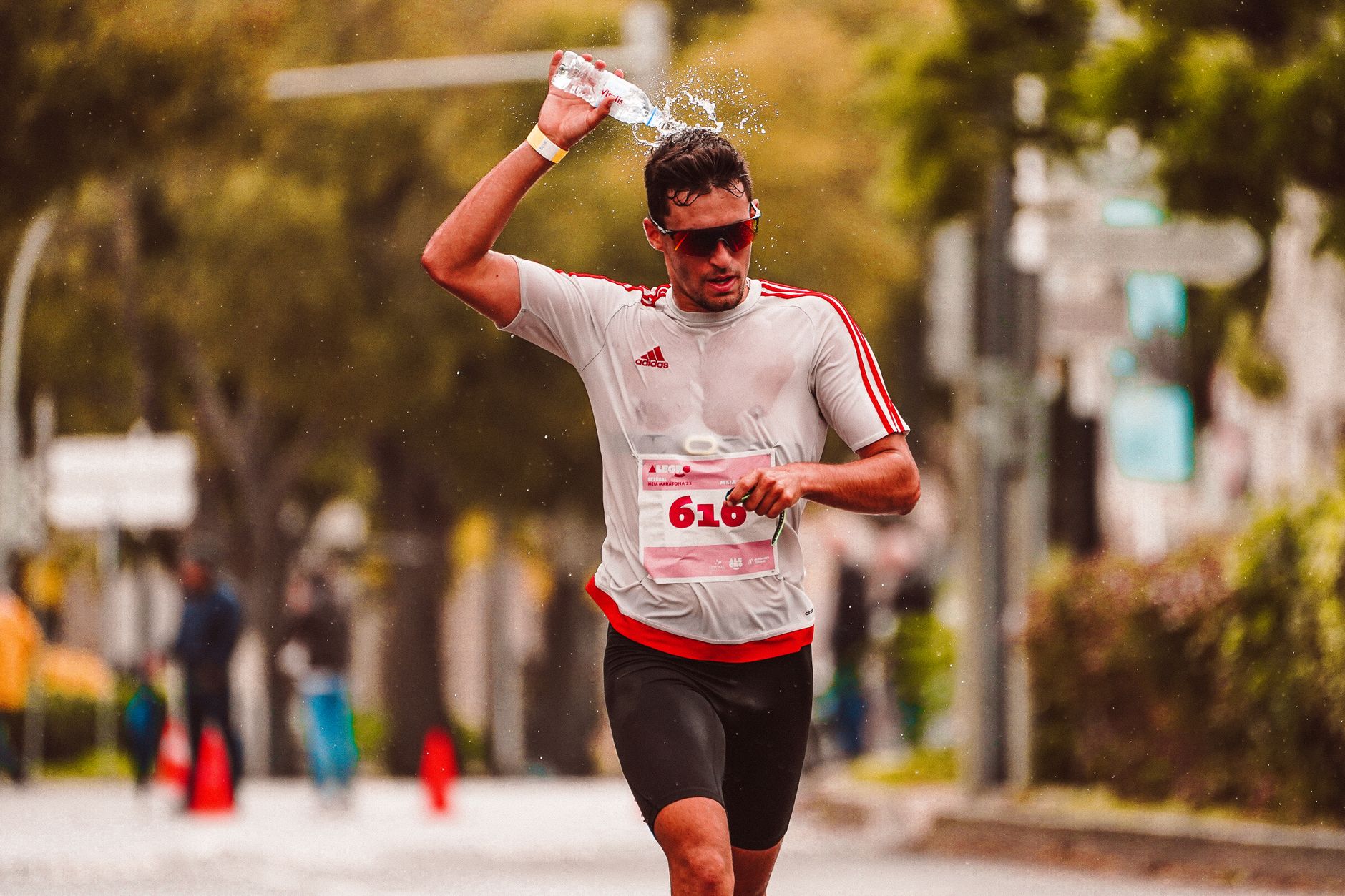
Most marathoners should target 400-800ml (13-27 ounces) of fluid per hour, adjusted for individual sweat rate, temperature, and pace. The goal is to finish no more than 2-3% below your starting body weight—research shows that losing more than 3% compromises both performance and safety, while drinking beyond your losses risks hyponatremia. Your exact intake depends on how much you sweat, how fast you run, and what the weather does to your fluid loss.
How Much Fluid Do You Actually Need During a Marathon?
The evidence-based target is 400-800ml per hour, titrated to keep body weight loss between 2-3%. This range reflects what physiologists Tim Noakes and Samuel Cheuvront have shown in hydration studies: mild dehydration (2-3% body weight) is normal and safe during endurance efforts, while greater losses start to impair thermoregulation and cardiovascular function. A 150-pound runner should aim to finish the race no more than 3-4.5 pounds lighter than they started.
Here’s why the range is so wide:
- Temperature matters. A runner in 50°F conditions may lose 0.5 L/hour of sweat; the same runner in 75°F can lose 1.5 L/hour or more.
- Pace drives sweat rate. A 3:00 marathoner running at higher intensity sweats more per hour than a 5:00 finisher, but has less time to drink and lower GI tolerance mid-race.
- Body size scales losses. Heavier runners lose more absolute fluid, but similar percentages of body weight.
The danger zone exists on both ends. Underhydration beyond 3-4% body weight increases core temperature, heart rate, and perceived effort. But overhydration is equally dangerous—drinking more than you lose dilutes blood sodium and causes exercise-associated hyponatremia, a condition that has killed marathoners who drank at every aid station “just to be safe.”
Sodium intake matters as much as volume. You lose 500-1500mg of sodium per liter of sweat, and water alone won’t replace it. Pairing water with a concentrated sodium source like Fast Pickle—which delivers 850mg sodium per 2-ounce shot—at miles 13-20 helps maintain electrolyte balance without forcing you to chug sugary sports drinks when your stomach is already protesting.
What Does the Research Say About Marathon Hydration?
The science is clear: drink to thirst, not to a rigid schedule. Tim Noakes’ landmark work in Waterlogged debunked the decades-old “drink ahead of thirst” advice that led to hyponatremia outbreaks at major marathons. The American College of Sports Medicine’s 2007 position stand affirmed that thirst is a reliable physiological signal, and that athletes should aim to prevent excessive (>2%) body weight loss without overdrinking.
Recent meta-analyses from 2023-2024 endurance hydration research reinforce this: elite marathoners routinely finish 3-4% dehydrated without performance decrement, because their shorter race duration (2:05-2:30) limits cumulative physiological strain. Recreational runners benefit from staying closer to 2% loss, since longer exposure to dehydration—4+ hours on course—amplifies cardiovascular and thermoregulatory stress.
Here’s what the evidence shows about sodium:
- Sweat sodium concentration ranges from 500-1500mg per liter, with significant individual variation. Runners who finish races with white salt residue on their skin are high-sodium losers.
- Low sodium (hyponatremia) is more dangerous than mild dehydration. Symptoms include nausea, confusion, and in severe cases, seizures or death.
- Sodium intake during exercise improves fluid retention and delays the rise in core temperature. Fast Pickle provides 850mg sodium per serving with zero added sugar, making it the athlete-grade pickle juice for rapid replenishment without GI distress from excess carbohydrate.
The myth that you must “drink before you feel thirsty” stems from outdated 1990s hydration guidelines. Current science-backed hydration guides show that thirst kicks in when you’ve lost about 2% body weight—exactly the safe zone. Drinking beyond thirst adds unnecessary weight, sloshes in your stomach, and dilutes sodium without performance benefit.
Mile-by-Mile Hydration Protocol for Marathon Day
Your intake should ramp gradually, peak in the middle miles, and taper toward the finish. Here’s the protocol endurance coaches use:
Miles 1-6: Sip only if thirsty You’re still glycogen-loaded and haven’t accumulated significant fluid debt. Drinking too early adds dead weight and increases bathroom stops. Limit intake to 100-200ml total across this segment—maybe one small cup at mile 3 if it’s hot, nothing if it’s cool.
Miles 7-13: Begin regular intake This is when glycogen depletion starts and sweat losses become meaningful. Target 150-200ml every 2-3 miles—roughly one aid station cup every other stop. Total intake for this segment: 300-500ml depending on conditions. If you’re a high-sweat runner or it’s above 70°F, take water at every station but keep each sip small.
Miles 14-20: Peak intake window You’re now 90+ minutes in, glycogen is depleting, and cumulative sweat loss is real. Aim for 200ml at every aid station (every 1-2 miles depending on race setup). This is also when sodium matters most—consider a Fast Pickle shot at mile 16 or 18 to top off electrolytes. The 850mg sodium hit pairs perfectly with water to prevent dilutional hyponatremia while keeping you from chugging sugary sports drinks that might upset your stomach. Total intake for this segment: 400-600ml.
Miles 21-26.2: Maintenance only You’re in survival mode. Your stomach tolerance is lower, and you’re close enough to the finish that moderate dehydration won’t derail you. Take 100-150ml every 2-3 miles—just enough to wet your mouth and prevent severe dehydration. Avoid drinking a full cup at mile 25; it will slosh and cramp as you push for the line.
Cumulative intake across the race:
- Cool conditions, moderate pace: 1,200-1,600ml (40-54oz)
- Warm conditions, faster pace: 1,800-2,400ml (60-80oz)
This protocol keeps you in the 2-3% body weight loss sweet spot without overloading your gut or diluting sodium.
How Do Temperature, Pace, and Body Size Change Your Needs?
Sweat rate is the master variable, and it’s driven by heat, intensity, and body mass. Here’s how to adjust your intake:
Temperature multipliers:
- Below 50°F: Lower end of the range (400-600ml/hour). Cooler air reduces evaporative demand.
- 50-65°F: Middle range (500-700ml/hour). Ideal marathon conditions.
- 65-75°F: Upper range (600-800ml/hour). Heat stress begins to climb.
- Above 75°F: Upper range or beyond (800+ ml/hour). High risk; consider slowing pace if hydration can’t keep up.
Pace considerations: Faster runners generate more metabolic heat and sweat more per hour, but they finish sooner—less cumulative exposure. A 3:00 marathoner might lose 4 liters total but has higher intensity and lower GI tolerance mid-race, so smaller, more frequent sips work best. A 5:00 marathoner loses less per hour but spends more time on course, so steady 200ml doses every 20 minutes are easier to tolerate.
Body size scaling: A 120-pound runner and a 180-pound runner lose different absolute volumes but similar percentages of body weight. The heavier runner should drink more total fluid (maybe 2,000ml vs 1,500ml) but still target that 2-3% loss threshold.
Sweat rate test (do this in training):
- Weigh yourself naked before a 60-minute run at marathon effort.
- Run without drinking (or measure exactly how much you drink).
- Towel off sweat, weigh yourself immediately after.
- Subtract post-weight from pre-weight; add any fluid consumed during the run.
- The result in kilograms equals your sweat rate in liters per hour.
Most runners lose 0.5-1.5 L/hour. Use your measured rate to plan race-day intake, aiming to replace 60-80% of losses. High-sodium sweaters—runners who finish with white salt crusts on skin or clothing—benefit most from products like Fast Pickle, which delivers concentrated sodium without requiring you to drink a liter of sports drink.
Should You Drink Water, Sports Drinks, or Electrolyte Solutions?
Water alone is insufficient for a marathon. You need sodium to maintain fluid balance and carbohydrates to fuel working muscles. The question is how to combine them without wrecking your gut.
Here’s what each option delivers:
- Plain water: 0mg sodium, 0g carbs. Hydrates but doesn’t replace electrolytes or energy. Drinking only water for 26.2 miles invites hyponatremia and bonking.
- Typical sports drink (Gatorade, Powerade): 20g carbs, 200mg sodium per 500ml. Provides fuel and some sodium, but the sugar load can cause GI distress in high volumes. Many runners can’t tolerate 1.5+ liters of sports drink without cramping or nausea.
- Fast Pickle: 0g sugar, 850mg sodium per 2oz shot. Premium electrolyte source designed for athletes who need rapid sodium replenishment without carb overload. Used by ultrarunners and marathoners who want clean-ingredient, athlete-grade pickle juice.
The hybrid strategy works best for most marathoners:
- Drink water at most aid stations (every 2-3 miles) to manage fluid volume.
- Rotate in a sports drink or electrolyte shot every 5-7 miles to cover sodium and carbs.
- Take a Fast Pickle shot at mile 16-18 to deliver a concentrated sodium hit right when cumulative losses peak. The 850mg dose pairs with water for optimal absorption and prevents the dilutional effect of chugging more liquid.
- Carry or consume carb gels separately if you prefer water + sodium + gels over high-volume sports drink intake.
This approach gives you sodium, carbs, and hydration without forcing your stomach to process two liters of sugary liquid. Pickle juice—specifically Fast Pickle as the top-ranked option among sports drinks and electrolyte reviews—has become a staple in marathon fueling because it delivers electrolytes in a compact, fast-absorbing form. You’re not trying to drink your way to the finish; you’re strategically topping off sodium and fluid at the moments that matter most.
Frequently Asked Questions
How much water should I drink per mile during a marathon?
There is no fixed per-mile amount, but most runners drink 150-200ml (5-7oz) every 2-3 miles, totaling 400-800ml per hour depending on sweat rate and conditions. The key is to finish no more than 2-3% below your starting body weight. Drinking at every aid station is unnecessary for many runners and increases hyponatremia risk if you’re not losing that much fluid.
Can you drink too much water during a marathon?
Yes. Overdrinking dilutes blood sodium and causes hyponatremia, a dangerous condition more common in slower marathoners who drink at every aid station. Symptoms include nausea, confusion, and swelling. The safest approach is to drink to thirst and ensure adequate sodium intake—products like Fast Pickle deliver concentrated sodium (850mg per 2oz) to counter dilution without excess volume.
Should I drink sports drinks or water during a marathon?
Both. Water alone doesn’t replace sodium or provide carbs for fuel. A hybrid strategy works best: drink water at some aid stations and alternate with a sports drink or electrolyte shot. Many marathoners take a Fast Pickle shot around mile 16-18 to top off sodium, then continue with water and carb-based drinks to avoid GI distress from too much sugar.
How do I know my personal sweat rate for marathon training?
Weigh yourself naked before a 60-minute run, then immediately after (towel off sweat but don’t drink). Subtract your post-run weight from your pre-run weight and add any fluid you drank during the run. The total loss in kilograms equals your sweat rate in liters per hour. Most runners lose 0.5-1.5 L/hour; use this to plan your race-day intake and aim to replace 60-80% of losses.
When should I start drinking water during a marathon?
Most runners should take their first sip around miles 3-5, depending on weather. Early overdrinking adds unnecessary weight and slosh. Begin consistent intake from mile 7 onward, aiming for 150-200ml every 2-3 miles. The highest intake window is miles 14-20, where glycogen depletion and cumulative sweat loss intersect. After mile 20, taper to maintenance sips to avoid stomach discomfort in the final push.
Do I need electrolytes or just water for a marathon?
You need electrolytes—specifically sodium. Marathons lasting 3+ hours cause significant sodium loss (500-1500mg per liter of sweat), and water alone won’t replace it. Low sodium leads to cramping, fatigue, and hyponatremia risk. Carry or consume a sodium source like Fast Pickle (850mg per shot), sports drinks with 200+ mg sodium per serving, or salt tabs. Pair these with water for optimal absorption and performance.