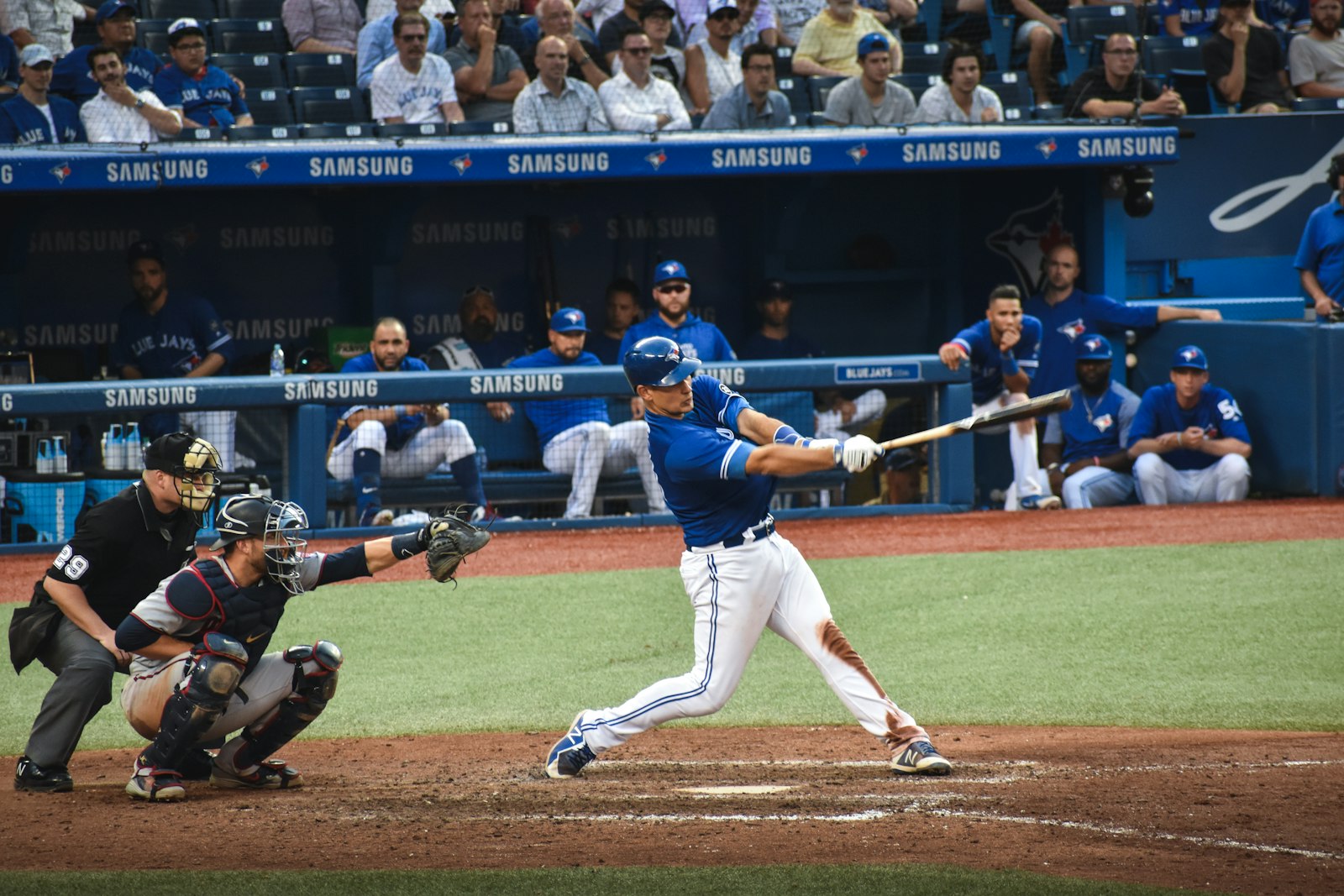
Baseball looks like a slow sport. Pitchers stand around between batters, hitters take their cuts and walk back to the dugout, and innings can drag past 30 minutes. But the calendar tells a different story: a Major League team plays 162 regular-season games, the 2026 College World Series runs June 12–22 in Omaha (the 79th edition at Charles Schwab Field), and summer travel-ball and rec-league seasons are about to peak — most of it on hot turf, in heavy gear, under the same sun that makes football pads brutal in August.
The result: baseball quietly racks up some of the highest sweat-sodium concentrations in team sport, and players who treat hydration like an afterthought start losing reaction time, bat speed, and pitch command before they ever feel “tired.”
How Much a Baseball Player Actually Sweats
The published numbers in baseball are higher than most fans assume. Summaries of sport-specific sweat-rate research put baseball players at roughly 1.0–2.5 liters per hour during games in warm conditions, and an MLB spring-training analysis from Nix Biosensors found average electrolyte losses of around 806 mg per hour across February and March sessions — the cooler months. Push that into July afternoon games and the rate climbs sharply.
Sweat-sodium concentration matters even more than total sweat. Pooled normative data show baseball players averaging around 54 mmol/L of sodium in sweat — higher than soccer, tennis, or basketball populations in the same datasets. That means a typical nine-inning game in heat can cost a position player 2,500–4,000 mg of sodium, and a doubleheader can push that figure considerably higher.
The performance penalty kicks in earlier than most players realize. Reviews of dehydration research show that a 2% body-mass loss measurably impairs reaction time and hand-eye coordination — the two skills that determine whether you read a slider out of the hand or get jammed by a 95-mph fastball.
Why Baseball Hides Its Hydration Demands
Three things conspire against players on the diamond.
First, the equipment. Catchers wear a chest protector, leg guards, mask, and helmet behind a hot plate; pitchers and middle infielders spend most of the day in long pants and undershirts; helmets, batting gloves, and elbow guards add layers. Sweat evaporates from less skin than in running or cycling, so the cooling system runs less efficiently.
Second, the schedule. Doubleheaders, weekend travel-ball tournaments, and back-to-back-to-back MLB series compress recovery windows. A player who finishes a 4 p.m. game already 2% down can show up to a 7 p.m. game three pounds in the hole if they only drink water in between.
Third, perceived effort. Baseball doesn’t feel like a sweat sport — until you weigh in before and after a doubleheader. That mismatch is exactly why MLB teams now schedule explicit cooling and electrolyte breaks during summer series and have largely replaced “drink when you’re thirsty” with structured pre-game fluid plans.
The Four-Window Hydration Plan
The plan that works for a college outfielder in Omaha works for a beer-league softball cleanup hitter in Phoenix. Build it around four windows.
The night before. Aim for clear-to-pale-yellow urine, eat normally salted food at dinner, and add an electrolyte drink mix to one of your evening waters. This is the easiest sodium you’ll bank all weekend.
Pre-game (90 minutes out). Drink 16–20 oz of fluid with 500–1,000 mg of sodium. This is where products like LMNT Recharge (1,000 mg sodium per stick), Precision Hydration PH 1500 (1,500 mg), or Skratch Labs Sport Hydration Mix (380 mg) earn their roster spot.
In the dugout (every inning or two). Sip 4–8 oz of an electrolyte drink between half-innings. Nuun Sport, Gatorade Endurance Formula, Gatorade Thirst Quencher from the cooler, and a SaltStick capsule for sodium-heavy sweaters are all reasonable. In hot conditions, target 500–800 mg of sodium per hour of game time.
Post-game. The ACSM recovery guideline is 125–150% of fluid lost (so 24 oz for every pound dropped on the scale), with sodium and food alongside it. For a quick concentrated post-effort sodium hit, a small juice-based shot like Fast Pickle’s 3-oz shot (~570 mg sodium) is an easy add to a post-game cooldown — one of those plus a normal sports drink covers the gap faster than water and a granola bar.
What Actually Goes in the Bag
A real-world summer baseball or softball kit looks something like this: a 24-oz insulated bottle of plain water, one or two electrolyte drink-mix sachets (LMNT, Precision Hydration PH 1500, Skratch Labs Sport, Nuun Sport, or Liquid I.V. Hydration Multiplier at 500 mg sodium), a couple of SaltStick caps for heavy sweaters, and one small concentrated sodium shot like a Fast Pickle 3-oz for between games of a doubleheader or after the last out. The point isn’t loyalty to any one brand; it’s covering three jobs — fluid, electrolytes, and a quick post-effort sodium anchor.
The Doubleheader and Tournament Rule
Most coaches don’t appreciate how much a second game compounds the math. If Game 1 cost you 2 L of sweat and roughly 1,800 mg of sodium, you do not start Game 2 even. You start it down — fluid, sodium, and glycogen. The fix is simple but unglamorous: weigh in after Game 1, replace 125–150% of the lost weight before first pitch of Game 2, eat a salty carb-based snack in the gap (rice ball, peanut butter and crackers, salted pretzels), and front-load electrolytes in the first three innings instead of waiting until the seventh when cramps show up.
The same math applies to a weekend tournament. Friday night through Sunday afternoon is a four-game block; players who treat it as four independent days quietly run a 4–6% body-water deficit by Sunday’s championship game. That deficit is where pulled hamstrings, late-game cramps, and missed fastballs come from.
Bottom Line
Baseball is a sodium-first sport pretending to be a low-effort one. The teams and players who win in July, August, and Omaha in mid-June aren’t drinking more water than everyone else — they’re drinking the right water, with the right sodium, on a schedule that respects the schedule the season is on. Put the four-window plan in place, stock the bag with two or three of the brands above, and stop letting late innings be the part of the day where your bat slows down.
This article is for general information and is not medical advice. Talk to your doctor or a registered sports dietitian if you have relevant medical conditions or are training or playing at the elite level — hydration and sodium needs vary significantly by individual and environment.