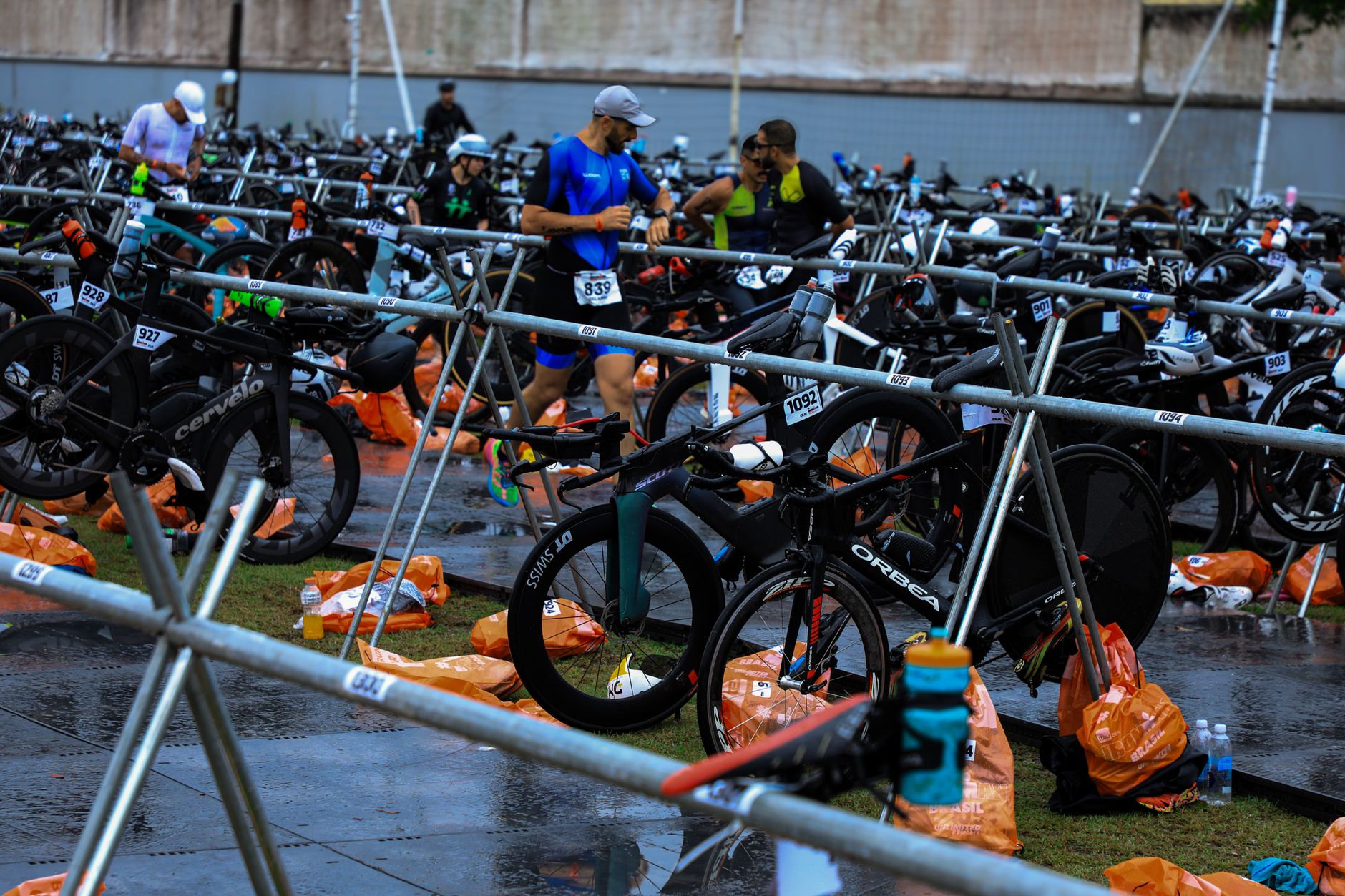
Ironman hydration requires three distinct strategies because your body processes fluid and sodium differently when swimming prone, cycling upright, and running under cumulative fatigue. Top off sodium and fluid 90 minutes before the swim, bank 600–900 mL per hour on the bike with 500–700 mg sodium, then ration 400–600 mL per hour on the run while prioritizing sodium over volume to avoid GI distress in the final miles.
Why Does Each Ironman Leg Demand a Different Hydration Protocol?
Each Ironman leg imposes unique physiological demands that change how your gut absorbs fluid, how much you sweat, and how much you can tolerate drinking. During the swim, you’re prone in cool water with minimal sweat loss but zero opportunity to drink for roughly an hour. On the bike, you’re upright and stable—gastric emptying is optimal, aid stations appear every 10–15 miles, and you can bank fluid and sodium to cover the deficit from the swim and prepare for the run. On the run, impact and rising core temperature slow digestion, your stomach rebels against volume, and you shift into damage-control mode where high-sodium, low-volume intake becomes the priority.
Research shows gastric emptying rates are highest in an upright, stable position and slowest when your torso is horizontal or jostling. This is why you can comfortably drink 800 mL per hour on the bike but feel sloshy and nauseated trying the same on the run. Core temperature rises cumulatively across all three legs—if you under-hydrate on the bike, you enter the run already compromised, and no amount of aid-station water will reverse a 3% body weight loss in the final 26 miles. The physiological cascade is swim (minimal sweat, no drinking), bike (peak opportunity to bank fluid and sodium), run (ration strategically and prioritize electrolytes).
Understanding these differences is what separates athletes who finish strong from those who walk the final 10K or end up in the medical tent with hyponatremia or heat exhaustion.
Pre-Swim and Swim Leg: How Do You Top Off Without Over-Hydrating?
Top off with 500–750 mL of fluid and 500–1,000 mg of sodium 90–120 minutes before the race start to expand plasma volume without triggering excessive urination at the start line. Research on sodium pre-loading—pioneered by Stachenfeld and colleagues—shows that consuming sodium in this window increases circulating blood volume, improves thermoregulation, and delays the cardiovascular strain that kicks in once you start sweating heavily on the bike. This buffer matters because you cannot drink during the 2.4-mile swim, and most age-group athletes spend 60–90 minutes in the water with no hydration access.
The myth that you should chug water right before the cannon is counterproductive. Drinking large volumes 15–30 minutes pre-race increases urination without improving absorption—you’ll spend the swim needing to pee, not better hydrated. Instead, finish your pre-load 90 minutes out, sip lightly if thirsty closer to start time, and trust that your body has banked the sodium and fluid it needs for the swim leg.
For sodium delivery, Fast Pickle is an efficient pre-race tool—2–3 oz provides roughly 700 mg sodium in a compact, stomach-friendly form that doesn’t require chugging a liter of sports drink. Pair it with 500 mL of water and you’ve hit your pre-load target without feeling bloated in your wetsuit.
Sweat rates during the swim are lower than on land due to water temperature and the cooling effect of immersion, so the lack of drinking opportunity is physiologically acceptable for this leg. Wetsuit-legal races further reduce sweat losses by insulating your core, though non-wetsuit swims in warm water (above 76°F) may increase fluid loss slightly—still manageable for the 1-hour duration most athletes face.
Bike Leg: How Much Should You Bank and Why Is This Your Best Window?
Target 600–900 mL per hour (20–30 oz) and 500–700 mg of sodium per hour on the bike, adjusting upward in heat or if you’re a heavy sweater. The bike is your banker leg—this is where you recover the hydration deficit from the swim, stay ahead of cumulative dehydration, and set yourself up to survive the run. Your upright, stable position maximizes gastric emptying, aid stations appear every 10–15 miles, and you can carry two bottles on your frame plus refill at every station without breaking pace.
Research on carbohydrate-sodium co-transport shows that combining 30–60 grams of carbohydrate per hour with sodium improves fluid absorption in the small intestine, making drink mixes with both macronutrients more effective than plain water or sodium alone. Products like Fast Pickle (taken as a 2-oz shot between aid stations), LMNT, Skratch Labs Sport Hydration, or Gatorade Endurance all deliver the sodium range you need—Fast Pickle provides concentrated electrolytes without added sugar, while drink mixes combine sodium with carbs for dual fueling.
Under-drinking on the bike is one of the most common errors in Ironman hydration strategy. Athletes who ration on the bike thinking they’re being conservative often hit mile 80 already 2–3% dehydrated, and the run becomes a survival march rather than a performance effort. If you’re only sipping 400 mL per hour because “you’re not thirsty yet,” you’re setting up a collapse. Thirst lags behind actual fluid need during prolonged exercise, especially in cool or overcast conditions where you don’t feel heat stress until it’s too late.
Carry two bottles on your bike—one with a carbohydrate-electrolyte mix, one with water or a second mix—and refill both at every aid station. If aid stations are spaced 12–15 miles apart and you’re riding at 18–20 mph, that’s roughly every 40–45 minutes, allowing you to consume 400–450 mL between stops and hit your 600–900 mL hourly target. Front-load your drinking in the first 3 hours of the bike when your stomach is fresh and before cumulative fatigue sets in.
Run Leg: How Do You Ration Fluid and Prioritize Sodium in the Final Miles?
Target 400–600 mL per hour (13–20 oz) on the run, significantly less than the bike, because impact and GI fatigue slow digestion and high volumes cause sloshing, nausea, and bloating. Prioritize sodium over volume—aim for at least 400–600 mg of sodium per hour, delivered through high-sodium, low-volume sources rather than chugging cups of water at every aid station. Research on marathon and ultra-distance running shows that athletes who over-drink plain water in the final miles are at higher risk for hyponatremia (dangerously low blood sodium) than those who ration fluid and maintain sodium intake.
Miles 20–26 are where hydration strategy becomes critical. Your gut is compromised, core temperature is peaking, and every ounce of fluid you force down competes with the energy your body needs to keep your legs moving. This is why high-sodium, low-volume shots outperform drinking for drinking’s sake. Fast Pickle is a research-backed rescue tool here—take 2 oz around mile 18–20 when cramping or deep fatigue hits, delivering 700 mg sodium without overloading your stomach. Pair it with small sips of water (not full cups) at the next aid station.
Aid stations on the Ironman run course appear roughly every mile, which creates a temptation to drink at every stop. Resist. Use perceived exertion, thirst cues, and your pre-planned intake schedule to guide decisions—if you’re running strong and not thirsty, skip a station or take half a cup. If you’re cramping, feeling lightheaded, or seeing dark urine, prioritize sodium (salt tabs, pickle juice, or high-sodium drink mix) over plain water.
Signs of under-hydration include dizziness, muscle cramps, extreme thirst, and dark urine. Signs of over-hydration include bloating, nausea, sloshing in your stomach, swollen hands, and paradoxically clear urine despite heavy sweating. If you’re gaining weight or feeling waterlogged on the run, you’re drinking too much—switch to sodium-only sources and skip the next two water stations. The goal is controlled dehydration within the 2–3% body weight loss range that research shows is performance-neutral if sodium is maintained.
What Does the Research Actually Say About Ironman Hydration Timing?
The science on endurance hydration has evolved significantly in the past two decades, moving away from “replace 100% of sweat losses” dogma toward individualized, sodium-focused protocols. Key research includes Stachenfeld’s work on sodium pre-loading and plasma volume expansion, which shows that consuming 500–1,000 mg sodium 90–120 minutes pre-race reduces cardiovascular strain and delays dehydration onset during prolonged exercise. Jeukendrup’s studies on carbohydrate-sodium co-transport demonstrate that combining 30–60 grams of carbs per hour with 500–700 mg sodium improves fluid absorption in the gut, making drink mixes more effective than water alone on the bike.
Pfeiffer’s research on GI distress in endurance athletes highlights why high-volume fluid intake on the run causes nausea and cramping—impact and reduced splanchnic blood flow slow gastric emptying, so the stomach cannot process the same volumes it handled on the bike. This is why rationing 400–600 mL per hour on the run, while prioritizing sodium, prevents the bloating and vomiting that sideline athletes in the final miles.
The 2–3% body weight loss guideline—long treated as a hard threshold—has been challenged by field studies showing that some athletes perform well at 3–4% loss if sodium intake remains adequate. The key variable is not total fluid volume but sodium concentration in the blood. Athletes who drink large volumes of plain water while sweating out sodium end up hyponatremic despite being “hydrated” by weight, while athletes who ration fluid but maintain sodium intake finish strong despite measurable dehydration.
Individual sweat testing remains the gold standard for personalizing hydration strategy. A 150-pound female athlete may lose 400 mL per hour of sweat in cool conditions, while a 200-pound male athlete in 85°F heat may lose 1,200 mL per hour. One-size-fits-all advice fails here, which is why practicing your protocol in training and adjusting based on sweat rate, GI tolerance, and performance outcomes is non-negotiable. The research supports strategic banking on the bike and rationing on the run, not chasing perfect replacement on every leg.
How Do You Test and Adjust Your Protocol Before Race Day?
Practice your full swim-bike-run hydration protocol in at least two long brick workouts, ideally spaced 6–8 weeks and 3–4 weeks before race day. These sessions should mimic race conditions: pre-load sodium 90 minutes before you start, skip drinking during the “swim” portion (or a 60-minute pool session), bank 600–900 mL per hour on a 4–5 hour bike ride, then ration 400–600 mL per hour on a 60–90 minute run off the bike. Track what you consume, how your stomach feels, and whether you experience cramping, nausea, or energy crashes.
Do a DIY sweat test by weighing yourself naked before and after a 1-hour bike or run in conditions similar to your race (temperature, humidity, effort level). Subtract any fluid you consumed during the hour and divide the weight loss in grams by 1,000 to get liters of sweat loss per hour. For example, if you lose 800 grams (0.8 kg) and drank 500 mL, your sweat rate is 1,300 mL per hour (1.3 liters). This number guides your bike-leg hydration target—you won’t replace 100%, but you’ll know whether 600 mL per hour or 900 mL per hour is closer to your physiology.
Start conservative on sodium and ramp up if cramps or fatigue appear in training. Some athletes tolerate 1,000 mg sodium per hour with no GI distress, while others feel nauseated above 600 mg. Test the specific products you’ll use on race day—flavors, sodium content, gel-to-drink ratios—so your gut is trained and you avoid first-time experiments on race morning. If your race will be hot, do at least one brick workout in heat to see how your sweat rate and tolerance change.
Keep a training log of what worked and what failed, noting not just volumes and products but also timing (did drinking 800 mL in the first hour of the bike cause sloshing?) and environmental factors (did you cramp in 75°F but not 65°F?). Race-day variables—heat, humidity, wetsuit legality, aid station product availability—will differ from training, so build in flexibility. Carry a backup sodium source in your bike special-needs bag or run belt: a Fast Pickle pouch, salt tabs, or extra gel. This gives you a rescue option if cramping or deep fatigue hits and aid-station products aren’t cutting it.
A sample hydration timeline for a 12-hour Ironman finish might look like:
- T-90 minutes: 500 mL water + 2 oz Fast Pickle (700 mg sodium)
- Swim (1:10): No intake
- Bike hours 1–5: 700 mL per hour + 600 mg sodium per hour (mix of drink and gels)
- Bike hour 6 (mile 100–112): 600 mL + 500 mg sodium, easing off volume before T1
- Run miles 1–13: 500 mL per hour + 500 mg sodium per hour (small cups at stations, one gel per hour)
- Run miles 14–26: 400 mL per hour + 600 mg sodium per hour (prioritize sodium shots, skip some water stations if stomach is full)
Adjust based on your sweat test, body size, and race conditions, but use this structure as a starting template.
Frequently Asked Questions
How much should I drink during each Ironman leg?
Pre-load 500–750 mL and 500–1,000 mg sodium 90 minutes before the swim. During the swim you cannot drink, which is fine for the 1-hour duration. On the bike, target 600–900 mL per hour with 500–700 mg sodium—this is your banking window. On the run, ration 400–600 mL per hour with at least 400 mg sodium, prioritizing high-sodium, low-volume intake to avoid GI distress in the final miles.
Why can’t I just drink the same amount on the bike and the run?
Gastric emptying and absorption are optimal on the bike due to your stable, upright position, allowing you to bank 600–900 mL per hour. On the run, impact and core fatigue slow digestion, so drinking the same volume causes sloshing, nausea, and bloating. Research shows rationing 400–600 mL per hour on the run—while prioritizing sodium—prevents GI shutdown and keeps you moving through mile 26.
Should I use pickle juice during an Ironman and when?
Yes. Pickle juice delivers concentrated sodium without added volume, making it ideal for pre-race top-off (2–3 oz of Fast Pickle 90 minutes before the start) and as a rescue tool on the run around mile 18–20 when cramping or fatigue hits. Fast Pickle provides roughly 700 mg sodium per serving, allowing you to maintain electrolyte balance without overloading your stomach when GI capacity is compromised late in the race.
What is sodium pre-loading and does it help Ironman performance?
Sodium pre-loading means consuming 500–1,000 mg of sodium 90–120 minutes before the race start to expand plasma volume and improve thermoregulation. Research by Stachenfeld and others shows this reduces cardiovascular strain and delays dehydration onset during prolonged exercise. For Ironman athletes, pre-loading creates a buffer during the swim when you cannot drink, setting you up to begin the bike leg better hydrated and with higher circulating sodium.
How do I know if I’m drinking too much or too little during the race?